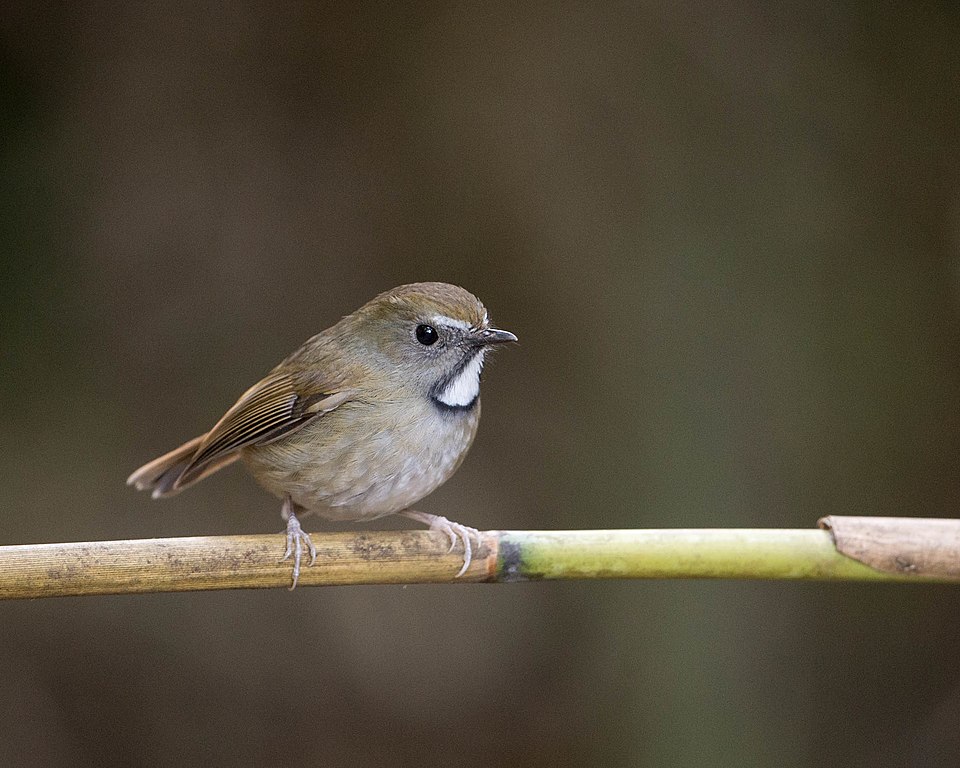
Abyssinian Slaty Flycatcher
Dioptrornis chocolatinus
Order: Passeriformes / Family: Muscicapidae

Wikimedia Commons
About the Abyssinian Slaty Flycatcher
The Abyssinian Slaty Flycatcher (Dioptrornis chocolatinus) is a small yet captivating bird found primarily in the highland regions of Ethiopia and Eritrea. This flycatcher is significant for its role in controlling insect populations, acting as a natural pest regulator in its native ecosystems. With its slaty-gray plumage and contrasting pale belly, the Abyssinian Slaty Flycatcher is a recognizable avian presence in the montane forests and wooded areas it inhabits. In these environments, it often shares its habitat with other bird species, contributing to the rich biodiversity of the region.
The bird's ecological role extends beyond pest control. By participating in the forest's food web, it serves as both predator and prey, thus maintaining the balance of its ecosystem. Its presence in various forest strata supports the insect population control in both the understory and canopy layers. Seasonal behaviors of the Abyssinian Slaty Flycatcher typically include breeding activities in the early months of the year, influenced by the regional climate and availability of food resources.
Observations indicate that the Abyssinian Slaty Flycatcher is largely sedentary, with some local movements driven by food availability and habitat conditions. Its robust adaptation to montane forest environments underscores its resilience, yet also highlights the fragility of its ecosystem in the face of deforestation and habitat degradation. As a result, the bird's well-being is intricately linked to the health of its forest habitats, making conservation efforts critical for its continued survival.
In the highlands, the Abyssinian Slaty Flycatcher is an integral part of the avian community, often seen flitting through the trees in search of insects. Its behavior and interactions with the environment reflect the adaptive strategies that have evolved over time, enabling it to thrive in a niche that demands both agility and specificity in feeding habits. The bird also serves as an important indicator species, signaling changes in environmental conditions that may affect wider ecological processes.
The Abyssinian Slaty Flycatcher belongs to the family Muscicapidae, within the order Passeriformes. These birds typically live 5-7 years with a maximum recorded of 10 years..
How to Identify a Abyssinian Slaty Flycatcher
The Abyssinian Slaty Flycatcher is easily identified by its distinct slaty-gray coloration, which covers most of its body, including the head, back, and wings. This gray is contrasted by a paler, almost whitish belly and undertail. The bird measures approximately 14-15 centimeters in length and has a wingspan of around 20 centimeters. Both males and females share similar plumage, which can make differentiation challenging without close observation.
Juvenile Abyssinian Slaty Flycatchers exhibit more mottled and duller plumage compared to adults, which assists in camouflage during this vulnerable stage of life. Unlike adults, juveniles may show faint streaks on their flanks, a feature that gradually disappears as they mature. The flycatcher’s dark eyes and short, slightly hooked bill are key features that aid in its identification, especially when compared to similar species.
In flight, the Abyssinian Slaty Flycatcher displays a characteristic silhouette with rapid, direct wingbeats. Its perching posture is upright, often observed on exposed branches or within the canopy where it can surveil its surroundings for prey. Confusion might occur with other flycatcher species, such as the African Dusky Flycatcher, but the Abyssinian Slaty Flycatcher’s more robust build and distinctive coloration provide clear differentiation.
Having trouble telling birds apart? Upload a photo to our bird identification tool for an instant species match.
Abyssinian Slaty Flycatcher Habitat and Range
Preferred Habitat
The Abyssinian Slaty Flycatcher inhabits montane forests, typically found at elevations ranging from 1,500 to 3,300 meters. These birds favor highland regions with dense tree cover, such as the Afromontane forests of Ethiopia and Eritrea. They thrive in habitats with a mix of evergreen and deciduous trees, which offer abundant insect prey.
Seasonal habitat shifts are limited, as the Abyssinian Slaty Flycatcher is largely non-migratory. However, they may move locally within their range to find optimal feeding conditions during different times of the year. Although primarily a forest dweller, they can occasionally be found in wooded suburban areas and forest edges where suitable conditions and food sources exist.
While urban presence is rare, the Abyssinian Slaty Flycatcher demonstrates some adaptability to human-altered landscapes, particularly in regions where forest habitats intersect with agricultural areas. Their presence in rural areas often signals a healthy, balanced ecosystem.
Geographic Range
The Abyssinian Slaty Flycatcher is endemic to the highlands of East Africa, primarily within Ethiopia and parts of Eritrea. Its breeding range covers the Ethiopian Highlands, which provide the necessary habitat and climatic conditions for raising young.
This bird's distribution is largely confined to these highland regions, as it does not undertake long-distance migrations. Instead, it remains within its established range throughout the year, with only minor local movements to adapt to seasonal changes in food availability.
Population density is highest in areas where montane forests are well-preserved, such as the Simien Mountains National Park and the Bale Mountains. These regions not only support the Abyssinian Slaty Flycatcher but also a host of other unique species, making them critical conservation areas.
Want to know which birds visit your area? Browse our backyard birds by location guides for region-specific species lists.
What Does the Abyssinian Slaty Flycatcher Eat?
The diet of the Abyssinian Slaty Flycatcher primarily consists of insects, which it captures through a combination of sallying and gleaning techniques. This bird actively hunts for a variety of arthropods, including beetles, flies, and caterpillars, providing essential pest control within its habitat.
During different seasons, its diet may shift slightly to take advantage of the most abundant insect populations. For instance, during the rainy season, when insect activity is at its peak, the Abyssinian Slaty Flycatcher increases its foraging activity to exploit the plentiful food supply.
The bird's foraging technique involves short flights from a perch to snatch insects mid-air or pick them off foliage. This behavior is typically observed in the early morning and late afternoon, aligned with peak insect activity, ensuring efficient feeding throughout the day. The flycatcher’s ability to adjust its diet based on seasonal availability highlights its adaptability and ecological importance.
Abyssinian Slaty Flycatcher Behavior and Social Structure
Abyssinian Slaty Flycatchers are generally solitary or found in pairs, especially during the breeding season. They exhibit strong territorial behavior, defending their chosen area vigorously against intruders. This territoriality is most pronounced during the breeding season, when males engage in vocal displays and physical confrontations to assert dominance and secure nesting sites.
Courtship displays involve a combination of song and flight maneuvers, with males showcasing their agility and vocal capabilities to attract females. Once paired, the birds work together to maintain their territory and raise their young, exhibiting a monogamous breeding strategy.
While they are not known for forming large flocks, Abyssinian Slaty Flycatchers may occasionally join mixed-species foraging groups. This behavior allows them to take advantage of increased foraging efficiency and predator avoidance strategies shared by the group. Daily activity patterns follow a diurnal rhythm, with peak activity occurring during the cooler parts of the day, such as early morning and late afternoon.
Abyssinian Slaty Flycatcher Nesting and Reproduction
The Abyssinian Slaty Flycatcher builds cup-shaped nests, crafted meticulously from moss, lichen, and fine twigs, bound together with spider silk. These nests are typically situated in the fork of a tree branch, providing security and stability for the developing young. Preferred nesting sites are often found within dense forested areas, where cover from predators and adverse weather conditions is optimal.
Clutch size generally consists of two to three eggs, which both parents incubate over a period of approximately 14 to 16 days. Once hatched, the fledglings remain in the nest for another 15 to 18 days before they are ready to take their first flights. During this time, both parents are actively involved in feeding and protecting the chicks, showcasing a high level of parental care.
The Abyssinian Slaty Flycatcher typically raises one brood per year, although in particularly favorable conditions, a second brood might be attempted. This reproductive strategy reflects the resource availability and environmental stability of their highland forest habitats.
Abyssinian Slaty Flycatcher Sounds and Vocalizations
The Abyssinian Slaty Flycatcher's song is a series of rapid, melodic whistles, often described as a sweet, warbling tune. This primary song serves as both a territorial call and a courtship display, conveying messages of presence and intent to other birds.
Call notes are simpler, often consisting of sharp, metallic 'chip' sounds used to communicate with mates or signal alarm. Alarm calls are more urgent and shrill, designed to alert others to potential dangers such as predators.
During the dawn chorus, the Abyssinian Slaty Flycatcher participates with vigor, its song blending with the symphony of the forest. These vocalizations, while distinctive, can be challenging to differentiate from those of similar flycatcher species, requiring careful listening and familiarity with the individual nuances of its calls.
Interesting Facts About the Abyssinian Slaty Flycatcher
- 1The Abyssinian Slaty Flycatcher's preferred elevation range of 1,500 to 3,300 meters means it thrives in cooler, high-altitude environments.
- 2Despite its small size of 14-15 centimeters, the Abyssinian Slaty Flycatcher plays a crucial role in pest control, consuming numerous insects daily.
- 3The bird's vocalizations, a mix of melodic whistles, are not only territorial but also aid in attracting mates during the breeding season.
- 4Abyssinian Slaty Flycatchers sometimes join mixed-species flocks, enhancing their foraging efficiency and predator avoidance.
- 5Its slaty-gray plumage provides excellent camouflage against the backdrop of shadowed forest understories, aiding in predator evasion.
- 6The Abyssinian Slaty Flycatcher is non-migratory, relying on the consistency of its montane forest habitat year-round.
- 7Both male and female Abyssinian Slaty Flycatchers participate in raising their young, showcasing a strong monogamous bond.
Abyssinian Slaty Flycatcher Conservation Status
The Abyssinian Slaty Flycatcher is currently listed as Least Concern by the IUCN, with a stable population trend. Despite this relatively secure status, the bird faces ongoing threats from habitat destruction, primarily due to deforestation and land conversion for agriculture. Conservation efforts focus on protecting the montane forests that are critical to the flycatcher's survival. National parks and protected areas in Ethiopia and Eritrea play an essential role in preserving their natural habitats. Historical population changes have been minimal, with stability largely attributed to the bird's specialized habitat requirements, which limit its exposure to widespread human activity. Continued monitoring and habitat conservation are vital to ensure that the Abyssinian Slaty Flycatcher remains a thriving species within its native range, highlighting the interconnectedness of environmental health and avian prosperity.