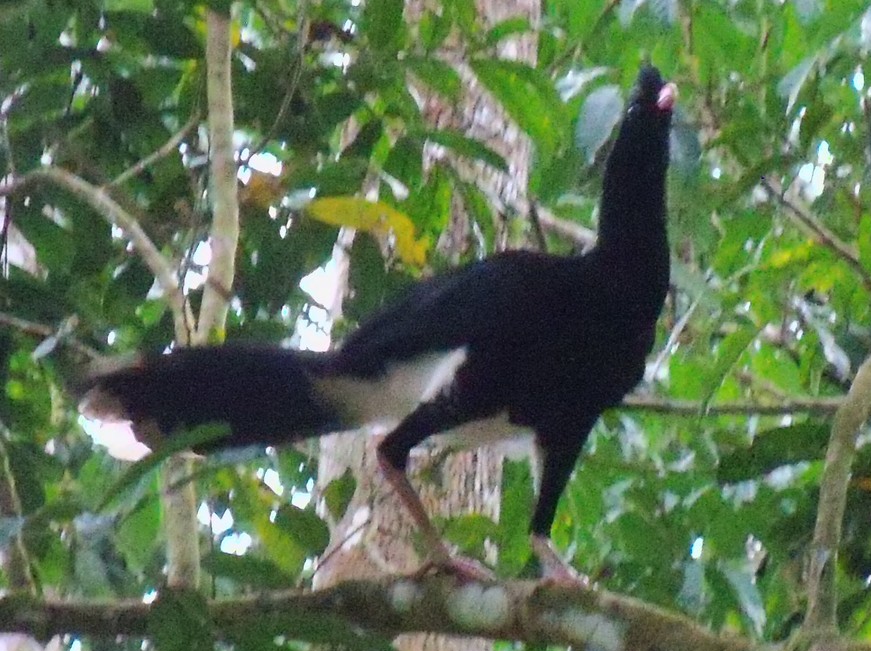
Alagoas Curassow
Mitu mitu
Order: Galliformes / Family: Cracidae

Wikimedia Commons
About the Alagoas Curassow
The Alagoas Curassow (Mitu mitu) is a striking bird within the Cracidae family, characterized by its glossy black feathers and vibrant red bill. Once endemic to the Atlantic Forest in northeastern Brazil, specifically in Alagoas, this bird is now extinct in the wild. The Alagoas Curassow's significance lies not only in its unique appearance but also in its role as a seed disperser within its native habitat, which is vital for maintaining the health and diversity of tropical ecosystems. Historically, this bird inhabited lowland tropical forests, where it contributed to the ecological balance by feeding on fruits and dispersing seeds over large areas. This activity facilitated forest regeneration and maintained the structural integrity of its environment. Currently, the only surviving individuals exist in captivity, where breeding programs strive to increase their numbers with the hope of eventual reintroduction. The extinction of the Alagoas Curassow in its natural habitat serves as a poignant reminder of the destructive impact of deforestation and habitat loss in the region. Seasonal behaviors of this bird, such as its movements and breeding patterns, would have been intimately linked with the fruiting cycles of forest trees, further emphasizing its ecological importance. Efforts to conserve the Alagoas Curassow highlight the broader challenges faced in preserving biodiversity in the Atlantic Forest, one of the world's most threatened biomes.
The Alagoas Curassow belongs to the family Cracidae, within the order Galliformes. These birds typically live 10-15 years in captivity, potentially longer.
How to Identify a Alagoas Curassow
The Alagoas Curassow is a large bird, measuring about 83-89 cm in length. Adult birds exhibit a primarily glossy black plumage with a distinctive red bill and a bare red patch of skin around the eyes, adding to their striking appearance. Males are typically larger than females, though both sexes share similar plumage patterns. Juveniles, on the other hand, may display a slightly duller black coloration until they mature. This species has a robust body and a long tail, which it often holds horizontally. The legs are strong and well-suited for walking through dense forest undergrowth. Unlike many other birds, the Alagoas Curassow is not prone to confusion with similar species due to its unique coloration and size. In flight, its silhouette is marked by broad, rounded wings and a relatively short neck, typical of galliform birds. When perched, the Alagoas Curassow maintains an upright posture, often remaining alert and scanning its surroundings for threats.
Having trouble telling birds apart? Upload a photo to our bird identification tool for an instant species match.
Alagoas Curassow Habitat and Range
Preferred Habitat
Historically, the Alagoas Curassow inhabited the lowland tropical forests of the Atlantic Forest biome in northeastern Brazil, particularly in the state of Alagoas. This habitat consists of dense, humid forests teeming with biodiversity. The forest floor, rich in leaf litter and fallen fruits, provided an ideal environment for the curassow to forage. Elevation in these regions typically ranges from sea level to a few hundred meters. The Alagoas Curassow showed no significant seasonal habitat shifts, relying instead on the consistent microclimate of the tropical forest. Unlike urban-adapted birds, the Alagoas Curassow thrived in undisturbed rural areas far from human settlements.
Geographic Range
The Alagoas Curassow was once found exclusively in the Atlantic Forest of northeastern Brazil, with its range limited to the state of Alagoas. This restricted range made the species highly vulnerable to habitat destruction. The bird did not migrate, as it was a year-round resident of its forested environment. Due to deforestation and hunting, the wild population disappeared in the late 20th century. Today, the Alagoas Curassow survives only in captivity, with breeding programs located in Brazil aiming to increase its numbers. Such efforts focus on preserving genetic diversity and exploring potential reintroduction sites within its historical range.
Want to know which birds visit your area? Browse our backyard birds by location guides for region-specific species lists.
What Does the Alagoas Curassow Eat?
The Alagoas Curassow primarily fed on a diet of fruits, seeds, and small invertebrates found on the forest floor. Its foraging technique involved walking slowly and deliberately through the underbrush, using its strong beak to pick up fallen fruits or dig into leaf litter for insects and other small prey. The diet likely varied seasonally, with the bird consuming more fruits during peak fruiting periods and relying on seeds and invertebrates at other times. Fruits from various tree species would have constituted the bulk of its diet, with seeds providing essential nutrients and energy. The Alagoas Curassow typically foraged during the early morning and late afternoon, avoiding the heat of midday.
Alagoas Curassow Behavior and Social Structure
The Alagoas Curassow was known for its relatively solitary nature, often seen alone or in pairs rather than large flocks. It exhibited territorial behavior, with males defending specific areas of the forest from intruders. Courtship displays involved males showcasing their vibrant plumage and performing elaborate dances to attract females. The Alagoas Curassow's response to predators included freezing in place or retreating into dense vegetation to avoid detection. Daily activity patterns were characterized by periods of foraging, resting, and vigilance, with dawn and dusk being the most active times of day.
Alagoas Curassow Nesting and Reproduction
The Alagoas Curassow constructed its nests on the ground, utilizing materials such as leaves, twigs, and grasses to create a shallow depression. Nest sites were typically located in secluded areas of the forest, providing cover from predators. A typical clutch consisted of two to three eggs, which the female incubated for approximately 28 to 30 days. Both parents participated in rearing the young, with the male often playing a role in protecting the nest and fledglings. The fledging period lasted about two months, during which the chicks developed the necessary skills for independence. The species likely produced only one brood per year, given its low reproductive rate.
Alagoas Curassow Sounds and Vocalizations
The Alagoas Curassow produced distinctive vocalizations, including a primary song that consisted of deep, resonant calls with a rhythmic pattern. The pitch was low, and the quality of the sound could be likened to a distant drumbeat. This song served to establish territory and attract mates. Additionally, the bird emitted short, sharp call notes when alarmed or threatened. During the dawn chorus, the Alagoas Curassow's calls were a prominent feature, adding to the symphony of sounds in the tropical forest.
Interesting Facts About the Alagoas Curassow
- 1The Alagoas Curassow is one of the few bird species declared extinct in the wild while still surviving in captivity.
- 2Mitu mitu was rediscovered in the wild in 1951 after being thought extinct, only to go extinct again by the late 20th century.
- 3Captive breeding programs for the Alagoas Curassow focus on genetic diversity to avoid inbreeding depression.
- 4The Alagoas Curassow played a key role in seed dispersal, helping to maintain the diversity of its forest ecosystem.
- 5The bird's striking red bill and facial skin make it one of the most visually distinctive members of the Cracidae family.
- 6Historically, the bird's range was limited to a mere 200 square kilometers, increasing its vulnerability to habitat loss.
- 7The Alagoas Curassow's demise in the wild was largely due to habitat destruction from agriculture and human settlement.
Alagoas Curassow Conservation Status
Currently classified as Critically Endangered by the IUCN, the Alagoas Curassow faces significant challenges for survival. The primary threats include habitat loss due to deforestation and historical hunting pressure. Conservation efforts focus on captive breeding programs, with the ultimate goal of reintroducing the bird into protected areas within its former range. Changes in land use and protection of existing forest fragments are crucial for establishing a viable wild population. The species' plight highlights the urgent need for comprehensive conservation strategies in the Atlantic Forest.
Other Cracidae Species


Birds Similar to the Alagoas Curassow
These species are often confused with the Alagoas Curassow due to similar appearance or overlapping range.