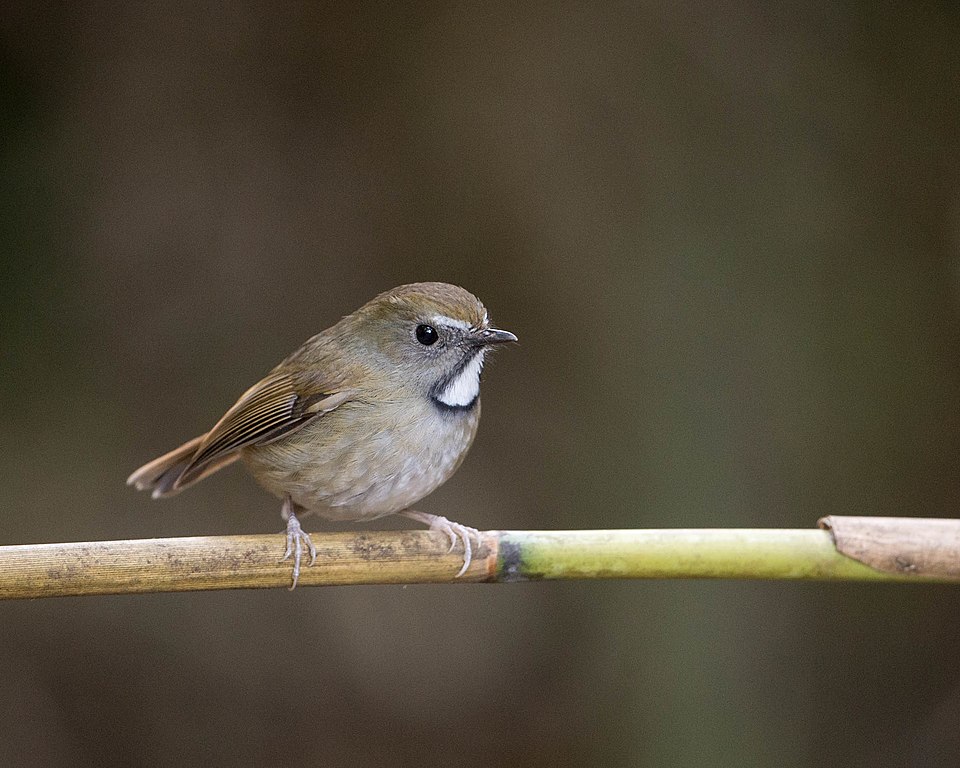
Amur Stonechat
Saxicola stejnegeri
Order: Passeriformes / Family: Muscicapidae

Wikimedia Commons
About the Amur Stonechat
The Amur Stonechat, scientifically known as Saxicola stejnegeri, is a small passerine bird belonging to the family Muscicapidae. This species is particularly recognized for its vibrant plumage and energetic behavior. Found predominantly in Asia, the Amur Stonechat thrives in a range of habitats from open grasslands to agricultural fields. Its adaptability to different environments underscores its ecological significance, as it plays a role in controlling insect populations through its diet. During the breeding season, which extends from May to July, the Amur Stonechat inhabits temperate regions where it raises its young. The breeding grounds are primarily located in northeastern China, eastern Russia, and parts of Japan. Here, the bird constructs its nest in low vegetation, providing a nurturing environment for its offspring. In autumn, the Amur Stonechat embarks on a southward migration to warmer locales such as Southeast Asia, including countries like Thailand, Vietnam, and the Philippines. This seasonal movement is essential for its survival, allowing the bird to exploit different ecological niches throughout the year. The Amur Stonechat is an active participant in its ecosystem, contributing to seed dispersal and pest control, which benefits both natural and human-modified landscapes.
The Amur Stonechat belongs to the family Muscicapidae, within the order Passeriformes. These birds typically live typically 2-4 years, with precise data on longevity limited..
How to Identify a Amur Stonechat
The Amur Stonechat is a small bird, measuring around 12 to 14 cm in length. Its most distinctive features are the black head and throat found in males, contrasted by a bright orange chest and flanks. The back and upperparts are mottled brown, providing effective camouflage in its natural environment. Females and juveniles, while less conspicuous, have more subdued coloration. Females sport a brownish head and paler orange underparts, which helps them blend into the surroundings, especially during the nesting period. Juveniles resemble females but are even more muted, with streaked brown plumage that aids in avoiding predators. In flight, the Amur Stonechat displays a characteristic short fluttering pattern with rapid wingbeats. Its perching posture is often upright on tall grasses or shrubs, making it a prominent sight in open fields. Although similar in appearance to the European Stonechat, the Amur Stonechat can be distinguished by its more pronounced white wing patch and the absence of a white collar.
Having trouble telling birds apart? Upload a photo to our bird identification tool for an instant species match.
Amur Stonechat Habitat and Range
Preferred Habitat
The Amur Stonechat inhabits a variety of open habitats, including grasslands, marshes, and agricultural fields. It is commonly found at elevations ranging from sea level to 1,500 meters. During the breeding season, it prefers areas with abundant low vegetation for nesting, such as meadows and reedbeds. In winter, the Amur Stonechat migrates to warmer regions, where it can be found in rice paddies and scrublands. This species is adaptable and can also be observed in urban parks and gardens, making it a bird of both rural and urban landscapes. Its ability to thrive in diverse environments highlights its resilience and ecological versatility.
Geographic Range
The Amur Stonechat breeds in northeastern Asia, specifically in countries such as Russia, China, and Japan. Its breeding range extends from the Amur River basin in Russia to the Japanese islands of Hokkaido and Honshu. During migration, the bird travels southward to wintering grounds in Southeast Asia, including Thailand, Vietnam, and the Philippines. The migration corridors used by the Amur Stonechat often pass through eastern China and the Korean Peninsula. While the species is widely distributed, population densities vary, with higher concentrations observed in coastal and lowland areas where food resources are abundant.
Want to know which birds visit your area? Browse our backyard birds by location guides for region-specific species lists.
What Does the Amur Stonechat Eat?
The diet of the Amur Stonechat primarily consists of insects, which it catches with deft aerial maneuvers or by foraging on the ground. During the breeding season, it feeds heavily on caterpillars and beetles, which provide essential nutrients for raising chicks. In winter, the diet diversifies to include seeds and small fruits, allowing the bird to sustain itself when insect prey is less available. The Amur Stonechat employs a sit-and-wait foraging strategy, often perching on a vantage point before swooping down to capture prey. This method is efficient, enabling the bird to conserve energy while maintaining a steady food intake throughout the day.
Amur Stonechat Behavior and Social Structure
The Amur Stonechat is a solitary bird during the breeding season, exhibiting strong territorial behavior to protect its nesting site. Males perform elaborate courtship displays involving song and flight to attract mates. Once paired, both male and female participate in nest-building and feeding the young. Outside the breeding season, the Amur Stonechat becomes more social, occasionally forming loose flocks during migration. Its response to predators includes alarm calls and mobbing behavior, particularly when nests are threatened. The bird is diurnal, with peak activity occurring in the early morning and late afternoon when it actively forages and defends its territory.
Amur Stonechat Nesting and Reproduction
The nesting season for the Amur Stonechat occurs from May to July. Nests are built low to the ground, often concealed within dense vegetation such as tall grasses or shrubs. Constructed primarily by the female, the nest comprises grasses, moss, and feathers, providing insulation and protection for the eggs. Clutch size ranges from three to six eggs, with an incubation period lasting about 12 to 14 days. Both parents share incubation duties, although the female undertakes the majority of this task. After hatching, the chicks remain in the nest for approximately 14 days before fledging. The Amur Stonechat typically raises one to two broods per year, depending on environmental conditions and food availability.
Amur Stonechat Sounds and Vocalizations
The primary song of the Amur Stonechat is a series of melodic, high-pitched notes delivered in a rhythmic pattern. These songs serve to establish territory and attract mates during the breeding season. In addition to its song, the Amur Stonechat produces a variety of call notes, including sharp 'chak' sounds used as contact calls. Alarm calls are more rapid and harsh, designed to alert other birds to potential threats. The dawn chorus features prominently in the Stonechat's vocal repertoire, with males singing vigorously from elevated perches.
Interesting Facts About the Amur Stonechat
- 1The Amur Stonechat migrates over 3000 kilometers annually, showcasing remarkable stamina for such a small bird.
- 2During courtship, the male performs aerial displays, singing while fluttering in mid-air to impress potential mates.
- 3Amur Stonechats can consume up to 200 insects daily, playing a significant role in controlling pest populations in agricultural areas.
- 4The species name 'stejnegeri' honors the American ornithologist Leonhard Stejneger, who contributed extensively to Asian ornithology.
- 5Amur Stonechats are known for their adaptability, often thriving in human-altered landscapes like rice paddies and urban parks.
- 6The striking plumage of the male Amur Stonechat is not just for show-it helps establish dominance and attract females during the breeding season.
- 7Despite their small size, Amur Stonechats are fierce defenders of their nests, often mobbing larger birds and predators to protect their young.
Amur Stonechat Conservation Status
Currently, the Amur Stonechat is listed as a species of Least Concern by the IUCN. The population trend appears stable, although localized declines have been noted due to habitat loss and agricultural expansion. Conservation efforts focus on preserving breeding and wintering habitats, particularly in key migratory stopover sites. Historically, the species has shown resilience to environmental changes, aided by its adaptability to various habitats.