
Andaman Flowerpecker
Dicaeum virescens
Order: Passeriformes / Family: Dicaeidae
Wikimedia Commons
About the Andaman Flowerpecker
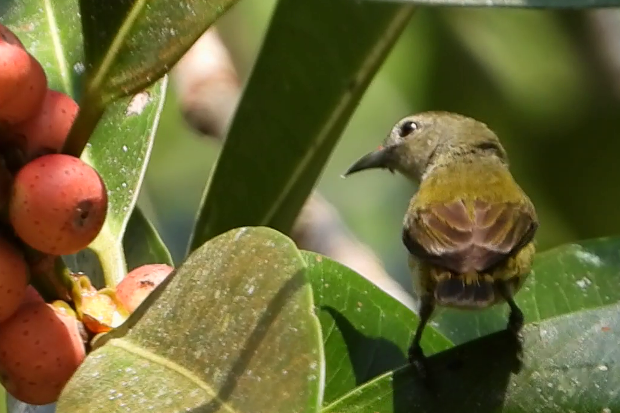
The Andaman Flowerpecker, scientific name Dicaeum virescens, is an intriguing species endemic to the Andaman Islands in the Bay of Bengal. This small passerine bird belongs to the family Dicaeidae, which is known for its specialized nectar-feeding habits. These birds play a significant ecological role in the Andaman ecosystem, acting as pollinators for a variety of flowering plants. Their presence in dense, evergreen forests highlights their preference for humid, tropical climates. The bird's bright green plumage provides effective camouflage among the lush foliage, making them a delightful yet elusive subject for birdwatchers exploring the region. The Andaman Flowerpecker's significance extends beyond its ecological role, as it represents the unique biodiversity of the Andaman Islands, a biodiversity hotspot. This bird's existence emphasizes the importance of conserving the island's natural habitats, which face threats from deforestation and human encroachment. Observations of the Andaman Flowerpecker often include its active foraging behavior, as it flits between flowering trees and shrubs in search of nectar. The Andaman Flowerpecker is most active during the early morning and late afternoon, when the air is cooler and flowers are in full bloom. During these periods, they engage in rapid, agile flights between feeding sites, showcasing their remarkable agility. In addition to nectar, they consume small insects, providing a balanced diet essential for their energy-intensive lifestyle. Their feeding habits contribute to the pollination of native plants and the control of insect populations. This bird's role in the ecosystem underlines the interconnectedness of species and the vital functions that even the smallest birds perform. The seasonal behaviors of the Andaman Flowerpecker reflect the dynamic nature of their environment. During the monsoon season, when heavy rains nurture a profusion of blooms, the birds enjoy an abundance of food resources. However, in the drier months, they may need to travel further within their habitat to locate sufficient food. This adaptability is crucial for their survival, as it allows them to thrive despite seasonal fluctuations in food availability. The Andaman Flowerpecker also displays territorial behaviors, particularly during the breeding season. Males establish and defend territories rich in resources, using vocalizations and displays to ward off rivals. These behaviors are critical for securing mates and ensuring the success of future generations. The territorial nature of these birds, combined with their vibrant appearance and ecological importance, makes the Andaman Flowerpecker a subject of great interest to ornithologists and conservationists alike.
The Andaman Flowerpecker belongs to the family Dicaeidae, within the order Passeriformes. These birds typically live typically 3-5 years, with the potential to live up to 7 years..
How to Identify a Andaman Flowerpecker
The Andaman Flowerpecker is a small bird, roughly 9 to 10 cm in length, with a distinctive green plumage that helps it blend into its lush forest surroundings. Adult males and females have similar coloration, primarily green with a slightly paler underbelly. The head, back, and wings are a rich, deep green, contrasting with the lighter throat and abdomen. Juveniles resemble adults but may appear duller and have a less pronounced sheen. Unlike many other species, there is little difference in coloration between the sexes, which can make field identification challenging without careful observation. The Andaman Flowerpecker's compact body and short tail are characteristic features, allowing it to maneuver swiftly among dense foliage. In flight, the rapid wing beats and agile movements are distinctive, as it moves in zigzag patterns between perches. When perched, it often sits upright, showcasing its short legs and rounded body. This posture is typical for flowerpeckers and aids in quick takeoffs. The Andaman Flowerpecker can be confused with other small green birds, but its combination of size, plumage, and behavior helps distinguish it from similar species in its range. Observing their feeding behavior, such as hovering near flowers, can also aid in identification. Their calls, a series of high-pitched notes, further assist in locating and identifying these birds in their natural habitat.
Having trouble telling birds apart? Upload a photo to our bird identification tool for an instant species match.
Andaman Flowerpecker Habitat and Range
Preferred Habitat
The Andaman Flowerpecker inhabits the dense, evergreen forests of the Andaman Islands, predominantly found at elevations up to 200 meters. These tropical forests provide the ideal environment, with abundant flowering plants necessary for their nectar-based diet. Within these forests, the birds prefer areas with a high density of shrubs and small trees that offer ample feeding opportunities. During the monsoon season, they might venture into more open areas where flowering plants are in bloom, but they primarily remain within forested regions. The flowerpecker is not typically found in urban settings, as it relies on the natural forest ecosystem for survival. Unlike some other species that adapt to human-altered landscapes, the Andaman Flowerpecker is closely tied to its native forest environment. This dependency on undisturbed habitats underscores the need for conservation efforts to preserve these areas from deforestation and other human impacts.
Geographic Range
The Andaman Flowerpecker's range is limited to the Andaman Islands, a group of islands located in the Bay of Bengal. This species is non-migratory, residing year-round in the tropical forests across the islands. Its distribution is primarily concentrated in the central and northern parts of the archipelago, where suitable habitat conditions prevail. The population density is higher in regions with dense forest cover, reflecting the availability of food resources and suitable nesting sites. Unlike migratory species, the Andaman Flowerpecker does not undertake long-distance movements, instead maintaining its presence within a relatively confined area throughout the year. This restricted range highlights the species' vulnerability to habitat changes, as any alterations to its environment could have significant impacts on its population. Conservation efforts focus on safeguarding the forests of the Andaman Islands to ensure the continued survival of this unique and localized bird species.
Want to know which birds visit your area? Browse our backyard birds by location guides for region-specific species lists.
What Does the Andaman Flowerpecker Eat?
The diet of the Andaman Flowerpecker consists primarily of nectar, which it extracts from a variety of tropical flowers using its specialized brush-tipped tongue. This adaptation allows the bird to efficiently gather nectar while hovering or perching near blossoms. In addition to nectar, the bird supplements its diet with small insects and spiders, providing essential proteins and nutrients. These additional food sources are particularly important during the breeding season, when the nutritional demands increase. The flowerpecker's foraging strategy involves rapid movements between flowering plants, where it uses its keen eyesight to locate suitable feeding sites. It often feeds in the early morning and late afternoon, times when flowers are most likely to be open and abundant in nectar. The bird's small size allows it to access flowers that might be unreachable for larger nectar feeders, giving it a distinct advantage in its niche. Seasonal changes in flower availability influence its diet, with a more insect-heavy diet during periods when flowers are scarce. This dietary flexibility is crucial for the Andaman Flowerpecker's survival, especially during the dry season when food resources can become limited.
Andaman Flowerpecker Behavior and Social Structure
The Andaman Flowerpecker exhibits a range of behaviors that are fascinating to observe. Its social structure is relatively solitary outside the breeding season, with individuals often foraging alone or in small groups. During the breeding season, however, males become highly territorial, marking their territory with vocalizations and chasing away intruders. This territorial behavior is essential for attracting mates and ensuring access to rich feeding grounds. Courtship displays involve a mix of vocalizations and physical displays, where the male flutters its wings and performs aerial maneuvers to impress potential mates. These displays highlight the bird's agility and strength, critical traits for successful reproduction. In response to predators, the Andaman Flowerpecker employs a combination of silence and rapid flight to evade capture. Its small size and swift movements make it a challenging target for predators. The bird's daily activity pattern includes periods of intense feeding interspersed with rest and preening. Given its high-energy lifestyle, these rest periods are vital for maintaining optimal health and performance. The flowerpecker's behavior reflects its adaptation to a dynamic environment, where swift responses and adaptability are key to survival.
Andaman Flowerpecker Nesting and Reproduction
The Andaman Flowerpecker's nesting habits are as specialized as its feeding behavior. It constructs small, cup-shaped nests using fine plant fibers, spider silk, and lichens, which are skillfully woven together to create a secure structure. These nests are typically positioned in the fork of a tree branch, well-concealed by surrounding foliage to protect against predators. The female lays a clutch of 2 to 3 eggs, with both parents participating in incubation duties. The incubation period lasts approximately 12 to 14 days, after which the chicks hatch and are cared for by both parents. The fledging period is relatively short, with young birds leaving the nest about 14 to 16 days after hatching. This rapid development is crucial for reducing the risk of predation during the vulnerable early stages of life. The pair may raise multiple broods per year, depending on environmental conditions and food availability. The cooperative nature of the parents in raising their young highlights the importance of partnership in the survival and continuation of the species. The Andaman Flowerpecker's nesting cycle is closely tied to the seasonal abundance of resources, ensuring that offspring have the best chance of survival in the challenging tropical environment.
Andaman Flowerpecker Sounds and Vocalizations
The Andaman Flowerpecker's vocalizations are a distinctive feature of its presence in the forest. Its primary song consists of a series of high-pitched, rapid notes that are both melodious and somewhat metallic in quality. These songs are usually delivered from a concealed perch, serving both as a territorial marker and a signal to potential mates. The bird's call notes are shorter and sharper compared to its song, often used for communication between individuals, especially during foraging. Alarm calls are more abrupt and urgent, alerting other birds to potential threats. During the dawn chorus, the Andaman Flowerpecker's voice adds a lively trill to the symphony of birdsong that fills the forest, though it is not as dominant as some larger species. The sound of its song and calls can be likened to the tinkling of small bells, offering a pleasant auditory experience for those who venture into its habitat.
Interesting Facts About the Andaman Flowerpecker
- 1The Andaman Flowerpecker's tongue has a brush-like tip, perfectly adapted for sipping nectar from flowers.
- 2Despite its small size, the Andaman Flowerpecker plays a crucial role as a pollinator in its ecosystem.
- 3The Andaman Flowerpecker can hover like a hummingbird, allowing it to access nectar from flowers with ease.
- 4Its rapid, zigzag flight pattern makes it difficult for predators to capture the Andaman Flowerpecker.
- 5The Andaman Flowerpecker can consume up to half its body weight in nectar and insects each day.
- 6This bird's vibrant green plumage provides excellent camouflage among the leaves and branches of its forest home.
- 7The Andaman Flowerpecker's call is often compared to the tinkling of tiny bells, a sound that enriches the forest ambiance.
Andaman Flowerpecker Conservation Status
The Andaman Flowerpecker is currently listed as Least Concern on the IUCN Red List, but it faces potential threats from habitat loss due to deforestation and human expansion on the Andaman Islands. While its population remains relatively stable, ongoing environmental pressures could impact its numbers in the future. Conservation efforts focus on protecting the island's natural habitats, preventing illegal logging, and promoting sustainable land use practices. Historically, the population of the Andaman Flowerpecker has fluctuated in response to changes in forest cover and resource availability. Continued monitoring and conservation initiatives are essential to ensure that this unique bird maintains its role in the ecosystem. The preservation of the Andaman Flowerpecker's habitat not only benefits the bird itself but also supports the broader biodiversity of the region, highlighting the interconnectedness of conservation efforts.


