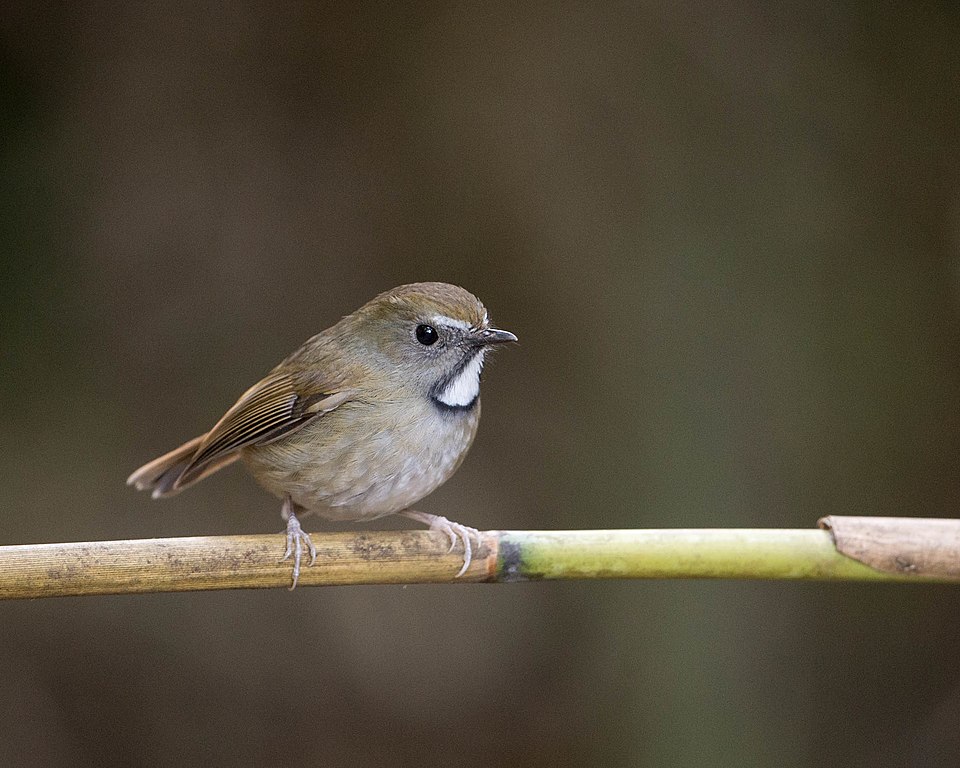
Angola Slaty Flycatcher
Dioptrornis brunneus
Order: Passeriformes / Family: Muscicapidae

Wikimedia Commons
About the Angola Slaty Flycatcher
The Angola Slaty Flycatcher, Dioptrornis brunneus, is a medium-sized passerine bird native to the subtropical and tropical regions of Africa, particularly Angola, where it primarily inhabits montane forests. This species is a member of the Muscicapidae family, commonly known for its flycatching prowess. The bird plays a significant ecological role in controlling insect populations, contributing to the health of the forest ecosystems it calls home. Its presence is most notable in the Afromontane regions, where dense forest canopies provide ample feeding and breeding opportunities. During the breeding season, typically from October to March, the Angola Slaty Flycatcher becomes more vocal and territorial. It is known to establish breeding territories in the highlands of Angola and occasionally ventures into northern Namibia. These birds prefer altitudes ranging between 1,000 and 2,500 meters, often frequenting areas with a rich understory where they can forage efficiently. In the non-breeding season, the Angola Slaty Flycatcher may exhibit some altitudinal migration, descending to lower elevations as food availability shifts. Its adaptability allows it to thrive in various forest types, though it shows a preference for humid environments. This adaptability extends to its diet, which consists mainly of insects and other small invertebrates. The Angola Slaty Flycatcher employs a sit-and-wait strategy, sallying forth from a perch to snatch prey mid-air with remarkable agility. Its feeding habits are crucial for maintaining the balance of insect populations within its habitat. As a year-round resident, this bird contributes consistently to the avian biodiversity of the region. Its ecological significance extends beyond insect control, as it also serves as a prey species for local raptors. Conservation efforts for the Angola Slaty Flycatcher focus on preserving its natural montane forest habitat, which faces threats from logging and land conversion.
The Angola Slaty Flycatcher belongs to the family Muscicapidae, within the order Passeriformes. These birds typically live 4-6 years with a maximum recorded of 8 years..
How to Identify a Angola Slaty Flycatcher
The Angola Slaty Flycatcher is easily recognized by its dark slate-gray plumage that covers most of its body. Adult birds exhibit a uniform coloration that is critical for blending into the shaded forest environments they inhabit. The bird's wings and tail are slightly darker, providing subtle contrast. In contrast, juveniles may show more brownish tones in their plumage, which gradually darken as they mature. Both male and female Angola Slaty Flycatchers look similar, making gender differentiation in the field challenging without behavioral cues. One of the key identifying features is their slender build and relatively long tail, which aids in their agile flight. The bird's posture when perching is typically upright, with a slight forward lean, giving it a poised appearance. When in flight, the Angola Slaty Flycatcher exhibits quick, darting movements, often punctuated by brief hovering as it captures insects. Its flight silhouette is characterized by a streamlined body and pointed wings, typical of many flycatchers. Although similar in size and shape to other flycatchers, the Angola Slaty Flycatcher's unique coloration helps distinguish it from sympatric species. Observers should note the environment and behavior, as these can offer additional clues for accurate identification.
Having trouble telling birds apart? Upload a photo to our bird identification tool for an instant species match.
Angola Slaty Flycatcher Habitat and Range
Preferred Habitat
The Angola Slaty Flycatcher thrives in montane forest environments, showing a particular affinity for Afromontane forests. These forests are characterized by their high altitude, ranging from 1,000 to 2,500 meters, and are rich in biodiversity. The bird's habitat preferences include areas with dense understory vegetation, which provides ample foraging opportunities and nesting sites. The Angola Slaty Flycatcher is less commonly found in open or disturbed habitats, as it relies on the forest's closed canopy for protection and food resources. Seasonal shifts in habitat use are minimal, although some altitudinal movement may occur in response to changes in food availability. In urban areas, the Angola Slaty Flycatcher is rarely seen, as it prefers the tranquility and resources of forested regions. Its presence in rural areas is more common, especially where natural forests intersect with human settlements. Conservation of its habitat is crucial, as deforestation and land conversion pose significant threats to its preferred environments.
Geographic Range
The range of the Angola Slaty Flycatcher is primarily confined to the highlands of Angola, with some populations extending into northern Namibia. This bird is endemic to the region, making it a vital part of Angola's avian biodiversity. Its breeding range corresponds closely with areas of montane forest, where suitable nesting sites and abundant food resources are available. During the non-breeding season, the Angola Slaty Flycatcher may exhibit some altitudinal migration, moving to lower elevations in search of food as availability shifts with the seasons. Migration corridors are not well-defined for this species, as it tends to be a resident bird, maintaining territories year-round. Population density is highest in areas where forest cover remains intact and insect prey is plentiful. Conservation efforts focus on protecting these key habitats to ensure the continued presence of the Angola Slaty Flycatcher in its native range.
Want to know which birds visit your area? Browse our backyard birds by location guides for region-specific species lists.
What Does the Angola Slaty Flycatcher Eat?
The Angola Slaty Flycatcher's diet primarily consists of insects and other small invertebrates, making it an essential player in the control of insect populations within its habitat. Its foraging technique involves a sit-and-wait strategy, where the bird perches silently before sallying forth to capture prey mid-flight. This method allows the Angola Slaty Flycatcher to efficiently exploit its environment, feeding on a variety of insects including flies, beetles, and caterpillars. Seasonal changes in diet are influenced by the availability of prey; during the wet season, when insect populations are at their peak, the bird has a diverse menu to choose from. The Angola Slaty Flycatcher is known to adapt its feeding schedule based on prey activity, often feeding during the cooler hours of the day when insects are most active. Prey size varies, but the bird typically targets insects that are easily manageable, given its size and agility. Its role as an insectivore is crucial, as it helps maintain the ecological balance within its forest home.
Angola Slaty Flycatcher Behavior and Social Structure
The Angola Slaty Flycatcher exhibits a range of behaviors typical of a sedentary, territorial songbird. During the breeding season, males establish territories and become more vocal, using song to attract mates and deter rivals. Courtship displays are subtle and involve a combination of singing and aerial maneuvers. Once paired, the Angola Slaty Flycatcher shows strong territorial behavior, defending its nesting area vigorously against intruders. While generally solitary or found in pairs, outside of the breeding season, it may associate loosely with mixed-species flocks, which can offer protection from predators and increase foraging efficiency. Its response to predators includes alarm calls and evasive flight patterns. Daily activity patterns revolve around feeding, with peak activity in the morning and late afternoon. The Angola Slaty Flycatcher remains vigilant, using its keen eyesight and quick reflexes to capture prey and avoid potential threats.
Angola Slaty Flycatcher Nesting and Reproduction
The nesting habits of the Angola Slaty Flycatcher involve constructing a cup-shaped nest made from twigs, moss, and other plant materials. These nests are typically situated in the fork of a tree branch, well-concealed by foliage to protect from predators. Clutch size ranges from two to four eggs, with both parents involved in incubation and feeding duties. The incubation period lasts approximately two weeks, after which the chicks hatch and are fed by both parents. Fledging occurs about 18 days post-hatching, with fledglings remaining dependent on parental care for a short period thereafter. The Angola Slaty Flycatcher usually raises one brood per year, although favorable conditions may lead to a second. Nesting success is influenced by factors such as food availability and predation pressure.
Angola Slaty Flycatcher Sounds and Vocalizations
The Angola Slaty Flycatcher is known for its clear, melodious song, characterized by a series of short, repetitive whistles that rise and fall in pitch. This song serves as both a mating call and a territorial marker. In addition to its primary song, the bird emits a variety of call notes, including sharp 'chip' and 'chack' sounds used for communication and alarm. Alarm calls are typically high-pitched and insistent, alerting nearby birds to potential danger. During the dawn chorus, the Angola Slaty Flycatcher contributes its voice to the symphony of sounds that fill the forest, marking its presence and reinforcing its territory. Its vocalizations, while not as complex as those of some songbirds, are distinctive and easy to recognize once familiar to the listener.
Interesting Facts About the Angola Slaty Flycatcher
- 1The Angola Slaty Flycatcher is endemic to the highlands of Angola, making it a unique representative of the region's avian diversity.
- 2Despite its name, the Angola Slaty Flycatcher occasionally crosses into northern Namibia, highlighting its adaptability.
- 3The bird's sit-and-wait foraging strategy is highly efficient, allowing it to capture fast-moving insects with minimal effort.
- 4Its melodious song is a key component of the dawn chorus, a daily event that underscores the vibrancy of its forest habitat.
- 5The Angola Slaty Flycatcher forms loose associations with mixed-species flocks outside of the breeding season, enhancing its foraging success.
- 6Both male and female Angola Slaty Flycatchers participate actively in parenting, sharing duties from incubation to fledgling care.
- 7The species is relatively understudied, offering opportunities for further research into its ecology and behavior.
Angola Slaty Flycatcher Conservation Status
The Angola Slaty Flycatcher is currently listed as Least Concern by the IUCN, with stable population trends observed across its range. However, it faces threats from habitat loss due to deforestation and land conversion for agriculture. Conservation efforts focus on preserving the montane forest habitats which are critical for its survival. Historically, population numbers have fluctuated in response to environmental changes, but current conservation measures aim to mitigate these impacts. Protecting key habitats and promoting sustainable land-use practices are essential for ensuring the long-term viability of the Angola Slaty Flycatcher.