
Apatosagittarius terrenus
Apatosagittarius terrenus
Order: Accipitriformes / Family: Accipitridae
Wikimedia Commons
About the Apatosagittarius terrenus
The Apatosagittarius terrenus, a majestic bird of prey within the family Accipitridae, captures the imagination of bird enthusiasts and researchers alike with its unique adaptations and ecological significance. This raptor, found predominantly in the savannas and open woodlands of sub-Saharan Africa, plays a crucial role in maintaining the balance of its ecosystem. Known for its adaptability, the Apatosagittarius terrenus thrives in a variety of habitats ranging from the arid grasslands of Namibia to the lush forests of the Congo Basin. During the wet season, these birds are often seen soaring over expansive floodplains in search of prey, while in the dry months, they frequent areas with sparse vegetation, taking advantage of their keen eyesight to spot movement from afar.
A patosagittarius terrenus serves as an apex predator, primarily hunting small to medium-sized mammals and birds. Its presence helps control the populations of rodents and other potential agricultural pests, thereby indirectly supporting the livelihoods of local communities. The bird's ability to adapt to different environmental conditions underscores its resilience, although habitat destruction and human encroachment pose significant threats to its continued survival. Despite these challenges, the Apatosagittarius terrenus remains a symbol of the untamed African wilderness.
In addition to its ecological role, this raptor holds cultural significance for many indigenous groups who regard it as a symbol of strength and freedom. Observing the Apatosagittarius terrenus in flight is a breathtaking experience, as it demonstrates incredible agility and power. The bird's seasonal movements are often dictated by prey availability and climatic conditions, leading to shifts in its distribution across regions like the Maasai Mara in Kenya and the Kruger National Park in South Africa. As a result, it is a species of interest not only for its ecological contributions but also for its cultural and aesthetic value.
The Apatosagittarius terrenus belongs to the family Accipitridae, within the order Accipitriformes. These birds typically live exact lifespan unknown; similar species live 10-20 years..
How to Identify a Apatosagittarius terrenus
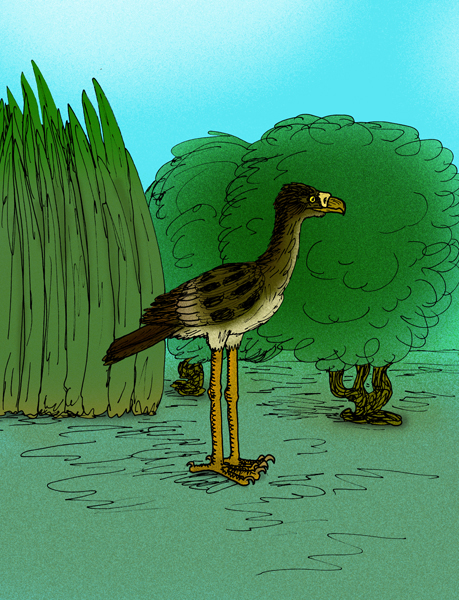
The Apatosagittarius terrenus is a large raptor, characterized by its broad wings and long tail. Adults exhibit a distinctive plumage pattern, with dark brown upperparts and lighter underparts that aid in camouflage within their natural habitat. The contrast between the bird's dark head and lighter body is a key identifying feature. Juveniles tend to have more mottled and lighter plumage, gradually acquiring the adult coloration as they mature.
In terms of sexual dimorphism, females are generally larger than males, a common trait among raptors. This size difference can aid in field identification when both sexes are observed together. The bird's yellow cere and legs stand out against its darker plumage, providing additional visual cues for identification. In flight, the Apatosagittarius terrenus showcases a distinctive silhouette, with its broad wings held flat and its tail fanned out to assist in maneuvering through the air.
The species might be confused with other large raptors such as the Martial Eagle or the Bateleur. However, the Apatosagittarius terrenus can be distinguished by its unique tail structure and flight style. When perched, the bird maintains an upright posture, often surveying its surroundings from a high vantage point, an aspect that reflects its predatory nature.
Having trouble telling birds apart? Upload a photo to our bird identification tool for an instant species match.
Apatosagittarius terrenus Habitat and Range
Preferred Habitat
Apatosagittarius terrenus inhabits a wide range of environments across Africa. It primarily resides in savannas, open woodlands, and grasslands, where it can easily spot prey from a distance. These habitats provide the bird with ample opportunities to hunt and nest. The elevation range for this species varies, with sightings reported from sea level up to altitudes of approximately 2,000 meters.
Seasonal habitat shifts occur as the bird follows prey movements and responds to environmental changes. During the rainy season, they are more commonly found in areas with abundant water sources, such as wetlands and river basins, since these locations attract a variety of prey. In contrast, during droughts or dry seasons, the Apatosagittarius terrenus may migrate to more forested regions where prey remains plentiful.
While the bird is less common in urban areas, it can occasionally be seen on the outskirts of cities where natural habitats remain. The adaptability of the Apatosagittarius terrenus to different environments highlights its resilience in the face of habitat changes.
Geographic Range
The breeding range of Apatosagittarius terrenus extends across sub-Saharan Africa, with the highest concentrations found in regions like the Serengeti in Tanzania and the Okavango Delta in Botswana. These areas provide ideal conditions for nesting and raising young due to abundant prey and suitable nesting sites. During the non-breeding season, the bird may expand its range, moving to areas like the Ethiopian Highlands or the coastal plains of Mozambique.
Migration patterns are influenced by environmental factors and prey availability. While some populations are relatively sedentary, others engage in short-distance migrations, particularly in response to seasonal changes. For example, birds in southern Africa may move northward during the dry season to take advantage of wetter conditions and richer food sources.
Population density hotspots include national parks and reserves where conservation efforts help maintain healthy ecosystems. In contrast, areas experiencing significant habitat degradation or human encroachment tend to have declining populations of the species.
Want to know which birds visit your area? Browse our backyard birds by location guides for region-specific species lists.
What Does the Apatosagittarius terrenus Eat?
The diet of Apatosagittarius terrenus primarily consists of small to medium-sized mammals such as rodents and hares. Birds also form a significant portion of its diet, with occasional consumption of reptiles and insects. The bird's diet shifts seasonally, often reflecting changes in prey availability.
During the rainy season, when prey is more abundant, the Apatosagittarius terrenus takes advantage of the increased number of nesting birds and small mammals that thrive in the lush environment. In contrast, during the dry months, it may rely more heavily on opportunistic feeding, targeting whatever prey is most accessible.
The bird employs a range of foraging techniques, primarily relying on its excellent vision to spot prey from a distance. Once prey is identified, the Apatosagittarius terrenus swoops down with remarkable speed and precision to capture it. The bird's feeding schedule is predominantly diurnal, with most hunting activity occurring during the early morning and late afternoon when temperatures are cooler and prey is active.
Apatosagittarius terrenus Behavior and Social Structure
Apatosagittarius terrenus exhibits solitary behavior, although pairs can often be seen during the breeding season. The species is highly territorial, with individuals and pairs actively defending their hunting grounds from intruders. Territorial disputes often involve aerial displays, where the bird showcases its impressive wingspan and flight capabilities.
Courtship displays are elaborate, involving aerial acrobatics and vocalizations. These displays strengthen pair bonds and signal readiness for breeding. During the non-breeding season, the bird tends to be more solitary, focusing on hunting and maintaining its territory.
In terms of daily activity patterns, the Apatosagittarius terrenus is primarily diurnal, with peak activity occurring in the morning and late afternoon. The bird spends considerable time perching high in trees or on rocky outcrops, scanning the landscape for prey. Upon spotting potential danger, the bird's response to predators involves both vocal alarms and physical displays to deter threats.
Apatosagittarius terrenus Nesting and Reproduction
Apatosagittarius terrenus builds large, sturdy nests high in trees or on cliff ledges. The nests are constructed from sticks and lined with softer materials like leaves and feathers. These nests are often reused for several years, with repairs and renovations made as needed.
The typical clutch size ranges from one to three eggs, with two being most common. Both parents share incubation duties, which last approximately 35 to 40 days. After hatching, the chicks remain in the nest for about 60 to 75 days before fledging, although they continue to rely on parental support for feeding and protection for several weeks thereafter.
Typically, Apatosagittarius terrenus produces one brood per year, although in areas with abundant food resources, a second brood may occasionally occur. Parental roles are well-defined, with the female primarily responsible for brooding while the male provides food for the family.
Apatosagittarius terrenus Sounds and Vocalizations
The primary song of the Apatosagittarius terrenus is a series of high-pitched, piercing calls that can be heard during courtship and territorial displays. These calls are sharp and resonant, often described as a series of "kee-kee-kee" notes.
In addition to its song, the bird emits a range of vocalizations, including softer contact calls used between mates or family members and harsher alarm calls when predators are near. The alarm calls are typically louder and more urgent, serving to warn both mate and offspring of impending danger.
During the dawn chorus, the song of Apatosagittarius terrenus contributes to the rich tapestry of sounds that characterize the African wilderness. Its vocalizations, while not as varied as some songbirds, are distinctive and serve an important role in communication and territory defense.
Interesting Facts About the Apatosagittarius terrenus
- 1Apatosagittarius terrenus is known for its incredible eyesight, allowing it to spot prey from over two kilometers away.
- 2Despite its size, Apatosagittarius terrenus can reach speeds of up to 80 kilometers per hour when diving for prey.
- 3The bird's name, Apatosagittarius, reflects its deceptive and agile flight, akin to the mythical centaur's swiftness.
- 4Apatosagittarius terrenus can adapt to significant environmental changes, showcasing remarkable resilience.
- 5This raptor is often depicted in African folklore as a guardian spirit, symbolizing protection and strength.
- 6The breeding success rate of the Apatosagittarius terrenus is relatively high, with fledging success in favorable conditions.
- 7The species plays a crucial role in controlling pest populations, benefiting both natural ecosystems and agriculture.
Apatosagittarius terrenus Conservation Status
The IUCN currently lists Apatosagittarius terrenus as a species of least concern, reflecting a relatively stable global population. However, localized declines have been observed due to habitat loss, primarily from agricultural expansion and deforestation. Conservation efforts focus on habitat preservation and the establishment of protected areas to ensure the species' long-term survival. Initiatives like community-based conservation projects and environmental education programs aim to foster coexistence between humans and these raptors. Historically, the population of Apatosagittarius terrenus has fluctuated in response to changes in land use and climate conditions. Continued monitoring and research are essential to understanding these dynamics and mitigating potential threats.


