
Ashy Tailorbird
Orthotomus ruficeps
Order: Passeriformes / Family: Cisticolidae
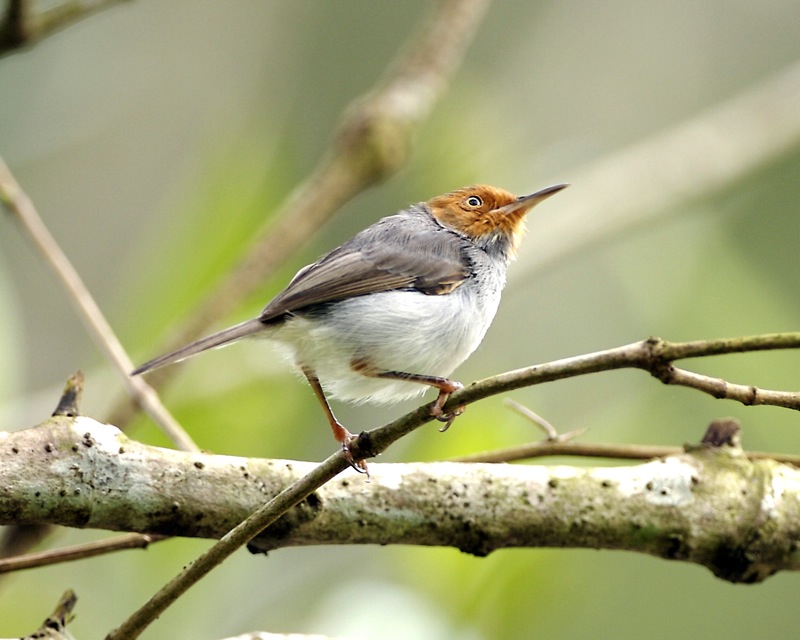
Wikimedia Commons
About the Ashy Tailorbird
The Ashy Tailorbird, Orthotomus ruficeps, is a fascinating member of the Cisticolidae family, celebrated for its unique ecological niche and adaptability. This small passerine is primarily found in the lush, tropical regions of Southeast Asia, including Malaysia, Indonesia, and parts of Thailand. Its presence in these biodiverse ecosystems highlights its role in maintaining the intricate balance of these habitats. With its slender frame and agile movements, the Ashy Tailorbird plays a crucial role in insect population control, contributing significantly to the ecological health of the regions it inhabits. This bird is a year-round resident in its range, showing no significant migratory behavior, which underscores its adaptation to the stable climatic conditions of its natural habitat.
The significance of the Ashy Tailorbird extends beyond its ecological contributions. Its ability to thrive in both primary and secondary forests, as well as in mangroves and even suburban gardens, showcases its remarkable adaptability. This adaptability not only ensures its survival amidst habitat changes but also makes it an important indicator species for environmental monitoring. Observing fluctuations in Ashy Tailorbird populations can offer insights into broader ecological shifts, such as deforestation impacts and climate change effects on tropical ecosystems.
In terms of ecological roles, the Ashy Tailorbird is an integral component of the food web. Its diet mainly consists of insects and small invertebrates, which it forages with precision and agility. During the breeding season, these birds become particularly vocal and territorial, offering a symphony of chirps and calls that enrich the acoustic landscape of their habitats. This seasonality in behavior is crucial for ornithologists and bird enthusiasts, providing key opportunities for observation and study. Overall, the Ashy Tailorbird is a testament to the resilience and diversity of avian life in Southeast Asia, serving as both a subject of scientific inquiry and a symbol of the region's natural beauty.
The Ashy Tailorbird belongs to the family Cisticolidae, within the order Passeriformes. These birds typically live average 4-6 years with a maximum recorded of 8 years..
How to Identify a Ashy Tailorbird
The Ashy Tailorbird is easily identifiable by its striking rufous cap, which distinguishes it from its relatives. Adult plumage is predominantly ashy-gray, with the head and nape exhibiting a rich rufous color that contrasts sharply with the paler underparts. This distinct coloration helps birders identify it within dense foliage. Males and females are similar in appearance, though males may exhibit slightly more vivid coloration during the breeding season.
Juvenile Ashy Tailorbirds can be distinguished by their duller plumage and lack of the prominent rufous cap seen in adults. This difference is crucial for accurately identifying individuals in the field, particularly for those conducting population surveys or engaging in bird banding activities.
In flight, the Ashy Tailorbird's silhouette is characterized by rapid wingbeats and a relatively short tail. When perched, it often flicks its tail and moves with quick, darting motions among branches. Its behavior and appearance can sometimes lead to confusion with other small, similarly colored passerines, such as the Common Tailorbird. However, the Ashy Tailorbird's unique cap and distinct call usually assist in proper identification.
Having trouble telling birds apart? Upload a photo to our bird identification tool for an instant species match.
Ashy Tailorbird Habitat and Range
Preferred Habitat
The Ashy Tailorbird predominantly inhabits tropical lowland forests, thriving in both primary and secondary growth areas. It is commonly found in mangrove forests, a habitat that provides both food and nesting sites. These birds adapt well to suburban gardens, where they can be observed foraging among shrubs and small trees.
Elevation-wise, the Ashy Tailorbird typically resides in areas ranging from sea level to about 1200 meters. This range allows it to occupy a variety of forest types, from coastal mangroves to higher altitude tropical forests.
Seasonal habitat shifts are minimal for this species due to its non-migratory nature. However, during the breeding season, birds may be more frequently observed in denser forested areas where nesting sites are abundant. In urban environments, the Ashy Tailorbird showcases its adaptability by utilizing parks and gardens as suitable habitats, often nesting in dense shrubbery.
Geographic Range
The Ashy Tailorbird's range extends across the tropical regions of Southeast Asia. It is a resident bird, found year-round in countries such as Malaysia, Indonesia, Singapore, and southern Thailand. The bird's presence in these areas is relatively stable, with healthy populations observed in both mainland and island regions.
In terms of specific distribution, the Ashy Tailorbird is particularly common in the Malay Peninsula and Borneo, where it occupies a variety of habitats ranging from coastal mangroves to inland forests. The bird's adaptability to different environments ensures its widespread presence across its range, making it a familiar sight for both local and visiting birdwatchers.
While the Ashy Tailorbird does not undertake long-distance migrations, local movements may occur in response to environmental conditions, such as changes in food availability or habitat disturbances. Population density is highest in areas with abundant vegetation and minimal human disturbance, highlighting the importance of habitat conservation efforts in maintaining healthy Ashy Tailorbird populations.
Want to know which birds visit your area? Browse our backyard birds by location guides for region-specific species lists.
What Does the Ashy Tailorbird Eat?
The Ashy Tailorbird primarily feeds on insects and small invertebrates. Its diet includes a variety of arthropods, such as beetles, caterpillars, and spiders, which it captures with deft precision. This insectivorous diet plays a significant role in controlling insect populations within its ecosystem.
Foraging techniques involve a combination of gleaning and sallying, where the bird actively searches through foliage and occasionally catches prey mid-air. The Ashy Tailorbird's small size and agility are advantageous for navigating dense vegetation, allowing it to exploit food resources that larger birds might overlook.
Seasonal diet changes are subtle, with a consistent preference for insects year-round. However, during the breeding season, the demand for protein-rich food sources increases to support the nutritional needs of developing chicks. The Ashy Tailorbird's feeding schedule is diurnal, with peak foraging activity occurring in the early morning and late afternoon, times when insect activity is typically highest.
Ashy Tailorbird Behavior and Social Structure
The Ashy Tailorbird exhibits a fascinating array of behaviors that reflect its adaptability and social dynamics. Typically, these birds are observed either alone or in pairs, rarely forming large flocks. They establish and defend small territories, especially during the breeding season when territorial disputes become more frequent.
Courtship displays involve a combination of visual and vocal signals. Males often engage in singing bouts to attract females and assert dominance over their territory. These vocal displays are accompanied by physical postures, such as wing flicking and tail spreading, which serve to enhance the male's visual appeal.
In response to predators, the Ashy Tailorbird employs a range of tactics. It may issue alarm calls to alert other birds of danger or take cover within dense foliage to avoid detection. These birds are most active during daylight hours, with a peak in activity during the cooler parts of the day, aligning with their foraging patterns.
Despite their small size, Ashy Tailorbirds are highly competitive when it comes to securing resources, often engaging in aggressive encounters with other small bird species over territory and food. This competitive behavior is most pronounced during the breeding season, when the need to protect their young compels them to defend their nesting areas vigorously.
Ashy Tailorbird Nesting and Reproduction
The Ashy Tailorbird is renowned for its distinctive nesting behavior, which involves the construction of intricate, sewn nests. These nests are typically built within dense shrubs or low-lying trees, providing both concealment and protection from predators.
Nest construction involves using plant fibers, leaves, and spider silk to create a secure structure. The bird pierces the edges of leaves and sews them together, forming a cradle-like nest that supports the eggs and later, the nestlings. This sewing behavior, which is rare among birds, is a hallmark of the tailorbird genus.
Clutch size generally consists of two to three eggs, which are incubated primarily by the female. The incubation period lasts approximately 14 days, after which the chicks hatch and remain in the nest for an additional two weeks before fledging. Both parents participate in feeding the young, ensuring a steady supply of insects for their rapid growth.
The Ashy Tailorbird may produce multiple broods per year, particularly in regions where climatic conditions allow for extended breeding seasons. This reproductive strategy helps maintain stable population numbers despite potential threats from predation and environmental changes.
Ashy Tailorbird Sounds and Vocalizations
The Ashy Tailorbird's vocalizations are a key aspect of its behavior and identification. Its primary song consists of a series of high-pitched, melodious chirps that are both rhythmic and energetic. This song serves multiple purposes, including attracting mates and marking territory boundaries.
In addition to its song, the Ashy Tailorbird produces a variety of call notes, characterized by soft chips and trills that vary in intensity depending on the context. Alarm calls are sharper and more rapid, intended to warn of potential threats and alert neighboring birds.
Dawn chorus behavior is prominent in the Ashy Tailorbird, with peak singing activity occurring shortly after sunrise. This period of vocal activity not only facilitates communication among individuals but also serves to reinforce territorial claims in the early hours of the day.
Comparatively, the Ashy Tailorbird's vocalizations are similar in rhythm and pitch to those of other tailorbirds, yet distinct enough to be recognizable to seasoned birders familiar with the nuances of Southeast Asian avian acoustics.
Interesting Facts About the Ashy Tailorbird
- 1The Ashy Tailorbird constructs its nests by sewing leaves together using plant fibers and spider silk.
- 2Despite its small size, the Ashy Tailorbird plays a significant role in controlling insect populations in tropical forests.
- 3The rufous cap of the Ashy Tailorbird is a distinctive feature that sets it apart from other tailorbirds.
- 4These birds are known for their adaptability, thriving in both dense forests and suburban gardens.
- 5The Ashy Tailorbird's vocalizations are a key part of its territorial behavior, especially during the breeding season.
- 6Unlike many birds, the Ashy Tailorbird remains a year-round resident in its tropical range, showing no migratory behavior.
- 7During the breeding season, the demand for protein-rich insects increases to support the growing needs of Ashy Tailorbird chicks.
Ashy Tailorbird Conservation Status
The Ashy Tailorbird currently holds a status of Least Concern on the IUCN Red List, indicating a stable population trend. However, like many tropical species, it faces threats from habitat loss due to deforestation and urbanization. Conservation efforts aimed at preserving lowland forests and mangrove habitats are crucial for the ongoing stability of Ashy Tailorbird populations. In regions where these habitats are protected, the bird thrives, underscoring the importance of habitat conservation in safeguarding biodiversity. Historically, the Ashy Tailorbird has demonstrated resilience in the face of moderate habitat changes, thanks to its adaptability. However, continued monitoring is essential to ensure that population levels remain robust, particularly in areas experiencing rapid environmental change. Local conservation programs often emphasize the importance of community involvement in habitat preservation, providing education on the ecological roles of birds like the Ashy Tailorbird. These initiatives help foster a sense of stewardship among local populations, which is vital for the long-term protection of these birds and their habitats.
Other Cisticolidae Species


Birds Similar to the Ashy Tailorbird
These species are often confused with the Ashy Tailorbird due to similar appearance or overlapping range.

