
Bar-winged Prinia
Prinia familiaris
Order: Passeriformes / Family: Cisticolidae
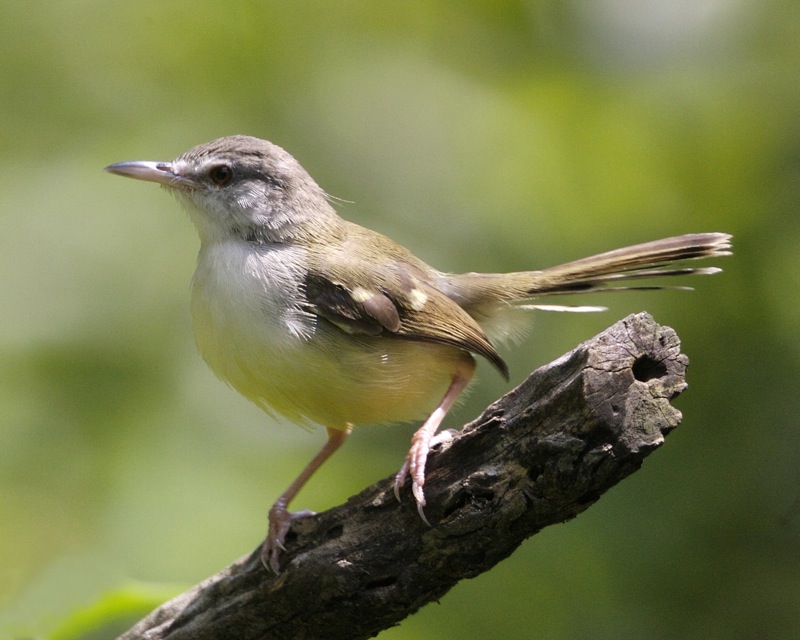
Wikimedia Commons
About the Bar-winged Prinia
The Bar-winged Prinia, scientifically known as Prinia familiaris, is a small passerine bird belonging to the family Cisticolidae. This bird is primarily found in Southeast Asia, with a range encompassing countries such as Indonesia, Malaysia, and Thailand. Known for its lively demeanor and distinctive vocalizations, the Bar-winged Prinia plays an important role in the ecosystems it inhabits. It thrives in a variety of habitats, including secondary growth, scrublands, and even cultivated areas, demonstrating its adaptability to both natural and modified landscapes.
The ecological significance of the Bar-winged Prinia stems from its role as both a predator and prey. By feeding on a wide array of insects, it helps control pest populations, thereby contributing to the health and balance of its ecosystem. Furthermore, as a prey species for larger birds and mammals, it forms a link in the food chain that supports higher trophic levels. Its presence in various habitats indicates a healthy environment, where biodiversity flourishes.
Beyond its ecological role, the Bar-winged Prinia holds cultural significance for local communities in its native range. Birdwatchers and nature enthusiasts often appreciate its energetic behavior and melodious song, making it a favored subject for observation and study. The bird's adaptability to human-altered environments highlights its resilience, but also underscores the need to maintain natural habitats for its continued survival. Seasonal behaviors of the Bar-winged Prinia include changes in activity patterns and vocalizations, particularly during the breeding season when males become more vocal to attract mates and establish territories.
During the wet season, the availability of food increases, leading to higher breeding activities. The Bar-winged Prinia is not migratory, but some local movements in search of food or favorable breeding sites can occur. Understanding these patterns is crucial for conservation efforts, as it aids in predicting the impacts of environmental changes on their populations.
The Bar-winged Prinia belongs to the family Cisticolidae, within the order Passeriformes. These birds typically live 3-5 years on average, with some individuals living up to 6 years..
How to Identify a Bar-winged Prinia
The Bar-winged Prinia is a small bird, measuring approximately 13-14 cm in length. It is distinguished by its olive-brown upperparts and pale underparts with a slight buff tinge. The most notable feature is the barred pattern on its wings, which gives the bird its common name. These bars are white and contrast with the darker feathers, making them visible even from a distance. The tail is relatively long and narrow, often held upright when the bird is perched.
Adult plumage is generally consistent between the sexes, with no significant differences between males and females. Juveniles, however, may appear slightly duller with less distinct wing bars, making them harder to identify without close observation. The Bar-winged Prinia can be confused with similar species like the Ashy Prinia or Plain Prinia, but the distinctive barred wings and the habitat preferences help in accurate identification.
In flight, the Bar-winged Prinia exhibits a weak, fluttery flight pattern typical of small passerines. Its perching posture is often alert and upright, with frequent tail flicks. The combination of these behaviors and physical characteristics aids birders in distinguishing it from other birds in its habitat.
Having trouble telling birds apart? Upload a photo to our bird identification tool for an instant species match.
Bar-winged Prinia Habitat and Range
Preferred Habitat
The Bar-winged Prinia inhabits a variety of environments across its range. It is commonly found in scrublands, grasslands, and areas of secondary growth. These birds are particularly fond of areas with dense underbrush and scattered trees, which provide both cover and foraging opportunities. It is also frequently observed in cultivated lands and gardens, indicating its adaptability to altered landscapes.
Typically found at lower elevations, the Bar-winged Prinia can be seen from sea level up to about 1500 meters, though its presence diminishes with increasing altitude. Seasonal habitat shifts are minimal due to its non-migratory nature, but it may move locally within its range to exploit food resources or suitable breeding sites.
While the Bar-winged Prinia is primarily associated with rural and semi-rural areas, it has shown the ability to thrive in urban environments where suitable vegetation exists. This adaptability helps maintain its population, even in areas undergoing rapid development.
Geographic Range
The Bar-winged Prinia's range is largely restricted to Southeast Asia, with a strong presence in Indonesia, particularly on the islands of Java, Sumatra, and Bali. It is also found in parts of Malaysia and Thailand, where suitable habitats exist. The bird is non-migratory, maintaining a relatively stable range year-round, though some local movements are observed depending on food availability.
Breeding populations are dense in areas where scrublands and secondary forests are prevalent, particularly in lowland regions. In Indonesia, the bird is a common sight in both natural and human-modified landscapes, contributing to its status as a widespread species within its range.
Although the Bar-winged Prinia does not undergo long-distance migrations, it may engage in short-distance dispersal, particularly after the breeding season when young birds seek new territories. This behavior ensures gene flow between populations, maintaining genetic diversity across its range.
Want to know which birds visit your area? Browse our backyard birds by location guides for region-specific species lists.
What Does the Bar-winged Prinia Eat?
The Bar-winged Prinia primarily feeds on insects, making it an insectivore. Its diet includes a variety of invertebrates such as beetles, spiders, and caterpillars. This diet shifts slightly with the seasons, as the availability of different insect species changes throughout the year, particularly during and after the rainy season when insect populations peak.
Foraging typically occurs in the lower strata of vegetation, where the Prinia actively searches for prey among leaves and branches. It employs a combination of gleaning and hover-gleaning techniques, frequently flicking its tail as it moves through foliage. The bird's small size allows it to access tight spaces within dense underbrush, where larger birds might struggle.
Feeding is generally most active during the early morning and late afternoon, aligning with peak insect activity. Occasionally, the Bar-winged Prinia will join mixed-species foraging flocks, benefiting from the safety and increased foraging success these groups provide. Its preference for small to medium-sized insects ensures that it can exploit a wide range of prey items within its environment.
Bar-winged Prinia Behavior and Social Structure
The Bar-winged Prinia exhibits a range of behaviors that reflect its adaptability and social nature. It is typically seen in pairs or small family groups, particularly during the breeding season when pairs form strong bonds. Outside of the breeding season, it may join mixed-species flocks, which offer protection from predators and increase foraging efficiency.
Territorial behavior is pronounced during the breeding season, with males becoming particularly vocal to defend their territories. They use song and physical displays to deter rivals and attract mates. These displays often include wing flicking and tail fanning, emphasizing the bird's distinctive markings.
Courtship involves a series of vocal and visual displays, where males present food to females as part of pair bonding. Once paired, both sexes participate in nest building and rearing the young. The Bar-winged Prinia's response to predators includes alarm calls and distraction displays, helping to protect its offspring from potential threats.
Daily activity patterns are typically diurnal, with peak activities in the early morning and late afternoon. During the heat of the day, the bird may rest in the shade, reducing its exposure to predators and conserving energy.
Bar-winged Prinia Nesting and Reproduction
The Bar-winged Prinia constructs a delicate cup-shaped nest made from grass, leaves, and other fine plant materials. Nests are typically located in low shrubs or tall grass, well-concealed from predators. The choice of nesting site is crucial, providing both cover and proximity to food resources.
A typical clutch consists of 2-4 eggs, which are incubated by both parents for approximately 12-14 days. The eggs are pale with speckles, blending in with the surrounding nest materials to avoid detection by predators. After hatching, the chicks remain in the nest for about 10-12 days, during which time both parents cooperate in feeding and caring for the young.
Parental roles are shared, with both sexes involved in incubation and feeding. This cooperative breeding strategy increases the chances of offspring survival. The Bar-winged Prinia may have multiple broods per year, particularly when food resources are abundant, allowing for rapid population growth under favorable conditions.
Bar-winged Prinia Sounds and Vocalizations
The Bar-winged Prinia's primary song is a series of high-pitched, melodious notes delivered in rapid succession. This song is often described as a 'tinkling' or 'twittering' sound, reminiscent of a small bell. It serves as both a territorial claim and a mate attraction call during the breeding season.
In addition to its song, the Bar-winged Prinia produces a variety of call notes, including soft 'churring' and sharp 'chip' sounds, used for communication between partners and within family groups. Alarm calls are more urgent and harsh, alerting others to potential danger in the vicinity.
The dawn chorus often features the Bar-winged Prinia prominently, with males singing vigorously at first light to establish their territory and attract mates. These vocalizations are a key characteristic for identifying the species in the field, even when visual confirmation proves challenging.
Interesting Facts About the Bar-winged Prinia
- 1The Bar-winged Prinia often flicks its tail while foraging, a behavior that may help flush out insects from vegetation.
- 2Despite its small size, the Bar-winged Prinia has a loud and penetrating song that can be heard over considerable distances.
- 3This species is known for its adaptability, thriving in both rural and urban environments across Southeast Asia.
- 4The Bar-winged Prinia's nest construction is a joint effort, with both male and female contributing materials and labor.
- 5The bird's ability to join mixed-species flocks enhances its foraging success and provides safety in numbers.
- 6Bar-winged Prinias can have multiple broods per year, increasing their population swiftly under favorable conditions.
- 7Their distinctive barred wings not only aid in identification but also play a role in their courtship displays.
Bar-winged Prinia Conservation Status
The IUCN currently lists the Bar-winged Prinia as a species of Least Concern, indicating a stable population trend in its native range. Despite this status, habitat loss due to agricultural expansion and urban development poses a potential threat. However, its adaptability to modified environments provides a buffer against these impacts. Conservation efforts focus on preserving natural habitats and promoting sustainable land-use practices to ensure the long-term survival of the species. Historical population data suggest that the Bar-winged Prinia has maintained a stable presence in its range, thanks in part to its ability to exploit a variety of habitats. Continued monitoring and research are essential to detect any future population declines and to implement appropriate conservation measures. Maintaining biodiversity in Southeast Asia's ecosystems is crucial, and the Bar-winged Prinia serves as an indicator species for the health of these environments.
Other Cisticolidae Species


Birds Similar to the Bar-winged Prinia
These species are often confused with the Bar-winged Prinia due to similar appearance or overlapping range.