
Black-capped Bulbul
Pycnonotus melanicterus
Order: Passeriformes / Family: Pycnonotidae
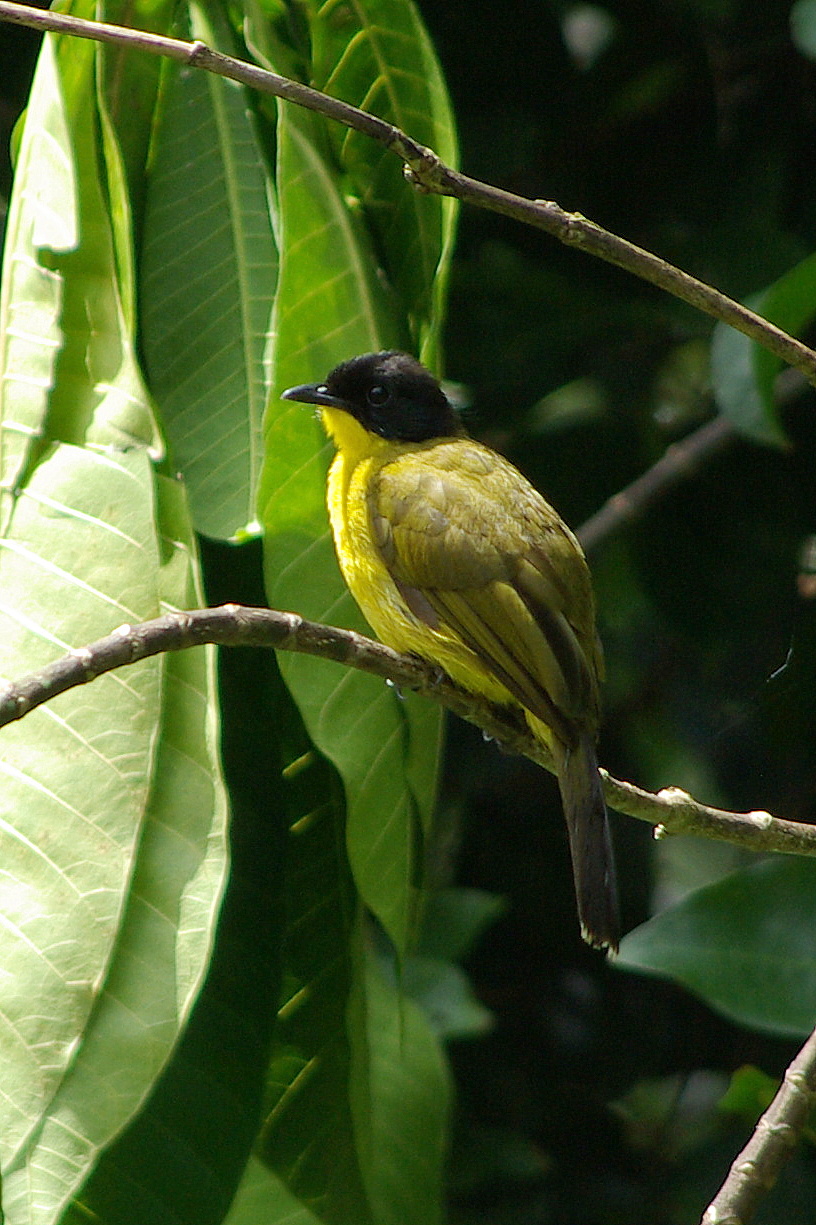
Wikimedia Commons
About the Black-capped Bulbul
The Black-capped Bulbul (Pycnonotus melanicterus) is a captivating member of the Pycnonotidae family, known for its vibrant plumage and melodious song. This medium-sized songbird is primarily found in the dense forests and lush gardens of South and Southeast Asia, including countries like Sri Lanka, India, and Thailand. Its presence in these regions signifies a healthy ecosystem, as it plays a crucial role in seed dispersal and insect population control. The Black-capped Bulbul is often seen flitting through the canopy, its bright yellow body contrasting sharply against the dense green foliage.
In terms of ecological significance, the Black-capped Bulbul contributes to the balance of its habitat by aiding in pollination and seed dispersal. During the breeding season, which typically occurs from March to August, these birds are particularly active, engaging in complex courtship displays and vocal performances to attract mates. Outside of the breeding season, they may be seen forming small flocks, which helps them forage more efficiently and provides safety in numbers against predators.
The Black-capped Bulbul's adaptability to different environments, from primary forests to secondary growth and even urban gardens, highlights its resilience. However, habitat loss and fragmentation pose a threat to its populations. Conservation efforts are focused on preserving its natural habitat and encouraging sustainable land-use practices. Despite these challenges, the Black-capped Bulbul remains a common sight across its range, continuing to enchant birdwatchers and nature enthusiasts with its lively presence and melodic calls.
The Black-capped Bulbul belongs to the family Pycnonotidae, within the order Passeriformes. These birds typically live average 7 years, with a max recorded of 10 years..
How to Identify a Black-capped Bulbul
The adult Black-capped Bulbul is unmistakable with its glossy black head and throat, contrasting with a bright yellow body. This vibrant coloration provides a vivid spectacle against the greenery of its habitat. Its wings and back are olive green, while the underparts are a bright yellow, making it one of the more colorful members of its genus. The bill is black, and the eyes are a striking red, adding to its charismatic appearance. Juvenile Black-capped Bulbuls have a more subdued coloration, with less distinct black on the head and a duller yellow on the body.
Males and females appear similar, making gender identification challenging in the field. However, subtle differences such as slightly more vibrant plumage in males during the breeding season may be noted by keen observers. In flight, the Black-capped Bulbul exhibits a steady and somewhat undulating flight pattern, with rapid wingbeats interspersed with glides. When perched, it often adopts an upright posture, showcasing its bright chest and head.
Confusion with other bulbul species is possible, especially those sharing similar habitats. However, the combination of its black cap and yellow body is distinctive. The White-browed Bulbul, for instance, lacks the black cap and has a white brow stripe, while the Red-whiskered Bulbul has a red face patch and lacks the overall yellow coloration. Observers should note these key features to ensure accurate identification.
Having trouble telling birds apart? Upload a photo to our bird identification tool for an instant species match.
Black-capped Bulbul Habitat and Range
Preferred Habitat
The Black-capped Bulbul thrives in a variety of habitats, primarily favoring tropical and subtropical forests. It is commonly found in primary and secondary forests, where dense foliage provides ample cover and foraging opportunities. Additionally, this adaptable bird can be seen in plantations and cultivated gardens, particularly those with abundant flowering and fruiting plants. It ranges from lowland areas to elevations of up to 1,500 meters, although it is less commonly observed at higher altitudes.
During the breeding season, Black-capped Bulbuls often prefer denser forest environments, which offer more secluded nesting sites. However, they are also known to frequent urban gardens and parks, where they benefit from the availability of exotic plants and fruits. This adaptability to urban environments demonstrates the species' resilience and ability to coexist with human activities. Seasonal habitat shifts are minimal, as the species does not undertake long migrations, instead remaining within its established range year-round.
Geographic Range
The Black-capped Bulbul's distribution is largely confined to South and Southeast Asia, with populations primarily concentrated in countries such as Sri Lanka, India, Bangladesh, Myanmar, and Thailand. Within this range, the species is resident, exhibiting limited migratory behavior. Its breeding range encompasses a broad swath of forested and rural landscapes across these regions, where it is a common and familiar presence.
In India, the bird is predominantly found in the Western Ghats and northeastern regions, while in Sri Lanka, it occupies both lowland and montane zones. In Thailand and Myanmar, it is more commonly seen in the southern and central parts, where suitable forested habitats persist. Despite being non-migratory, the Black-capped Bulbul may undertake local movements in response to seasonal changes in food availability, particularly in more temperate areas of its range.
Population density hotspots are often associated with regions that offer a mosaic of forest patches and agricultural landscapes. In these areas, the Black-capped Bulbul finds an abundance of resources, contributing to its relatively stable populations. However, habitat fragmentation due to agricultural expansion and urban development remains a concern, potentially limiting the species' range in some areas.
Want to know which birds visit your area? Browse our backyard birds by location guides for region-specific species lists.
What Does the Black-capped Bulbul Eat?
The Black-capped Bulbul's diet primarily consists of fruits, berries, and small insects, reflecting its role as both a frugivore and insectivore. This bird often forages in the upper and middle canopy layers, where it can access a diverse array of food sources. Its fruit preferences include figs, berries, and the fruits of various native and exotic plants, which it plucks while deftly maneuvering among branches.
During the breeding season, the demand for protein increases, leading to a higher intake of insects such as caterpillars, beetles, and other small arthropods. This dietary adjustment supports the nutritional needs of growing chicks. The Black-capped Bulbul employs a variety of foraging techniques, including gleaning insects from leaves and catching flying prey mid-air. It often feeds in the morning and late afternoon, taking advantage of cooler temperatures and the increased activity of insects.
Seasonal diet changes are influenced by the availability of food sources, with fruit consumption peaking during times of abundance. In more urban settings, the bird may also exploit human-provided food sources, such as garden fruits and insects attracted to artificial lights, showcasing its adaptability in feeding habits.
Want to attract Black-capped Bulbuls to your yard? See our recommended feeders and seed types for the best results.
Black-capped Bulbul Behavior and Social Structure
The Black-capped Bulbul exhibits a range of intriguing behaviors, both social and solitary. It is a generally social bird, often forming small flocks outside the breeding season. These flocks, typically comprising loose gatherings of individuals, facilitate efficient foraging and offer protection from predators like raptors and snakes.
Territorial behavior becomes pronounced during the breeding season, as pairs establish and defend nesting territories. Males perform elaborate courtship displays, which involve singing, wing fluttering, and short flights to attract females. Once paired, both partners engage in nest-building and share parental duties.
In terms of daily activity patterns, the Black-capped Bulbul is primarily diurnal, with peak activity occurring in the early morning and late afternoon. It spends considerable time foraging and engaging in social interactions. When alarmed by predators, it emits sharp alarm calls and may engage in mobbing behavior to deter threats. Additionally, the bird's adaptability to different environments is evident in its ability to exploit urban gardens and parks, where it maintains its social and foraging behaviors amidst human activity.
Black-capped Bulbul Nesting and Reproduction
The Black-capped Bulbul constructs a cup-shaped nest, typically situated in a fork of a tree or shrub, often 1 to 3 meters above the ground. The nest is composed of twigs, leaves, and grasses, intricately woven to provide stability and concealment. Both male and female participate in nest-building, demonstrating a cooperative approach to reproduction.
Clutch size generally ranges from 2 to 4 eggs, which are pale pink or whitish with reddish-brown speckles. The incubation period lasts approximately 12 to 14 days, during which both parents take turns incubating the eggs, ensuring consistent warmth and protection. After hatching, the chicks remain in the nest for about 12 to 15 days before fledging.
Parental care continues post-fledging, as the young birds remain dependent on the adults for feeding and protection until they are capable of independent survival. The Black-capped Bulbul typically raises one to two broods per year, with the possibility of more in favorable conditions. This reproductive strategy allows the species to maintain stable population levels despite environmental pressures.
Black-capped Bulbul Sounds and Vocalizations
The Black-capped Bulbul is renowned for its melodious song, a series of rich, fluty notes delivered in a rhythmic pattern. The song typically consists of a series of three to five notes, each varying in pitch and quality, creating a pleasing and harmonious melody. These vocalizations are most prominent during the breeding season, serving to establish territory and attract mates.
In addition to its primary song, the Black-capped Bulbul emits a variety of calls, including sharp 'chip' notes used for communication between individuals and as alarm signals to warn of potential threats. During the dawn chorus, this species often contributes its distinctive voice, adding to the symphony of sounds that characterize tropical forests at sunrise.
The bird's vocalizations are an essential tool for identification, as they are unique in tone and rhythm compared to other bulbuls. Observers familiar with these sounds can often detect the presence of Black-capped Bulbuls even in dense foliage where the birds themselves may be hidden from view.
Interesting Facts About the Black-capped Bulbul
- 1The Black-capped Bulbul's red eyes are not just for show; they help it spot predators in dense foliage.
- 2Unlike many birds, both male and female Black-capped Bulbuls share incubation duties, showcasing true partnership.
- 3The Black-capped Bulbul's melodious song can carry over long distances, a vital trait for territory establishment.
- 4This species is known to adapt well to human-altered landscapes, often thriving in urban gardens.
- 5Black-capped Bulbuls have been observed using snake skins as nesting material, possibly to deter predators.
- 6Despite their vibrant appearance, these birds can be surprisingly difficult to spot in the dense canopy.
- 7The Black-capped Bulbul contributes significantly to seed dispersal, aiding in forest regeneration.
Black-capped Bulbul Conservation Status
The Black-capped Bulbul currently holds a status of Least Concern on the IUCN Red List, with populations considered stable across much of its range. Despite this, the species faces threats from habitat destruction due to deforestation and urban expansion. These activities result in habitat fragmentation, which can impact local populations by reducing available resources and nesting sites. Conservation efforts focus on habitat preservation, advocating for sustainable land-use practices that balance human needs with ecological preservation. Protected areas, such as national parks and wildlife reserves, play a critical role in safeguarding the Black-capped Bulbul's habitat. Additionally, community-based conservation programs aim to raise awareness about the importance of biodiversity and the role of species like the Black-capped Bulbul in ecosystem health. Historically, the species has maintained relatively stable populations, thanks in part to its adaptability to various environments. Ongoing monitoring and research are essential to ensure that this trend continues, allowing the Black-capped Bulbul to thrive amidst the challenges posed by a changing landscape.
Attracting Black-capped Bulbuls to Your Feeder
The Black-capped Bulbul is a regular visitor to backyard bird feeders across its range. At the Eye On The Fly feeding station, we observe Black-capped Bulbuls regularly and capture footage with our feeder cameras.


