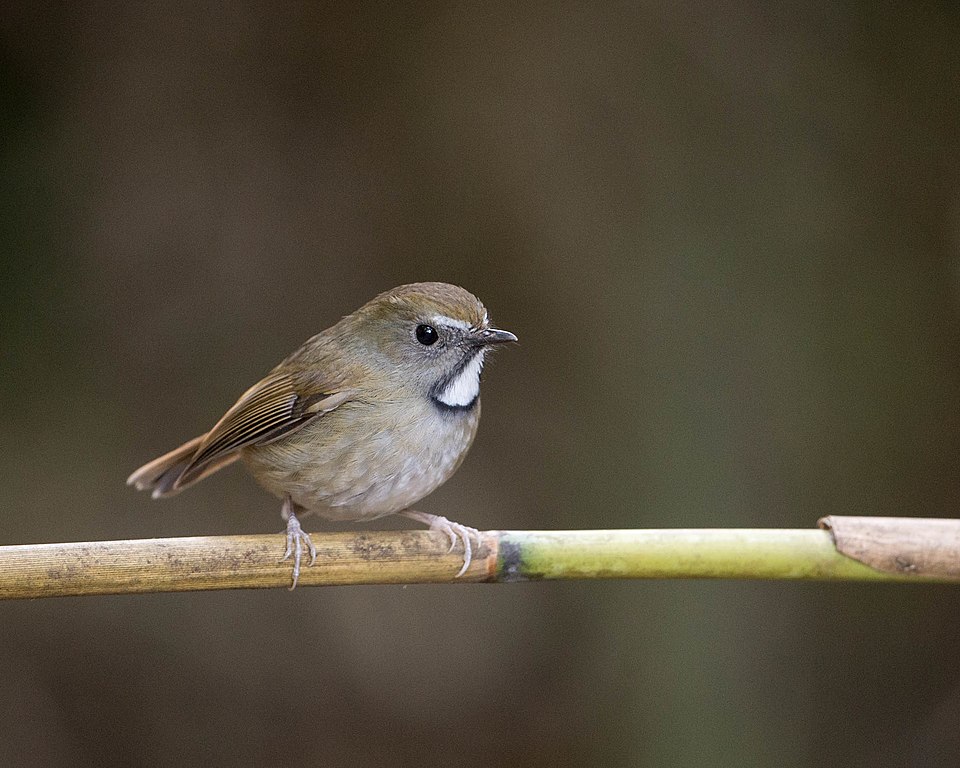
Black Scrub-Robin
Cercotrichas podobe
Order: Passeriformes / Family: Muscicapidae

Wikimedia Commons
About the Black Scrub-Robin
The Black Scrub-Robin (Cercotrichas podobe) is a remarkable bird that thrives in the arid and semi-arid regions of Africa, particularly in the Sahel zone. This species belongs to the Muscicapidae family and is known for its adaptability to harsh environments. The Black Scrub-Robin plays a significant role in its ecosystem through its insectivorous diet, controlling insect populations and contributing to the balance of its habitat. Found in countries such as Sudan, Niger, and Mali, the bird prefers scrublands and sparse woodland areas, often near human settlements where it can find suitable nesting sites and food sources.
This species has a distinct ecological role as it often forages on the ground, using its long tail for balance while searching for insects and small invertebrates. The Black Scrub-Robin is a year-round resident in its range, but it may exhibit local movements in response to seasonal changes in food availability or habitat conditions. During the breeding season, which coincides with the rainy season, its activity increases, with males becoming more vocal and territorial.
The importance of the Black Scrub-Robin extends beyond its ecological role, as it is also a species of interest for birdwatchers and naturalists. Its presence can indicate the health of its habitat, and observing its behaviors provides insights into the adaptation strategies of birds in arid environments. The Black Scrub-Robin's ability to thrive in challenging conditions highlights the resilience and diversity of avian life across different ecosystems.
The Black Scrub-Robin belongs to the family Muscicapidae, within the order Passeriformes. These birds typically live average 4 years with max recorded 6 years..
How to Identify a Black Scrub-Robin
Adult Black Scrub-Robins are striking with their predominantly black plumage and long, graduated tail which is often held upright, a characteristic posture when perched. The underparts are slightly paler than the upperparts, and the bird exhibits a prominent white eye-ring that contrasts sharply with its dark feathers. Juveniles resemble adults but have a browner hue and less pronounced eye-rings, which can lead to confusion with other scrub-robin species.
Both male and female Black Scrub-Robins appear similar, making visual sex differentiation in the field challenging without observing behavior. However, males are typically more vocal during the breeding season, which can aid identification. In flight, the Black Scrub-Robin displays a long tail and steady wingbeats, helping distinguish it from other medium-sized passerines.
Potential confusion may arise with the Rufous-tailed Scrub-Robin, but the latter has rufous undertones and lacks the pure black coloration of Cercotrichas podobe. Observing the silhouette, particularly the length and position of the tail, is crucial for accurate identification.
Having trouble telling birds apart? Upload a photo to our bird identification tool for an instant species match.
Black Scrub-Robin Habitat and Range
Preferred Habitat
The Black Scrub-Robin inhabits arid and semi-arid regions across the Sahel, preferring open scrubland and areas with scattered trees. It thrives in environments with acacia and thorny bushes, often found near dry riverbeds and wadis. These habitats provide adequate cover and foraging opportunities. The bird's presence in both rural and peri-urban areas shows its adaptability to human-altered landscapes.
Typically found at low elevations, the Black Scrub-Robin may occasionally venture into higher areas if suitable conditions exist. There is little seasonal habitat shift, as the bird remains in its chosen territory year-round, taking advantage of microhabitats within its range to adapt to changing environmental conditions.
Geographic Range
The Black Scrub-Robin's range spans across the Sahel region of Africa, where it is a non-migratory resident. Its breeding range includes parts of Sudan, Niger, Nigeria, Chad, and Mali, extending to the southern fringes of the Sahara Desert. The bird is not known for long-distance migration but may undertake local movements to exploit seasonal food resources or avoid extreme weather conditions.
In some areas, population densities are higher where suitable scrub habitat and food availability align, particularly following the rainy season when insect populations peak. Despite its preference for arid environments, the Black Scrub-Robin can also be found in cultivated areas, indicating its adaptability to human presence.
Want to know which birds visit your area? Browse our backyard birds by location guides for region-specific species lists.
What Does the Black Scrub-Robin Eat?
Primarily insectivorous, the Black Scrub-Robin feeds on a variety of insects and small invertebrates, including beetles, ants, and termites. Its diet may shift seasonally, with the bird consuming more insects during and immediately after the rainy season when prey abundance is high. During drier periods, it may resort to feeding on seeds and small fruits if necessary.
The Black Scrub-Robin employs a ground-foraging technique, often seen hopping and flicking its tail as it searches for prey among leaf litter and under bushes. It may also take advantage of insect swarms, capturing prey mid-flight when the opportunity arises. This opportunistic feeding behavior allows the bird to thrive in its arid environment.
Black Scrub-Robin Behavior and Social Structure
The Black Scrub-Robin exhibits a solitary or pair-based social structure, maintaining territories that it defends vigorously against intruders. Males are particularly territorial during the breeding season, using vocalizations to establish dominance and attract mates. Courtship displays often involve tail flicking and vocal duets between pairs.
This species is primarily diurnal, with peak activity during the cooler hours of the morning and late afternoon. The Black Scrub-Robin is generally non-flocking, preferring to remain within its established territory. When faced with predators, it employs distraction displays, using its agility and the element of surprise to lead threats away from its nest or young.
Black Scrub-Robin Nesting and Reproduction
Black Scrub-Robins construct cup-shaped nests using twigs, grasses, and leaves, often lined with softer materials for insulation. They prefer to nest in dense shrubs or low trees, providing cover from predators and harsh weather. Typical clutch size ranges from two to four eggs, with both parents sharing incubation duties, which last approximately 12-14 days.
After hatching, the altricial young remain in the nest for about 10-12 days before fledging. Parental care continues for several weeks post-fledging, with both parents actively feeding and protecting the immature birds. The Black Scrub-Robin typically raises one brood per year, though favorable conditions may allow for a second.
Black Scrub-Robin Sounds and Vocalizations
The primary song of the Black Scrub-Robin is a melodious series of whistles and trills, delivered with a rhythmic cadence that carries well across open landscapes. This song plays a crucial role in territory establishment and mate attraction. Aside from its song, the bird also produces a variety of call notes, including sharp chips and whistles used in alarm situations.
During the dawn chorus, the Black Scrub-Robin is particularly vocal, contributing to the symphony of sounds that characterize the early morning hours in its habitat. Its calls and songs are reminiscent of other scrub-robin species but can be distinguished by their more pronounced and fuller quality.
Interesting Facts About the Black Scrub-Robin
- 1The Black Scrub-Robin's tail, often held upright, can exceed half its body length, aiding in balance and communication.
- 2This species can endure temperatures exceeding 40°C, showcasing remarkable adaptation to extreme heat.
- 3Despite its arid habitat, the Black Scrub-Robin can be found near human settlements, often nesting in gardens or orchards.
- 4The Black Scrub-Robin's vocal repertoire includes over 20 distinct calls, each serving a unique communicative purpose.
- 5Known for its territorial nature, the Black Scrub-Robin often engages in aerial pursuits to chase off rivals or intruders.
Black Scrub-Robin Conservation Status
The Black Scrub-Robin is currently listed as Least Concern by the IUCN, with a stable population trend across its range. However, habitat degradation due to agricultural expansion and overgrazing poses potential threats to its preferred environments. Conservation efforts focus on maintaining natural scrub habitats and mitigating human impact in key areas of its range. While historically stable, ongoing monitoring is essential to ensure that changes in land use do not adversely affect population numbers. Community-based conservation programs can play a role in promoting sustainable practices that benefit both local human populations and the Black Scrub-Robin.