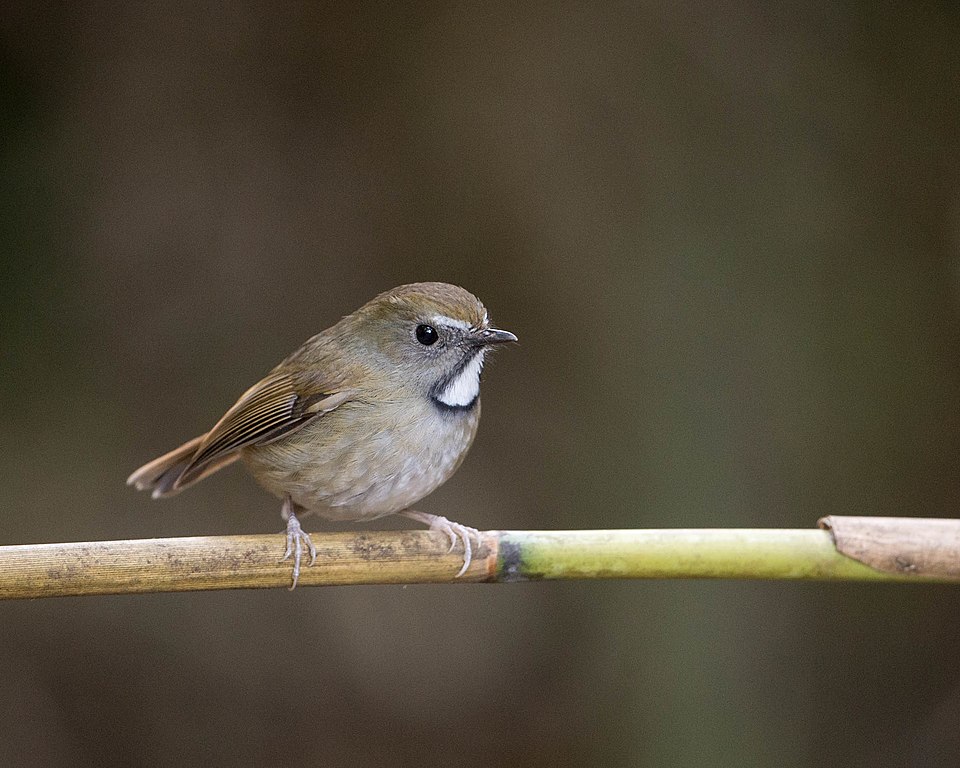
Blackstart
Oenanthe melanura
Order: Passeriformes / Family: Muscicapidae

Wikimedia Commons
About the Blackstart
The Blackstart, known scientifically as Oenanthe melanura, holds a special place in the arid landscapes where it resides. This bird is a member of the Muscicapidae family and is prevalent in the rocky deserts and semi-desert regions of North Africa, the Middle East, and parts of Southwest Asia. Its presence in these areas underscores its adaptability to harsh, dry environments. The Blackstart is not just a fixture of these arid zones; it plays a significant role in its ecosystem by controlling insect populations and contributing to the pollination of desert plants. As a resident bird, it does not migrate but may exhibit slight local movements in response to seasonal changes in food availability. During the breeding season, which stretches from February to June, the Blackstart becomes particularly active, engaging in courtship displays and territorial defense. Its ecological significance extends beyond mere survival in harsh conditions; it is a key indicator species for the health of its ecosystem. Observations of the Blackstart often reveal insights into the broader environmental changes occurring in its habitat, such as shifts in climate and human impact. In these regions, where vegetation is sparse and survival is a daily challenge, the Blackstart has adapted to exploit every available resource, showcasing an impressive resilience. Its ability to thrive in such environments highlights the evolutionary ingenuity of avian species. The Blackstart’s presence in these arid landscapes also offers a unique opportunity for researchers and birders alike to study a species that has successfully navigated the demands of life in some of the world's most challenging terrains.
The Blackstart belongs to the family Muscicapidae, within the order Passeriformes. These birds typically live average 3-5 years, with some individuals reaching 7 years..
How to Identify a Blackstart
The Blackstart is easily recognized by its grey plumage and contrasting black tail, a feature from which its name derives. Adult Blackstarts display a uniform grey coloration across their body, with a slightly paler underside. The black tail is the most striking feature and assists in identification. Juveniles, while similar in shape, exhibit a more mottled and less uniform appearance, with brownish tones mixed into the grey. Males and females share similar plumage, although males tend to have slightly brighter and more defined coloring. In flight, the Blackstart shows a distinct silhouette with rounded wings and a long tail, which it often fans out. When perched, the bird maintains an upright posture, frequently flicking its tail as part of its characteristic behavior. Confusion with other species is minimized due to its unique tail pattern and habitat preference. However, in some regions, it might be mistaken for other wheatears or chats. Observing the Blackstart in its natural environment, with its engaging foraging and territorial displays, is a rewarding experience for birders.
Having trouble telling birds apart? Upload a photo to our bird identification tool for an instant species match.
Blackstart Habitat and Range
Preferred Habitat
The Blackstart resides predominantly in rocky, arid landscapes, favoring environments such as deserts and semi-deserts. These regions include the Negev Desert in Israel, the Sinai Peninsula, and parts of the Arabian Peninsula. The bird thrives in elevations ranging from sea level up to 1000 meters, although it is most commonly found in lower altitudes where rocky outcrops provide shelter and nesting sites. Seasonal shifts do not significantly alter the habitat choice of the Blackstart, as it remains a year-round resident in these areas. However, it may move locally to areas with more abundant food resources during extreme weather changes. While primarily rural, the Blackstart can occasionally be found near human settlements, especially if such areas border natural desert landscapes. Its adaptability to arid conditions makes it a fascinating subject for study in these challenging environments.
Geographic Range
The Blackstart's range spans across several regions in North Africa, the Middle East, and Southwest Asia. Countries where it is frequently observed include Egypt, Israel, Jordan, Saudi Arabia, and parts of Iran. Within these countries, it inhabits specific arid zones rather than widespread national presence. As a non-migratory bird, the Blackstart remains within its range throughout the year, showing minor local movements rather than long-distance migrations. Populations are densest in the more extensive desert regions, where they can exploit the open, rocky terrain that suits their lifestyle. Although not common outside its typical range, isolated sightings occur due to human transport or slight natural range extensions.
Want to know which birds visit your area? Browse our backyard birds by location guides for region-specific species lists.
What Does the Blackstart Eat?
The Blackstart primarily feeds on insects, which comprise the bulk of its diet. Beetles, ants, and other small arthropods are frequently hunted by this bird, particularly in the cooler morning and late afternoon hours. During the breeding season, the Blackstart exhibits increased foraging activity, driven by the need to feed its young. Besides insects, it occasionally consumes seeds and small fruits, especially when insect prey becomes scarce due to seasonal changes. This opportunistic feeding strategy ensures its survival in harsh environments where food resources vary widely. The Blackstart employs a distinctive foraging technique, often seen hopping on the ground or flitting from rock to rock in pursuit of prey, showcasing its agility and keen eyesight.
Blackstart Behavior and Social Structure
In terms of social structure, the Blackstart tends to be solitary or found in pairs, particularly during the breeding season. It is a territorial bird, with males vigorously defending their chosen areas through song and display flights. Courtship includes intricate aerial displays and the presentation of food by the male to the female. When threatened by predators, the Blackstart relies on its agility to escape, often retreating to rocky crevices or dense shrubs. While not a flocking species, loose gatherings may occur at abundant food sources. The Blackstart's daily activity peaks during the cooler parts of the day, avoiding the intense midday heat common in its habitat. This pattern allows it to maximize foraging efficiency while minimizing exposure to harsh environmental conditions.
Blackstart Nesting and Reproduction
The Blackstart constructs its nests in rocky crevices or among boulders, using materials such as twigs, grass, and feathers to create a well-insulated nest. The choice of nesting location provides excellent camouflage and protection from predators. A typical clutch consists of three to five eggs, which the female incubates for approximately 13 to 15 days. Both parents participate in feeding and caring for the chicks once hatched. The fledging period lasts about 15 to 17 days, during which the young birds rapidly develop the skills needed for survival. The Blackstart typically raises one brood per year, although favorable conditions may allow for a second brood. Parental roles are clearly defined, with the female handling incubation and the male defending the territory and assisting in feeding.
Blackstart Sounds and Vocalizations
The Blackstart's song is a melodious series of whistles and chirps, delivered in a rhythmic pattern. Its song often serves as a territorial display, audible from a considerable distance in the open desert. Call notes are sharp and clear, used for communication between mates or as alarms. During the dawn chorus, the male Blackstart becomes especially vocal, establishing its presence in the early light. Compared to other desert birds, the Blackstart's song stands out for its clarity and melodic quality, making it an easily recognizable feature of its habitat.
Interesting Facts About the Blackstart
- 1The Blackstart's black tail is not only a key identification feature but plays a role in its courtship displays.
- 2Despite its arid habitat, the Blackstart is highly adaptable and can occasionally be found near urban areas.
- 3With a wingspan of around 28 cm, the Blackstart is a small yet agile bird, capable of quick maneuvers.
- 4The Blackstart's song, though simple, is often one of the few sounds heard in its silent desert habitat.
- 5Capable of enduring high temperatures, the Blackstart has adapted well to the extreme conditions of its environment.
- 6A pair of Blackstarts can raise up to ten chicks in a productive breeding season if conditions are favorable.
- 7The Blackstart often uses old nests of other birds or natural rock cavities, showcasing its resourcefulness.
Blackstart Conservation Status
The Blackstart is currently listed as Least Concern by the IUCN, with a stable population trend. However, habitat loss due to human encroachment and climate change poses potential threats. Conservation efforts focus on habitat preservation and monitoring population trends to ensure this species remains a thriving part of its ecosystem. Historically, the Blackstart has maintained a relatively stable population, benefiting from the protected status of some of its habitats in national parks and reserves.