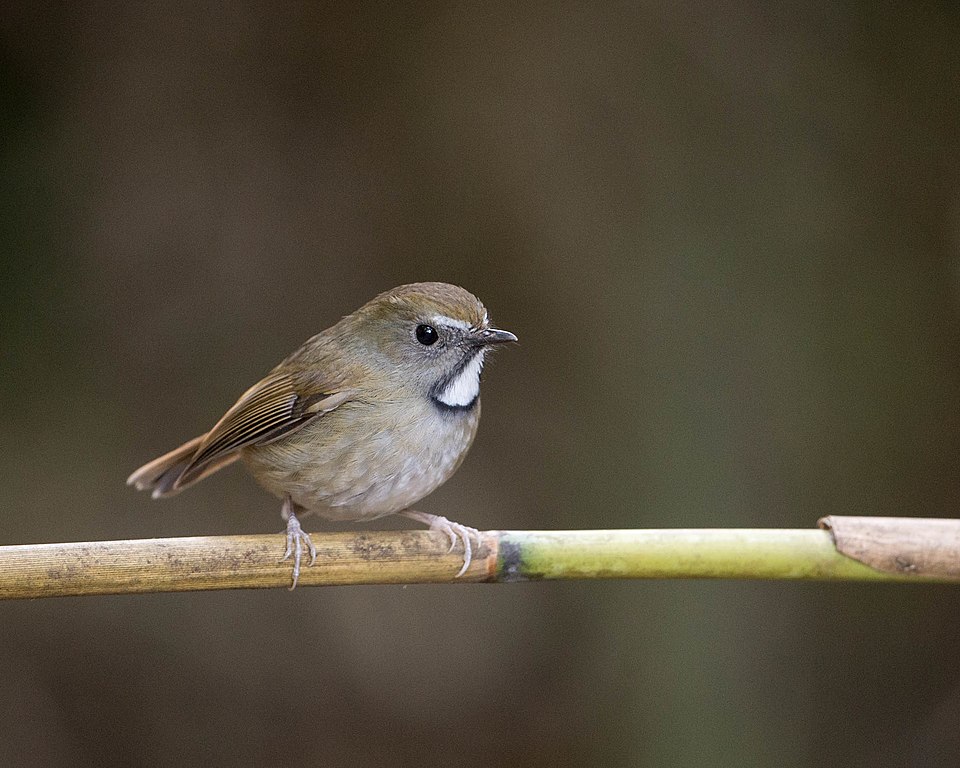
Blue-breasted Flycatcher
Cyornis herioti
Order: Passeriformes / Family: Muscicapidae

Wikimedia Commons
About the Blue-breasted Flycatcher
The Blue-breasted Flycatcher, Cyornis herioti, is a fascinating avian species within the Muscicapidae family, known for its striking blue plumage and agile insect-catching techniques. This bird inhabits the lush, tropical forests of Southeast Asia, predominantly found in countries like Indonesia and Malaysia. It typically resides in lowland and submontane forests, thriving in dense, shaded environments where its primary food sources, insects, and small arthropods are abundant.
The ecological role of the Blue-breasted Flycatcher is significant, as it helps control insect populations within its environment, thereby maintaining ecological balance. The bird employs a sallying flight technique, darting from perches to catch insects mid-air, which also contributes to the distribution of insect populations across various forest layers. During the breeding season, which aligns with the warmer, wetter months, the Blue-breasted Flycatcher becomes more vocal, using its melodic song to establish territories and attract mates.
Beyond its ecological contributions, the Blue-breasted Flycatcher is an essential part of the cultural and natural heritage of the regions it inhabits. Its presence is often a reliable indicator of healthy, biodiverse forest ecosystems. As forest habitats face increasing threats from deforestation and human encroachment, the conservation of this species becomes ever more crucial. Efforts to protect their habitats not only benefit the Blue-breasted Flycatcher but also countless other species that share these environments.
The Blue-breasted Flycatcher belongs to the family Muscicapidae, within the order Passeriformes. These birds typically live average 5-7 years, with a max recorded of 9 years.
How to Identify a Blue-breasted Flycatcher
The Blue-breasted Flycatcher is a small songbird with a total length of approximately 13 centimeters. Adult males are easily distinguished by their vibrant blue upperparts, contrasting with a white throat and a vivid blue breast that gives the species its name. The underparts transition to a lighter, almost buff color towards the belly. Females, while less colorful, exhibit a more subdued blue on their wings and tail, with a grayish-brown head and lighter underparts, making them slightly less conspicuous than their male counterparts.
Juvenile Blue-breasted Flycatchers resemble females but are generally duller, with less defined color contrast and more prominent spotting or mottling on their plumage. In flight, these birds show a compact silhouette with rapid wingbeats, characteristic of flycatchers, which aids in their agile hunting technique. When perched, they maintain an upright posture, often flicking their tails and wings, which can be a useful identification behavior.
While there are other flycatchers within their range that may cause confusion, such as the Blue-and-white Flycatcher, the distinct blue throat and breast of Cyornis herioti serve as reliable field marks to differentiate them. Birders should note these specific color patterns and behaviors to accurately identify the Blue-breasted Flycatcher in the wild.
Having trouble telling birds apart? Upload a photo to our bird identification tool for an instant species match.
Blue-breasted Flycatcher Habitat and Range
Preferred Habitat
The Blue-breasted Flycatcher predominantly inhabits lowland and submontane tropical forests, where it seeks out dense, shaded areas rich in insect life. It is typically found at elevations ranging from sea level up to 1,500 meters, although it is most abundant in the lower ranges. These birds prefer primary forests with a closed canopy, which provides ample cover and foraging opportunities.
Seasonal shifts in habitat are minimal for the Blue-breasted Flycatcher, as it generally remains within the same forested areas year-round. Unlike some migratory species, it does not venture into urban settings, making it less adaptable to heavily human-modified environments. Its presence is a hallmark of undisturbed, mature forest ecosystems where biodiversity is high.
During the breeding season, these flycatchers may move slightly within their range to locate optimal nesting sites, usually favoring areas with dense understory growth to provide additional cover and resources for raising young.
Geographic Range
The Blue-breasted Flycatcher is native to Southeast Asia, with a range primarily encompassing the islands of Indonesia and the Malay Peninsula. While its distribution is relatively limited geographically, it is a resident species, not undertaking long-distance migrations.
In Indonesia, the Blue-breasted Flycatcher can be observed across various islands, including Sumatra, Java, and Borneo, where it inhabits both primary and secondary forests. On the Malay Peninsula, its presence is noted in regions with intact forest cover but is less common in heavily deforested areas.
Population density is generally highest in protected areas and national parks, where conservation efforts have helped maintain suitable habitats. However, localized populations may vary due to habitat destruction and fragmentation, posing challenges for long-term stability and conservation.
Want to know which birds visit your area? Browse our backyard birds by location guides for region-specific species lists.
What Does the Blue-breasted Flycatcher Eat?
The diet of the Blue-breasted Flycatcher primarily consists of insects and small arthropods, with a marked preference for flying insects such as flies, beetles, and moths. This preference for aerial insects aligns with its adept sallying flight technique, where the bird launches from a perch to capture prey mid-air.
During the wetter months, when insect populations peak, the Blue-breasted Flycatcher takes advantage of the abundance to supplement its diet and build energy reserves for the demanding breeding season. In drier periods, it may forage closer to the ground, capturing ants, spiders, and other available invertebrates.
Its feeding schedule is predominantly diurnal, with peak activity occurring in the early morning and late afternoon. The flycatcher's keen eyesight and quick reflexes make it an effective predator, capable of adapting its foraging strategy to suit seasonal changes in prey availability.
Blue-breasted Flycatcher Behavior and Social Structure
The Blue-breasted Flycatcher exhibits a solitary or paired social structure, especially during the breeding season when pairs form to raise young. Its territorial behavior becomes most pronounced at this time, with males defending their territories through vocal displays and physical presence.
Courtship involves elaborate displays where the male fluffs his plumage, sings, and performs aerial maneuvers to attract a mate. These displays are crucial for pair bond formation and successful breeding. Outside the breeding season, the Blue-breasted Flycatcher may join loose flocks with other insectivorous birds, participating in mixed-species foraging groups that enhance feeding efficiency by flushing out insects.
In response to predators, the bird exhibits alert behavior, often freezing or retreating to dense foliage to avoid detection. Daily activity patterns are primarily centered around foraging, with periods of rest during the hottest parts of the day, reflecting its adaptation to the tropical climate.
Blue-breasted Flycatcher Nesting and Reproduction
Nesting for the Blue-breasted Flycatcher typically occurs during the wet season, which provides ample food resources for raising young. The nest is a cup-like structure, intricately woven with grass, leaves, and other plant materials, and is usually positioned in a well-concealed location such as a tree fork or dense shrub.
Preferred nesting sites are often within dense understory vegetation, providing protection from predators and harsh weather. Clutch sizes generally range from two to four eggs, which are incubated by the female for approximately 14 days until hatching.
Post-hatching, both parents take an active role in feeding the chicks, delivering a steady supply of insects to support rapid growth. Fledging occurs about 12 to 15 days after hatching, at which point the young birds begin to explore their surroundings under parental supervision. The Blue-breasted Flycatcher typically raises one brood per year, though favorable conditions may allow for a second.
Blue-breasted Flycatcher Sounds and Vocalizations
The primary song of the Blue-breasted Flycatcher is a melodious series of high-pitched whistles and trills, often described as sweet and fluting. The song is used mainly by males during the breeding season to establish territory and attract mates.
Call notes are shorter and simpler, often consisting of sharp 'chip' or 'tick' sounds used for communication between mates or signaling alarm. Alarm calls are more abrupt and urgent, serving to warn of potential threats in the environment.
During the dawn chorus, the Blue-breasted Flycatcher's song contributes to the rich acoustic tapestry of the forest, a soundscape that signals the start of a new day and the bird's active participation in its ecosystem.
Interesting Facts About the Blue-breasted Flycatcher
- 1The Blue-breasted Flycatcher can catch insects in mid-flight, showcasing its agile aerial skills and sharp reflexes.
- 2With a length of about 13 cm, the Blue-breasted Flycatcher is a relatively small bird, yet it plays a big role in controlling insect populations.
- 3The species' vibrant blue plumage is most striking in males, especially during the breeding season when they display to attract mates.
- 4The Blue-breasted Flycatcher is a resident bird, meaning it does not undertake long migratory journeys like some other flycatchers.
- 5This bird's melodious song is not only a territorial tool but also a key element of the dawn chorus in its native Southeast Asian forests.
Blue-breasted Flycatcher Conservation Status
The IUCN currently lists the Blue-breasted Flycatcher as a species of 'Least Concern', although its population trend is decreasing due to habitat loss. Deforestation poses the greatest threat, as it reduces the availability of suitable breeding and foraging habitats. Conservation efforts focus on preserving the primary and secondary forests that this species relies on. Protected areas and national parks within its range play a crucial role in maintaining stable populations. Historical data indicate that the species was once more widespread, thriving in larger expanses of undisturbed forest. Increasing awareness and habitat conservation are essential to ensure the continued survival of the Blue-breasted Flycatcher, as these efforts benefit not only this species but the broader forest ecosystems they inhabit.