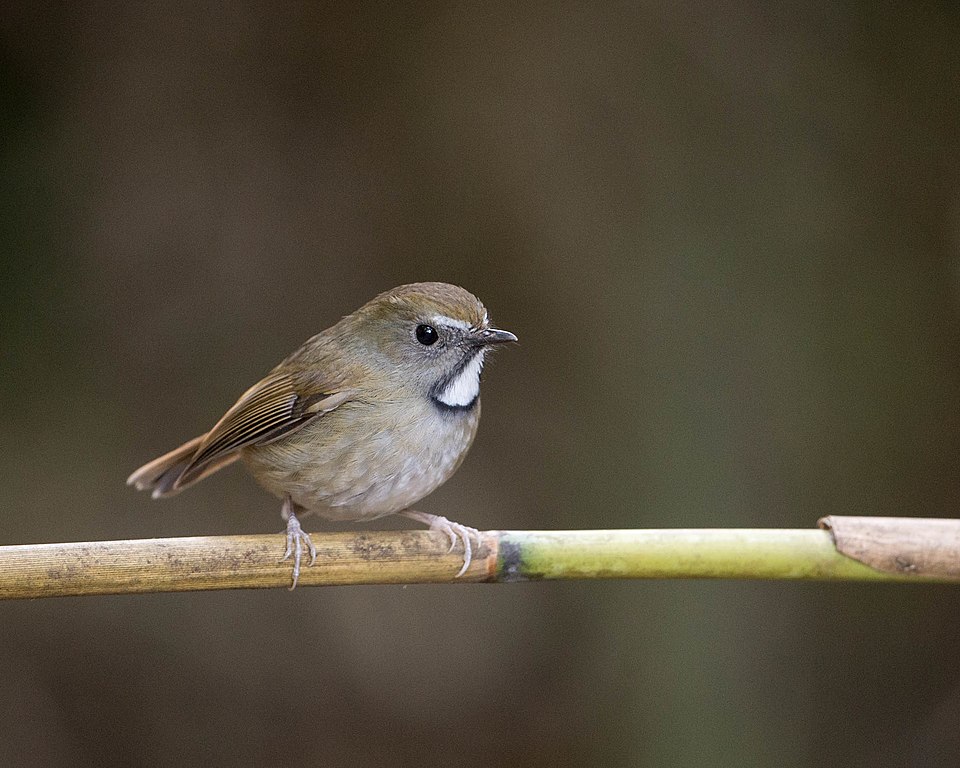
Blue-fronted Flycatcher
Cyornis hoevelli
Order: Passeriformes / Family: Muscicapidae

Wikimedia Commons
About the Blue-fronted Flycatcher
The Blue-fronted Flycatcher, scientifically known as Cyornis hoevelli, is a captivating songbird found primarily in the montane forests of Sulawesi, Indonesia. This bird is especially significant due to its restricted range within the Indonesian archipelago, thereby playing a crucial role in the local ecosystem as both predator and prey. Its presence in these forests is an indicator of environmental health, as it relies on a rich diversity of insect life and undisturbed forest habitats. The Blue-fronted Flycatcher contributes to the ecological balance by controlling insect populations, which indirectly supports the health of the forest vegetation and the species that depend on these plants. The flycatcher typically inhabits elevations ranging from 900 to 2,000 meters, where it finds optimal conditions for feeding and breeding.
During the breeding season, which coincides with the wet season from November to April, the Blue-fronted Flycatcher becomes particularly active. Males engage in elaborate displays to attract mates, and their song becomes a prominent feature of the forest soundscape. These vocalizations not only serve in mate attraction but also play a role in territorial defense, warning rival males of the presence of an established territory. Outside the breeding season, these birds may exhibit more solitary behavior, focusing on foraging and maintaining their physical condition.
Ecologically, the Blue-fronted Flycatcher’s role as an insectivore helps control populations of potential pest species, benefiting both local agriculture and forest health. Its presence attracts birdwatchers and ecotourists to the region, contributing to the local economy and fostering an appreciation for biodiversity. However, its limited range makes it vulnerable to habitat loss due to deforestation and land conversion for agricultural purposes. Conservation efforts are essential to ensure the survival of this species, emphasizing the importance of preserving its forest habitat.
The Blue-fronted Flycatcher belongs to the family Muscicapidae, within the order Passeriformes. These birds typically live average 5 years, with a maximum recorded of 8 years.
How to Identify a Blue-fronted Flycatcher
The Blue-fronted Flycatcher is a small songbird, measuring about 13 to 15 centimeters in length. The adult male is easily identifiable by its vibrant blue forehead and face, which contrast with its slate-blue upperparts and lighter blue on the wings and tail. The underparts are a pale grayish-white, providing a subtle yet elegant appearance. In contrast, the female is more subdued in coloration, with brownish upperparts and a less pronounced blue on the forehead, which can make her more challenging to identify in dense foliage.
Juvenile Blue-fronted Flycatchers resemble the females but have even more muted tones and a somewhat mottled appearance with brownish spots on the breast, which disappear as they mature. These field marks are crucial for differentiation, especially when observing mixed-species flocks in their native habitat. The bird's flight silhouette is characterized by swift, agile movements with quick, erratic flutters as it pursues insect prey.
When perched, the Blue-fronted Flycatcher adopts an upright posture, often flicking its tail and wings, a behavior that aids in identification. This posture, along with its distinctive coloration, helps differentiate it from other similarly sized flycatchers in the region, such as the Sulawesi Blue Flycatcher, which shares its range but lacks the bright blue forehead of Cyornis hoevelli.
Having trouble telling birds apart? Upload a photo to our bird identification tool for an instant species match.
Blue-fronted Flycatcher Habitat and Range
Preferred Habitat
The Blue-fronted Flycatcher thrives in the montane forests of Sulawesi, preferring dense, humid environments with a rich understorey. These forests provide ample cover and abundant insect prey, essential for the bird's survival. It is primarily found at elevations between 900 and 2,000 meters, where the climate remains relatively cool and stable throughout the year.
Seasonal habitat shifts are minimal, as the Blue-fronted Flycatcher tends to remain within its montane forest environment year-round, relying on the consistent availability of insects. It is less common in lowland forests or heavily disturbed areas, which lack the structural complexity and food resources required by this species. While it may occasionally venture into secondary growth or edge habitats, it is rarely found in urban settings, as these do not provide the necessary conditions for its survival.
The presence of the Blue-fronted Flycatcher in a given area indicates a healthy forest ecosystem, as it relies on intact habitats with a high diversity of insect life. Conservation of montane forests is therefore critical for the continued existence of this species.
Geographic Range
The Blue-fronted Flycatcher is endemic to Sulawesi, Indonesia, making its range highly restricted. It primarily inhabits the central and northern parts of the island, where suitable montane forest habitats are found. Within this range, the species is relatively localized, with population density hotspots occurring in areas with mature forest cover and minimal human disturbance.
Unlike many other bird species, the Blue-fronted Flycatcher does not engage in long-distance migrations. Its sedentary nature means that it remains within its montane forest range throughout the year, with only minor local movements in response to food availability and breeding requirements. This limited range, combined with its specific habitat preferences, makes the Blue-fronted Flycatcher particularly vulnerable to habitat loss.
Efforts to map its distribution have shown that while it is present in several protected areas, much of its habitat remains unprotected. Continued deforestation and land conversion pose significant threats to its range, highlighting the need for targeted conservation actions to safeguard its remaining habitats.
Want to know which birds visit your area? Browse our backyard birds by location guides for region-specific species lists.
What Does the Blue-fronted Flycatcher Eat?
The Blue-fronted Flycatcher primarily feeds on a wide variety of insects, which it captures using a combination of aerial sallies and gleaning techniques. Its diet includes beetles, flies, caterpillars, and other small arthropods, which provide the necessary proteins and nutrients for its active lifestyle.
During the wet season, when insect abundance peaks, the flycatcher's diet is diversified, allowing it to feed extensively and store energy for the breeding season. In contrast, during drier periods, it may have to search more diligently, sometimes venturing into different areas within its montane forest habitat to find sufficient prey.
Its foraging technique is characterized by quick, agile movements, often sallying forth from a perch to snatch insects mid-flight. The Blue-fronted Flycatcher hunts at various heights within the forest, from the understorey to higher canopy levels, depending on prey availability. This flexibility in foraging strategy ensures that it can exploit different niches within its ecosystem.
Blue-fronted Flycatcher Behavior and Social Structure
The Blue-fronted Flycatcher is primarily solitary, but during the breeding season, it exhibits more social behaviors. Males become highly territorial, engaging in vocal displays to establish and defend their territories from rival males. These territories provide essential resources such as food, nesting sites, and protection from predators.
Courtship displays are an integral part of their behavior, with males performing a series of rapid flights and vocalizations to attract females. Once a pair forms, they work collaboratively in nest-building and raising their young. Outside the breeding season, Blue-fronted Flycatchers may join mixed-species flocks, which provide safety in numbers and increased foraging efficiency.
Their daily activity pattern involves active foraging during the cooler hours of the morning and late afternoon, while they rest during the hottest part of the day. In the presence of predators, such as raptors, these birds employ evasive maneuvers and rely on their cryptic coloration to avoid detection. Alarm calls are used to alert other birds of potential threats, contributing to the overall vigilance of the bird community.
Blue-fronted Flycatcher Nesting and Reproduction
The Blue-fronted Flycatcher constructs cup-shaped nests using a variety of materials, including grasses, roots, and mosses, often lined with softer materials like feathers and spider webs. These nests are typically built in the fork of a tree or shrub, providing security and camouflage.
Preferred nesting sites are usually located at heights of 1 to 3 meters above the ground, within dense vegetation that offers protection from predators and harsh weather. The clutch size ranges from two to four eggs, which are incubated primarily by the female for about 14 to 16 days.
Both parents participate in feeding the nestlings, which fledge approximately 12 to 14 days after hatching. The young birds remain dependent on their parents for a short period after fledging, gradually learning to forage independently. The Blue-fronted Flycatcher typically raises one brood per year, although favorable conditions may occasionally allow for a second brood.
Blue-fronted Flycatcher Sounds and Vocalizations
The song of the Blue-fronted Flycatcher is a series of melodious whistles and trills, often delivered from a prominent perch. This song is composed of a rhythmic sequence of rising and falling notes, varying in pitch and quality, which serves both territorial and mate-attraction purposes.
Its call notes are shorter and more abrupt, used for communication between mates and alarm signaling. In response to threats, the flycatcher emits sharp, repetitive alarm calls to warn other birds in the vicinity.
During the dawn chorus, the Blue-fronted Flycatcher contributes its distinctive song, blending with the multitude of forest sounds. This chorus enhances the acoustic complexity of the habitat and is a highlight for birdwatchers visiting Sulawesi's montane forests.
Interesting Facts About the Blue-fronted Flycatcher
- 1The Blue-fronted Flycatcher is endemic to Sulawesi, meaning it is found nowhere else in the world, making it a sought-after species for birdwatchers.
- 2Despite its striking coloration, the Blue-fronted Flycatcher is adept at avoiding predators by blending into its forest surroundings.
- 3Its scientific name, Cyornis hoevelli, honors the collector H. C. von Hoevell, who first described the species.
- 4The Blue-fronted Flycatcher is a part of the family Muscicapidae, which includes over 300 species of Old World flycatchers.
- 5This species does not migrate but remains within the montane forests of Sulawesi year-round, relying on the stable climate and abundant resources.
- 6The Blue-fronted Flycatcher's song is often one of the first sounds heard at dawn in its montane forest habitat, marking the beginning of the day.
- 7Conservation efforts for the Blue-fronted Flycatcher help protect other endemic species in Sulawesi's unique montane ecosystems.
Blue-fronted Flycatcher Conservation Status
Currently, the Blue-fronted Flycatcher is classified as Least Concern by the IUCN, but its population trend is decreasing due to ongoing habitat loss. Primary threats include deforestation for agriculture and logging, which reduce the extent of suitable montane forest habitats. Conservation efforts focus on protecting these habitats through the establishment and management of protected areas, as well as sustainable land-use practices. Historical data suggest that the species' range was once more extensive, but human activities have fragmented its habitat, leading to a more restricted distribution. Ongoing research and monitoring are essential to understand population dynamics and assess the effectiveness of conservation strategies. Engaging local communities in conservation initiatives through education and ecotourism can also play a significant role in safeguarding the Blue-fronted Flycatcher.