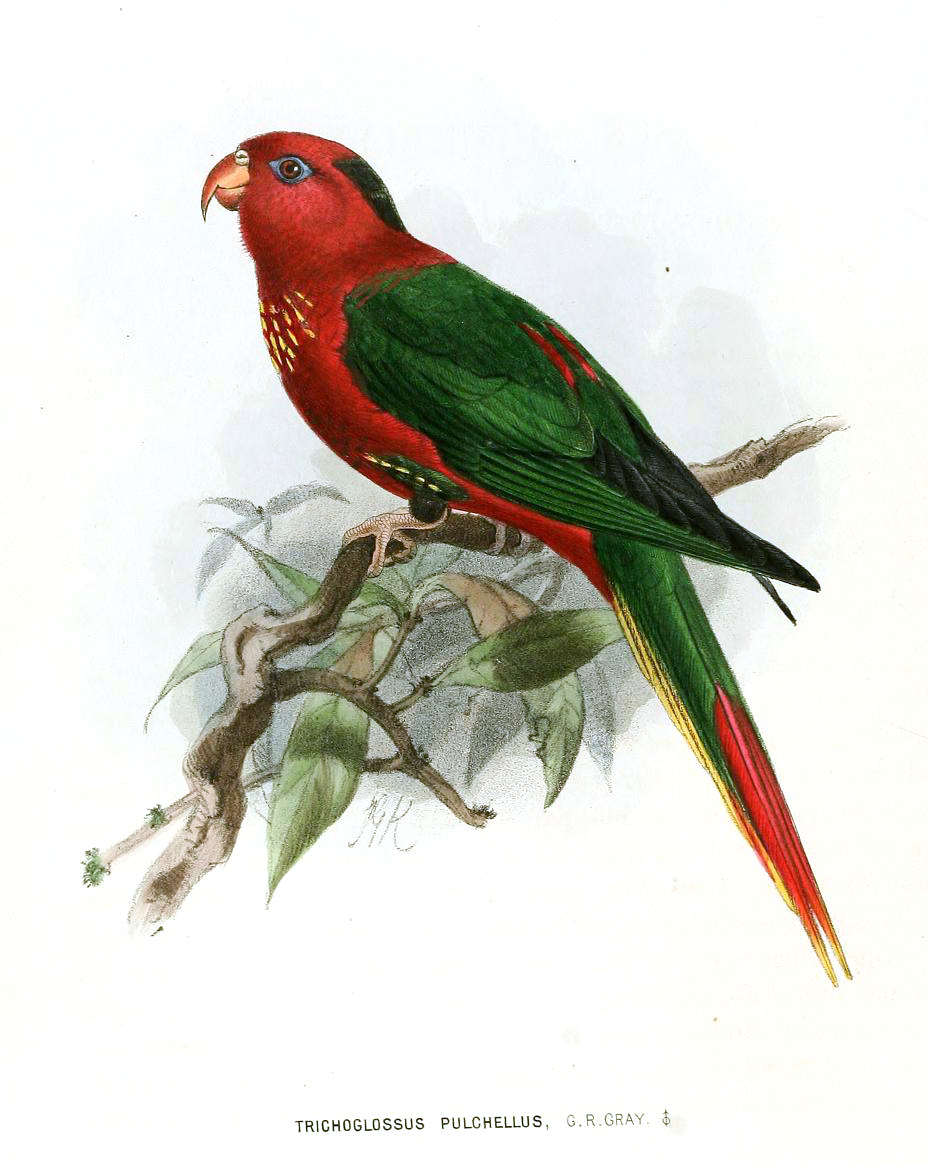
Blue-fronted Lorikeet
Charmosynopsis toxopei
Order: Psittaciformes / Family: Psittaculidae
About the Blue-fronted Lorikeet
The Blue-fronted Lorikeet, scientifically known as Charmosynopsis toxopei, is an intriguing parrot species endemic to Indonesia. This vibrant bird is particularly noted for its striking blue frontal plumage that contrasts with its predominantly green body. As a member of the family Psittaculidae, the Blue-fronted Lorikeet plays a vital role in its ecosystem, primarily due to its feeding habits that aid in the pollination of various plant species. Its presence in the forested regions of Indonesia underscores the rich biological diversity of these tropical areas, specifically on the island of Buru in the Maluku Islands. The ecological significance of the Blue-fronted Lorikeet is substantial as it contributes to the maintenance of floral health through its nectar-feeding behavior, which inadvertently facilitates the cross-pollination of plants.
This species inhabits lowland and montane tropical forests, where it can be found flitting among the canopy layers in search of nectar. The lorikeet's habitat preferences make it an important indicator of forest health, as its presence often correlates with the availability of flowering trees and shrubs. The seasonal habits of the Blue-fronted Lorikeet are influenced by the flowering cycles of its preferred flora. During peak flowering periods, these lorikeets are more conspicuous and active, often forming small foraging flocks that move through the forest in search of food. In contrast, during periods of low floral abundance, they may be less visible, retreating deeper into the forest.
The Blue-fronted Lorikeet's ecological role extends beyond pollination. Its diet also includes fruits and insects, which helps control insect populations and aids in seed dispersal. The Blue-fronted Lorikeet's feeding activities support the regeneration of forest areas by facilitating seed germination, making it an essential component of its habitat's ecological dynamics. The bird's interaction with its environment highlights the interconnectedness of tropical forest ecosystems, where each species contributes to the overall health and sustainability of the region.
The Blue-fronted Lorikeet belongs to the family Psittaculidae, within the order Psittaciformes. These birds typically live around 10 years, with up to 15 years recorded in captivity..
How to Identify a Blue-fronted Lorikeet
The Blue-fronted Lorikeet is easily distinguished by its bright blue forehead and crown, which stand out against its predominantly green body. Adult lorikeets exhibit a vibrant coloration with a distinctive red patch on the lower belly and a hint of purple around the chest area. The wings are green with blue underparts, and the tail is predominantly yellow, providing a colorful display in flight.
Juvenile Blue-fronted Lorikeets bear a resemblance to adults but generally have duller plumage, lacking the intensity of the blue and red seen in mature individuals. As they mature, their colors become more vivid, particularly the blue on the head. Both male and female lorikeets share similar plumage, making it challenging to differentiate between sexes based solely on appearance.
In terms of size, the Blue-fronted Lorikeet is a small parrot, measuring approximately 18 to 20 centimeters in length. Its flight silhouette is characterized by rapid wingbeats and a slightly undulating flight pattern. When perched, this lorikeet often adopts an upright posture, making it easier to spot amidst the dense foliage of its forest habitat.
Having trouble telling birds apart? Upload a photo to our bird identification tool for an instant species match.
Blue-fronted Lorikeet Habitat and Range
Preferred Habitat
The Blue-fronted Lorikeet primarily resides in the lowland and montane forests of the island of Buru in Indonesia. These forests offer a rich diversity of flowering plants, which are crucial for the lorikeet's nectar-based diet. The species tends to avoid open areas, preferring the dense canopy and understory where their feeding and nesting activities take place.
They occupy elevations ranging from sea level up to around 1,500 meters, demonstrating a preference for habitats that provide ample flowering resources throughout the year. Seasonal habitat shifts are minimal for this species as they are not migratory, instead following the ebb and flow of floral abundance within their home range.
While the Blue-fronted Lorikeet is primarily a forest dweller, it occasionally ventures into adjacent agricultural areas, especially when forest resources are scarce. Nonetheless, urban sightings are rare as this species maintains a strong affinity for natural forest environments.
Geographic Range
The Blue-fronted Lorikeet has a very restricted range, found solely on the island of Buru in the Maluku Islands of Indonesia. Due to its limited distribution, the lorikeet is considered an endemic species, which contributes to its rarity. The breeding range is confined to the forested regions of Buru, where suitable nesting sites and food sources are available.
This species does not undertake long-distance migrations, remaining in its home range throughout the year. However, local movements within the island occur in response to food availability, as the lorikeet searches for flowering plants that supply nectar. Population densities are variable and closely linked to the distribution of floral resources.
Due to habitat specificity, the Blue-fronted Lorikeet is not found outside Indonesia, and its population hotspots are concentrated in the undisturbed forest regions of Buru. Conservation efforts are crucial to preserving these areas to ensure the lorikeet's continued survival.
Want to know which birds visit your area? Browse our backyard birds by location guides for region-specific species lists.
What Does the Blue-fronted Lorikeet Eat?
The diet of the Blue-fronted Lorikeet is primarily nectar-based, with a strong preference for the flowers of native trees and shrubs found in its forest habitat. This diet is supplemented with fruits and occasionally small insects, which provide additional nutrients necessary for their energetic lifestyle. The lorikeet employs a specialized brush-tipped tongue to efficiently extract nectar from flowers, making them effective pollinators.
Seasonal changes in plant flowering cycles impact the availability of nectar, prompting the lorikeet to adjust its foraging patterns accordingly. During peak flowering seasons, these birds can often be seen in small groups actively moving through the forest canopy in search of abundant nectar sources. In contrast, during periods of floral scarcity, they may rely more heavily on fruits and insects to meet their dietary needs.
The lorikeet demonstrates a flexible feeding schedule, foraging throughout the day with peaks in activity during the early morning and late afternoon. This pattern allows them to take advantage of cooler temperatures and optimal nectar availability, while minimizing competition with other nectarivores.
Blue-fronted Lorikeet Behavior and Social Structure
The Blue-fronted Lorikeet exhibits a range of social behaviors, often forming small flocks that facilitate efficient foraging and protection against predators. These social groups typically consist of family units or loosely associated individuals that come together during feeding activities. The lorikeet is generally non-territorial, with minimal aggressive interactions observed among individuals.
Courtship displays for the Blue-fronted Lorikeet involve a series of vocalizations and visual signals, including head bobbing and wing fluttering. These displays serve to strengthen pair bonds and facilitate mate selection. Once paired, lorikeets tend to remain monogamous, working together in nesting and chick-rearing activities.
In response to predators, such as raptors, the Blue-fronted Lorikeet relies on its agility and speed to escape, often taking refuge in dense foliage. Alarm calls are also employed to alert other flock members of impending danger, triggering a coordinated flight response. Daily activity patterns include periods of rest during the hottest parts of the day, with increased foraging activity in the early morning and late afternoon.
Blue-fronted Lorikeet Nesting and Reproduction
The Blue-fronted Lorikeet typically nests in tree cavities, utilizing natural hollows formed in the trunks and branches of mature trees within its forest habitat. These cavities offer protection from predators and environmental elements, providing a safe environment for raising young.
Nesting materials are minimal, as the lorikeet often relies on the existing cavity structure, occasionally adding soft plant matter to line the nest. The clutch size ranges from 1 to 3 eggs, with incubation lasting approximately 24 to 26 days. Both parents participate in incubation and feeding duties, ensuring the survival and growth of the chicks.
Fledging occurs around 6 to 8 weeks after hatching, with young lorikeets remaining dependent on parental care for some time after leaving the nest. The species typically raises one brood per year, although optimal conditions may allow for a second. The shared responsibility of parental roles highlights the strong bond between lorikeet pairs and their dedication to successful chick rearing.
Blue-fronted Lorikeet Sounds and Vocalizations
The Blue-fronted Lorikeet is known for its series of high-pitched, melodious calls that resemble a swift, chattering sequence. These calls play a crucial role in communication within flocks, especially during feeding and flight. The pitch and rhythm of the calls are consistent, serving as a means of identification among individuals.
In addition to their primary calls, lorikeets produce a variety of softer notes used in close-range communication between mates and during nesting activities. Alarm calls are more abrupt and louder, effectively alerting the group to potential threats.
During the dawn chorus, the Blue-fronted Lorikeet's calls blend with those of other forest birds, creating a symphony of sounds that herald the start of a new day. Their vocalizations contribute to the rich auditory landscape of their tropical forest environment.
Interesting Facts About the Blue-fronted Lorikeet
- 1The Blue-fronted Lorikeet is one of the few parrot species that relies primarily on nectar for sustenance.
- 2Charmosynopsis toxopei was first described in the early 20th century, highlighting its relatively recent scientific recognition.
- 3This lorikeet's specialized tongue features papillae, which help in efficiently collecting nectar from flowers.
- 4The small population size and restricted range of the Blue-fronted Lorikeet make it one of the rarer parrot species in the world.
- 5Despite its vivid coloration, the Blue-fronted Lorikeet can be surprisingly difficult to spot in the dense forest canopy.
- 6The lorikeet's diet includes a variety of native plant species, making it an essential pollinator within its ecosystem.
- 7Efforts to conserve the Blue-fronted Lorikeet are bolstered by its status as a charismatic flagship species for Buru's biodiversity.
Blue-fronted Lorikeet Conservation Status
The Blue-fronted Lorikeet is listed as endangered on the IUCN Red List due to its restricted range and declining population. Habitat loss from logging and agricultural expansion poses the greatest threat to this species. Conservation efforts focus on habitat preservation and restoration within its limited range on Buru. Population trends indicate a slow decline, attributed to ongoing deforestation and habitat fragmentation. Historical changes in population size reflect the impact of human activities on the island's ecosystems. Conservation organizations are working to establish protected areas and promote sustainable land use practices to mitigate these threats. Local community engagement and awareness programs aim to foster appreciation for the Blue-fronted Lorikeet and its role in forest ecosystems. Collaborative efforts are crucial to ensuring the survival of this unique species in its natural habitat.