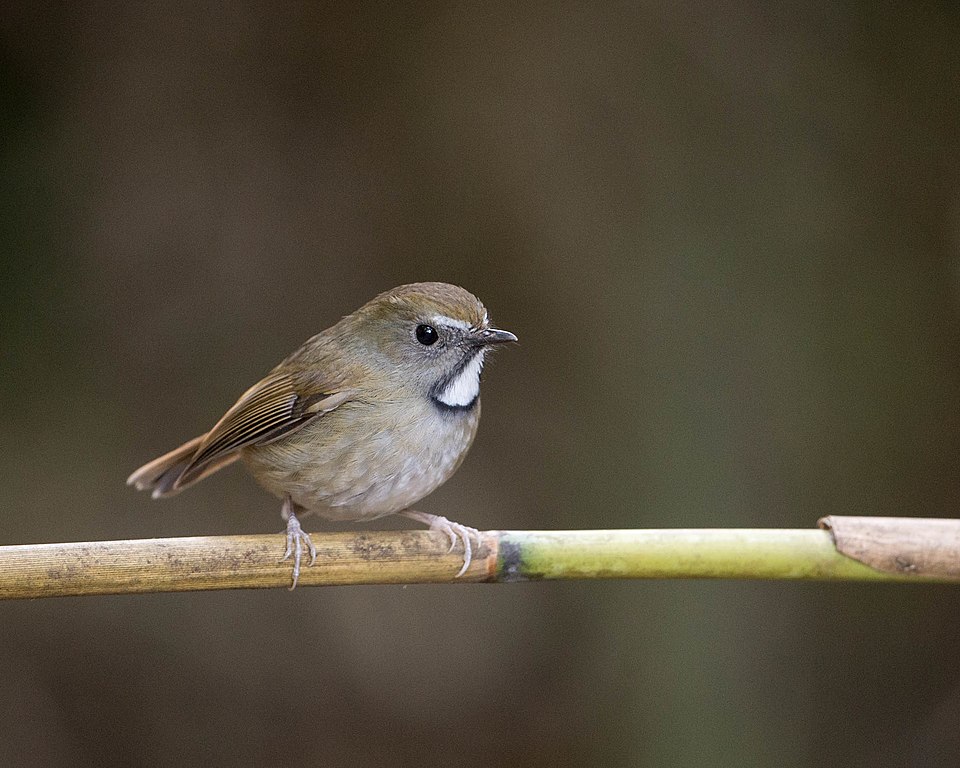
Blue Rock-Thrush
Monticola solitarius
Order: Passeriformes / Family: Muscicapidae

Wikimedia Commons
About the Blue Rock-Thrush
The Blue Rock-Thrush (Monticola solitarius) is a captivating songbird that belongs to the Muscicapidae family. Renowned for its vibrant blue plumage, the male Blue Rock-Thrush exhibits a striking deep blue color that contrasts beautifully with its rocky surroundings. Females, while less colorful, possess a more subdued blue-gray hue, which aids in camouflage. This species is predominantly found in rocky, mountainous regions across southern Europe, northern Africa, and parts of Asia, extending to the Indian Subcontinent and Southeast Asia. Its preference for rugged terrain is reflected in its scientific name, with 'solitarius' indicating its solitary nature, often observed perched alone on cliffs or boulders.
The Blue Rock-Thrush plays a significant role in its ecosystem as both a predator and a prey species. By controlling insect populations, it contributes to the ecological balance within its habitat. Its diet primarily consists of insects and small invertebrates, although it occasionally consumes berries and fruits, especially during the colder months when insects are scarce. This dietary flexibility allows it to thrive in diverse environments ranging from coastal cliffs to mountain slopes. The Blue Rock-Thrush's presence in various geographical regions highlights its adaptability and ecological importance.
Seasonal behaviors of the Blue Rock-Thrush are fascinating to observe. During the breeding season, which typically occurs from March to August, males showcase elaborate song displays to attract females. Their melodious songs, often delivered from prominent perches, serve both to establish territory and to court potential mates. As summer wanes, some populations undertake short migrations to lower elevations or milder climates, although many remain year-round residents, particularly in southern parts of their range. This partial migratory pattern underscores the species' adaptability to environmental conditions and resource availability.
The Blue Rock-Thrush belongs to the family Muscicapidae, within the order Passeriformes. These birds typically live average lifespan is 6-7 years, with some living up to 10 years..
How to Identify a Blue Rock-Thrush
Blue Rock-Thrushes are medium-sized songbirds, measuring approximately 21-23 cm in length with a wingspan of 32-38 cm. Adult males are unmistakable with their vivid azure blue plumage, which deepens during the breeding season. The female, while less conspicuous, sports a bluish-gray coloration with faint mottling, providing effective camouflage against rocky backgrounds. Juveniles resemble females but have more pronounced speckling and a browner tone, which gradually transitions to adult plumage as they mature.
In the field, the Blue Rock-Thrush can be distinguished by its relatively long, slender bill and upright posture when perched. Its flight is direct and purposeful, characterized by rapid wingbeats interspersed with glides. When compared to similar species, such as the Rock Thrush, the Blue Rock-Thrush is notably larger and lacks the orange underparts seen in the latter. Observers should note the bird's preference for elevated perches, which it uses both for singing and surveying its territory.
Despite these distinctive features, the Blue Rock-Thrush's plumage can blend into its rocky environment, making it a rewarding challenge for birdwatchers. Observing its behavior, such as its characteristic bobbing motion, can assist in identification. Birders should also listen for its varied song, a key identifier in distinguishing it from other thrushes.
Having trouble telling birds apart? Upload a photo to our bird identification tool for an instant species match.
Blue Rock-Thrush Habitat and Range
Preferred Habitat
The Blue Rock-Thrush thrives in rocky and mountainous habitats, often found in regions with steep cliffs, crags, and boulder-strewn landscapes. This species is commonly associated with Mediterranean scrubland, limestone escarpments, and coastal cliffs. Its presence in urban areas is less frequent, although it occasionally ventures into abandoned buildings or ruins that mimic its natural rocky environments.
Elevationally, the Blue Rock-Thrush can be found from sea level up to 3,000 meters, depending on its geographical location. In southern Europe and North Africa, it often inhabits lower elevations, while in the Himalayas, it extends to higher altitudes. Seasonal habitat shifts occur as some populations migrate to lower elevations or milder areas during winter months, exhibiting a flexible approach to habitat utilization.
While primarily associated with rural and remote areas, the Blue Rock-Thrush's adaptability to various rocky terrains enables it to exploit diverse habitats. Its presence in both coastal and inland environments highlights its ecological versatility, a trait that contributes to its widespread distribution.
Geographic Range
The Blue Rock-Thrush has a broad geographic range, encompassing parts of southern Europe, North Africa, and Asia. Its breeding range extends from the Iberian Peninsula through southern France and Italy to Greece, Turkey, and the Caucasus region. Further east, it occupies parts of Iran, the Arabian Peninsula, and the Indian Subcontinent, reaching as far as Southeast Asia.
During the winter months, some populations migrate to warmer regions, although many remain as year-round residents, particularly in the southernmost parts of their range. Migration corridors generally follow coastal and riverine paths, facilitating movement between breeding and wintering grounds. Notable wintering areas include the southern Mediterranean basin, parts of North Africa, and the Indian Subcontinent.
Population density hotspots for the Blue Rock-Thrush occur in regions with abundant rocky outcrops and cliffs, such as the Mediterranean coast, the Himalayas, and Southeast Asian karst landscapes. These areas provide the necessary resources and breeding sites, ensuring the species' continued presence across its range.
Want to know which birds visit your area? Browse our backyard birds by location guides for region-specific species lists.
What Does the Blue Rock-Thrush Eat?
The Blue Rock-Thrush exhibits a predominantly insectivorous diet, consuming a variety of insects and small invertebrates. Beetles, grasshoppers, and ants form the mainstay of its diet, with occasional consumption of spiders and small mollusks. During the breeding season, its diet focuses on high-protein prey to support energy demands.
In colder months, when insect availability declines, the Blue Rock-Thrush diversifies its diet to include berries, fruits, and seeds. This dietary shift underscores its adaptability and resourcefulness in fluctuating conditions. The bird forages by scanning the ground and surrounding vegetation from elevated perches, making quick sallies to capture prey.
The prey size typically ranges from small insects to medium-sized beetles, with foraging activity peaking during early morning and late afternoon. This feeding schedule aligns with the availability of prey and optimal foraging conditions, ensuring the Blue Rock-Thrush maintains its energy levels throughout the year.
Blue Rock-Thrush Behavior and Social Structure
The Blue Rock-Thrush exhibits a solitary and territorial behavior, particularly during the breeding season. Males establish and defend their territories through song displays and physical presence, often engaging in aerial chases to deter intruders. Courtship involves males performing elaborate song displays from prominent perches to attract females.
In terms of social structure, the Blue Rock-Thrush is primarily solitary outside the breeding season, although loose associations may form in areas with abundant food resources. Flocking is uncommon, reflecting the species' preference for solitary foraging and territorial behavior.
When threatened by predators, the Blue Rock-Thrush employs a combination of vocal alarms and evasive flight to escape danger. Its daily activity pattern includes periods of intense foraging interspersed with bouts of rest and preening, typically occurring during the cooler hours of the day. This pattern maximizes foraging efficiency while minimizing exposure to midday heat.
Blue Rock-Thrush Nesting and Reproduction
The Blue Rock-Thrush builds its nest in rocky crevices, cliff faces, or within the sheltered confines of abandoned buildings. Nests consist of a loose assembly of twigs, grasses, and leaves, lined with softer materials like feathers and hair. This choice of nesting sites provides protection from predators and harsh weather conditions.
Clutch size typically ranges from 3 to 5 eggs, with incubation lasting approximately 13 to 15 days. Both parents participate in feeding the chicks, which fledge after about 16 to 18 days. After fledging, juveniles remain dependent on parental care for several more weeks, gradually learning to forage independently.
The species usually produces one brood per year, although in favorable conditions, a second brood may be attempted. Parental roles are well defined, with both male and female contributing to nest building, incubation, and chick-rearing duties.
Blue Rock-Thrush Sounds and Vocalizations
The primary song of the Blue Rock-Thrush is a melodious and varied series of fluty whistles and trills, often delivered from a high perch. The song's rhythm is fluid, with a mix of high-pitched notes and softer undertones, creating a rich tapestry of sound that resonates through its rocky habitat.
Call notes include a sharp, metallic 'tink' or 'chink' sound, used for communication between mates and as an alarm signal when danger approaches. During the dawn chorus, the Blue Rock-Thrush's song is most prominent, marking its territory and attracting potential mates.
Its song, while distinctive, can be compared to the melodious tunes of the Eurasian Blackbird, though it possesses a unique clarity and resonance that distinguishes it within its habitat.
Interesting Facts About the Blue Rock-Thrush
- 1The Blue Rock-Thrush holds cultural significance in some Asian countries, symbolizing solitude and resilience.
- 2This species can adapt to urban environments by nesting in man-made structures that mimic rocky habitats.
- 3Despite their solitary nature, Blue Rock-Thrushes are devoted parents, with both sexes sharing chick-rearing duties.
- 4The Blue Rock-Thrush's song is highly variable, with individual birds developing unique repertoire variations.
- 5In Japan, the Blue Rock-Thrush is considered a national bird and appears in various cultural and artistic representations.
Blue Rock-Thrush Conservation Status
According to the IUCN, the Blue Rock-Thrush is currently classified as Least Concern, with a stable population trend. While its widespread distribution helps buffer against potential threats, localized pressures such as habitat destruction, urbanization, and climate change are areas of concern. Conservation efforts focus on habitat preservation, particularly in regions where rocky landscapes face degradation due to human activities. Historical population data suggests a relatively stable trend, although continued monitoring is essential to detect any future changes that may impact the species. Collaboration with local communities to promote awareness and sustainable land use practices contributes to the conservation of the Blue Rock-Thrush's natural habitats, ensuring its continued presence across its range.