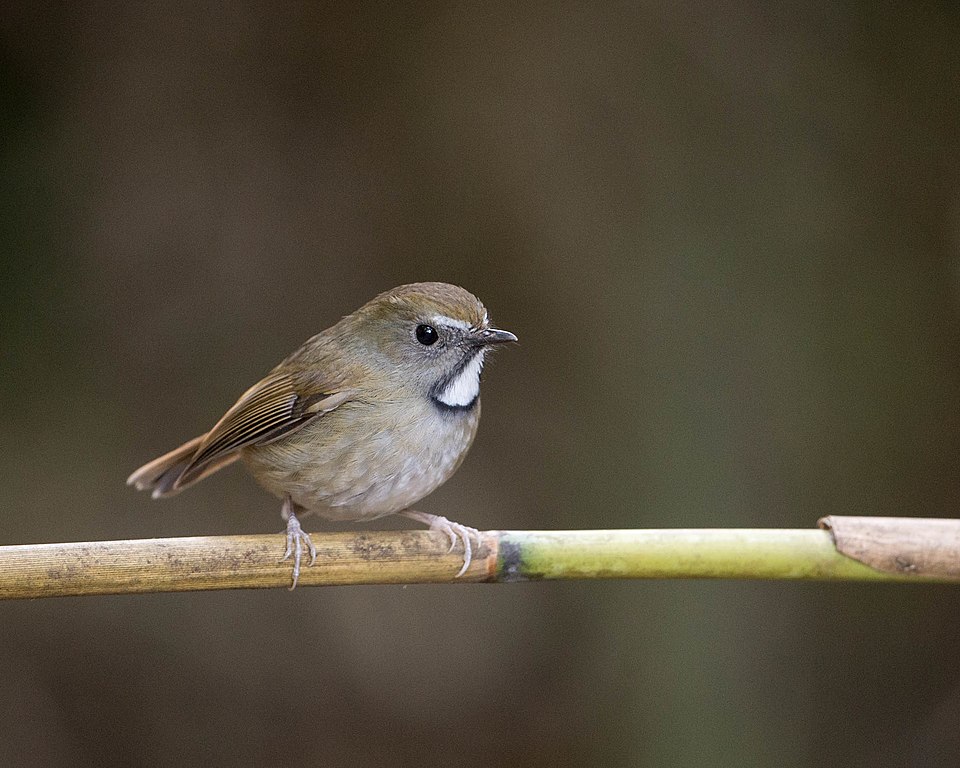
Blue-throated Flycatcher
Cyornis rubeculoides
Order: Passeriformes / Family: Muscicapidae

Wikimedia Commons
About the Blue-throated Flycatcher
The Blue-throated Flycatcher (Cyornis rubeculoides) is a striking bird belonging to the Muscicapidae family, a group renowned for their attractive plumage and melodious songs. This small passerine is primarily found in the subtropical and tropical moist lowland forests of South and Southeast Asia, with its range extending across countries such as India, Nepal, Bangladesh, Myanmar, Thailand, and Vietnam. The Blue-throated Flycatcher plays a significant ecological role as an insectivore, helping to control pest populations in its habitat. Its presence is often a marker of healthy forest ecosystems, as it relies on a rich abundance of insects and a well-structured forest canopy to thrive.
In terms of seasonal behavior, the Blue-throated Flycatcher exhibits migratory patterns, although these can vary based on geographic location. Populations in the northern parts of its range, particularly in the Himalayan foothills, tend to migrate southward during the winter months. Conversely, in more southern locales, this species may remain resident year-round, provided that food supplies remain adequate. During the breeding season, males become particularly territorial, utilizing their vibrant plumage and song to attract females and ward off competitors.
The Blue-throated Flycatcher holds cultural significance in many of the regions it inhabits, often celebrated for its beautiful appearance and the diversity of songs it delivers. As a forest-dependent bird, it is sensitive to habitat changes, making it an important species for monitoring environmental health. Conservation efforts focus on preserving forest habitats to ensure the survival of this and many other forest-dwelling species. The bird's preference for dense, undisturbed habitats makes it a less common sight in heavily urbanized or agricultural areas, thus highlighting its dependence on conservation initiatives aimed at protecting natural landscapes.
The Blue-throated Flycatcher belongs to the family Muscicapidae, within the order Passeriformes. These birds typically live average lifespan is 5-7 years, with some individuals living up to 8 years..
How to Identify a Blue-throated Flycatcher
The Blue-throated Flycatcher is a small bird, measuring approximately 13 to 14 centimeters in length, with a wingspan that can reach around 20 centimeters. Adult males are easily recognizable by their bright blue throat and head, which contrast with their rufous breast and flanks. The back and wings are a rich blue, fading into a more subdued grayish tone on the lower back and tail. Females, on the other hand, have a more subdued coloration, with olive-brown upperparts and a less vivid blue throat, making them slightly more challenging to identify at a distance.
Juvenile Blue-throated Flycatchers differ from adults in that they have a more mottled appearance, with streaks and spots across their chest and back that provide better camouflage from predators. This plumage gradually transitions to the adult coloration after the first year. When observing these birds in the field, pay attention to their upright perching posture and swift, agile flight, which is characteristic of flycatchers as they dart from perch to perch in pursuit of insects.
In terms of similar species, the Blue-throated Flycatcher can be confused with other members of the Cyornis genus, such as the Hill Blue Flycatcher (Cyornis banyumas), which may share its range. The key distinguishing feature is the intensity and extent of the blue throat in males, as well as subtle differences in song and habitat preference. Observers should also note the behavior of the Blue-throated Flycatcher, which often remains within the canopy or mid-levels of the forest, making it less likely to be seen in open or exposed areas.
Having trouble telling birds apart? Upload a photo to our bird identification tool for an instant species match.
Blue-throated Flycatcher Habitat and Range
Preferred Habitat
The Blue-throated Flycatcher primarily inhabits subtropical and tropical moist lowland forests, as well as montane forests. It thrives in regions with dense foliage, where it can find ample insects to feed on. These forests are often characterized by a multi-layered canopy, which provides the necessary cover and foraging opportunities for this species. In India, for example, it is commonly found in the Western Ghats and the northeastern hill forests. Elevation ranges for this species span from sea level up to 2,000 meters, depending on the region.
Seasonal habitat shifts are observed, particularly in northern populations that may migrate to lower elevations during the winter months to escape the harsher conditions of higher altitudes. While the Blue-throated Flycatcher prefers dense forest environments, it can occasionally be spotted in more open areas adjacent to forests, such as clearings and forest edges, though it generally avoids highly urbanized areas.
In terms of urban versus rural presence, the Blue-throated Flycatcher is predominantly a forest bird, making its presence in urban areas uncommon. It is more frequently encountered in rural regions where forest patches remain intact. Efforts to preserve and restore forest habitats are crucial for maintaining the population of this species, as deforestation and habitat fragmentation continue to pose significant threats.
Geographic Range
The Blue-throated Flycatcher has a breeding range that extends across several countries in South and Southeast Asia, including India, Nepal, Bhutan, Bangladesh, Myanmar, Thailand, Laos, and Vietnam. Within these regions, the bird is commonly found in suitable forested habitats, where it establishes territories during the breeding season.
During the winter months, some populations of the Blue-throated Flycatcher migrate to more southern parts of its range or to lower elevations, particularly from the Himalayan foothills to the plains of India and Myanmar. Migration corridors are generally aligned with major river systems and forested valleys, which provide essential stopover points for resting and foraging.
Population density hotspots for the Blue-throated Flycatcher can be found in well-preserved forest areas such as the Western Ghats and the northeastern hill forests of India, as well as protected areas in Thailand and Vietnam. These regions support healthy populations due to the abundance of food resources and suitable breeding habitats. Conservation efforts in these areas aim to protect the natural habitat and mitigate the impact of deforestation, ensuring the continued survival of this species.
Want to know which birds visit your area? Browse our backyard birds by location guides for region-specific species lists.
What Does the Blue-throated Flycatcher Eat?
The diet of the Blue-throated Flycatcher primarily consists of insects, making it an important insectivore in its ecosystem. It primarily feeds on a variety of arthropods, including ants, beetles, caterpillars, and small flying insects such as flies and mosquitoes. The bird's diet may expand to include small berries and fruits, particularly when insect prey is less abundant during certain seasons.
Foraging techniques of the Blue-throated Flycatcher are typical of flycatchers, involving sallying flights from a perch to capture prey mid-air. This agile hunter often returns to the same perch after a successful catch. The bird may also glean insects from foliage, taking advantage of its keen eyesight and quick reflexes to spot and snatch prey from leaves and branches.
Feeding typically occurs during daylight hours, with peak activity in the early morning and late afternoon when insect activity is at its highest. The Blue-throated Flycatcher adjusts its feeding strategy based on seasonal availability of food resources, demonstrating a level of adaptability that is crucial for its survival in varying forest environments.
Blue-throated Flycatcher Behavior and Social Structure
The Blue-throated Flycatcher exhibits a range of behaviors that reflect its adaptation to forest life. Socially, this species tends to be solitary or found in pairs, especially during the breeding season when males become highly territorial. Males engage in courtship displays, showcasing their vibrant plumage and singing complex songs to attract females and establish dominance over territory. This territorial behavior often involves chasing away rival males and other intruders from their chosen nesting area.
During non-breeding seasons, the Blue-throated Flycatcher may exhibit more tolerant behavior towards other birds, occasionally joining mixed-species foraging flocks. This opportunistic behavior allows them to benefit from the vigilance of other species and improve foraging success. These flocks often comprise a variety of insectivorous birds that share similar habitat preferences.
In response to predators, the Blue-throated Flycatcher relies on its agility and keen awareness of its surroundings. It uses a combination of alarm calls and evasive flight to avoid predation, often retreating to dense foliage for cover. Daily activity patterns are largely diurnal, with peak activity during early morning and late afternoon, corresponding to periods of high insect activity. During the hottest parts of the day, the bird may become less active, seeking shade within the dense forest canopy.
Blue-throated Flycatcher Nesting and Reproduction
The Blue-throated Flycatcher constructs its nest in the form of a loose cup, typically positioned in the fork of a tree or bush. These nests are made from natural materials such as grasses, leaves, and fine roots, lined with softer materials like feathers or hair to provide insulation and comfort for the eggs. The choice of nesting site is influenced by the need for concealment and protection from predators, often opting for locations that are difficult to access.
Clutch size for the Blue-throated Flycatcher ranges from two to four eggs, with the female primarily responsible for incubation. The incubation period lasts approximately 12 to 14 days, during which the female remains attentive to the nest, leaving only briefly to forage for food. Males may assist by bringing food to the female during this period.
Once hatched, the fledglings remain in the nest for about 13 to 15 days, during which both parents participate in feeding and caring for the young. The number of broods per year can vary, with some pairs managing to raise two broods if conditions are favorable. Parental roles are well-defined, with both the male and female contributing to feeding and protecting the offspring until they are ready to fledge.
Blue-throated Flycatcher Sounds and Vocalizations
The Blue-throated Flycatcher's song is a series of melodious and varied whistles, often delivered from a high perch within its forest habitat. The rhythm of its song is fluid, with a mix of high-pitched notes and softer trills, creating a pleasing, musical quality that can carry through the dense canopy. These songs serve as both a territorial declaration and a means of attracting potential mates.
Apart from its primary song, the Blue-throated Flycatcher emits a variety of call notes, which include sharp, short chips used for communication between mates or to signal alarm. In the presence of predators or during territorial disputes, the bird may produce harsher, more strident calls, alerting other nearby birds to potential danger.
Dawn chorus behavior is particularly pronounced during the breeding season, with males singing vigorously at first light to establish their presence within their territory. The Blue-throated Flycatcher's vocalizations, while distinct, can be reminiscent of other forest songbirds, yet its unique combination of notes and rhythm helps experienced birders distinguish it from similar species.
Interesting Facts About the Blue-throated Flycatcher
- 1The Blue-throated Flycatcher is known for its agile hunting technique called 'sallying,' where it catches insects mid-flight.
- 2Males of the species are recognized for their striking blue throat, which serves as a visual cue during courtship displays.
- 3The species can be found at elevations up to 2,000 meters, adapting to various forest environments across its range.
- 4Despite its vibrant appearance, the Blue-throated Flycatcher often goes unnoticed due to its preference for dense forest canopies.
- 5The bird's song varies significantly between individuals, contributing to its role in territorial defense and mate attraction.
- 6The Blue-throated Flycatcher plays a critical role in controlling insect populations within its forest ecosystems.
- 7As a member of the Muscicapidae family, this flycatcher shares traits with other Old World flycatchers, including behavior and habitat preference.
Blue-throated Flycatcher Conservation Status
The Blue-throated Flycatcher is currently listed as a species of Least Concern by the IUCN, indicating that it does not face an immediate threat of extinction. However, its population trend is currently decreasing, primarily due to habitat loss and fragmentation caused by deforestation and agricultural expansion. The degradation of forest habitats poses a significant long-term threat to the species, as it relies heavily on intact forest ecosystems for breeding and foraging. Conservation efforts focused on preserving forest habitats are crucial for ensuring the continued survival of the Blue-throated Flycatcher. Protected areas and national parks in countries like India and Thailand play a vital role in safeguarding critical habitats for this species. Additionally, reforestation initiatives and sustainable land use practices contribute to mitigating the impacts of habitat loss. Historical population changes for the Blue-throated Flycatcher are not well-documented, but ongoing monitoring and research are essential to understanding the full extent of threats and informing future conservation actions. Collaboration between governments, conservation organizations, and local communities is key to effective conservation strategies that benefit both the Blue-throated Flycatcher and the broader biodiversity of its forest habitats.