
Bocage's Akalat
Sheppardia bocagei
Order: Passeriformes / Family: Muscicapidae

Wikimedia Commons
About the Bocage's Akalat
Bocage's Akalat (Sheppardia bocagei) is a fascinating member of the Muscicapidae family, residing primarily in the dense, humid forests of Central Africa. This small passerine bird is often found in Angola, the Democratic Republic of the Congo, Zambia, and neighboring regions. The species plays a vital ecological role as an insectivore, contributing to the control of insect populations within its habitat. The Bocage's Akalat is named after the renowned Portuguese naturalist José Vicente Barbosa du Bocage, honoring his contributions to bird taxonomy. This bird's ecological significance extends beyond its role as a predator; it also serves as prey for larger predators, thereby contributing to the food web dynamics within its environment. Unlike many birds that adapt to a range of habitats, Bocage's Akalat is highly specialized, thriving in the undergrowth of forests where it forages for insects and arthropods below the canopy. Seasonal behaviors of the Bocage's Akalat are largely influenced by the wet and dry seasons typical of its equatorial range. During the wet season, the availability of insects increases, offering abundant food resources that support breeding and raising the young. As the dry season approaches, the bird may adjust its activity levels and foraging strategies to cope with the reduced prey availability. Bocage's Akalat is non-migratory, maintaining its territories year-round within the forested regions it inhabits. This sedentary lifestyle, combined with its reliance on specific habitat conditions, underscores the importance of preserving forest integrity for the species' survival. The species' preference for dense foliage makes it a challenging subject for ornithologists and birdwatchers alike, but its distinctive vocalizations often betray its presence, providing a vital cue for locating this elusive bird.
The Bocage's Akalat belongs to the family Muscicapidae, within the order Passeriformes. These birds typically live average 4-6 years with a maximum recorded of 8 years.
How to Identify a Bocage's Akalat
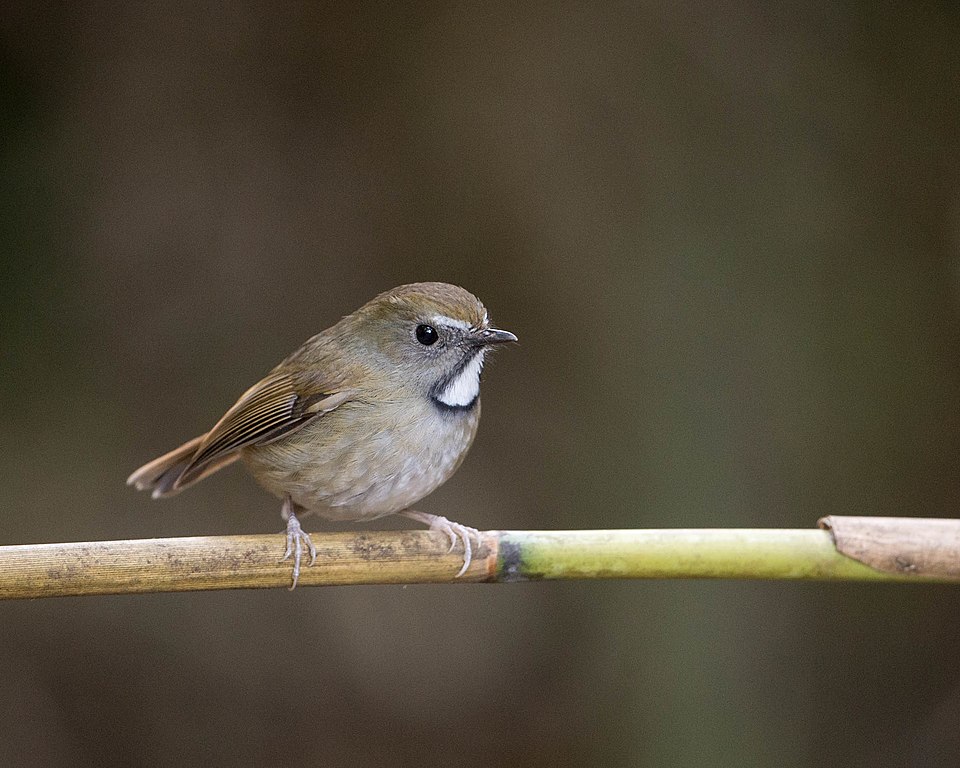
Bocage's Akalat is a small bird, typically measuring around 12-14 cm in length. The adult plumage is characterized by a rich rufous-brown coloration on the upperparts, with a contrasting white throat and belly. The flanks and underparts are tinged with orange-buff, adding to its distinctive appearance. Its eyes are large and dark, a feature that stands out against its plumage. Juveniles are similar to adults but have a slightly duller coloration, lacking the full intensity of the adult's hues. Males and females of this species exhibit similar plumage, making it difficult to distinguish them by sight alone in the field. However, the subtle differences in vocalizations can sometimes provide clues to their identity. In flight, Bocage's Akalat displays a short, rounded wing silhouette, which aids in quick maneuvers through the dense forest undergrowth. When perching, the bird often adopts an upright posture, allowing it to survey its surroundings for prey and potential threats. Although it shares its habitat with other forest-dwelling birds, such as the Olive Sunbird and the African Broadbill, the Bocage's Akalat's unique combination of size, coloration, and vocalizations helps distinguish it from similar species.
Having trouble telling birds apart? Upload a photo to our bird identification tool for an instant species match.
Bocage's Akalat Habitat and Range
Preferred Habitat
Bocage's Akalat primarily inhabits lowland tropical rainforests, where it prefers the dense undergrowth and thickets beneath the forest canopy. These birds are typically found at elevations ranging from sea level up to about 1,500 meters, rarely venturing into higher altitudes. The species shows a marked preference for undisturbed primary forests, though it can occasionally be found in well-developed secondary forests where undergrowth is abundant. It is generally absent from urban environments and open habitats like grasslands, preferring the seclusion and protection offered by densely vegetated areas. Seasonal shifts in habitat use are minimal, as the bird remains largely sedentary, relying on the stable conditions provided by its forest environment throughout the year.
Geographic Range
Bocage's Akalat is primarily distributed across Central Africa, with its range encompassing parts of Angola, the Democratic Republic of the Congo, Zambia, and extending into more localized areas in surrounding countries. The bird's presence is most concentrated in the expansive rainforests of the Congo Basin, where it finds the requisite dense undergrowth for foraging and nesting. Breeding occurs within this core range, with little evidence of long-distance migration. Some local movements may occur in response to seasonal changes in food availability, but these are typically limited to short distances within the species' established range. Population density is generally higher in areas where forest cover is intact and human disturbance is minimal, underscoring the importance of habitat preservation in maintaining healthy populations of Bocage's Akalat.
Want to know which birds visit your area? Browse our backyard birds by location guides for region-specific species lists.
What Does the Bocage's Akalat Eat?
The diet of Bocage's Akalat primarily consists of insects and other arthropods, which it expertly seeks out within the leaf litter and low vegetation of the forest floor. The bird employs a methodical foraging technique, often seen hopping along the ground, flipping leaves, and probing crevices to uncover hidden prey. Its diet includes ants, beetles, caterpillars, spiders, and occasionally small snails, with prey size typically ranging from small to medium-sized insects. Seasonal variations in diet are influenced by the abundance of prey items, with a greater diversity of insects available during the wet season, enhancing the bird's foraging success. Bocage's Akalat tends to feed throughout the day, with peak activity occurring in the early morning and late afternoon when insect activity is highest.
Bocage's Akalat Behavior and Social Structure
Bocage's Akalat is primarily solitary or found in pairs, exhibiting a strong territorial behavior. Individuals or pairs vigorously defend their territories from intruders through vocalizations and displays. During the breeding season, males engage in courtship displays that include song flights and wing-fluttering to attract females. Unlike many songbirds that form large flocks, Bocage's Akalat maintains a more solitary existence, although it may occasionally join mixed-species foraging flocks, especially during times of food scarcity. The bird exhibits a cautious and secretive demeanor, often relying on its cryptic plumage to avoid detection by predators. When threatened, it may freeze in place or retreat into dense cover. Daily activity patterns involve a mix of foraging and resting, with increased vocal activity during dawn and dusk when territorial and mating calls are most frequently heard.
Bocage's Akalat Nesting and Reproduction
Bocage's Akalat constructs a cup-shaped nest using dry leaves, moss, and other plant materials, typically located low in dense bushes or among tree roots. The nest is well-camouflaged to protect against predators. Clutch size usually consists of two to three eggs, which are incubated primarily by the female for about 14-16 days. Both parents participate in feeding and caring for the chicks, which fledge approximately 12-14 days after hatching. The species may raise one or two broods per year, depending on food availability and environmental conditions. Parental roles are shared, with both male and female contributing to feeding the young and maintaining the nest.
Bocage's Akalat Sounds and Vocalizations
The primary song of Bocage's Akalat is a melodious series of whistles and trills, delivered in a rhythmic pattern that varies between individuals. Its call notes include sharp, high-pitched 'tsik' sounds used for communication between mates and signaling alarm. During the dawn chorus, its song stands out amidst the cacophony of the forest, often heard before the bird is seen. The song has a clear, flute-like quality, reminiscent of a thrush but with distinctive local variations. Alarm calls are shorter and more abrupt, serving as warnings to other birds of nearby threats.
Interesting Facts About the Bocage's Akalat
- 1Bocage's Akalat was named in honor of José Vicente Barbosa du Bocage, a 19th-century Portuguese naturalist.
- 2The bird's song can be heard from up to 100 meters away, making it easier to locate despite its secretive nature.
- 3Bocage's Akalat is non-migratory, spending its entire life within the confines of dense African rainforests.
- 4The species plays a crucial role in controlling insect populations, acting as a natural pest regulator.
- 5Bocage's Akalat's preference for dense undergrowth makes it an important indicator of forest health and integrity.
- 6The bird's cryptic plumage provides excellent camouflage, helping it avoid predators in its thick forest habitat.
- 7Despite its small size, Bocage's Akalat exhibits bold territorial behavior, often challenging intruders in its domain.
Bocage's Akalat Conservation Status
Bocage's Akalat is currently listed as Least Concern by the IUCN, with populations considered stable. However, habitat destruction due to deforestation poses a significant threat, particularly in regions where logging and agriculture are expanding. Conservation efforts focus on protecting forest habitats and promoting sustainable land-use practices. Historical population levels have fluctuated with changes in land use, highlighting the need for ongoing monitoring to ensure the species' continued survival. Conservationists emphasize the importance of preserving large tracts of intact forest to support the Akalat's habitat requirements.
Other Muscicapidae Species


Birds Similar to the Bocage's Akalat
These species are often confused with the Bocage's Akalat due to similar appearance or overlapping range.

