
Boulder Chat
Pinarornis plumosus
Order: Passeriformes / Family: Muscicapidae

Wikimedia Commons
About the Boulder Chat
The Boulder Chat, Pinarornis plumosus, is a captivating bird species belonging to the family Muscicapidae. This songbird is indigenous to the rocky terrains and open woodlands of southern Africa, where it plays a vital role in the ecosystem as both predator and prey. Its presence is especially significant in the dry, rocky landscapes of Zimbabwe, Botswana, and northern South Africa. These areas provide an ideal habitat where the bird's unique adaptations allow it to thrive.
Boulder Chats are often found in rocky hillsides and outcrops, where their striking black and white plumage offers excellent camouflage against the lichen-covered rocks. As insectivores, they help control insect populations, thus maintaining a balanced ecosystem. This bird's feeding habits also aid in seed dispersal, contributing to the regeneration of native flora.
During the breeding season, which coincides with the rainy months from November to February, the Boulder Chat becomes more territorial and vocal. Its melodious song, a series of fluty notes, reverberates across its rocky domain, signaling territory boundaries and attracting mates. These birds are mostly sedentary, though they may undertake local movements in response to seasonal changes in food availability.
The Boulder Chat is an integral part of the avian community in southern Africa. It serves as a bioindicator for the health of its habitat. Conservation efforts aimed at preserving rocky and woodland environments are crucial for maintaining healthy populations of this species. Through its role in the ecosystem, the Boulder Chat underscores the interconnectedness of species and the importance of habitat conservation.
The Boulder Chat belongs to the family Muscicapidae, within the order Passeriformes. These birds typically live average 6-8 years with a maximum recorded of 12 years..
How to Identify a Boulder Chat
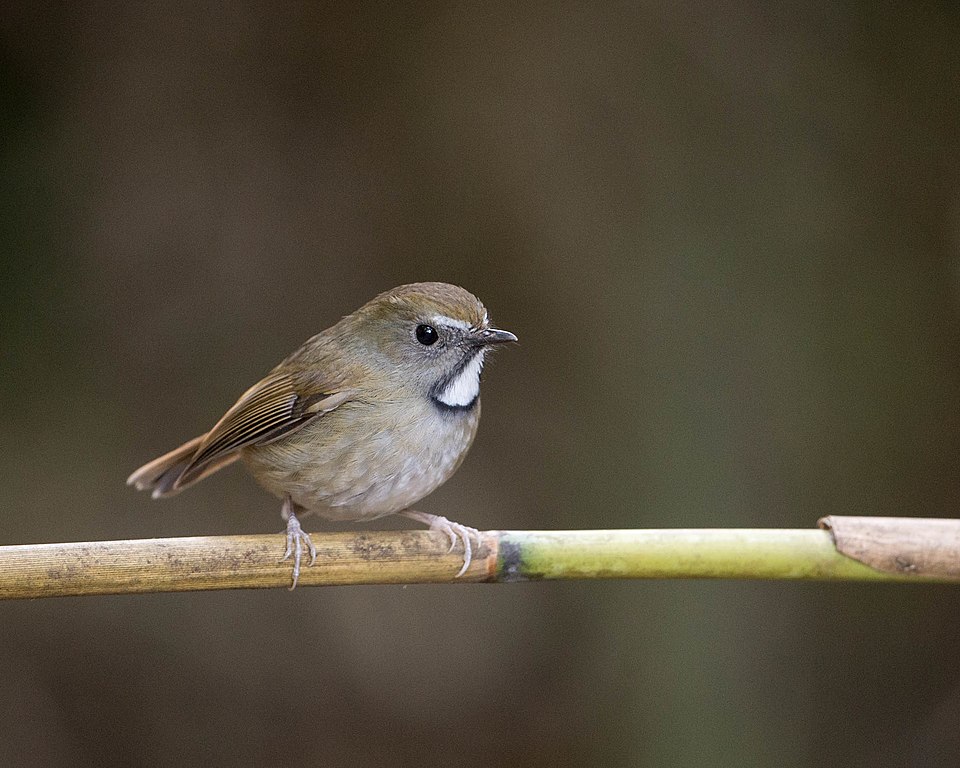
The Boulder Chat is easily recognized by its distinctive plumage. Adult birds display a striking contrast of black and white. The head, back, and wings are predominantly black, while the underparts are a clean white. This stark coloration sets it apart from many other species within its range. Juvenile birds resemble adults but exhibit slightly duller plumage with brownish tones interspersed among the black feathers. This juvenile plumage aids in camouflage during their vulnerable early life stages.
Males and females of the species are similarly colored, though females may have a slightly more brownish hue in their plumage. Observers often note the Boulder Chat's upright posture when perched, which, combined with its white underparts, makes it quite conspicuous against the rocky landscapes it inhabits. In flight, the bird displays a distinctive silhouette with broad wings and a relatively long tail, which are adaptations for maneuvering through its rocky habitat.
Although confusion with other species is possible, the Boulder Chat's unique black and white patterning and its habitat preference help to distinguish it from other chats and thrushes. The White-crowned Wheatear, a somewhat similar species, can be distinguished by its habitat preference for more open areas and its different vocalizations.
Having trouble telling birds apart? Upload a photo to our bird identification tool for an instant species match.
Boulder Chat Habitat and Range
Preferred Habitat
The Boulder Chat is primarily associated with rocky habitats, including kopjes and granite outcrops. These environments provide the perfect setting for its nesting and foraging activities. In addition to rocky areas, it occupies open woodlands, particularly those featuring scattered trees and sparse undergrowth. The bird typically occurs at elevations ranging from 500 to 1,800 meters.
Seasonal shifts in habitat preference are minimal for the Boulder Chat, as it is largely sedentary. However, during periods of extreme weather or scarcity of food, it may venture into adjacent habitats such as bushveld or semi-arid savannas. While it primarily inhabits rural and natural environments, it seldom appears in urban areas unless such areas are adjacent to suitable rocky terrains.
The Boulder Chat's preference for rocky and woody environments highlights its specialized adaptations and underscores the importance of these habitats for the species' survival. Conservation of such areas ensures the continued presence of this unique bird.
Geographic Range
The Boulder Chat is endemic to southern Africa, with its range encompassing countries like Zimbabwe, Botswana, northern South Africa, and parts of Mozambique. Within these regions, it inhabits areas characterized by rocky outcrops and open woodlands.
Breeding populations are concentrated in regions with abundant rocky hills and kopjes, particularly in Zimbabwe's Matobo National Park, where the bird is relatively common. Outside the breeding season, its range does not significantly change, as the Boulder Chat is primarily sedentary. However, local movements may occur in response to seasonal food availability, particularly during droughts or dry seasons.
Population densities are generally higher in protected areas and reserves where suitable habitats are preserved. The Boulder Chat's distribution highlights its reliance on specific habitats, making it vulnerable to habitat destruction and changes. Efforts to preserve its natural environments are therefore crucial for maintaining stable populations across its range.
Want to know which birds visit your area? Browse our backyard birds by location guides for region-specific species lists.
What Does the Boulder Chat Eat?
The Boulder Chat primarily feeds on insects and other small invertebrates, making it an important insectivore in its ecosystem. Its diet consists mostly of beetles, ants, termites, and grasshoppers, which it efficiently captures using a combination of ground foraging and short flights from perches.
Seasonal changes in diet occur as the availability of prey fluctuates. During the rainy season, when insect populations peak, the Boulder Chat has access to a more abundant food supply. In drier periods, it may supplement its diet with seeds and berries, although these constitute a minor part of its overall food intake.
The bird's foraging technique involves perching prominently on rocks or low branches to scan for prey, followed by swift, precise flights to capture insects. This method allows the Boulder Chat to exploit both arboreal and terrestrial food sources. It typically forages during the cooler parts of the day, such as early morning and late afternoon, reducing its exposure to the midday sun.
Boulder Chat Behavior and Social Structure
Boulder Chats exhibit a solitary or territorial behavior, often seen alone or in pairs, especially during the breeding season. Males establish territories by singing from prominent perches, using their melodious songs to ward off rivals and attract potential mates. Territorial disputes sometimes result in chases or displays, though physical confrontations are rare.
Courtship involves elaborate displays, including wing fluttering and tail fanning. Males may present food items to females as part of the courtship ritual, reinforcing pair bonds. Once paired, Boulder Chats remain monogamous throughout the breeding season.
In response to predators, these birds rely on their cryptic plumage and rocky habitat for concealment. When threatened, they often freeze or take swift, low flights to nearby cover. Daily activity peaks during early morning and late afternoon, with periods of rest during the hottest part of the day. Unlike many other chats, Boulder Chats do not form large flocks, maintaining their solitary nature throughout the year.
Boulder Chat Nesting and Reproduction
The Boulder Chat constructs its nest in rock crevices or among dense shrubs, utilizing a variety of materials such as grass, twigs, and leaves. Nests are typically cup-shaped, providing a secure environment for the eggs and later the chicks.
Preferred nesting locations are well-hidden, offering protection from predators and harsh weather. Clutch size generally ranges from two to four eggs, which are incubated primarily by the female for about 14 days. During this period, the male assists by providing food and defending the territory.
Once hatched, the chicks remain in the nest for approximately 16 to 18 days before fledging. Both parents participate in feeding and caring for the young, ensuring their survival during the vulnerable early stages. The Boulder Chat typically raises one brood per year, although in optimal conditions, a second brood may occur.
Boulder Chat Sounds and Vocalizations
The Boulder Chat's primary song is a series of clear, fluty notes that are both melodious and far-carrying. This song, often delivered from a prominent perch, serves to establish territory and attract mates. It possesses a rhythm similar to that of a thrush, with a rich and varied quality.
Call notes include a sharp 'chik' and a softer 'tsee,' used for communication between mates and as alarms when predators approach. During the dawn chorus, the Boulder Chat's song is particularly prominent, adding to the symphony of bird calls that greet the new day.
The bird's vocalizations are not only essential for breeding success but also for maintaining social bonds and coordinating activities between mates. Their calls and songs are vital components of their behavioral repertoire.
Interesting Facts About the Boulder Chat
- 1The Boulder Chat is often compared to the European Robin due to its similar size and upright posture.
- 2Despite its striking black and white appearance, the Boulder Chat can be surprisingly well-camouflaged against rocky backgrounds.
- 3Boulder Chats are known to mimic other bird species, incorporating various sounds into their own repertoire.
- 4The Boulder Chat's scientific name, Pinarornis plumosus, reflects its affinity for rocky habitats, with 'Pinarornis' meaning rock bird.
- 5Unlike many other songbirds, the Boulder Chat remains largely sedentary, with little need for long-distance migration.
- 6The Boulder Chat's song repertoire includes a variety of phrases, making it one of the more accomplished singers in its habitat.
- 7In some regions, Boulder Chats are considered good luck by local communities, who admire their resilience and adaptability.
Boulder Chat Conservation Status
The Boulder Chat is currently classified as Least Concern by the IUCN, with stable population trends. However, habitat destruction poses a significant threat, as the bird relies heavily on rocky and woodland environments. Primary threats include agricultural expansion, mining activities, and urban development, which lead to habitat fragmentation and degradation. Conservation efforts focus on protecting natural habitats and promoting sustainable land-use practices. Historically, the Boulder Chat's population has remained relatively stable, owing to its adaptability to specific niches. Continued monitoring and habitat conservation are crucial to ensure the long-term survival of this unique species.
Other Muscicapidae Species


Birds Similar to the Boulder Chat
These species are often confused with the Boulder Chat due to similar appearance or overlapping range.

