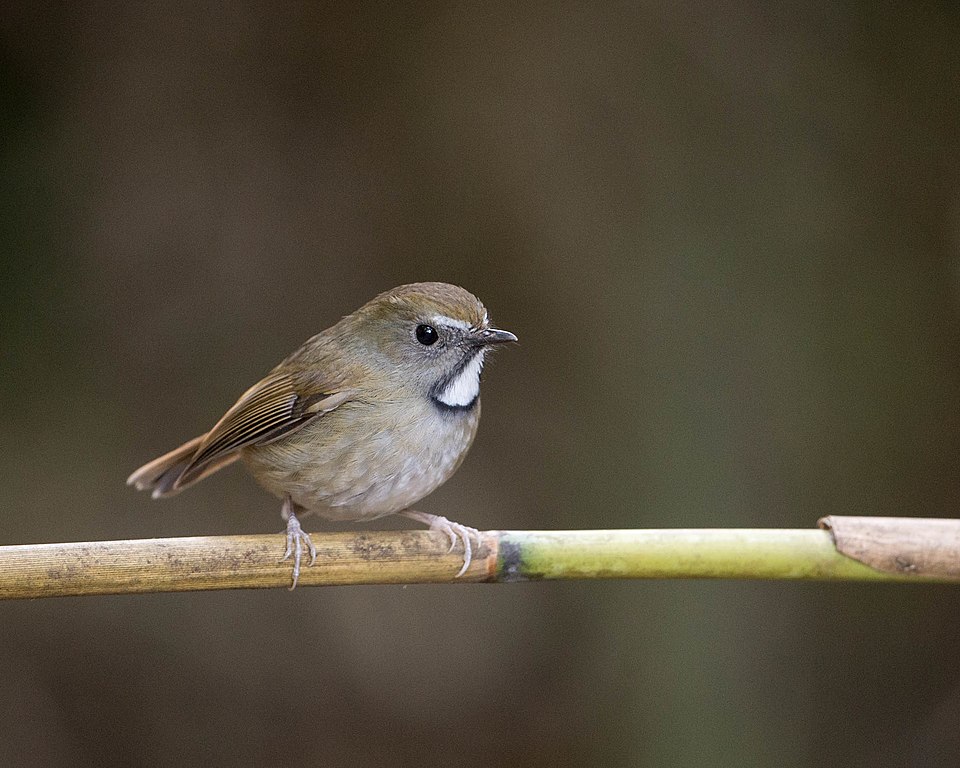
Bradornis fuliginosus
Bradornis fuliginosus
Order: Passeriformes / Family: Muscicapidae

Wikimedia Commons
About the Bradornis fuliginosus
The African Dusky Flycatcher, Bradornis fuliginosus, is a small passerine bird that belongs to the family Muscicapidae. This species is widespread throughout sub-Saharan Africa, found in countries such as Kenya, Tanzania, and South Africa. It is a significant member of the ecosystems it inhabits, playing a vital role in controlling insect populations. The African Dusky Flycatcher thrives in a variety of habitats, including open woodlands, forest edges, and even gardens and parks, making it a frequent visitor to human-altered landscapes. During the breeding season, which typically spans from September to March in southern Africa, these birds become particularly active, displaying increased vocalization and territorial behavior. The African Dusky Flycatcher occupies a niche that allows it to be both a predator and prey. Its diet primarily consists of flying insects, making it an important biological control agent against pest populations. The bird also serves as a food source for larger predators, such as raptors and snakes, thus contributing to the biodiversity of its environment. Ecologically, the African Dusky Flycatcher is an indicator species for healthy ecosystems, as its presence often signifies a rich and balanced insect population. This bird is also notable for its adaptability, able to adjust to seasonal changes by altering its diet and habitat preferences. During the dry season, it might move to areas with more abundant water sources or where insect activity is higher. This adaptability helps maintain its population across varied environmental conditions and landscapes. The African Dusky Flycatcher's interactions with other species, including symbiotic relationships with other insectivorous birds, highlight its ecological importance. It's often observed in mixed-species flocks, particularly outside the breeding season, which aids in foraging efficiency and predator detection. As human activities continue to alter landscapes across Africa, understanding the ecological role of species like the African Dusky Flycatcher becomes increasingly important in conservation efforts.
The Bradornis fuliginosus belongs to the family Muscicapidae, within the order Passeriformes. These birds typically live average 5 years with a maximum recorded of 8 years..
How to Identify a Bradornis fuliginosus
Identifying the African Dusky Flycatcher in the field involves noting its small size, approximately 14 cm in length, and its uniform sooty gray plumage. Adult birds feature a more pronounced gray color, while juveniles might have a slightly lighter shade with subtle brownish tinges, particularly on the wings and tail. Both sexes appear similar, with no significant differences in coloration or markings, which can sometimes make field identification challenging without observing behavioral cues or habitat preferences. In flight, the African Dusky Flycatcher exhibits a distinctive silhouette characterized by a short, somewhat rounded tail and rapid wingbeats, which aid in its agile pursuit of insects. When perched, it often adopts an upright posture, frequently flicking its tail and wings, a behavior that can help distinguish it from similar species. Confusion may arise with other flycatchers like the Spotted Flycatcher, but the latter has noticeable spotting on the breast, unlike the plain breast of the African Dusky Flycatcher. Observers should also note the flycatcher's behavior; it typically sallies forth from a perch to catch insects mid-air, a trait characteristic of many flycatchers, yet it returns to the same or nearby perch, a habit that can assist in positive identification.
Having trouble telling birds apart? Upload a photo to our bird identification tool for an instant species match.
Bradornis fuliginosus Habitat and Range
Preferred Habitat
The African Dusky Flycatcher is predominantly found in open woodlands and forest edges, thriving in environments where insect activity is abundant. These birds are common in montane regions, typically inhabiting elevations ranging from 500 to 3,000 meters. They are adaptable, often seen in suburban gardens and parks, especially in areas with scattered trees and shrubs providing ample perching and foraging opportunities. Seasonal habitat shifts occur as these birds may move to lower elevations or wetter areas during dry periods to follow insect populations. While primarily associated with rural landscapes, they are increasingly seen in urban settings due to habitat fragmentation, demonstrating their ability to adapt to changing environments. This adaptability allows the African Dusky Flycatcher to maintain healthy populations across various habitats, from dense forests to semi-arid savannas.
Geographic Range
The range of the African Dusky Flycatcher extends across much of sub-Saharan Africa. It breeds in countries like Kenya, Uganda, Tanzania, and as far south as South Africa, where it is a year-round resident in many areas. While not typically migratory, some populations may exhibit local movements in response to food availability and seasonal climatic changes. In East Africa, the flycatcher is commonly found in the highland regions, whereas in southern Africa, it occupies a diverse range of habitats from coastal forests to inland woodlands. Population density tends to be higher in regions with abundant insect populations and less disturbed habitats. Despite its wide range, the African Dusky Flycatcher remains somewhat elusive due to its preference for well-vegetated areas, making it less conspicuous than other more urban-adapted species.
Want to know which birds visit your area? Browse our backyard birds by location guides for region-specific species lists.
What Does the Bradornis fuliginosus Eat?
The diet of the African Dusky Flycatcher primarily consists of flying insects, which it captures in agile flight. During peak insect activity in the warmer months, the flycatcher focuses on small to medium-sized insects, such as flies, beetles, and occasional moths. Its feeding strategy involves sallying from a perch to snatch prey mid-air before returning to its original or nearby perch. As seasons change and insect availability fluctuates, the bird may expand its diet to include other arthropods like spiders or small caterpillars, particularly during the cooler months when flying insects are less abundant. The flycatcher usually forages alone or in pairs, although it can be seen joining mixed-species flocks outside the breeding season, which enhances foraging efficiency and reduces the risk of predation. This behavior underscores its adaptability in various environments and seasons.
Bradornis fuliginosus Behavior and Social Structure
The African Dusky Flycatcher exhibits solitary or paired behavior, particularly during the breeding season when territoriality becomes pronounced. Males often engage in song during this time to establish and defend territories. Courtship displays are subtle, involving mutual preening and feeding between partners. Outside the breeding season, these birds may form loose associations with other species in mixed flocks, a strategy that aids in foraging success and predator detection. The flycatcher is diurnal, with peak activity during the early morning and late afternoon when insect prey is most active. In response to predators, it relies on its agile flight to evade capture and may issue alarm calls to alert nearby birds of potential threats. Though primarily terrestrial, it occasionally ventures into the canopy to exploit feeding opportunities, showcasing its versatility in various ecological niches.
Bradornis fuliginosus Nesting and Reproduction
Nesting for the African Dusky Flycatcher involves constructing a small, cup-shaped nest made from fine plant materials such as grass, twigs, and leaves, often lined with softer substances like feathers or down. Nest placement is typically in the fork of a tree or shrub, providing concealment and protection from predators. Clutch size generally ranges from 2 to 4 eggs, which are incubated primarily by the female for about 14 days. During this time, the male plays a supportive role by providing food for the incubating female. Once hatched, both parents participate in feeding the chicks, which fledge approximately 15 to 18 days post-hatching. The pair may raise one to two broods per breeding season, depending on environmental conditions and food availability. The communal effort in rearing offspring highlights the species' cooperative breeding strategy.
Bradornis fuliginosus Sounds and Vocalizations
The primary song of the African Dusky Flycatcher is a series of soft, melodious whistles, often delivered from a prominent perch. The rhythm is slow and deliberate, with each note clear and slightly descending in pitch, reminiscent of a gentle, flowing stream. Call notes include a sharp 'chip' or 'tssik', typically used in communication between mates or as an alarm. During dawn chorus, males increase their singing activity, establishing territories and attracting females. Compared to other flycatchers, the African Dusky Flycatcher's vocalizations are less varied but possess a distinctive quality that aids in identification. These sounds play a crucial role in social interactions, territory defense, and predator alert systems.
Interesting Facts About the Bradornis fuliginosus
- 1The African Dusky Flycatcher is known for its ability to catch insects mid-air with remarkable agility, a skill honed over generations.
- 2Despite its name, the African Dusky Flycatcher is not strictly limited to dusky or twilight hours but is active throughout the day.
- 3This flycatcher species often joins mixed-species flocks, benefiting from the collective vigilance against predators.
- 4The African Dusky Flycatcher's soft, melodious song can often be heard during the early morning, contributing to the dawn chorus.
- 5In addition to catching insects mid-air, the African Dusky Flycatcher will also glean insects from foliage and branches.
- 6The species is well adapted to a variety of environments, from montane forests to urban gardens, demonstrating remarkable ecological flexibility.
- 7The African Dusky Flycatcher's nesting season aligns with periods of high insect availability, ensuring ample food for growing chicks.
Bradornis fuliginosus Conservation Status
The African Dusky Flycatcher is currently listed as Least Concern by the IUCN, with stable population trends across its range. Primary threats include habitat loss due to deforestation and agricultural expansion, although its adaptability to modified landscapes has mitigated some impacts. Conservation efforts focus on preserving natural habitats and promoting biodiversity-friendly agricultural practices. Historically, the species has maintained a stable presence across much of its range, benefiting from its ability to thrive in both natural and human-altered environments. Continued monitoring is essential to ensure population stability, particularly in regions experiencing rapid environmental changes.