
Pied Bradyornis
Bradyornis leucomelas
Order: Passeriformes / Family: Muscicapidae
About the Pied Bradyornis
The Pied Bradyornis, or Bradyornis leucomelas, stands out with its distinctive black and white coloration. This bird is a member of the Muscicapidae family, a group known for its diverse range of songbirds. Predominantly found in Southeast Asia, the Pied Bradyornis inhabits countries such as Thailand, Malaysia, and Indonesia. Its preference for dense forests and wooded regions underscores its adaptability to various subtropical and tropical climates. As a species, the Pied Bradyornis plays a vital role in its ecosystem, primarily through its insectivorous feeding habits, which help control insect populations.
The Pied Bradyornis has garnered attention from bird enthusiasts and ornithologists alike due to its striking appearance and unique vocalizations. Its presence in the forests of Southeast Asia contributes to the rich biodiversity of these regions, serving as both a predator and prey. The bird's ecological significance extends beyond insect control, as it also aids in seed dispersal, thus promoting forest regeneration.
Seasonal behaviors of the Pied Bradyornis are noteworthy. During the breeding season, which typically occurs in the warmer months, this species becomes highly territorial. Males engage in elaborate courtship displays to attract mates, a behavior that not only facilitates reproduction but also strengthens pair bonds. As the seasons change, the bird's activity patterns shift slightly, with a noticeable increase in foraging during the rainy season when insect abundance peaks. Overall, the Pied Bradyornis exemplifies the intricate balance of tropical forest ecosystems, with its life cycle closely tied to the rhythms of its environment.
The Pied Bradyornis belongs to the family Muscicapidae, within the order Passeriformes. These birds typically live average 6 years with a max recorded of 10 years..
How to Identify a Pied Bradyornis
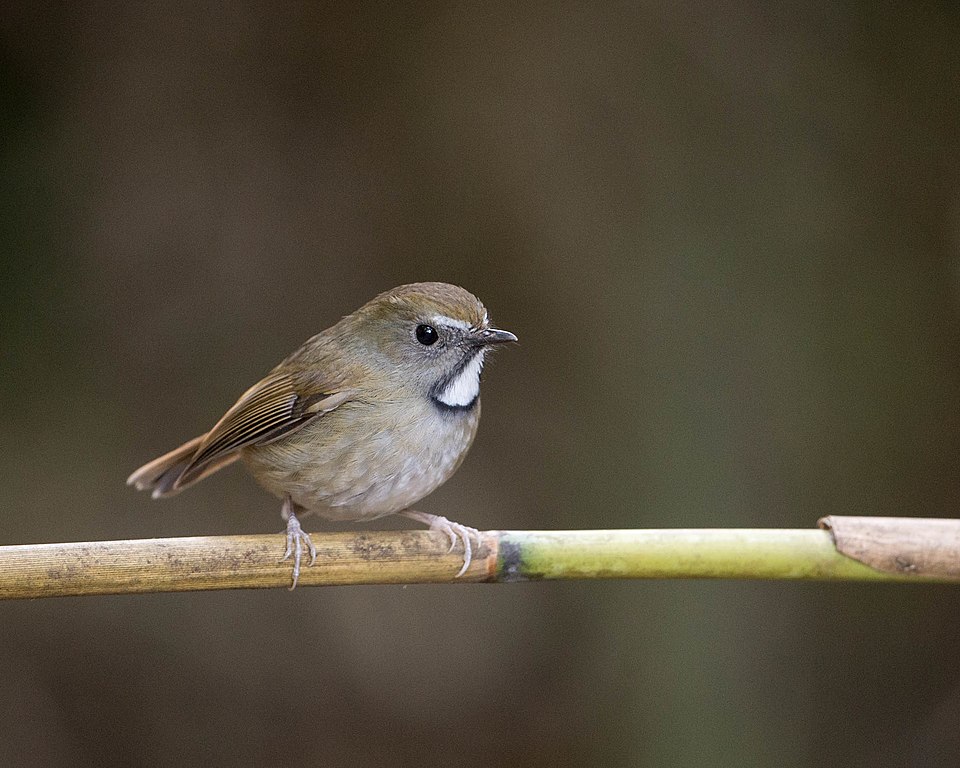
The Pied Bradyornis is easily identified by its contrasting black and white plumage. Adult birds exhibit a glossy black head, back, and wings, while their underparts are predominantly white. Juveniles, however, display a more subdued coloration, with brownish tones on their upperparts that gradually transition to the adult pattern as they mature. Males and females are similar in appearance, although males may have a slightly more pronounced sheen on their black feathers.
In the field, the Pied Bradyornis might be confused with other monochromatic species, but its distinctive pattern and posture set it apart. The bird typically adopts an upright stance when perched, often flicking its tail as a characteristic behavior. In flight, the Pied Bradyornis displays a swift, direct flight pattern, with quick wingbeats that make it a challenge to spot among the dense foliage.
The Pied Bradyornis's vocalizations also aid in identification. Its song, a series of melodious whistles and trills, often echoes through its forested habitats. These vocal cues, combined with its striking appearance, make the Pied Bradyornis a standout species for birdwatchers and researchers alike.
Having trouble telling birds apart? Upload a photo to our bird identification tool for an instant species match.
Pied Bradyornis Habitat and Range
Preferred Habitat
The Pied Bradyornis thrives in a variety of forested habitats across Southeast Asia, with a preference for subtropical and tropical forests. It can be found in lowland rainforests, montane forests, and even secondary growth areas, demonstrating its adaptability to different environments. Typically, this species resides at elevations ranging from sea level to around 1500 meters.
Seasonal habitat shifts are minimal for the Pied Bradyornis, as it tends to remain in forested areas year-round. However, it may move to slightly lower elevations during periods of extreme weather to access more abundant food sources. While primarily a forest dweller, the Pied Bradyornis occasionally ventures into rural gardens and plantations, particularly those bordering natural forests.
Unlike some other bird species, the Pied Bradyornis does not commonly inhabit urban areas. Its reliance on dense vegetation and a steady supply of insects makes it more suited to rural and semi-natural landscapes. These habitats provide the cover and resources needed for feeding, nesting, and overall survival.
Geographic Range
The Pied Bradyornis has a relatively narrow geographic range, primarily confined to Southeast Asia. Its breeding range includes countries such as Thailand, Malaysia, Indonesia, and parts of Myanmar. Within these regions, the bird exhibits a preference for forested areas, which provide the necessary habitat for breeding and feeding.
During the non-breeding season, the Pied Bradyornis remains within its range, as it is not a migratory species. Instead, it may undertake short-distance movements within its home range to exploit seasonal variations in food availability. Migration corridors are not a significant feature of this species' behavior, given its largely sedentary nature.
Within its range, population densities of the Pied Bradyornis vary, with higher concentrations typically found in areas of undisturbed forest. However, it can also persist in fragmented habitats, provided that these areas still offer adequate resources and protection from predators. Despite its limited range, the Pied Bradyornis maintains stable populations, supported by the extensive forest cover in its Southeast Asian stronghold.
Want to know which birds visit your area? Browse our backyard birds by location guides for region-specific species lists.
What Does the Pied Bradyornis Eat?
The Pied Bradyornis primarily feeds on insects, making it an important insectivore within its ecosystem. Its diet consists of a wide variety of insects, including beetles, ants, and caterpillars. During the rainy season, when insect populations are at their peak, the Pied Bradyornis increases its foraging activity to take advantage of the abundance.
In addition to insects, the Pied Bradyornis occasionally supplements its diet with small fruits and seeds. This dietary flexibility allows it to adapt to different seasonal conditions and ensures a steady food supply even when insect numbers decline. The bird's foraging technique is characterized by active gleaning, where it picks insects off leaves and branches with precision.
Prey size is generally small to medium, as the Pied Bradyornis relies on its agile movements and keen eyesight to capture its targets. Feeding typically occurs during the early morning and late afternoon, aligning with peak insect activity. This schedule not only ensures optimal foraging success but also minimizes competition with other insectivorous species in the area.
Pied Bradyornis Behavior and Social Structure
The Pied Bradyornis exhibits a range of interesting behaviors that highlight its adaptability and ecological role. Socially, it is often found in pairs or small family groups, particularly during the breeding season. Territorial behavior is pronounced, with males vigorously defending their territories against intruders. This territoriality is crucial for securing nesting sites and food resources.
Courtship displays of the Pied Bradyornis are elaborate, involving song, flight displays, and mutual preening. These behaviors strengthen pair bonds and are essential for successful reproduction. Once a mate is secured, the pair remains together for the breeding season, cooperating in nest building and chick rearing.
While the Pied Bradyornis is not known for forming large flocks, it may occasionally join mixed-species feeding flocks outside the breeding season. This behavior allows it to benefit from the increased foraging efficiency and predator vigilance of the flock. In response to predators, the Pied Bradyornis employs alarm calls and evasive maneuvers, often taking cover in dense foliage to avoid detection.
Daily activity patterns of the Pied Bradyornis exhibit a bimodal distribution, with peaks in activity during the morning and late afternoon. This routine aligns with the availability of food resources and the bird's need to balance foraging with territorial defense and social interactions.
Pied Bradyornis Nesting and Reproduction
The nesting habits of the Pied Bradyornis are well-suited to its forested environment. Nests are typically cup-shaped structures built using a variety of plant materials, including twigs, leaves, and moss. The bird prefers to locate its nests in the forks of tree branches, often at a height of 2-5 meters above the ground, providing protection from ground-based predators.
Clutch size for the Pied Bradyornis usually ranges from two to four eggs. The female primarily undertakes incubation, which lasts about 12-14 days. During this period, the male plays a supportive role, providing food and guarding the territory.
After hatching, both parents actively participate in feeding and caring for the chicks. The fledging period lasts approximately 14-16 days, after which the young birds gradually gain independence. The Pied Bradyornis typically raises one to two broods per year, depending on environmental conditions and food availability.
Parental roles are well-defined, with both the male and female contributing to chick rearing. This cooperation ensures high survival rates for the offspring, allowing the Pied Bradyornis to maintain stable population levels.
Pied Bradyornis Sounds and Vocalizations
The Pied Bradyornis is known for its melodious and complex song, characterized by a series of rich whistles and trills. The primary song serves as both a territorial marker and a tool for attracting mates. Its rhythm is fluid, with varying pitch and quality that can be quite captivating to the listener.
In addition to its song, the Pied Bradyornis produces a variety of call notes, including sharp, short alarm calls used to warn of predators. These calls are often delivered in quick succession, creating an urgent auditory signal. The bird's vocalizations are most pronounced during the dawn chorus, a time when males actively assert their presence and territorial claims.
The Pied Bradyornis's vocal repertoire is an essential component of its behavior, playing a crucial role in communication and social interactions. The variety and complexity of its sounds make it a favorite among birdwatchers and ornithologists studying avian communication.
Interesting Facts About the Pied Bradyornis
- 1The Pied Bradyornis can consume up to twice its body weight in insects during peak feeding periods.
- 2This bird's song can be heard over a distance of up to 100 meters, making it a prominent feature of its forest habitat.
- 3Despite its striking appearance, the Pied Bradyornis can be surprisingly elusive due to its preference for dense forest cover.
- 4The species was first described scientifically in the early 19th century and has since become a favorite among ornithologists.
- 5The Pied Bradyornis participates in mixed-species flocks with other insectivores, benefiting from collective foraging.
- 6Its nest-building skills are remarkable, with some nests featuring intricate weaving of plant fibers and moss.
- 7During courtship, males perform elaborate flight displays, showcasing both agility and vocal prowess.
Pied Bradyornis Conservation Status
The Pied Bradyornis currently holds a status of Least Concern on the IUCN Red List, with populations considered stable. Despite its relatively limited range, the bird benefits from extensive forest cover in Southeast Asia, which provides suitable habitat for breeding and feeding. Primary threats to the Pied Bradyornis include habitat loss due to deforestation and land conversion for agriculture. Conservation efforts focus on preserving forest habitats and promoting sustainable land-use practices. Protected areas and national parks in countries like Malaysia and Indonesia play a critical role in safeguarding the habitats of this species. Historically, the Pied Bradyornis has maintained stable population levels, thanks to its adaptability and the availability of suitable habitats. Continued monitoring and conservation measures are essential to ensure its long-term survival, particularly in areas where habitat fragmentation poses a growing threat.
Other Muscicapidae Species


Birds Similar to the Pied Bradyornis
These species are often confused with the Pied Bradyornis due to similar appearance or overlapping range.