
Brazilian Tinamou
Crypturellus strigulosus
Order: Tinamiformes / Family: Tinamidae
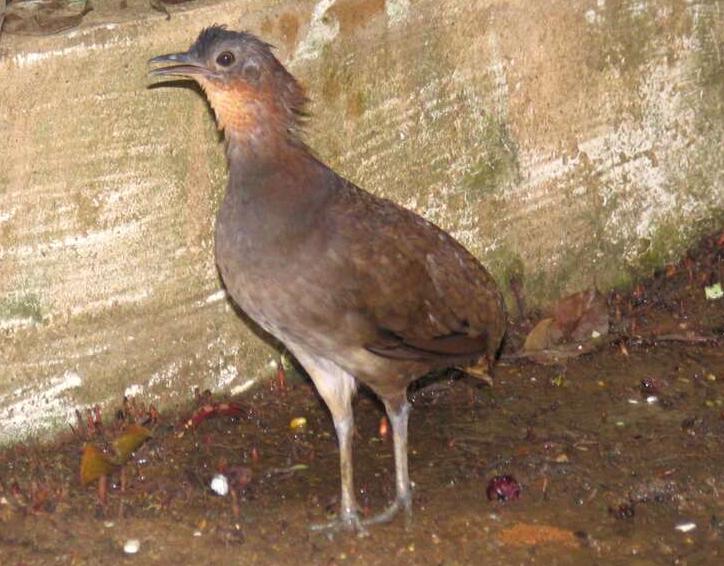
Wikimedia Commons
About the Brazilian Tinamou
The Brazilian Tinamou, scientifically known as Crypturellus strigulosus, is a fascinating bird species endemic to the dense, humid lowland forests of the Amazon Basin. This bird plays a crucial role in the ecosystem as both a seed disperser and a prey species for larger predators. Its presence is an indicator of forest health, as it thrives in undisturbed habitats. Although the Brazilian Tinamou is relatively elusive and hard to spot, its vocalizations often betray its presence to those familiar with its calls.
Occupying regions primarily across Brazil, Peru, and Bolivia, the Brazilian Tinamou is a terrestrial bird that prefers the cover of dense undergrowth. It can be found from the eastern slopes of the Andes to the lower parts of the Amazon Basin. The tinamou’s preference for seclusion in such areas makes it a vital part of the food chain, serving as prey for larger mammals and birds of prey. This bird is integral to the intricate web of life within the rainforest.
The Brazilian Tinamou exhibits seasonal behaviors that align with the rhythm of the rainforest. During the wet season, it takes advantage of the abundance of food, engaging in more frequent foraging activities. The dry season, however, sees a reduction in activity, with the tinamou relying on its cryptic plumage to evade predators as it conserves energy. The Brazilian Tinamou’s life cycle is closely tied to the climatic conditions of the forest.
As a member of the family Tinamidae, the Brazilian Tinamou shares traits with other ground-dwelling birds, yet it exhibits unique characteristics that distinguish it from other species. Its ecological role as a seed disperser is particularly important, as it aids in the regeneration of the forest by spreading seeds through its droppings. This bird’s subtle presence underscores the delicate balance of the rainforest ecosystem.
The Brazilian Tinamou belongs to the family Tinamidae, within the order Tinamiformes. These birds typically live averages 7-10 years in the wild..
How to Identify a Brazilian Tinamou
Identifying the Brazilian Tinamou involves recognizing its medium-sized, plump body and rather cryptic plumage, which is predominantly brown with intricate patterning. Adult plumage typically features a brownish-gray hue with darker barring that provides excellent camouflage against the forest floor. The underparts are generally lighter, with faint streaks that may vary in intensity among individuals.
Juvenile Brazilian Tinamous resemble adults but often have slightly softer, more downy feathers, and their patterns may appear less defined. Both sexes share similar plumage, which can make distinguishing males from females challenging in the field. However, males are usually slightly smaller and may exhibit subtle differences in vocalizations, which are crucial for mating.
In flight, the Brazilian Tinamou presents a distinctive silhouette with rounded wings, a short tail, and rapid, shallow wingbeats. It rarely takes to the air, preferring to run swiftly through the underbrush to evade threats. The bird’s posture while perching or resting typically involves crouching low to the ground, blending seamlessly with its surroundings. Comparatively, it is less likely to be confused with other species due to its unique size and pattern.
Having trouble telling birds apart? Upload a photo to our bird identification tool for an instant species match.
Brazilian Tinamou Habitat and Range
Preferred Habitat
The Brazilian Tinamou inhabits the dense, humid forests of the Amazon Basin, thriving in areas with substantial undergrowth and leaf litter. It is most commonly found at elevations ranging from sea level to about 900 meters. This bird prefers primary forests with minimal human disturbance, though it can occasionally be spotted in secondary growth areas.
Seasonal habitat shifts are minimal for the Brazilian Tinamou, as it resides year-round in the rainforest. Unlike many other bird species, it does not migrate but may adjust its range slightly in response to food availability and climatic conditions. While primarily a forest dweller, this species avoids urban environments, maintaining its presence in more secluded, rural areas.
The tinamou's reliance on pristine forest environments underscores the importance of habitat conservation efforts in the Amazon. As deforestation continues to threaten these regions, the Brazilian Tinamou's habitat becomes increasingly fragmented, posing challenges to its survival.
Geographic Range
The Brazilian Tinamou's range is primarily confined to the Amazon Basin, encompassing countries such as Brazil, Peru, and Bolivia. Within Brazil, it is prevalent in states like Amazonas, Acre, and Rondônia. Its range extends into eastern Peru and northern Bolivia, where the Amazon rainforest dominates the landscape.
Unlike migratory birds, the Brazilian Tinamou remains in its breeding range year-round, although slight movements may occur in response to local environmental changes. The bird's distribution is closely linked to the availability of suitable forest habitat, leading to population density hotspots in regions with dense, undisturbed forests.
This species does not undertake long-distance migrations but instead exhibits localized movements. As a result, its presence serves as a valuable indicator of the health and continuity of forested areas. The Brazilian Tinamou's range is a testament to the biodiversity of the Amazon and highlights the need for coordinated conservation efforts across international borders.
Want to know which birds visit your area? Browse our backyard birds by location guides for region-specific species lists.
What Does the Brazilian Tinamou Eat?
The Brazilian Tinamou primarily forages for seeds, fruits, and small invertebrates, making it an omnivorous bird. Its diet consists largely of what it finds on the forest floor, where it scratches through leaf litter in search of food. Small fruits, berries, and seeds from a variety of plants form the bulk of its diet, supplemented by insects, worms, and snails.
During the wet season, the abundance of fruits and seeds leads to a more varied diet, allowing the tinamou to take advantage of the increased food resources. Conversely, the dry season often sees a shift toward more insect consumption as fruit becomes scarcer. The tinamou's foraging technique involves a combination of scratching and pecking, allowing it to uncover hidden prey and plant material.
Prey size typically ranges from small insects to medium-sized seeds, with the bird displaying considerable adaptability in its feeding habits. The Brazilian Tinamou usually forages during the early morning and late afternoon, taking advantage of cooler temperatures and reduced predation risk. This feeding schedule aligns with the bird's overall strategy to minimize exposure to predators while maximizing energy efficiency.
Brazilian Tinamou Behavior and Social Structure
The Brazilian Tinamou exhibits largely solitary behavior, though it may form loose associations with other tinamous during the non-breeding season. Its territorial behavior is marked by vocalizations that serve both to attract mates and to defend its territory from intruders. These vocalizations are often low-pitched and resonate through the dense forest.
Courtship displays for the Brazilian Tinamou include a combination of calls and subtle physical displays. The male typically initiates courtship by vocalizing to attract a female, followed by a series of postures and movements designed to impress. Once paired, the birds maintain a monogamous relationship through the breeding season.
Flocking patterns are minimal, with the Brazilian Tinamou preferring the company of its mate or small family groups. In response to predators, this bird relies on its cryptic plumage and ability to run swiftly to evade capture. It often remains motionless when threatened, blending seamlessly into its surroundings.
Daily activity patterns for this species revolve around foraging, resting, and preening. The Brazilian Tinamou is primarily diurnal, with peak activity occurring during the cooler parts of the day. This bird's ability to adapt its behavior to the challenges of rainforest life underscores its evolutionary success in this complex environment.
Brazilian Tinamou Nesting and Reproduction
The Brazilian Tinamou nests on the ground, often choosing secluded sites with ample cover to conceal its presence. Nest construction involves scraping a shallow depression in the leaf litter, which is sometimes lined with plant material for added insulation.
Clutch size typically ranges from 2 to 4 eggs, with coloration varying from pale cream to a richer tan, often with subtle spotting. The incubation period lasts approximately 16 to 20 days, during which the male takes on the primary role of incubator. This role reversal is common among tinamous and highlights the unique breeding strategy of this family.
Fledging occurs around 14 days after hatching, with the young tinamous being precocial and able to leave the nest shortly after birth. Both parents share responsibilities in rearing the chicks, although the male continues to play a dominant role in their protection and guidance.
The Brazilian Tinamou typically raises one brood per year, though conditions permitting, a second brood may occur. The nesting strategy of this bird aligns with its overall approach to survival, balancing energy expenditure with reproductive success.
Brazilian Tinamou Sounds and Vocalizations
The Brazilian Tinamou is more often heard than seen, with its primary song being a series of low, resonant whistles that carry through the forest. These whistles often follow a rhythmic pattern, starting with a single note and building into a sequence of three to four notes, each slightly higher in pitch than the last.
Call notes are similarly low-pitched and can serve as contact calls between mates or as signals to deter rival males. The alarm calls of the Brazilian Tinamou are distinguishable by their sharp, abrupt quality, alerting other tinamous and nearby wildlife to potential danger.
During the dawn chorus, the Brazilian Tinamou's calls contribute to the vibrant symphony of the rainforest, providing an aural backdrop to the early morning hours. The bird's vocal repertoire, though limited compared to songbirds, is a crucial aspect of its communication and territorial behavior.
These sounds, while not as complex as those of some avian species, are integral to the Brazilian Tinamou's interactions within its environment, allowing it to maintain social bonds and defend its territory effectively.
Interesting Facts About the Brazilian Tinamou
- 1The Brazilian Tinamou is capable of extremely fast sprints, using its strong legs to navigate through dense underbrush.
- 2Though flight-capable, the Brazilian Tinamou prefers to run, using its wings primarily for balance rather than sustained flight.
- 3Unlike many birds, the male Brazilian Tinamou takes the lead in incubating eggs and raising the young.
- 4Their cryptic plumage is so effective that Brazilian Tinamous are often detected only by their vocalizations.
- 5The Brazilian Tinamou's diet changes with the seasons, shifting from fruit-heavy to insect-focused during different times of the year.
- 6Despite their secretive nature, Brazilian Tinamous play a key role in seed dispersal, aiding in rainforest regeneration.
- 7These birds have strong territorial instincts and use their vocalizations to establish and maintain their territory.
Brazilian Tinamou Conservation Status
Currently, the Brazilian Tinamou is classified as Least Concern by the IUCN, with population trends considered stable. However, the primary threats to the species stem from habitat loss due to deforestation and agricultural expansion within the Amazon Basin. Conservation efforts focus on preserving the tinamou's natural habitat through legal protections and sustainable land management practices. Protected areas and national parks in Brazil, Peru, and Bolivia play a crucial role in safeguarding the rainforest ecosystems these birds depend on. Historically, the Brazilian Tinamou's population has been relatively resilient, but ongoing deforestation poses a significant threat to its long-term survival. Continued conservation actions are necessary to ensure that the rich biodiversity of the Amazon, including the Brazilian Tinamou, remains intact for future generations. Collaborative international efforts, along with increased awareness and education, are vital in mitigating the impact of human activities on this species and its habitat. Protecting the Brazilian Tinamou requires a concerted effort to balance human development with the preservation of biodiversity.


