
Brown-headed Thrush
Turdus chrysolaus
Order: Passeriformes / Family: Turdidae
Wikimedia Commons
About the Brown-headed Thrush
The Brown-headed Thrush, known scientifically as Turdus chrysolaus, is a member of the family Turdidae and is native to East Asia. This medium-sized thrush is primarily found in Japan, where it breeds in the cooler northern and mountainous regions. During the winter months, it migrates southward to warmer areas, such as the southern islands of Japan and parts of Southeast Asia. The bird's striking brown head and vibrant song have made it a subject of interest among birdwatchers and naturalists alike. Ecologically, the Brown-headed Thrush plays a significant role in its habitat by aiding in seed dispersal and insect population control. It thrives in a variety of environments, from dense deciduous forests to open woodlands, demonstrating its adaptability. The Brown-headed Thrush is especially known for its preference for forested areas with abundant undergrowth, where it finds ample food and shelter. Its migratory patterns are influenced by seasonal changes, especially in relation to breeding and feeding requirements. During the breeding season, which typically commences in late spring, the thrush is more vocal and can be heard delivering its melodious calls to establish territory and attract mates. The Brown-headed Thrush also participates in the dawn chorus, enriching the early morning soundscape with its harmonious tune. Notably, this species has been observed to exhibit some degree of site fidelity, returning to the same breeding grounds each year. As a part of its ecological role, the Brown-headed Thrush contributes to the health of forest ecosystems by preying on insects, thereby helping to control pest populations. Its diet is diverse, including a variety of fruits, seeds, and invertebrates, which vary seasonally depending on availability. This dietary flexibility allows the thrush to adapt to different habitats and environmental conditions throughout its range. The Brown-headed Thrush's presence in both rural and urban settings highlights its ability to coexist with human-altered landscapes. In urban areas, it is often found in parks and gardens, where it benefits from the availability of food resources and nesting sites. The bird's adaptability and resilience make it a common sight across its range, although habitat loss and environmental changes pose challenges to its population. Conservationists emphasize the importance of preserving its natural habitat to ensure the continued survival of the species. Overall, the Brown-headed Thrush holds an essential place in the ecosystems it inhabits, contributing to biodiversity and the intricate balance of nature.
The Brown-headed Thrush belongs to the family Turdidae, within the order Passeriformes. These birds typically live average 5 years, with a maximum recorded of 10 years..
How to Identify a Brown-headed Thrush
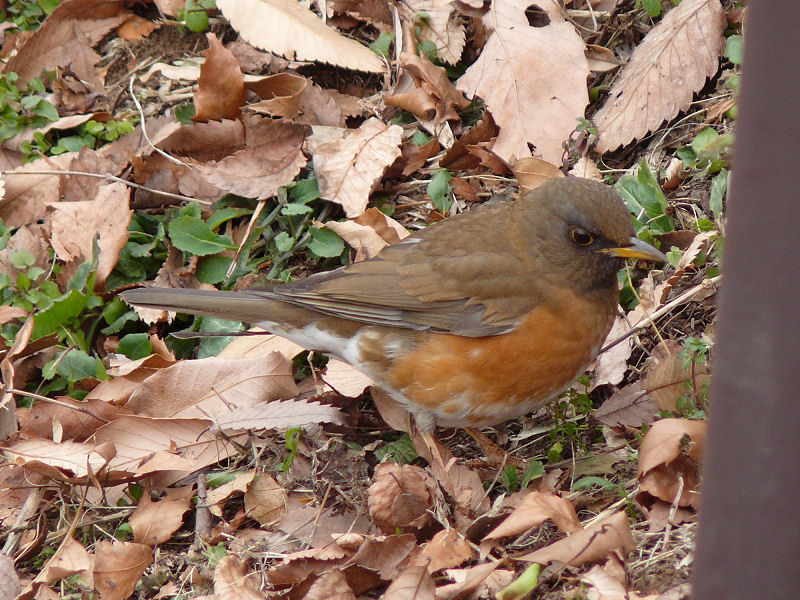
The Brown-headed Thrush is a medium-sized bird, measuring approximately 23 cm in length. Its most notable feature is the rich brown coloration of its head, which distinguishes it from other thrush species. The rest of its plumage is predominantly grayish-brown, with a paler underbelly. The wings and tail exhibit subtle black and gray barring, enhancing its camouflage in wooded environments. Males and females are similar in appearance, though males may display slightly more vibrant coloring. Juveniles can be identified by their streaked plumage and duller overall coloration, which they gradually lose as they mature. In flight, the Brown-headed Thrush shows a steady and purposeful silhouette, with broad wings and a slightly rounded tail. When perched, it often adopts an upright posture, which, combined with its coloration, helps it blend into its surroundings. The Brown-headed Thrush can sometimes be confused with the Pale Thrush (Turdus pallidus), but the latter lacks the characteristic brown head. Its song, a series of clear, melodious notes, is another reliable identifying trait, setting it apart from similar species.
Having trouble telling birds apart? Upload a photo to our bird identification tool for an instant species match.
Brown-headed Thrush Habitat and Range
Preferred Habitat
The Brown-headed Thrush favors temperate and subtropical forests, particularly those with dense undergrowth that provide ample cover and foraging opportunities. It is commonly found in deciduous and mixed woodlands, often at elevations of up to 1,500 meters. During the breeding season, it prefers undisturbed mountainous regions where it can find suitable nesting sites. In winter, the thrush descends to lower elevations and can be found in a broader range of habitats, including urban parks and gardens. Its ability to adapt to various environments, including rural and urban settings, allows it to exploit different food resources and nesting sites. Despite this adaptability, the Brown-headed Thrush is primarily associated with forested areas, where it finds the necessary conditions for breeding and feeding.
Geographic Range
The Brown-headed Thrush breeds primarily in Japan, particularly in Hokkaido and northern Honshu, where it occupies mountainous and forested regions. During the non-breeding season, it migrates to southern Japan and parts of Southeast Asia, including Taiwan and the Ryukyu Islands. Its migratory routes are influenced by seasonal changes, with birds moving southward to escape harsh winter conditions. The species is not considered highly migratory, often showing strong site fidelity by returning to the same breeding and wintering grounds annually. Population densities are highest in regions with abundant forest cover and suitable foraging conditions. While its range is largely confined to East Asia, vagrants have occasionally been reported in other parts of Asia, indicating some level of dispersal beyond its typical range.
Want to know which birds visit your area? Browse our backyard birds by location guides for region-specific species lists.
What Does the Brown-headed Thrush Eat?
The Brown-headed Thrush has a varied diet that includes a wide range of fruits, seeds, and invertebrates. During the breeding season, it primarily feeds on insects and other small invertebrates, which provide the necessary protein for raising chicks. Common prey items include beetles, caterpillars, and spiders. As the seasons change, the thrush's diet shifts to include more fruits and berries, which are abundant in late summer and autumn. It forages mostly on the ground, using its keen eyesight to detect movement and its strong bill to probe the leaf litter. The thrush may also be seen feeding in shrubs and low trees, where it can access fruits and seeds. Its flexible feeding schedule allows it to take advantage of food resources throughout the day, although it is most active during the early morning and late afternoon.
Brown-headed Thrush Behavior and Social Structure
The Brown-headed Thrush is a solitary bird outside the breeding season, although it may form loose flocks during migration. It is territorial during the breeding season, with males establishing and defending territories through song and displays. Courtship involves a series of vocalizations and visual displays, including wing flicking and tail fanning. The thrush is generally a ground forager, often seen hopping along the forest floor in search of food. It is diurnal, with peak activity occurring in the early morning and late afternoon. In response to predators, the thrush employs a variety of strategies, including alarm calls and seeking cover in dense vegetation. Its social structure is primarily monogamous, with pairs working together to raise their young. Flocking behavior is more common outside the breeding season, particularly during migration, when the thrush may join mixed-species flocks for increased protection and foraging efficiency.
Brown-headed Thrush Nesting and Reproduction
The Brown-headed Thrush constructs a cup-shaped nest, usually placed in the fork of a tree or shrub, often at a height of 2-5 meters above the ground. The nest is made from twigs, grass, and leaves, lined with softer materials such as feathers and moss. The female typically lays 3-5 eggs, which she incubates for about two weeks. During this time, the male assists by bringing food to the nest. Once hatched, the chicks remain in the nest for approximately 12-14 days, during which both parents feed and care for them. The young fledge but continue to rely on their parents for food and protection for several weeks. The Brown-headed Thrush generally raises one brood per year, although in favorable conditions, a second brood may be attempted.
Brown-headed Thrush Sounds and Vocalizations
The Brown-headed Thrush is renowned for its beautiful song, which consists of a series of melodious, flute-like notes. The song has a clear and rhythmic quality, often delivered from a high perch to maximize its reach. In addition to its song, the thrush produces a variety of call notes, including a harsh "chuck" used as an alarm call. During the dawn chorus, its song is particularly prominent, contributing to the symphony of sounds in its habitat. The vocalizations of the Brown-headed Thrush can be compared to those of other thrushes, but its unique combination of tones and sequences makes it distinctive.
Interesting Facts About the Brown-headed Thrush
- 1The Brown-headed Thrush can travel over 1,000 kilometers during its seasonal migrations.
- 2A single Brown-headed Thrush can consume up to 100 insects in a day, aiding in pest control.
- 3During courtship, the Brown-headed Thrush male performs a unique display of wing-flicking and tail-fanning.
- 4This thrush species can be found at elevations as high as 1,500 meters in its breeding range.
- 5Brown-headed Thrushes have been observed returning to the same breeding grounds year after year.
- 6The species is known to join mixed-species flocks during migration for increased foraging efficiency.
- 7The melodious song of the Brown-headed Thrush is often compared to a flute, with its clear and rhythmic notes.
Brown-headed Thrush Conservation Status
The Brown-headed Thrush is currently listed as Least Concern by the IUCN, with a stable population trend. However, habitat loss due to deforestation and urban development poses a potential threat. Conservation efforts focus on preserving its natural habitat and monitoring population changes. Historically, the species has maintained a stable presence across its range, but ongoing environmental pressures necessitate continued conservation attention to ensure its survival. The thrush's adaptability to different habitats has helped buffer it against some of the more severe impacts of habitat degradation.
Other Turdidae Species


Birds Similar to the Brown-headed Thrush
These species are often confused with the Brown-headed Thrush due to similar appearance or overlapping range.

