
Brownish-flanked Bush Warbler
Horornis fortipes
Order: Passeriformes / Family: Cettiidae
Wikimedia Commons
About the Brownish-flanked Bush Warbler
The Brownish-flanked Bush Warbler (Horornis fortipes) is an understated yet captivating member of the Cettiidae family, renowned for its subtle beauty and melodious voice. This warbler thrives in the dense underbrush of forests and shrublands across Asia, where its presence often indicates the health of the ecosystem. It plays a crucial role in pest control by consuming a variety of insects, thus maintaining ecological balance. Native to regions such as the Himalayas, Taiwan, and parts of Southeast Asia, this bird adapts remarkably to diverse environments. While mostly resident, some populations exhibit altitudinal movements in response to seasonal changes. Its preference for dense, moist habitats provides it with ample cover and food, while its song serves as both a territorial marker and a means of attracting mates. In the breeding season, the Brownish-flanked Bush Warbler becomes particularly active, engaging in vocal displays and territorial skirmishes. Its ability to thrive in secondary growth and disturbed habitats underscores its resilience. Despite its small size, this bird significantly impacts its environment by participating in seed dispersal. Overall, the Brownish-flanked Bush Warbler's presence signifies a thriving ecosystem, making it a key species for conservationists monitoring habitat health.
The Brownish-flanked Bush Warbler belongs to the family Cettiidae, within the order Passeriformes. These birds typically live average 5 years with maximum recorded of 9 years..
How to Identify a Brownish-flanked Bush Warbler
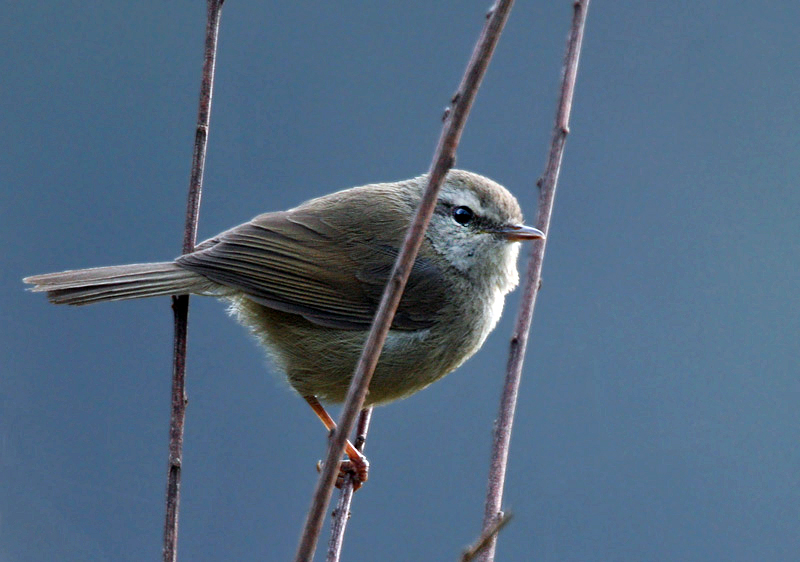
The Brownish-flanked Bush Warbler sports a modest yet distinctive appearance. Adult plumage features olive-brown upperparts and brownish flanks, providing effective camouflage against the forest floor and shrubs. The belly is a lighter buff color, enhancing its subtle contrast. Juveniles resemble adults but may appear slightly duller with less distinct markings. Males and females are similar in appearance, making sex differentiation challenging in the field. This species is often mistaken for other Horornis species, but its song and particular habitat preferences aid in identification. Its flight silhouette is compact and agile, with rapid wing beats, while its perching posture is often low and hidden within thick vegetation. Close observation reveals its distinct tail flicking, a behavior common among bush warblers.
Having trouble telling birds apart? Upload a photo to our bird identification tool for an instant species match.
Brownish-flanked Bush Warbler Habitat and Range
Preferred Habitat
The Brownish-flanked Bush Warbler predominantly inhabits moist, dense undergrowth in forests and shrublands. It thrives in altitudinal ranges from lowland forests to montane regions, typically from 300 to 3,000 meters. Seasonal shifts may drive it to lower elevations during harsh winters. While primarily a forest dweller, it does not shy away from secondary growth areas and disturbed habitats, demonstrating its adaptability. Urban encroachment can fragment its habitat, but it persists in rural landscapes where vegetation remains dense and undisturbed. Its presence in bamboo thickets, understory shrubs, and along forest edges highlights its preference for complex vegetation structures.
Geographic Range
The Brownish-flanked Bush Warbler has a broad range across Asia, from the western Himalayas through the eastern Himalayan states of India to southern China and Taiwan. It is also found in parts of Southeast Asia, including northern Thailand, Myanmar, and Vietnam. This bird primarily resides in mountainous regions, with notable populations in the Himalayas and the hills of southern China. While non-migratory, some populations exhibit altitudinal shifts to lower elevations during colder months. The warbler's range overlaps with other Horornis species, yet its specific song and habitat preferences help distinguish it.
Want to know which birds visit your area? Browse our backyard birds by location guides for region-specific species lists.
What Does the Brownish-flanked Bush Warbler Eat?
The diet of the Brownish-flanked Bush Warbler consists mainly of insects, including beetles, caterpillars, and spiders. During breeding seasons, its diet expands to include a variety of larvae and small arthropods, providing essential protein for developing chicks. The warbler employs a methodical foraging technique, hopping among branches and underbrush to glean insects from leaves and bark. Insect abundance in its habitat influences its feeding schedule, which often peaks at dawn and dusk. Its opportunistic feeding strategy allows adaptation to seasonal prey availability, maintaining its pivotal role in pest control.
Brownish-flanked Bush Warbler Behavior and Social Structure
The Brownish-flanked Bush Warbler is primarily solitary outside the breeding season, showcasing a territorial nature through song and behavior. Vocal displays, including its melodious and repetitive song, serve as both boundary markers and mating calls. During courtship, males may engage in subtle displays such as wing flicking and tail spreading. This species exhibits a remarkable resilience to human presence, often remaining unseen in dense vegetation. Its daily activity peaks during early morning and late afternoon, aligning with cooler temperatures and increased insect activity. In response to predators, the warbler relies on its cryptic plumage and rapid, low flight to evade detection.
Brownish-flanked Bush Warbler Nesting and Reproduction
Nesting for the Brownish-flanked Bush Warbler involves careful selection of dense, low vegetation. Nests are typically cup-shaped, constructed from grass, leaves, and moss, and lined with finer materials for insulation. Preferred nesting locations include thickets and low shrubby layers, often near the ground. Clutch size ranges from 3 to 5 eggs, with an incubation period of about 12 to 14 days. Both parents share incubation duties and subsequent feeding responsibilities, ensuring high chick survival rates. Fledging occurs approximately 12 days post-hatching, after which parents continue feeding fledglings until they are independent. Generally, the species produces two broods per year, maximizing reproductive success.
Brownish-flanked Bush Warbler Sounds and Vocalizations
The primary song of the Brownish-flanked Bush Warbler is a melodious and repetitive series of notes, often described as 'twee-twee-chu-chu.' Its rhythm is steady with a gentle pitch, making it a distinctive sound within its habitat. Call notes are sharp and metallic, serving as contact calls between mates or an alarm system when predators are near. The dawn chorus features this warbler prominently, filling the forest with its resonant, flute-like song. Comparisons to other Horornis species highlight its unique quality and consistency, aiding in field identification.
Interesting Facts About the Brownish-flanked Bush Warbler
- 1Despite its small size, the Brownish-flanked Bush Warbler can be heard up to 200 meters away, thanks to its powerful song.
- 2Horornis fortipes is known to mimic calls of other bird species, adding an element of surprise for birders.
- 3During breeding season, the warbler's plumage appears slightly brighter, enhancing its attractiveness to potential mates.
- 4The Brownish-flanked Bush Warbler's nest is intricately woven, often taking several days to complete.
- 5It is one of the few warbler species that can be found in urban green spaces, adapting to human-altered environments.
- 6Unlike many small birds, the Brownish-flanked Bush Warbler engages in a dual parenting strategy, with both sexes caring for the young.
- 7Its scientific name, Horornis fortipes, reflects its strong feet, which aid in agile movement through dense foliage.
Brownish-flanked Bush Warbler Conservation Status
Currently, the Brownish-flanked Bush Warbler is listed as Least Concern on the IUCN Red List. Its population trend remains stable due to its adaptability to various habitats, including secondary growth and disturbed areas. However, habitat fragmentation from agriculture and urban development poses potential threats. Conservation efforts focus on preserving forested areas and maintaining ecological corridors. Historical data shows that while some local populations have experienced declines, the species overall adapts well to environmental changes, suggesting resilience amidst moderate habitat disruptions.


