
Buff-streaked Chat
Campicoloides bifasciatus
Order: Passeriformes / Family: Muscicapidae

Wikimedia Commons
About the Buff-streaked Chat
The Buff-streaked Chat (Campicoloides bifasciatus) is a striking small passerine bird belonging to the Muscicapidae family. This species resides predominantly in the rocky grasslands and open scrublands of southern Africa, especially in regions such as the Drakensberg Mountains and the highveld of South Africa. Its presence is notable in countries like Lesotho, Swaziland, and certain areas of Zimbabwe, where the bird plays a significant ecological role by controlling insect populations through its active foraging behavior. The Buff-streaked Chat is particularly associated with montane grasslands, often found at elevations ranging from 1,000 to 3,000 meters, where it exploits the varied terrain to hunt its prey. During the breeding season, which coincides with spring and summer in the Southern Hemisphere, the Buff-streaked Chat becomes highly territorial, engaging in conspicuous displays to defend its area. The species is not only important for ecological balance but also serves as an indicator of healthy grassland ecosystems, as it is sensitive to changes in its environment caused by overgrazing and habitat destruction. Beyond its ecological role, the Buff-streaked Chat captivates bird enthusiasts with its melodious song and vibrant plumage, making it a sought-after species for birdwatchers visiting southern Africa.
The Buff-streaked Chat belongs to the family Muscicapidae, within the order Passeriformes. These birds typically live average 5 years with a max recorded of 8 years..
How to Identify a Buff-streaked Chat
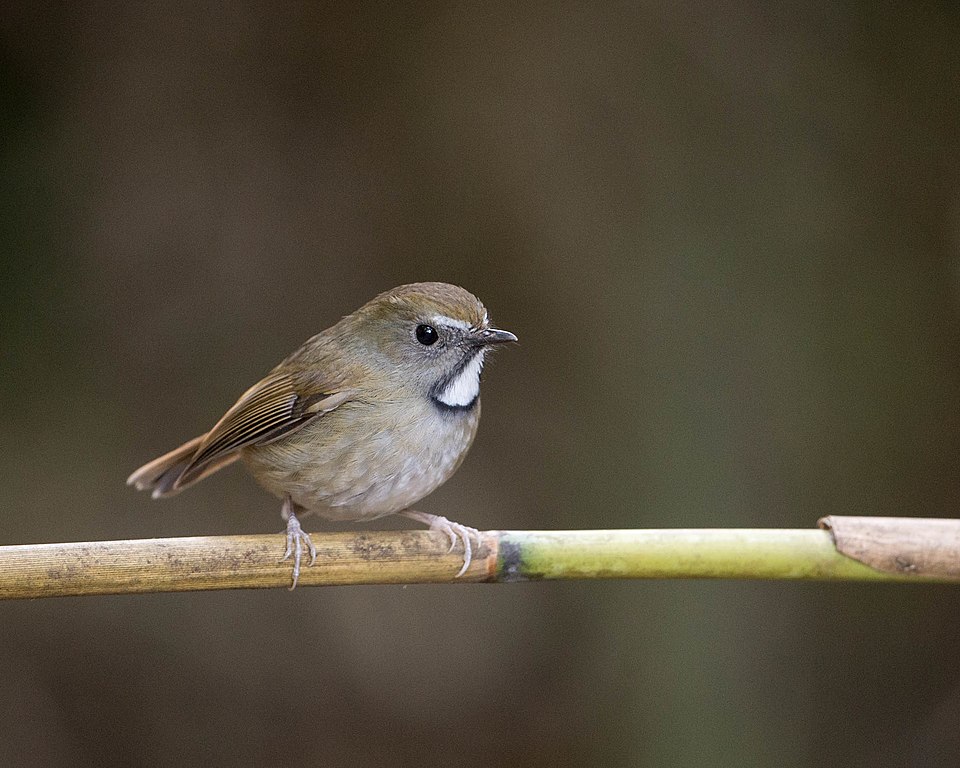
The Buff-streaked Chat is a medium-sized songbird, measuring approximately 16-18 cm in length. Adult males are particularly striking, featuring a distinctive combination of buff, black, and white plumage. The upperparts of the male are primarily black, with a prominent buff streak running from the shoulder to the lower back, a key field mark that gives the bird its common name. The underparts are predominantly white, contrasting sharply with the dark upperparts. Female Buff-streaked Chats are less flamboyant, with more muted colors; they display brownish upperparts with similar buff streaks, making them harder to distinguish in the field. Juvenile birds resemble females but can be identified by their speckled appearance. Both sexes have a characteristic upright perching posture, often seen on rocks or low shrubs. In flight, the Buff-streaked Chat displays a distinctive fluttery pattern with its rounded wings and can be differentiated from similar species like the Familiar Chat by its unique color pattern and habitat preference.
Having trouble telling birds apart? Upload a photo to our bird identification tool for an instant species match.
Buff-streaked Chat Habitat and Range
Preferred Habitat
The Buff-streaked Chat inhabits open grasslands and montane regions, thriving in areas where rocky outcrops and sparse vegetation provide both foraging opportunities and nesting sites. These birds are most commonly found in the Drakensberg Mountains and other high-altitude regions of southern Africa, such as the highveld of South Africa, Lesotho, and Swaziland. Preferring elevations between 1,000 and 3,000 meters, they are adapted to cooler, moist climates. The Buff-streaked Chat shows little preference for urban environments, typically avoiding heavily developed areas and instead favoring rural landscapes where grazing and agriculture are less intensive. Seasonal shifts in habitat are minimal, as the bird is largely sedentary, remaining within its established range throughout the year.
Geographic Range
The Buff-streaked Chat is a resident breeder in southern Africa, with its range primarily encompassing the high-altitude regions of South Africa, Lesotho, and Swaziland. While non-migratory, it occupies a relatively narrow range confined to suitable montane grasslands and rocky outcrops. The species is particularly abundant in the Drakensberg Mountains, where population densities can be quite high in suitable habitats. The range extends marginally into Zimbabwe, where the bird is less common. Its preference for specific habitat types means that the Buff-streaked Chat's distribution is patchy, with populations thriving in areas that offer the right combination of elevation, climate, and vegetation.
Want to know which birds visit your area? Browse our backyard birds by location guides for region-specific species lists.
What Does the Buff-streaked Chat Eat?
The Buff-streaked Chat primarily feeds on a diet of insects and other small invertebrates, which it actively hunts among the rocky outcrops and grasslands it inhabits. Its diet includes beetles, ants, spiders, and caterpillars, which are abundant in its preferred habitats. The bird employs a variety of foraging techniques, including ground gleaning and darting flights to capture prey. Seasonal variations in diet are minimal, but during the breeding season, the bird may increase its foraging activity to meet the higher nutritional demands of raising young. The Buff-streaked Chat typically feeds throughout the day, with peaks in activity during the cooler morning and late afternoon hours when insect activity is high.
Buff-streaked Chat Behavior and Social Structure
The Buff-streaked Chat exhibits a range of behaviors characteristic of its social and territorial nature. During the breeding season, males become highly territorial, performing aerial displays and singing to establish and defend their territory. These displays often involve the male perching prominently on rocks or shrubs, where its song can be heard echoing across the grasslands. The bird's daily activities include foraging for insects, which it does alone or in pairs. While generally solitary outside of the breeding season, Buff-streaked Chats may form loose flocks during winter months, especially in areas where food sources are abundant. The species exhibits a distinctive flight pattern, characterized by short, fluttery flights interspersed with glides. In response to predators, such as raptors, the Buff-streaked Chat relies on its cryptic plumage and quick, erratic flight to evade capture.
Buff-streaked Chat Nesting and Reproduction
The nesting habits of the Buff-streaked Chat reflect its adaptation to rocky, open environments. These birds typically build their nests in rock crevices or on ledges, where they are well-protected from the elements and potential predators. The nest is a cup-shaped structure, constructed from grass, plant fibers, and lined with softer materials such as feathers. During the breeding season, which spans from September to January, the female lays a clutch of 2-4 eggs. The incubation period lasts approximately two weeks, with the female responsible for most of the incubation duties while the male provides food. After hatching, the chicks are altricial, requiring significant parental care. Both parents participate in feeding the young, which fledge about three weeks after hatching. The Buff-streaked Chat typically raises one brood per year, although in good conditions, a second brood is possible.
Buff-streaked Chat Sounds and Vocalizations
The Buff-streaked Chat's song is a melodious series of whistles and trills, often delivered from a prominent perch. The primary song consists of varied phrases with a sweet, clear tone, making it a delightful addition to the soundscape of its grassland habitat. In addition to its song, the Buff-streaked Chat emits a variety of calls, including a sharp 'chik-chik' alarm call when disturbed or when predators are near. During the dawn chorus, males sing with increased intensity, establishing territories and attracting mates. These vocalizations are key to the bird's social interactions and territorial behavior.
Interesting Facts About the Buff-streaked Chat
- 1The Buff-streaked Chat is one of the few bird species endemic to the grasslands of southern Africa, making it a unique biological asset to the region.
- 2During the breeding season, male Buff-streaked Chats perform a series of aerial displays to attract females, showcasing their agility and strength.
- 3Despite being primarily insectivorous, Buff-streaked Chats have been observed occasionally consuming small seeds and berries.
- 4The Buff-streaked Chat's nest, often hidden in rocky crevices, provides excellent protection from both predators and harsh weather conditions.
- 5Buff-streaked Chats are known for their distinctive upright perching posture, which allows them to survey their surroundings for prey and intruders.
- 6Though not a migratory species, Buff-streaked Chats may exhibit local movements in response to environmental conditions such as drought or food scarcity.
- 7The Buff-streaked Chat's vocal repertoire includes over a dozen distinct calls and songs, each serving a different social or territorial function.
Buff-streaked Chat Conservation Status
The Buff-streaked Chat is currently listed as Least Concern by the IUCN, with stable population trends across its range. Despite this, the species faces threats from habitat loss due to agricultural expansion and overgrazing, which can degrade its preferred grassland habitats. Conservation efforts focus on protecting montane grasslands and ensuring sustainable land-use practices to preserve the bird's natural environment. Historically, the Buff-streaked Chat's population has remained relatively stable, but ongoing monitoring is essential to detect any potential declines caused by environmental changes.
Other Muscicapidae Species


Birds Similar to the Buff-streaked Chat
These species are often confused with the Buff-streaked Chat due to similar appearance or overlapping range.