
Cerulean Cuckooshrike
Coracina temminckii
Order: Passeriformes / Family: Campephagidae
Wikimedia Commons
About the Cerulean Cuckooshrike
The Cerulean Cuckooshrike (Coracina temminckii) is a captivating bird renowned for its vibrant blue coloration, which makes it a distinctive member of the Campephagidae family. This medium-sized passerine is primarily found in the montane forests of Southeast Asia, particularly on the islands of Sumatra and Java. These regions are characterized by their lush, dense forest cover, which provides an ideal habitat for the cuckooshrike. The bird's presence signifies the health of these ecosystems, as it relies on the rich insect life that thrives in such environments. As both a predator and a prey species, the Cerulean Cuckooshrike plays a crucial role in maintaining ecological balance. It helps control insect populations while also serving as a food source for larger birds of prey. Its foraging behavior involves gleaning insects from foliage and branches, contributing to the control of insect populations. Seasonally, the Cerulean Cuckooshrike exhibits some altitudinal movement, often descending to lower elevations during the non-breeding season. This movement is driven by the availability of food resources and the need to escape harsh weather conditions at higher altitudes. During the breeding season, typically from March to August, it returns to higher elevations to take advantage of the abundant food supply necessary for raising its young. The bird's adaptability to different forest types, from primary to secondary growth, highlights its ecological resilience. However, habitat destruction due to logging and agricultural expansion poses significant threats to its populations. Conservation efforts focusing on preserving its montane forest habitats are essential to ensure the continued survival of the Cerulean Cuckooshrike.
The Cerulean Cuckooshrike belongs to the family Campephagidae, within the order Passeriformes. These birds typically live average lifespan of 6-8 years, with some living up to 12 years..
How to Identify a Cerulean Cuckooshrike
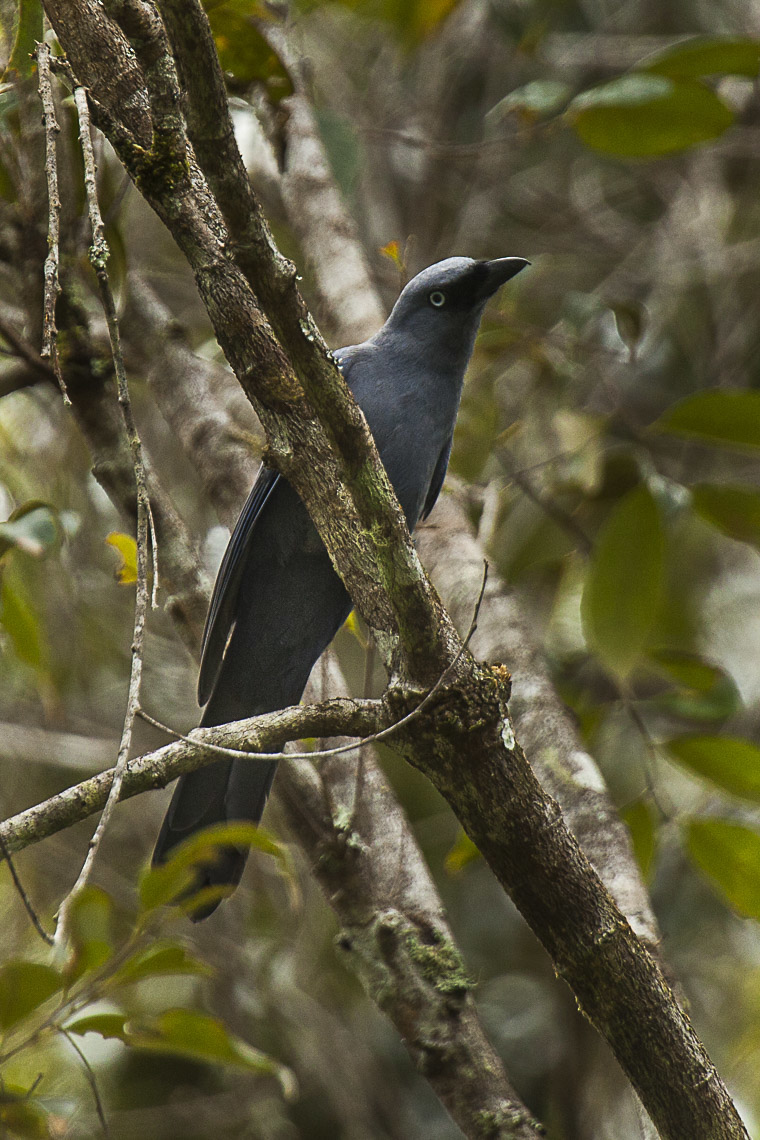
The adult Cerulean Cuckooshrike is easily recognized by its brilliant cerulean blue plumage, which covers most of its body. Its wings and tail are slightly darker, offering a subtle contrast against the lighter blue of its underparts. The male and female are similar in appearance, although females may exhibit slightly duller hues. Juveniles, in contrast, display a more subdued color palette with a grayish-blue tone and less pronounced markings, which gradually brighten as they mature. The cuckooshrike's stout bill and strong legs are adapted for its insectivorous diet. Its eyes are dark, providing a striking contrast against the vibrant feathers. When perched, the bird holds an upright posture, often remaining motionless for extended periods as it scans for prey. In flight, the Cerulean Cuckooshrike exhibits a buoyant and direct flight pattern, with steady wingbeats and occasional glides. While it could be confused with other blue birds within its range, such as certain species of leafbirds or flycatchers, its larger size and distinctive behavior help set it apart.
Having trouble telling birds apart? Upload a photo to our bird identification tool for an instant species match.
Cerulean Cuckooshrike Habitat and Range
Preferred Habitat
The Cerulean Cuckooshrike inhabits montane forests, thriving at elevations ranging from 800 to 2,500 meters. It prefers primary forests but can also be found in mature secondary growth. These forests, rich in biodiversity, provide the dense canopy cover and abundant insect life the bird requires. While primarily a forest bird, it sometimes visits forest edges and clearings, especially during its altitudinal movements in the non-breeding season. The cuckooshrike is not typically found in urban areas, as it relies heavily on the undisturbed forest environments of Southeast Asia's mountain ranges. Seasonal habitat shifts occur as the bird descends to lower elevations to escape harsh weather and find food during the wetter months.
Geographic Range
The Cerulean Cuckooshrike is endemic to Southeast Asia, with its range primarily confined to the islands of Sumatra and Java in Indonesia. Within this region, it occupies the montane forests, favoring the cooler, moist climates found at higher elevations. The bird does not undertake long-distance migrations but shows some altitudinal shifts in response to changing seasonal conditions. Population density is typically higher in areas with extensive undisturbed montane forests. Conservation of these habitats is crucial, as these areas are increasingly threatened by human activities such as logging and agricultural expansion.
Want to know which birds visit your area? Browse our backyard birds by location guides for region-specific species lists.
What Does the Cerulean Cuckooshrike Eat?
The Cerulean Cuckooshrike feeds primarily on insects, including caterpillars, beetles, and other arthropods, which it skillfully extracts from the foliage and branches of its forest habitat. Its foraging technique involves methodically moving through the canopy, often hanging upside down to reach prey hidden on the underside of leaves. During the breeding season, the bird's diet becomes more varied to include fruits and berries, providing additional nutrition necessary for raising chicks. The cuckooshrike's feeding schedule is largely diurnal, with peak activity occurring during the early morning and late afternoon when insect activity is highest. Its ability to adapt its diet according to seasonal availability of food resources illustrates its ecological flexibility.
Cerulean Cuckooshrike Behavior and Social Structure
The Cerulean Cuckooshrike is generally solitary or found in pairs, particularly during the breeding season when it exhibits strong territorial behavior. Males engage in conspicuous courtship displays, often involving aerial acrobatics and vocalizations to attract a mate. Outside the breeding season, the bird may join mixed-species foraging flocks, benefiting from increased vigilance and access to food resources. When threatened by predators, the cuckooshrike uses its agility to evade capture, often retreating to dense foliage for cover. Its daily activity pattern includes periods of active foraging interspersed with rest during the hottest parts of the day. This rhythm ensures the bird maximizes its energy efficiency while minimizing exposure to potential threats.
Cerulean Cuckooshrike Nesting and Reproduction
The Cerulean Cuckooshrike constructs a cup-shaped nest using twigs, leaves, and other plant materials, which it skillfully weaves together and positions high in the forest canopy. Nesting sites are typically selected to provide concealment from predators and protection from the elements. The bird lays a clutch of 2 to 3 eggs, with both parents sharing incubation duties over a period of approximately 14 to 16 days. Once the chicks hatch, they are fed a diet rich in insects, which aids in their rapid growth. Fledging occurs around 18 to 21 days post-hatching, with both parents continuing to care for the young until they are independent. The Cerulean Cuckooshrike typically raises one brood per year, although in optimal conditions, a second brood is possible.
Cerulean Cuckooshrike Sounds and Vocalizations
The Cerulean Cuckooshrike's primary song is a series of clear, melodious whistles that rise and fall in pitch, often described as having a flute-like quality. These vocalizations are most prominent during the breeding season, serving both to establish territory and attract mates. In addition to its song, the bird emits shorter call notes, which are used to communicate with mates and offspring or as alarm calls when predators are nearby. The cuckooshrike participates in the dawn chorus, adding its distinct voice to the chorus of forest sounds. Its vocalizations, while not as complex as some other songbirds, are a defining trait of its presence in the montane forests.
Interesting Facts About the Cerulean Cuckooshrike
- 1The Cerulean Cuckooshrike's name comes from its vibrant blue plumage, reminiscent of the color of a clear sky.
- 2Unlike many cuckoos, the Cerulean Cuckooshrike builds its own nest and raises its young, showcasing parental dedication.
- 3The bird's foraging technique is highly acrobatic, often hanging upside down to reach insects on the undersides of leaves.
- 4Cerulean Cuckooshrikes are part of mixed-species flocks during the non-breeding season, enhancing their foraging success.
- 5Despite their solitary nature, these birds exhibit strong pair bonds, often staying with the same mate for multiple seasons.
- 6Their diet shifts seasonally, incorporating more fruits during the breeding season to meet the nutritional needs of growing chicks.
- 7The Cerulean Cuckooshrike's song is a key identifier, with its flute-like whistles resonating through the montane forests.
Cerulean Cuckooshrike Conservation Status
The Cerulean Cuckooshrike is currently classified as Least Concern by the IUCN, although its populations are subject to pressures from habitat loss and degradation. Deforestation for timber and agricultural expansion represents the primary threats to its montane forest habitat. Conservation efforts focus on protecting these critical areas through the establishment of reserves and sustainable forestry practices. Historical population data suggest that while the species is not immediately at risk, continued habitat loss could lead to declines. Ongoing monitoring and habitat restoration are vital to ensuring the cuckooshrike's long-term survival.


