
Chestnut-naped Forktail
Enicurus ruficapillus
Order: Passeriformes / Family: Muscicapidae

Wikimedia Commons
About the Chestnut-naped Forktail
The Chestnut-naped Forktail (Enicurus ruficapillus) stands as a striking member of the Muscicapidae family, renowned for its vibrant chestnut crown and sharply contrasting black and white body. This medium-sized songbird is primarily found in the Southeast Asian regions, inhabiting countries such as Thailand, Malaysia, and Indonesia. The species thrives in the humid, lowland, and montane forests of these regions, typically up to elevations of 1,500 meters. The Chestnut-naped Forktail plays a crucial ecological role as an insectivore, aiding in the control of insect populations and thus contributing to the health of its forest habitats.
This species exhibits a pronounced preference for forested areas near streams or rivers, where it can often be seen foraging along the banks. The Chestnut-naped Forktail is significant not only for its beauty but also for its contribution to the biodiversity of its native regions, acting as an indicator of healthy forest ecosystems. Seasonally, the forktail does not undergo large migrations but may exhibit altitudinal movements in response to environmental changes, such as variations in food availability or temperature shifts.
The Chestnut-naped Forktail is predominantly solitary or found in pairs, especially during the breeding season. Their presence is often indicated by their melodic song, which resonates through the dense foliage. The preservation of its natural habitat is vital for the survival of the Chestnut-naped Forktail, as deforestation poses a significant threat to its population. Conservation efforts aimed at protecting forest areas are crucial for maintaining the ecological balance within these regions.
The Chestnut-naped Forktail belongs to the family Muscicapidae, within the order Passeriformes. These birds typically live average 5-7 years with a maximum recorded of 10 years..
How to Identify a Chestnut-naped Forktail
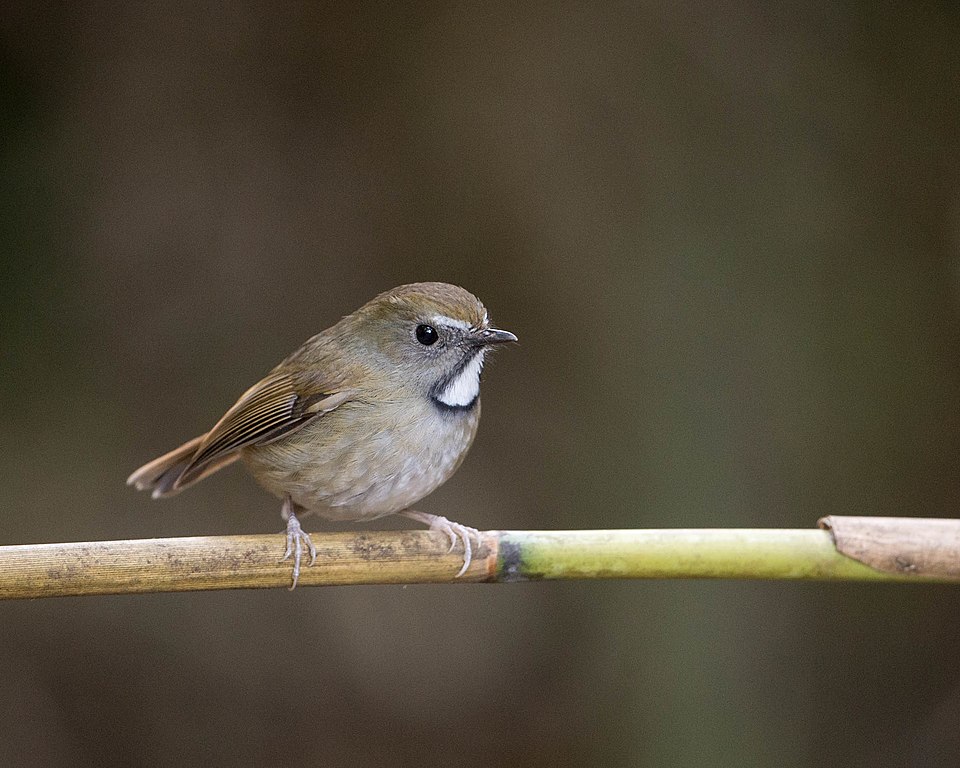
Identifying the Chestnut-naped Forktail involves noting its distinct coloration and unique plumage pattern. Adult birds showcase a radiant chestnut-colored nape, contrasting sharply with their predominantly black and white body. The head and upper parts are mostly black, while the lower back and rump are white, creating a striking contrast. The tail is long and deeply forked, a feature characteristic of the species and contributing to its name. In flight, the forktail presents a distinctive silhouette with a clear fork in its tail, aiding in identification from a distance.
Juveniles differ from adults by having a more subdued coloration, with less pronounced chestnut markings and a generally duller appearance. There are subtle differences between males and females, with males usually exhibiting slightly brighter plumage, although this can be challenging to discern without close observation.
The Chestnut-naped Forktail can be confused with other forktail species, particularly those sharing its habitat, such as the White-crowned Forktail. However, the distinctive chestnut nape of Enicurus ruficapillus serves as a key distinguishing feature. When perched, the forktail maintains an upright posture, often flicking its tail, a behavior that helps differentiate it from other similar species.
Having trouble telling birds apart? Upload a photo to our bird identification tool for an instant species match.
Chestnut-naped Forktail Habitat and Range
Preferred Habitat
The Chestnut-naped Forktail primarily inhabits humid tropical forests, particularly favoring areas with dense undergrowth and proximity to water sources like streams and rivers. It is most frequently observed in primary and secondary lowland forests but can also be found in montane regions up to about 1,500 meters in elevation. The presence of clean, flowing water is a significant factor in habitat selection, as the bird often forages along the banks.
While largely forest-dependent, there are records of the Chestnut-naped Forktail venturing into more open areas, such as forest edges and clearings, particularly when pursuing food. Seasonal shifts in habitat are minimal, though some individuals may move to lower elevations during colder months. Unlike some bird species, the Chestnut-naped Forktail is rarely found in urban environments, due to its strong reliance on forested habitats and natural water courses.
Geographic Range
The range of the Chestnut-naped Forktail is primarily confined to Southeast Asia, with the bird found in the forests of Thailand, Malaysia, and Indonesia, including Sumatra and Borneo. The species is a resident breeder within these regions, showing little migratory behavior. Its distribution is closely tied to the availability of suitable forest habitats, particularly those near streams and rivers.
Population density is greatest in areas with intact forest cover, where the conditions are ideal for foraging and breeding. While the Chestnut-naped Forktail is not known for extensive migrations, altitudinal movements may occur as individuals seek optimal conditions for feeding and nesting throughout the year. Conservation of forested areas in its range is critical to maintaining healthy population levels.
Want to know which birds visit your area? Browse our backyard birds by location guides for region-specific species lists.
What Does the Chestnut-naped Forktail Eat?
The diet of the Chestnut-naped Forktail primarily consists of insects and other small invertebrates, which it skillfully hunts along forest streams and riverbanks. The bird employs a foraging technique that involves darting along the ground, flipping over leaves and debris to uncover hidden prey. Its keen eyesight aids in spotting insects, spiders, and occasionally small crustaceans, which it captures with precision.
Seasonal variations in diet are influenced by the availability of prey. During wetter months, when insect populations thrive, the forktail's diet becomes more diverse. The Chestnut-naped Forktail typically feeds during the day, with peak activity occurring in the early morning and late afternoon when insects are most active. Its role as an insectivore is vital for controlling insect populations, thereby contributing to the ecological balance of its habitat.
Chestnut-naped Forktail Behavior and Social Structure
The Chestnut-naped Forktail displays a range of interesting behaviors that highlight its adaptability and ecological role. It is generally a solitary creature or found in pairs, particularly during the breeding season when territorial behavior becomes more pronounced. The bird is known for its distinctive tail flicking, a behavior observed frequently while foraging or perched. This tail movement may serve as a communication signal or help in startling prey.
Courtship displays involve a series of aerial and vocal performances, with males showcasing their plumage to attract females. Once paired, the Chestnut-naped Forktail exhibits strong territorial instincts, actively defending its chosen area from intruders. Despite its solitary nature, the species does not exhibit aggressive flocking behavior, although loose associations may form in areas with abundant food resources.
In response to predators, the forktail relies on its agility and the dense forest cover to evade capture, often retreating to thick undergrowth. Daily activity patterns are diurnal, with birds most active during dawn and dusk, capitalizing on peak insect availability.
Chestnut-naped Forktail Nesting and Reproduction
The nesting habits of the Chestnut-naped Forktail involve crafting a nest that is both concealed and secure, usually located near water. The nest is often situated in a crevice or depression along a steep bank or among rocks, providing protection from predators. Constructed primarily from leaves, moss, and fine roots, the nest is an intricate structure that blends seamlessly with its surroundings.
A typical clutch comprises 2-3 eggs, with both parents playing active roles in incubation and care. The incubation period lasts about 14-16 days, during which time the parents alternate shifts to ensure constant warmth and protection for the eggs. Once hatched, the chicks remain in the nest for approximately 12-14 days, receiving regular feedings from both parents. The Chestnut-naped Forktail typically raises one or two broods per year, contingent on food availability and environmental conditions.
Chestnut-naped Forktail Sounds and Vocalizations
The vocalizations of the Chestnut-naped Forktail are both distinctive and melodious, characterized by a series of clear, sweet notes. The primary song consists of a repetitive phrase, often described as a musical 'twee-twee-twee,' with each note delivered in rapid succession. It is typically heard during dawn and dusk, resonating through the forest as males establish territory and attract mates.
In addition to its song, the forktail emits a variety of call notes, including sharp, metallic 'pik' sounds used for communication between mates or to signal alarm. Alarm calls are more abrupt and harsh, serving to alert others of potential threats. The vocal repertoire of the Chestnut-naped Forktail is an essential component of its behavioral ecology, facilitating interactions and maintaining social bonds.
Interesting Facts About the Chestnut-naped Forktail
- 1The Chestnut-naped Forktail is one of the few bird species that prefers to forage almost exclusively along stream banks.
- 2This bird's distinctive tail is not just for show; it aids in balance and maneuvering through dense undergrowth.
- 3The species displays a fascinating courtship ritual where males perform intricate aerial displays to woo potential mates.
- 4Despite its small size, the Chestnut-naped Forktail can cover extensive ground during foraging, often traveling along entire stream stretches.
- 5The bird's melodious song is often used as an indicator of forest health by researchers studying these ecosystems.
- 6Its preference for pristine water sources makes it an excellent bioindicator for environmental quality assessments.
- 7Young forktails can often be seen practicing their tail-flicking behavior even before they are capable of sustained flight.
Chestnut-naped Forktail Conservation Status
The Chestnut-naped Forktail currently holds a status of Least Concern according to the IUCN Red List, with populations considered stable. However, ongoing threats such as habitat destruction due to logging, agriculture, and infrastructure development pose significant risks to its future. Maintaining healthy forest ecosystems is crucial, as these birds rely heavily on undisturbed habitats for survival. Conservation efforts are focused on protecting remaining forest areas, enforcing logging regulations, and promoting sustainable land-use practices. Historical population changes have been linked to fluctuations in habitat availability, underscoring the importance of habitat conservation. Continued monitoring and habitat preservation efforts are vital to ensuring the long-term survival of the Chestnut-naped Forktail.
Other Muscicapidae Species


Birds Similar to the Chestnut-naped Forktail
These species are often confused with the Chestnut-naped Forktail due to similar appearance or overlapping range.

