
Coastal Miner
Geositta peruviana
Order: Passeriformes / Family: Furnariidae
Wikimedia Commons
About the Coastal Miner
The Coastal Miner, Geositta peruviana, is a small passerine that holds a unique place in the avian communities of South America's coastal deserts. Belonging to the family Furnariidae, the Coastal Miner thrives in arid environments, particularly along the coastal strip of Peru and northern Chile. This bird is noted for its adeptness at navigating harsh, barren landscapes where few other species dare to tread. As a member of the ovenbird family, the Coastal Miner shares familial traits of adaptability and ground foraging but stands out due to its specialized habitat preferences.
The Coastal Miner's ecological role is pivotal in these arid regions, as it contributes to the control of insect populations through its foraging activities. Its presence in the coastal desert ecosystem is a testament to its resilience and adaptability to extreme conditions. Unlike many songbirds that prefer lush forests or grasslands, the Coastal Miner has evolved to exploit niches in areas characterized by sparse vegetation and sandy terrain.
Seasonal behaviors of the Coastal Miner are subtle yet significant. While many birds exhibit pronounced migratory or breeding patterns, the Coastal Miner remains relatively sedentary, reflecting the stable yet challenging environment it inhabits. The breeding season typically aligns with the milder climatic conditions of late winter and early spring when food resources are slightly more abundant. During this time, the Coastal Miner exhibits increased territoriality and vocal activity, as pairs establish and defend nesting sites.
The Coastal Miner's significance extends beyond its ecological contributions. It serves as an indicator species for the health of coastal desert ecosystems. Its presence or absence can provide insights into changes in environmental conditions, such as shifts in climate or human impacts. Conservationists and ornithologists alike value the Coastal Miner as a subject of study, offering clues into the broader ecological dynamics of its habitat.
The Coastal Miner belongs to the family Furnariidae, within the order Passeriformes. These birds typically live 3-5 years, with a maximum recorded of 7 years.
How to Identify a Coastal Miner
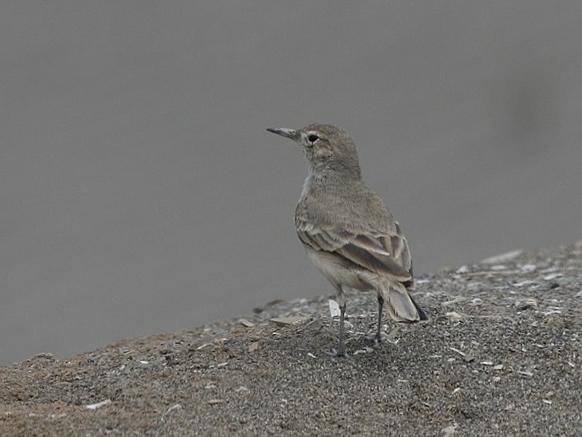
The Coastal Miner is a small bird, measuring approximately 14 to 16 centimeters in length, with a wingspan ranging from 25 to 28 centimeters. Its plumage is predominantly sandy brown, which provides effective camouflage against the arid desert landscapes it inhabits. The bird's underparts are a paler buff color, often blending seamlessly into the sandy ground.
Adult Coastal Miners exhibit little sexual dimorphism, meaning males and females look similar. However, females may appear slightly duller in coloration. Juveniles resemble adults but have softer, fluffier plumage that lacks the subtle tonal contrasts seen in mature birds. The Coastal Miner's flight silhouette is characterized by rapid, low-level flights, often hugging the contours of the land to avoid detection.
The bird's perching posture is distinctive, often observed on low shrubs or rocks. It has a slightly hunched stance, with its tail held level or slightly elevated. While confusion with other species is minimal due to its unique habitat, it could be mistaken for other ground-dwelling birds like the Tawny-throated Dotterel in overlapping regions. However, the Coastal Miner's smaller size and more consistent sandy coloration serve as distinguishing features.
Having trouble telling birds apart? Upload a photo to our bird identification tool for an instant species match.
Coastal Miner Habitat and Range
Preferred Habitat
The Coastal Miner inhabits the arid coastal deserts of South America, particularly along the narrow strip of land between the Pacific Ocean and the Andes Mountains. Its range spans northern Chile and Peru, where it prefers open, sandy areas with sparse vegetation. The Coastal Miner is most commonly found at elevations ranging from sea level to about 1,500 meters.
This bird displays a preference for habitats such as coastal dunes, rocky outcrops, and semi-desert grasslands. Despite the inhospitable nature of these environments, the Coastal Miner thrives by exploiting microhabitats and resources that other species overlook. Seasonal shifts in habitat use are minimal, as the Coastal Miner's home range offers consistent environmental conditions throughout the year.
While the Coastal Miner typically avoids urban areas, it can occasionally be found near human settlements, especially in regions where natural habitats overlap with agricultural lands or are adjacent to coastal developments. However, its presence in such areas is usually transient and less common.
Geographic Range
The Coastal Miner is endemic to the western coasts of South America, with a breeding range predominantly within Peru and northern Chile. Its core population centers are found along the coastal deserts, from the La Libertad region in Peru down to the Atacama Desert in Chile.
The bird is primarily a resident species, exhibiting little to no long-distance migratory behavior. Instead, it undertakes local movements in response to seasonal changes in food availability or environmental conditions. These movements are typically confined to altitudinal shifts or short-range dispersals within its existing range.
High population densities occur in areas where the coastal desert provides ample foraging opportunities and suitable nesting sites. While it remains relatively widespread within its range, the Coastal Miner's distribution is patchy, reflecting the fragmented and niche-specific nature of its preferred habitats.
Want to know which birds visit your area? Browse our backyard birds by location guides for region-specific species lists.
What Does the Coastal Miner Eat?
The Coastal Miner's diet primarily consists of insects and other invertebrates, which it skillfully extracts from the sandy soils and sparse vegetation of its habitat. Its foraging technique is characterized by rapid movements and frequent stops, during which it probes the ground with its slender bill to capture prey.
Insect larvae and ants form the bulk of its diet, providing the necessary protein and energy for survival in the nutrient-poor environments of the coastal deserts. During the breeding season, the Coastal Miner may increase its intake of insects to meet the higher nutritional demands of raising chicks.
Although primarily insectivorous, the Coastal Miner occasionally supplements its diet with small seeds or plant material, particularly during periods of low insect abundance. This dietary flexibility allows the bird to adapt to fluctuating resource availability, enhancing its resilience in a challenging ecosystem.
Coastal Miner Behavior and Social Structure
The Coastal Miner exhibits fascinating behavioral adaptations to its arid environment. It is largely solitary or found in pairs, especially during the breeding season, when it becomes highly territorial. Males engage in vocal displays to establish and defend their territories, often singing from elevated perches like rocks or low shrubs.
Courtship displays involve mutual preening and synchronized foraging between pairs, strengthening pair bonds. Despite its generally solitary nature, the Coastal Miner may form small, loose flocks during non-breeding periods, likely as a strategy to enhance foraging efficiency and predator detection.
In response to predators, the Coastal Miner relies on its cryptic plumage and swift, low flights to evade detection. Its daily activity pattern is bimodal, with peak foraging occurring in the early morning and late afternoon, avoiding the harsh midday sun typical of its desert habitat.
Coastal Miner Nesting and Reproduction
The Coastal Miner constructs its nest in burrows or cavities, utilizing natural crevices in rocky outcrops or self-excavated holes in sandy banks. Nesting materials are sparse, often consisting of dry grasses and feathers, with the occasional addition of softer plant fibers to line the nest.
Clutch size typically ranges from two to three eggs, which are incubated by both parents for approximately 14 to 16 days. The fledging period lasts about 17 to 20 days, during which both parents actively feed and protect the young. Parental roles are shared, with both males and females participating in incubation and chick-rearing duties.
The Coastal Miner usually raises one brood per year, although favorable conditions may occasionally lead to a second brood. Breeding success is closely linked to environmental factors such as food availability and nest predation rates, which can vary significantly across its range.
Coastal Miner Sounds and Vocalizations
The Coastal Miner's song is a series of rapid, melodious chirps, each note delivered at a steady pace and medium pitch. The song serves primarily as a territorial and courtship display, often heard during the early morning hours.
In addition to its primary song, the Coastal Miner emits soft contact calls to maintain communication between pairs or family groups. Alarm calls, sharp and high-pitched, are reserved for predator alerts, prompting immediate evasive action.
During the dawn chorus, the Coastal Miner contributes its voice to the desert soundscape, its song blending with those of other avian residents. Despite the arid environment, these vocalizations are clear and carry well across the open terrain.
Interesting Facts About the Coastal Miner
- 1The Coastal Miner is one of the few bird species adapted to the extreme conditions of the Atacama Desert, one of the driest places on Earth.
- 2Despite its small size, the Coastal Miner can travel over 10 kilometers in search of food, demonstrating remarkable endurance.
- 3The Coastal Miner often uses its slender bill to probe deep into sandy soils to extract hidden insect prey.
- 4During the breeding season, male Coastal Miners sing up to 200 times a day to establish and defend their territories.
- 5The Coastal Miner's nest burrows can be up to 50 centimeters deep, providing protection from predators and extreme temperatures.
- 6This bird's camouflage is so effective that it can remain undetected even when just a few meters away from observers.
- 7The Coastal Miner's presence in an area can indicate the health of the local ecosystem, making it a valuable bioindicator.
Coastal Miner Conservation Status
The Coastal Miner is currently classified as Least Concern by the IUCN, reflecting its relatively stable population across its range. However, localized threats such as habitat degradation, agricultural expansion, and climate change pose potential risks to its long-term survival. Conservation efforts focus on preserving the integrity of its coastal desert habitats, where human activities could disrupt the delicate ecological balance. Monitoring programs aim to track population trends and assess the impacts of environmental changes. Historical population data suggest that the Coastal Miner has maintained stable numbers, but ongoing vigilance is necessary to address emerging threats. Habitat protection and sustainable land use practices are essential to ensure the continued survival of this unique species.
Other Furnariidae Species


Birds Similar to the Coastal Miner
These species are often confused with the Coastal Miner due to similar appearance or overlapping range.

