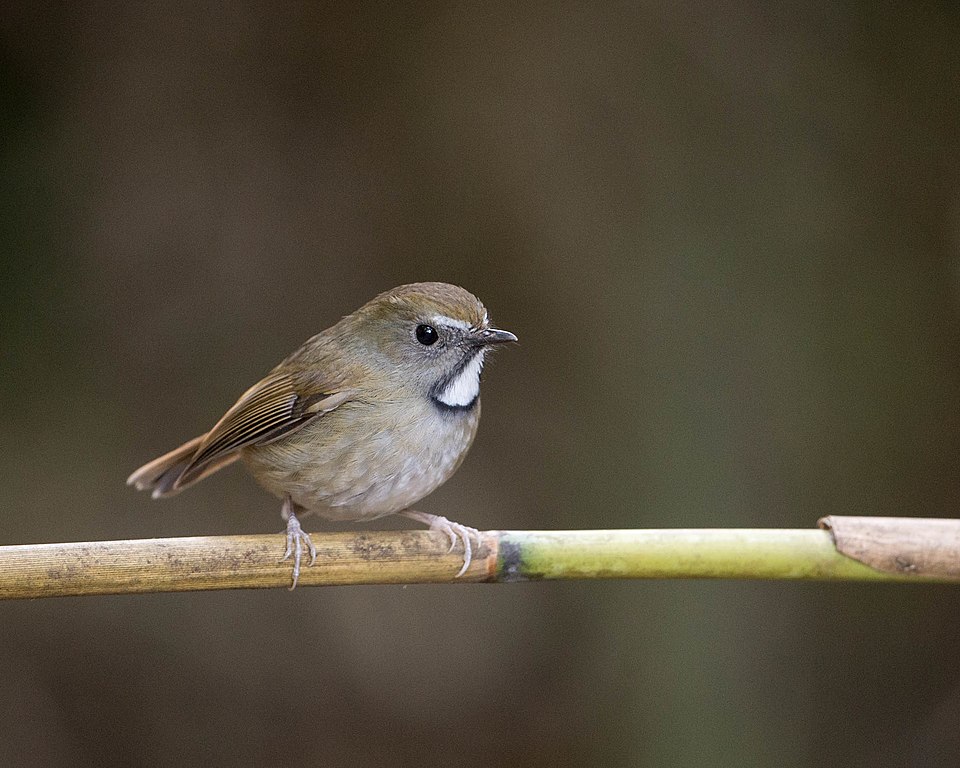
Collared Bush-Robin
Tarsiger johnstoniae
Order: Passeriformes / Family: Muscicapidae

Wikimedia Commons
About the Collared Bush-Robin
The Collared Bush-Robin, Tarsiger johnstoniae, is a captivating songbird native to the mountainous regions of Taiwan. This bird is a member of the Muscicapidae family and belongs to the order Passeriformes. Renowned for its vibrant plumage and melodious song, the Collared Bush-Robin plays a significant ecological role in its native habitat. It thrives in montane forests and shrublands, typically above 1,500 meters in elevation, where it contributes to the ecosystem by aiding in seed dispersal and pest control through its insectivorous diet. The bird's presence in Taiwan's high-altitude regions exemplifies its adaptation to cooler climates and rugged terrains, where it occupies a niche unshared by many other avian species. During the breeding season, which spans from March to August, the Collared Bush-Robin exhibits territorial behavior, often observed perching prominently on branches to sing and defend its territory. Its striking coloration and engaging behavior make it a favorite among birdwatchers and researchers alike. The Collared Bush-Robin's ecological role extends beyond its diet; it also serves as an indicator species for the health of montane forest ecosystems. The presence or absence of this bird can signal changes in forest health, potentially influenced by climate change or human encroachment. As an endemic species, the Collared Bush-Robin holds cultural significance in Taiwan, symbolizing the rich biodiversity of the island's mountainous regions. Conservation efforts focus on preserving its habitat, ensuring that this vibrant songbird continues to thrive in its natural environment.
The Collared Bush-Robin belongs to the family Muscicapidae, within the order Passeriformes. These birds typically live typically lives around 5-8 years in the wild..
How to Identify a Collared Bush-Robin
Adult Collared Bush-Robins are easily recognized by their bright orange breasts and distinctive white collars that encircle their necks, giving the species its common name. The back and wings are predominantly olive-green, providing a subtle contrast to the vivid orange of the underparts. Males and females exhibit slight differences in plumage, with males typically showing more vibrant coloration. Juvenile Collared Bush-Robins, however, present a more subdued appearance with browner tones and less distinct markings, allowing them to blend more easily into their forest surroundings. The bird's compact size, roughly 12 to 14 centimeters in length, makes it a small yet prominent presence in its montane habitat. In flight, the Collared Bush-Robin exhibits a fluttery pattern, characterized by rapid wingbeats interspersed with short glides. Its perching posture is upright, often on low branches or shrubs, where it remains vigilant for passing insects. While its vivid plumage makes it relatively easy to identify, some confusion may arise with the similarly sized and colored Johnstone's Robin, which also inhabits Taiwan. However, the latter lacks the Collared Bush-Robin's distinctive white collar, serving as a key differentiating factor.
Having trouble telling birds apart? Upload a photo to our bird identification tool for an instant species match.
Collared Bush-Robin Habitat and Range
Preferred Habitat
The Collared Bush-Robin primarily inhabits the montane forests and shrublands of Taiwan, thriving at elevations above 1,500 meters. These ecosystems are characterized by dense vegetation and cooler temperatures, providing ideal conditions for the bird's survival and breeding. The species is particularly fond of areas with abundant undergrowth, which offer both food resources and protection from predators. During the breeding season, the Collared Bush-Robin remains in these high-altitude forests, showing little evidence of significant seasonal habitat shifts. Although largely absent from urban areas, the bird can occasionally be spotted near the edges of rural settlements that border its natural habitat. The Collared Bush-Robin's preference for pristine forest environments underscores the importance of habitat conservation in maintaining its population.
Geographic Range
The Collared Bush-Robin is endemic to Taiwan, with a range restricted to the central and northern mountainous regions of the island. It occupies high-altitude areas, often above 1,500 meters, with a preference for montane forests and shrublands. Unlike migratory species, the Collared Bush-Robin does not undertake long-distance seasonal migrations, instead remaining within its established range year-round. Population density tends to be higher in areas such as the Alishan Range and Hehuanshan, where suitable habitat conditions are prevalent. These regions serve as hotspots for both breeding and non-breeding activities, supporting stable populations. The lack of significant range expansion or contraction highlights the species' specialized habitat requirements and limited geographic distribution.
Want to know which birds visit your area? Browse our backyard birds by location guides for region-specific species lists.
What Does the Collared Bush-Robin Eat?
The Collared Bush-Robin is primarily insectivorous, with a diet heavily reliant on insects and other small invertebrates. It employs a variety of foraging techniques, including gleaning from foliage and sallying from perches to capture prey mid-air. This agile forager often targets insects such as beetles, caterpillars, and spiders, which constitute the bulk of its diet. During the breeding season, the bird's feeding activity increases to meet the nutritional demands of raising young. While insects remain the primary food source, the Collared Bush-Robin occasionally supplements its diet with small fruits and seeds, particularly during periods of insect scarcity. This dietary flexibility aids its survival in the variable montane environment that typifies its habitat.
Collared Bush-Robin Behavior and Social Structure
The Collared Bush-Robin exhibits a range of behaviors that reflect its adaptation to the montane environments of Taiwan. Socially, it is generally solitary or found in pairs, particularly during the breeding season when territoriality is pronounced. Males engage in vocal displays to establish and defend their territories, often perching conspicuously to deliver their melodious songs. Courtship involves a series of displays and calls, with males showcasing their vibrant plumage to attract potential mates. The Collared Bush-Robin is diurnal, with peak activity occurring during the early morning and late afternoon when it forages for food. In response to predators, the bird employs a combination of vocal alarms and evasive flight maneuvers to avoid capture. Despite its solitary tendencies, it may occasionally join mixed-species foraging flocks, particularly outside the breeding season, to enhance foraging efficiency and predator vigilance.
Collared Bush-Robin Nesting and Reproduction
The Collared Bush-Robin constructs cup-shaped nests, skillfully fashioned from moss, leaves, and twigs. These are typically situated in dense shrubbery or low branches, providing concealment from predators. Nesting occurs from March to August, coinciding with the breeding season. A typical clutch consists of 2 to 4 eggs, which are incubated primarily by the female for about 14 days. Both parents contribute to feeding and caring for the nestlings, which fledge approximately 14 to 16 days post-hatching. The species generally raises one to two broods per year, depending on environmental conditions and food availability. This collaborative parental effort ensures high survival rates of the young, critical for maintaining population stability.
Collared Bush-Robin Sounds and Vocalizations
The Collared Bush-Robin is known for its rich and melodious song, characterized by a series of clear, whistling notes and trills. The primary song serves both to establish territory and attract mates, often delivered from prominent perches within its habitat. Call notes are short and sharp, used for communication between individuals or to signal alarm when predators are nearby. During the dawn chorus, the Collared Bush-Robin's song is particularly prominent, contributing to the acoustic tapestry of its montane environment. Its vocalizations, while unique, may bear some resemblance to those of other forest-dwelling songbirds, though the rhythm and quality of its song are distinct.
Interesting Facts About the Collared Bush-Robin
- 1The Collared Bush-Robin is endemic to Taiwan, making it a unique species found nowhere else in the world.
- 2Despite its striking coloration, this bird is adept at camouflaging in the dense undergrowth of its montane forest habitat.
- 3The Collared Bush-Robin's song is often one of the first sounds heard at dawn, marking the beginning of the forest's daily activities.
- 4This species plays a vital role in controlling insect populations, contributing to the ecological balance of its forest environment.
- 5The Collared Bush-Robin exhibits site fidelity, often returning to the same territory over successive breeding seasons.
- 6Unlike many songbirds, the Collared Bush-Robin remains active during colder months, adapting its foraging behavior to seasonal variations.
- 7Its scientific name, Tarsiger johnstoniae, honors the naturalist who first described the species in the early 20th century.
Collared Bush-Robin Conservation Status
The Collared Bush-Robin is currently listed as Least Concern by the IUCN, with stable population trends observed in its native range. However, habitat destruction due to deforestation and human encroachment poses ongoing threats to its montane forest habitat. Conservation efforts focus on habitat preservation and management, ensuring that the ecosystems on which this species depends remain intact. Historically, the bird has maintained stable populations, though localized declines have been noted in areas where habitat degradation is most pronounced. Continued monitoring and conservation action are essential to safeguard the species against future threats.