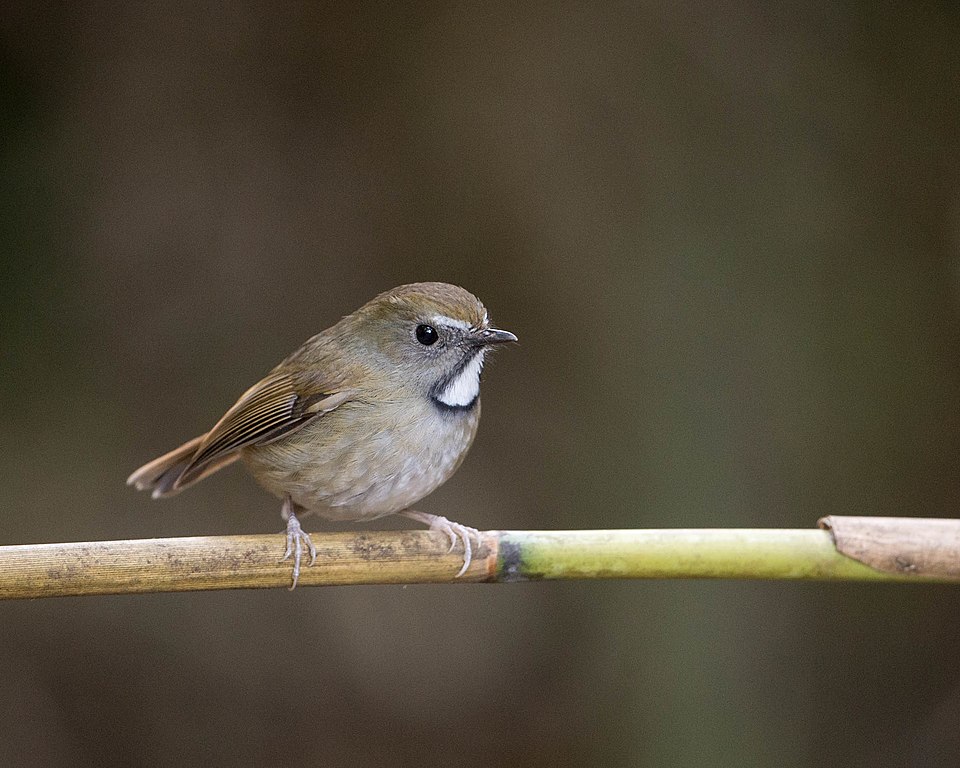
Damar Flycatcher
Ficedula henrici
Order: Passeriformes / Family: Muscicapidae

Wikimedia Commons
About the Damar Flycatcher
The Damar Flycatcher, scientifically known as Ficedula henrici, is a small passerine bird endemic to Indonesia, specifically the island of Damar in the Banda Sea. This flycatcher belongs to the Muscicapidae family and is a prime example of a species highly adapted to its restricted range. The Damar Flycatcher primarily inhabits subtropical or tropical moist lowland forests. Its presence highlights the unique biodiversity of small, isolated islands in Southeast Asia. The bird plays a crucial role in its ecosystem as an insectivore, helping to control insect populations. Despite its limited range, the Damar Flycatcher has managed to maintain a stable population, though it remains susceptible to habitat loss due to deforestation and human encroachment.
Ficedula henrici contributes significantly to its ecological community by participating in seed dispersal indirectly through its diet. As it consumes insects that feed on seeds, it helps maintain the health of the forest undergrowth. Moreover, the Damar Flycatcher serves as an indicator species for the health of its environment, where changes in its population could signify shifts in habitat quality. The bird's ecological role underscores the importance of conserving its habitat, not only for the Damar Flycatcher itself but for the broader ecosystem.
Seasonally, the Damar Flycatcher does not engage in extensive migrations, unlike many of its flycatcher relatives. This sedentary lifestyle is typical for species inhabiting small islands where resources remain relatively consistent year-round. However, slight movements within the island may occur in response to local climatic conditions or food availability. The Damar Flycatcher's presence throughout the year makes it a reliable subject for ornithological studies focused on island biogeography and species adaptation.
The Damar Flycatcher belongs to the family Muscicapidae, within the order Passeriformes. These birds typically live typically 5-7 years, with some living up to 9 years..
How to Identify a Damar Flycatcher
The Damar Flycatcher displays an impressive combination of colors that makes it easily recognizable to those familiar with its appearance. Adult males showcase a vibrant blue upper body contrasted with a stark white underbelly. Their wings and tail exhibit dark accents, providing a striking juxtaposition against their blue plumage. Female Damar Flycatchers, while similar in size, typically have a more subdued coloration, with olive or brownish tones replacing the bright blue, aiding in camouflage among the foliage.
Juveniles resemble females in their duller coloration, which gradually brightens as they mature. The subtle distinctions between the sexes can be challenging to discern without a close examination, particularly in low light conditions often found in dense forest habitats. One must note the difference in plumage when attempting to identify the Damar Flycatcher, especially during the breeding season when sexual dimorphism becomes more pronounced.
In flight, the Damar Flycatcher exhibits a rapid, agile movement characterized by short bursts of speed interspersed with brief glides. When perched, it maintains an upright posture, often flicking its tail in a behavior typical of many flycatchers. Despite its distinctive plumage, the Damar Flycatcher can be mistaken for other sympatric species; however, its specific coloration and size usually aid in proper identification.
Having trouble telling birds apart? Upload a photo to our bird identification tool for an instant species match.
Damar Flycatcher Habitat and Range
Preferred Habitat
The Damar Flycatcher inhabits moist lowland forests on the island of Damar. It thrives in dense, humid environments where the canopy provides ample cover. This species shows a preference for primary forests, where human intervention hasn't significantly altered the landscape. However, it can also adapt to secondary forests, although with less frequency.
The bird is typically found at elevations up to 500 meters, where the forest offers a diverse range of insect prey. Seasonal shifts in habitat are minimal due to the stable climate of the island. Unlike some bird species that might venture into urban or agricultural areas, the Damar Flycatcher remains firmly tied to its forest habitat, relying on the undisturbed environment for survival.
The flycatcher's affinity for dense forests underscores the importance of maintaining these habitats against deforestation and habitat fragmentation. Conservation efforts focus on protecting these vital forested areas to ensure the continued survival of the Damar Flycatcher.
Geographic Range
The Damar Flycatcher is endemic to Indonesia, specifically the island of Damar, located in the Banda Sea. Its range is confined to this small landmass, making it a species of interest for ornithologists studying island endemism. This restricted distribution means that the population is concentrated, with no widespread dispersal beyond the island's boundaries.
During the breeding season, the Damar Flycatcher remains within its forested habitat on the island. Unlike many migratory birds, it does not undertake long-distance migrations. Instead, any movement is localized within the island, primarily dictated by resource availability and environmental factors.
The population density of the Damar Flycatcher is highest in the island's undisturbed forest regions, where ecological conditions are most favorable. However, these areas are under threat from deforestation, which could impact the range and density of this unique species.
Want to know which birds visit your area? Browse our backyard birds by location guides for region-specific species lists.
What Does the Damar Flycatcher Eat?
The Damar Flycatcher's diet predominantly consists of insects, which it captures with remarkable agility. Its primary food sources include beetles, flies, and caterpillars, which are abundant in its forest habitat. During the breeding season, the demand for protein-rich food increases, driving the flycatcher to intensify its foraging efforts.
Seasonal variations in diet are minimal due to the consistent climate of the Damar island, yet minor shifts may occur in response to changes in insect populations. The flycatcher employs a 'sit-and-wait' foraging technique, perching on a branch before launching into short flights to snatch prey mid-air. This method allows it to conserve energy while maximizing hunting efficiency.
The size of the prey varies, with the Damar Flycatcher capable of consuming insects ranging from small flies to larger caterpillars. Feeding occurs throughout the day, with peaks during the early morning and late afternoon when insect activity is highest.
Damar Flycatcher Behavior and Social Structure
Socially, the Damar Flycatcher tends to be solitary or found in pairs, particularly during the breeding season. Its territorial behavior becomes more pronounced during this time, with males exhibiting displays to ward off intruders. These displays often involve vocalizations and aerial maneuvers intended to establish dominance over a specific territory.
Courtship displays are subtle, involving a combination of song and flight patterns designed to attract a mate. Once paired, both the male and female participate in raising the young, though the male takes a more prominent role in defending the territory.
The Damar Flycatcher remains active during daylight hours, with peak activity in the early morning and late afternoon. Its response to predators includes alarm calls and evasive flights, often retreating to dense foliage to avoid detection. Despite its small size, the flycatcher exhibits a strong instinct for self-preservation, utilizing its environment to its advantage.
Damar Flycatcher Nesting and Reproduction
The Damar Flycatcher constructs a cup-shaped nest using materials such as grass, leaves, and twigs. These nests are usually positioned on tree branches, ensuring protection from ground predators. The preference for elevated sites also provides a strategic advantage against adverse weather conditions.
Clutch sizes typically range from two to four eggs, with incubation lasting approximately two weeks. During this period, both parents share responsibilities, although the female predominantly incubates the eggs. After hatching, the fledging period extends for about another two weeks, during which the young are fed a diet rich in insects to support their rapid growth.
Parental roles are well-defined, with the male often taking charge of territorial defense while the female focuses on nurturing the young. The Damar Flycatcher usually raises one brood per year, although favorable conditions may sometimes allow for a second.
Damar Flycatcher Sounds and Vocalizations
The primary song of the Damar Flycatcher consists of a series of high-pitched, melodic notes delivered in rapid succession. This song serves both as a territorial declaration and a mate attraction signal. Its rhythm is lively, with a quality reminiscent of a musical trill, making it distinctive among forest bird calls.
The flycatcher's call notes include short 'chip' sounds, used predominantly as contact calls or alarms. When faced with potential threats, the bird emits a sharper, more insistent call, alerting others to the presence of danger. During the dawn chorus, the Damar Flycatcher's song contributes to the symphony of forest sounds, though its higher pitch can be distinguished amid the cacophony.
Compared to more subdued avian vocalizations, the Damar Flycatcher's song stands out for its clarity and frequency, offering a reliable cue for birdwatchers trying to locate this elusive species.
Interesting Facts About the Damar Flycatcher
- 1The Damar Flycatcher is named after its exclusive habitat on the island of Damar, making it a highly localized species.
- 2Despite its limited range, the Damar Flycatcher exhibits a stable population, a testament to its adaptability within its environment.
- 3The bird's striking blue plumage is primarily found in males, with females taking on more camouflaged hues to avoid predators.
- 4Ficedula henrici is part of the Muscicapidae family, which includes a diverse range of small insectivorous birds.
- 5The Damar island's isolated location in the Banda Sea has contributed to the unique evolutionary path of the Damar Flycatcher.
- 6With its insect-based diet, the Damar Flycatcher plays a critical role in controlling insect populations within its habitat.
- 7The Damar Flycatcher's song is a key tool for both territory establishment and mate attraction, highlighting its importance in social interactions.
Damar Flycatcher Conservation Status
The IUCN currently categorizes the Damar Flycatcher as a species of Least Concern, although its restricted range warrants ongoing monitoring. The population appears stable, yet deforestation poses a significant threat, potentially leading to habitat loss. Conservation efforts focus on preserving the island's forested regions, which are vital to the bird's survival. Local and international organizations advocate for sustainable land-use practices to mitigate habitat degradation. Historical data suggests that the population has remained stable over the last few decades, but continuous surveillance is necessary to ensure this trend continues. Efforts to raise awareness about the Damar Flycatcher's ecological importance are crucial, emphasizing the need to protect not just this species, but the entire island ecosystem in which it thrives.