
Dubois's Seedeater
Sporophila ardesiaca
Order: Passeriformes / Family: Thraupidae
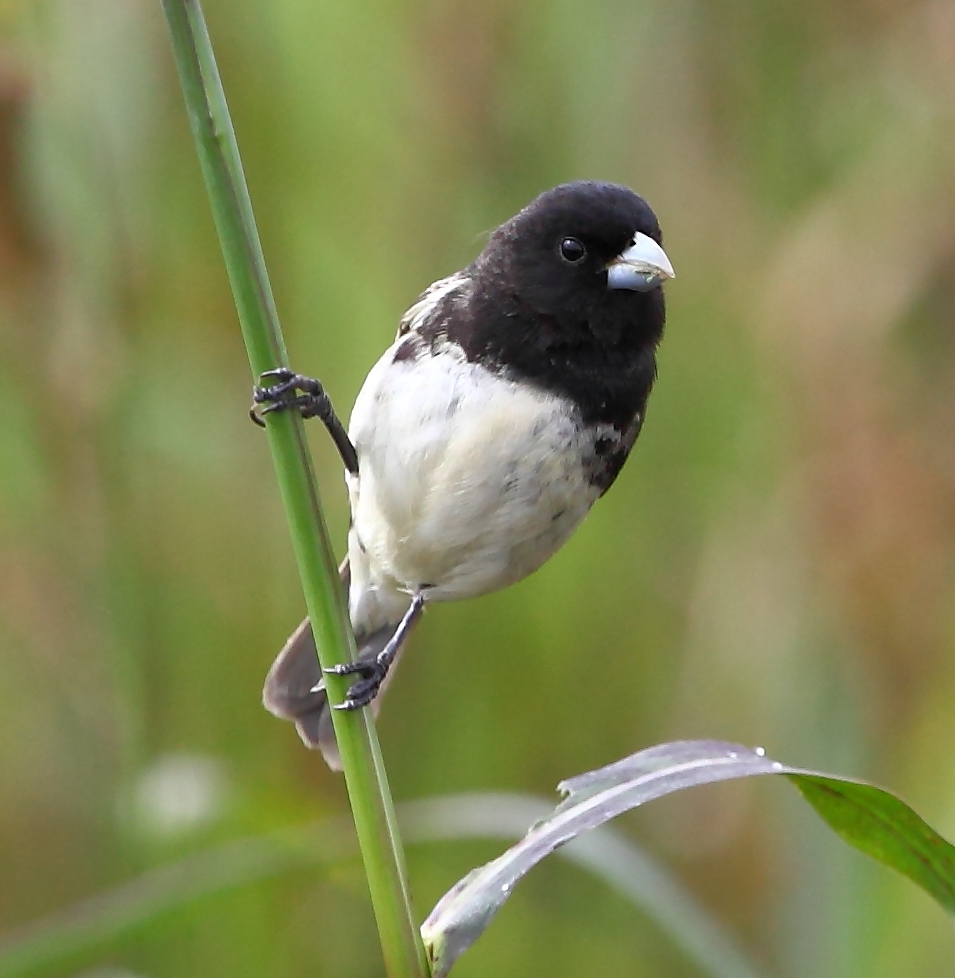
Wikimedia Commons
About the Dubois's Seedeater
Dubois's Seedeater, or Sporophila ardesiaca, is a small, granivorous bird belonging to the family Thraupidae and is primarily found in South America. Its range includes regions in Brazil, Bolivia, and Paraguay, where it inhabits grasslands, shrublands, and edge areas of tropical and subtropical forests. This species plays a crucial role in seed dispersal, contributing to the maintenance of its habitat's plant diversity. The Dubois's Seedeater exhibits seasonal behaviors, often seen in flocks during non-breeding months, which enhances their foraging efficiency and predator avoidance. During the breeding season, these seedeaters become more territorial, often found in pairs. The species thrives in regions with abundant grass seeds, which constitute the primary component of its diet. This bird's ecological role extends beyond seed consumption, as it also participates in controlling insect populations by consuming them during the breeding season. The Dubois's Seedeater is an important indicator of ecosystem health, as changes in its population can reflect alterations in habitat conditions. The bird's presence in a given area indicates a healthy balance of vegetation and the availability of essential resources. Observers of this bird will notice its adaptability to different environments, including rural and semi-urban areas, where it can be found foraging in gardens and parks. The Dubois's Seedeater's adaptability helps it cope with habitat changes, although it still faces threats from deforestation and habitat fragmentation. Conservation efforts focus on preserving its natural habitats, ensuring that this species continues to fulfill its ecological role. As a species with a stable population, Sporophila ardesiaca serves as a flagship for habitat conservation and the protection of seed-dispersing avian fauna.
The Dubois's Seedeater belongs to the family Thraupidae, within the order Passeriformes. These birds typically live average 3-5 years, maximum recorded 6 years.
How to Identify a Dubois's Seedeater
Adult Dubois's Seedeaters are characterized by their soft gray plumage, with males showing a slightly darker shade than females. This dimorphism makes it easier to distinguish between the sexes during the breeding season. The bird exhibits a compact size, typically ranging from 10 to 11 centimeters in length, and has a stout, conical bill adapted for seed consumption. Juveniles resemble females but are generally duller in color, lacking the sharp contrast seen in adults. A key feature to notice is the bird's short tail, which aids in its identification when in flight. When perching, Dubois's Seedeater maintains an upright posture, often on grass stalks or low shrubs. Its wing pattern, predominantly gray with subtle lighter edges, helps differentiate it from similar species like the Chestnut-bellied Seedeater, which sports a distinct chestnut coloration. In flight, the Dubois's Seedeater has a swift, undulating motion, typical of many small finches. Observers should note the bird's flight silhouette, which lacks any prominent wing bars or tail markings that might otherwise confuse it with other Sporophila species. Its consistent coloring and lack of vibrant markings make it a challenge to spot in dense foliage, but its repetitive, melodious song often betrays its presence.
Having trouble telling birds apart? Upload a photo to our bird identification tool for an instant species match.
Dubois's Seedeater Habitat and Range
Preferred Habitat
The Dubois's Seedeater predominantly inhabits open grasslands and shrublands, where it finds ample food supplies and nesting sites. It thrives in elevations ranging from sea level to 1,500 meters, although it is more commonly found at lower altitudes. This bird shows a preference for areas with tall grasses and scattered shrubs, which provide both food and shelter. During the breeding season, it may venture into the edges of forests or areas with sparse tree cover to establish nesting territories. While generally a resident species, some populations may make short altitudinal movements in response to seasonal changes in food availability. In urban and suburban settings, Dubois's Seedeater can occasionally be observed in parks and gardens, especially where native grasses and seed-bearing plants are present. This adaptability to various habitats aids in its survival, although it still requires specific vegetation types for feeding and breeding.
Geographic Range
The Dubois's Seedeater is primarily found in South America, with its range extending across southern Brazil, eastern Bolivia, and parts of Paraguay. It occupies grassland and savanna regions, favoring areas with abundant seed resources. During the breeding season, it is most commonly found in the more humid regions of these countries, where the availability of nesting sites and food is optimal. While this species is not known for long-distance migration, some populations may undertake local movements, especially in response to seasonal changes in food availability or habitat conditions. In Brazil, it is particularly prevalent in the Cerrado biome, a region known for its rich biodiversity and unique grassland ecosystems. Population densities tend to be higher in areas with extensive grass cover and minimal human disturbance. Despite its limited migratory behavior, the Dubois's Seedeater can be considered a partial migrant, with movements primarily influenced by environmental factors rather than a strict migratory schedule.
Want to know which birds visit your area? Browse our backyard birds by location guides for region-specific species lists.
What Does the Dubois's Seedeater Eat?
Dubois's Seedeater primarily feeds on seeds, which form the bulk of its diet throughout the year. Its strong, conical bill is well-adapted for cracking open various types of grass seeds and small grains, which it selectively forages from the ground and low vegetation. During the breeding season, the seedeater's diet expands to include a variety of insects, providing crucial protein for the growth of nestlings. This dietary shift is typical of many passerines, helping to support the increased nutritional demands of reproduction. The bird's foraging behavior involves methodical hopping through grass and shrubland, pecking at seeds and insects with precision. It often forages in small flocks outside the breeding season, which enhances its ability to locate food and provides protection from predators. Feeding activity peaks during the early morning and late afternoon, with the seedeater spending midday hours resting in shaded areas. Seasonal changes in habitat conditions can influence the availability of food resources, prompting the bird to adjust its foraging range accordingly.
Dubois's Seedeater Behavior and Social Structure
Dubois's Seedeater exhibits a range of behaviors that reflect its adaptation to grassland environments. Socially, it is a gregarious species, often forming flocks during the non-breeding season. These flocks, which can number from a few individuals to several dozen, provide benefits such as enhanced foraging success and increased vigilance against predators. During the breeding season, however, the species becomes more territorial, with pairs establishing and defending nesting sites against intruders. Courtship displays among Dubois's Seedeater involve a combination of song and physical displays, where males perform a series of postures and wing-flicking to attract females. These displays are crucial for mate selection, with females choosing mates based on the quality of their songs and displays. The bird's daily activity patterns are influenced by environmental conditions, with peak activity occurring during the cooler hours of the day. In response to predators, Dubois's Seedeater employs a variety of tactics, including flocking tightly together to confuse aerial predators and using dense vegetation for cover. The bird's calls and songs play a vital role in communication, serving functions such as mate attraction, territory defense, and alerting other flock members to potential threats.
Dubois's Seedeater Nesting and Reproduction
Dubois's Seedeater constructs cup-shaped nests, typically placed low in dense shrubs or among tall grasses. These nests are made from fine plant materials, such as grass stems and rootlets, and are lined with softer materials like feathers for insulation. The bird shows a preference for sites that offer protection from predators and environmental elements, often selecting locations that are well-concealed by foliage. A typical clutch consists of two to three eggs, which are incubated primarily by the female for about 12 to 14 days. During this period, the male plays an active role in defending the nest territory and providing food for the female. Once hatched, the chicks remain in the nest for about 10 to 12 days, during which both parents participate in feeding and caring for the young. Dubois's Seedeater may produce two broods per breeding season, depending on environmental conditions and food availability. Parental roles are well-defined, with both sexes contributing to the rearing of offspring. The bird's nesting success can be influenced by factors such as predation pressure and weather conditions, which can also impact the decision to attempt multiple broods within a season.
Dubois's Seedeater Sounds and Vocalizations
The Dubois's Seedeater is renowned for its melodious song, which consists of a series of clear, sweet notes delivered in a rapid sequence. The song serves multiple functions, including mate attraction and territory establishment. It is generally performed from an elevated perch or during short display flights. In addition to its primary song, the Dubois's Seedeater produces a variety of call notes, including soft, trilling sounds used for communication within flocks and harsher alarm calls employed to warn of predators. The bird's vocalizations are most prominent during the early morning, contributing to the dawn chorus of its habitat. The quality of its song has a flute-like clarity, which can be reminiscent of other Sporophila species but with a unique rhythm and pitch that helps in identification. Understanding these vocalizations is key to locating and identifying the species in the field.
Interesting Facts About the Dubois's Seedeater
- 1Dubois's Seedeater can ingest up to 10% of its body weight in seeds each day, showcasing its efficient foraging habits.
- 2This species is known for its rapid adaptation to changing environments, often adjusting its foraging strategies seasonally.
- 3During the breeding season, males can sing over 200 different song variations, a trait that plays a key role in mate attraction.
- 4The Dubois's Seedeater's nests are often reused by other bird species after the breeding season, contributing to ecological recycling.
- 5Despite its small size, the Dubois's Seedeater can travel several kilometers daily in search of food, exhibiting remarkable endurance.
- 6Studies have shown that Dubois's Seedeater can recognize individual flock members by their unique vocal signatures.
- 7It has been observed that Dubois's Seedeater's song repertoire changes slightly between populations, suggesting regional dialects.
Dubois's Seedeater Conservation Status
Currently, Dubois's Seedeater is classified as a species of Least Concern by the IUCN, with a stable population trend. However, it faces ongoing threats from habitat destruction and fragmentation, primarily due to agricultural expansion and deforestation. Conservation efforts focus on habitat preservation and the protection of key grassland areas that support its populations. Historically, the species has maintained stable numbers, but continuous monitoring is essential to detect potential declines. Local conservation initiatives aim to integrate sustainable land-use practices that benefit both the bird and local communities. While not currently endangered, the Dubois's Seedeater serves as an important indicator species, with its health reflecting the overall state of the grassland ecosystems it inhabits. The maintenance of genetic diversity and population connectivity is crucial for its long-term survival, necessitating cooperative efforts across its range.


