
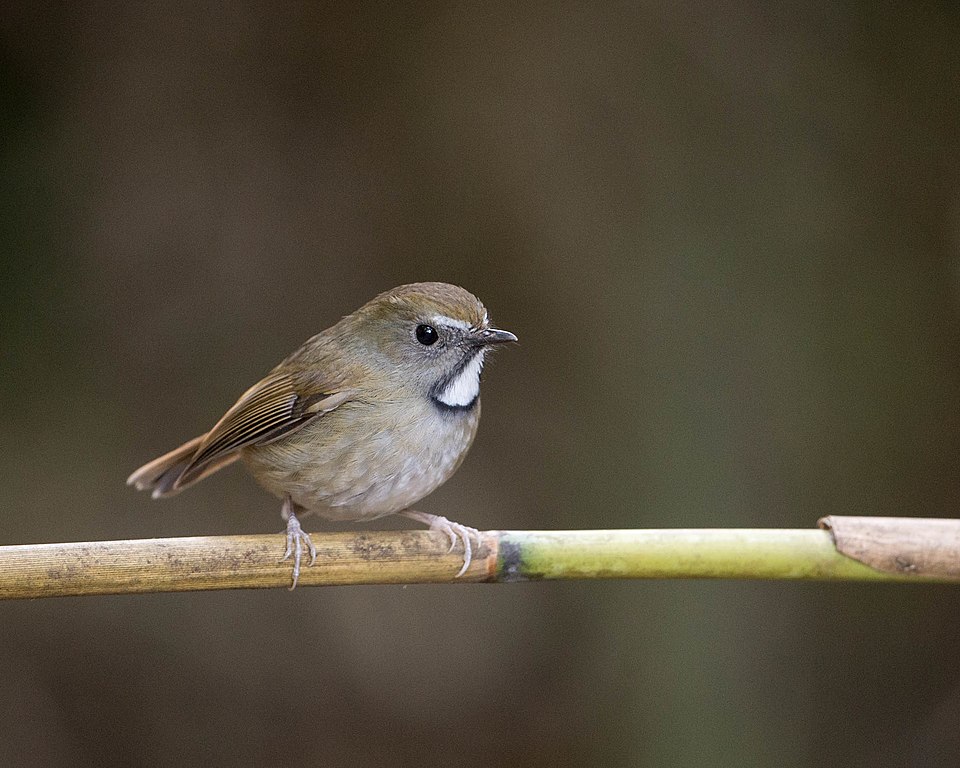
Dusky-brown Flycatcher
Muscicapa adusta
Order: Passeriformes / Family: Muscicapidae

Wikimedia Commons
About the Dusky-brown Flycatcher
The Dusky-brown Flycatcher, scientifically known as Muscicapa adusta, is a small passerine bird belonging to the family Muscicapidae. Found predominantly in sub-Saharan Africa, this bird inhabits a range of environments from forest edges to montane regions. Its presence extends from the Ethiopian highlands through the Congo Basin, reaching the southernmost parts of South Africa. Notably, it thrives in both deciduous and evergreen forests, displaying a marked preference for areas where undergrowth is dense yet not impassable. This adaptability allows it to exploit habitats that vary from moist montane forests to drier savanna woodlands.
Ecologically, the Dusky-brown Flycatcher plays a critical role as an insect predator, helping to control populations of flying insects. Its diet primarily consists of small insects, which it expertly catches in mid-air. This feeding behavior is not only beneficial for its nutritional needs but also aids in maintaining ecological balance by managing insect populations. During the breeding season, which varies geographically, the Dusky-brown Flycatcher becomes particularly active, defending territories vigorously and engaging in elaborate courtship displays.
This bird's relatively stable population reflects its adaptability to a variety of habitats, although it faces threats from habitat destruction due to deforestation and agricultural expansion. Its capacity to adjust seasonally by shifting altitudinally in response to climatic changes underlines its resilience. As the seasons shift, so too does its behavior, with movements often dictated by food availability and breeding requirements. The Dusky-brown Flycatcher exemplifies the intricate balance of avian life in Africa's diverse ecosystems, serving as a vital indicator species for environmental health.
The Dusky-brown Flycatcher belongs to the family Muscicapidae, within the order Passeriformes. These birds typically live average lifespan is around 4-5 years..
How to Identify a Dusky-brown Flycatcher
The Dusky-brown Flycatcher can be identified by its uniformly dusky-brown plumage, which provides excellent camouflage against the forest backdrop. Adult birds display a subtle, almost unmarked appearance, with the upperparts and wings sporting a consistent brown color, whereas the underparts are slightly paler. The bird's medium size, around 13 centimeters in length, and its slender, agile build make it well-suited to its life as an aerial insectivore.
Juveniles bear a similar appearance to adults but can sometimes be distinguished by the presence of faint spots or streaks on the breast. Both males and females exhibit similar plumage, making sex differentiation in the field quite challenging. However, during the breeding season, males may be observed displaying slightly more vibrant plumage.
In flight, the Dusky-brown Flycatcher maintains a sleek silhouette with rapid, direct wing beats. When perched, it often adopts an upright posture, frequently flicking its wings and tail, a characteristic behavior among flycatchers. Confusion with similar species, such as the African Dusky Flycatcher, may occur, but the latter is typically found at higher altitudes and displays a more distinctly streaked breast.
Having trouble telling birds apart? Upload a photo to our bird identification tool for an instant species match.
Dusky-brown Flycatcher Habitat and Range
Preferred Habitat
The Dusky-brown Flycatcher inhabits a variety of forested environments, showing a preference for dense undergrowth in both primary and secondary forests. It is frequently observed in moist montane forests and subtropical or tropical dry forests. This bird also makes use of forest edges and clearings, where it can capitalize on open areas for foraging.
Its elevation range extends from lowland areas up to 3,000 meters in montane regions, where it adapts to different forest types. During different seasons, the Dusky-brown Flycatcher may shift its habitat preferences slightly, moving to lower elevations in response to cooler temperatures or food scarcity. While it is not typically found in urban settings, it can occasionally be observed in rural areas near forested habitats.
Geographic Range
The Dusky-brown Flycatcher has a wide distribution across sub-Saharan Africa. Its range stretches from the highlands of Ethiopia and Eritrea in the north, through the equatorial rainforests of the Democratic Republic of Congo, to the eastern regions of South Africa in the south. It is also found in countries like Kenya, Tanzania, and Uganda, which provide a variety of suitable habitats.
The flycatcher does not undertake long-distance migrations but may exhibit altitudinal movements within its range, especially in response to seasonal changes. In regions like the Albertine Rift and the Angolan highlands, it is a resident species, maintaining territories year-round. Population density tends to be higher in areas where forests are intact and less fragmented.
Want to know which birds visit your area? Browse our backyard birds by location guides for region-specific species lists.
What Does the Dusky-brown Flycatcher Eat?
The diet of the Dusky-brown Flycatcher is primarily insectivorous, consisting mainly of flying insects such as flies, beetles, and moths. It employs a distinctive hawking technique, sallying from perches to catch prey mid-air with remarkable agility. This method allows it to exploit the abundant insect life found in its forest habitats effectively.
Seasonal variations in diet occur as the availability of prey changes. During the wet season, when insect populations are at their peak, the flycatcher may expand its dietary choices to include a greater variety of insects. In the dry season, it may supplement its diet with occasional small fruits or berries, although insects remain the primary food source. Feeding activity peaks during the early morning and late afternoon, aligning with periods of increased insect activity.
Dusky-brown Flycatcher Behavior and Social Structure
The Dusky-brown Flycatcher is generally a solitary bird, showing strong territorial behavior, particularly during the breeding season. Males establish and defend territories through vocalizations and physical displays, often engaging in aerial chases to deter intruders. Courtship involves a series of flights and vocalizations, with males displaying their agility and stamina to attract females.
Although primarily solitary, outside the breeding season, this flycatcher may occasionally form loose associations with mixed-species foraging flocks, taking advantage of the increased protection and foraging efficiency these groups offer. It is a diurnal species, with peak activity occurring during the cooler parts of the day.
In response to predators such as raptors or snakes, the Dusky-brown Flycatcher employs a combination of alarm calls and evasive flight maneuvers to avoid capture. Its keen eyesight allows it to detect threats quickly, often retreating to dense foliage where it can remain unseen.
Dusky-brown Flycatcher Nesting and Reproduction
Nesting for the Dusky-brown Flycatcher involves constructing a small, cup-shaped nest, typically made from grasses, rootlets, and leaves, bound together with spider silk. These nests are strategically placed in trees or shrubs, often at a height of 2 to 5 meters, where they are concealed among foliage.
The clutch size generally ranges from 2 to 4 eggs, which are incubated primarily by the female for about 12 to 14 days. During this period, the male may assist by providing food and guarding the nest. Once hatched, the chicks are altricial, relying heavily on parental care for food and protection.
Fledging occurs approximately 14 to 16 days post-hatching, with both parents sharing the responsibility of feeding and nurturing the young. The Dusky-brown Flycatcher typically raises one brood per year, although favorable conditions may occasionally result in a second brood.
Dusky-brown Flycatcher Sounds and Vocalizations
The primary song of the Dusky-brown Flycatcher is a series of melodious whistles, often described as a clear, rhythmic 'whee-chee-wee'. This song serves as a territorial and mating call, particularly during the breeding season. In addition to its song, the flycatcher produces a variety of call notes, including sharp 'tsee-tsee' sounds used for communication between mates or as contact calls in mixed-species flocks.
Alarm calls are more strident, designed to alert others to the presence of predators. Dawn chorus participation is notable, with the flycatcher's song adding to the cacophony of morning birdlife in its habitat.
Interesting Facts About the Dusky-brown Flycatcher
- 1The Dusky-brown Flycatcher can catch insects in mid-air with remarkable precision, a trait common among flycatchers.
- 2Despite its drab coloring, the Dusky-brown Flycatcher is known for its clear and melodious song, often heard during the breeding season.
- 3This flycatcher species is adaptable, thriving in a wide range of habitats from forests to montane regions across sub-Saharan Africa.
- 4Unlike some migratory flycatchers, the Dusky-brown Flycatcher is largely sedentary, with only minor seasonal movements.
- 5Its nests are ingeniously constructed using natural materials like grasses and spider silk, providing strength and camouflage.
- 6The bird's ability to blend into its environment with its dusky-brown plumage makes it a master of camouflage.
- 7The Dusky-brown Flycatcher often participates in mixed-species foraging flocks, benefiting from the protection and food-finding efficiency of these groups.
Dusky-brown Flycatcher Conservation Status
According to the IUCN Red List, the Dusky-brown Flycatcher is currently listed as Least Concern, with stable population trends across its range. However, ongoing threats include habitat loss due to deforestation and agricultural expansion, particularly in regions like the Congo Basin. Conservation efforts focus on habitat preservation and the establishment of protected areas to safeguard vital ecosystems. Historical data suggest that populations have remained relatively stable, although localized declines may occur in areas experiencing significant environmental changes.
Other Muscicapidae Species


Birds Similar to the Dusky-brown Flycatcher
These species are often confused with the Dusky-brown Flycatcher due to similar appearance or overlapping range.
