
Dwarf Honeyguide
Indicator pumilio
Order: Piciformes / Family: Indicatoridae

Wikimedia Commons
About the Dwarf Honeyguide
The Dwarf Honeyguide (Indicator pumilio) is a fascinating avian species belonging to the family Indicatoridae, which is renowned for its unique interactions with bees and honey. Found predominantly in parts of Central and East Africa, this bird holds a special place within its ecosystem due to its role in both pollination and seed dispersal. Its presence is most notable in the montane forests of Rwanda, Burundi, and western Uganda, where it thrives in dense, humid environments. The Dwarf Honeyguide's ecological significance extends beyond its interactions with bees. As a frugivore and insectivore, it aids in the control of insect populations and the spread of plant species. This small bird, rarely exceeding 10 cm in length, is adept at navigating the forest canopy, where it spends much of its time foraging. The Dwarf Honeyguide has evolved a mutualistic relationship with certain species of bees, which is not only rare but also crucial for the maintenance of biodiversity in its habitat. The availability of honey and bee larvae influences the seasonal behaviors of the Dwarf Honeyguide. During the wet season, when flowers abound and bee activity increases, these birds become more active in their pursuit of bee colonies. This seasonal shift often results in a temporary change in diet, with the birds consuming more insects and nectar. In the dry season, when bee activity wanes, the Dwarf Honeyguide adapts by shifting its focus to alternative food sources, demonstrating remarkable flexibility. The bird's role as a pollinator and seed disperser underscores its importance in maintaining the health of its ecosystem. By aiding in the reproduction of flowering plants, the Dwarf Honeyguide contributes to the overall biodiversity and resilience of montane forests. This ecological service is particularly vital in regions where human activities, such as deforestation, threaten natural habitats. Conservation efforts aimed at preserving these forests indirectly benefit the Dwarf Honeyguide and the myriad species that rely on its ecological contributions. Understanding the Dwarf Honeyguide's significance within its natural habitat not only highlights its unique behaviors but also underscores the interconnectedness of all species within an ecosystem. As with many species, the survival of the Dwarf Honeyguide hinges on the preservation of its habitat and the broader ecological networks that sustain it.
The Dwarf Honeyguide belongs to the family Indicatoridae, within the order Piciformes. These birds typically live average 5-7 years with max recorded at 10 years..
How to Identify a Dwarf Honeyguide
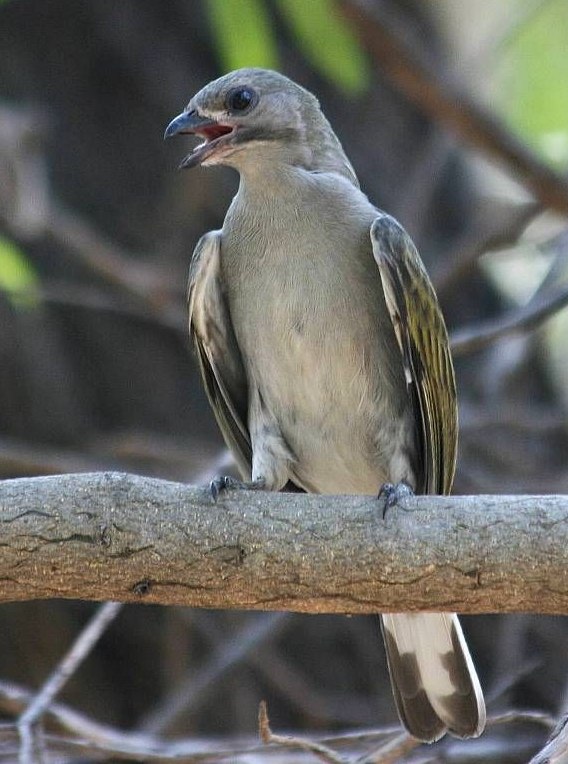
The Dwarf Honeyguide is a small bird, measuring approximately 9-10 cm in length. It has a striking plumage that features olive-green upperparts and paler, whitish underparts. The wings and tail are more subdued, with a mix of brown and green tones that provide effective camouflage against the forest canopy. One of the distinguishing field marks of the Dwarf Honeyguide is its relatively short, stout bill, adapted for its unique diet. The eyes are dark and expressive, set against a subtle pale eye-ring. Juveniles resemble adults but typically exhibit duller plumage with more pronounced streaking on the underparts. Male and female Dwarf Honeyguides are similar in appearance, making sexing in the field challenging. However, males occasionally exhibit slightly brighter plumage during the breeding season, a trait that can be useful for identification. When perched, the Dwarf Honeyguide maintains an upright posture, which, combined with its small size, can make it difficult to spot among dense foliage. In flight, it exhibits a rapid, direct pattern, often accompanied by a series of high-pitched whistles. The Dwarf Honeyguide can be confused with similar species, such as the Green-backed Honeybird, but its smaller size and distinct vocalizations help differentiate it. Observers should note its flight silhouette, characterized by short, rounded wings and a square-tipped tail, which contrast with the longer wings and tail of other honeyguides.
Having trouble telling birds apart? Upload a photo to our bird identification tool for an instant species match.
Dwarf Honeyguide Habitat and Range
Preferred Habitat
The Dwarf Honeyguide predominantly inhabits montane and sub-montane forests, typically found at elevations ranging from 1500 to 2500 meters. These environments, rich in diverse flora and fauna, provide ample food resources and nesting opportunities. The bird favors dense, humid forests where it can blend seamlessly with the canopy. In addition to primary forests, the Dwarf Honeyguide occasionally ventures into secondary growth and forest edges, demonstrating a degree of adaptability. These birds are less commonly found in lowland forests or savannah habitats, where food resources and suitable nesting sites are limited. The Dwarf Honeyguide exhibits some seasonal habitat shifts, particularly during the breeding season when they are more likely to explore forest edges in search of food. Unlike some honeyguides, they tend to avoid urban and heavily disturbed areas, preferring the relative seclusion of their montane forest homes.
Geographic Range
The Dwarf Honeyguide's range is relatively restricted, with populations concentrated in Central and East Africa. It is primarily found in the Albertine Rift montane forests, spanning regions of Rwanda, Burundi, and western Uganda. This area, known for its high biodiversity and endemism, provides the ideal habitat for the Dwarf Honeyguide. Unlike many migratory species, the Dwarf Honeyguide is largely sedentary, with limited movement outside its established range. This sedentary nature is largely due to the bird's specialized dietary needs and reliance on specific habitats. Population density is highest in areas with intact forest cover, particularly within protected reserves and national parks. While the bird does not undertake long-distance migrations, it may exhibit minor altitudinal movements in response to seasonal changes in food availability. These movements are typically limited to within its known range, ensuring year-round presence in its preferred habitat.
Want to know which birds visit your area? Browse our backyard birds by location guides for region-specific species lists.
What Does the Dwarf Honeyguide Eat?
The Dwarf Honeyguide's diet is primarily composed of wax and bee larvae, a unique preference among birds. It has developed specialized digestive adaptations to process these unconventional food sources. This specialization is complemented by a secondary diet of insects and small fruits, which provide additional nutrients, especially during periods when bee activity is low. Seasonal changes in diet reflect the availability of food resources. During the wet season, the abundance of flowers and increased bee activity allows the Dwarf Honeyguide to focus on its preferred diet. In contrast, the dry season necessitates a broader dietary approach, with increased consumption of insects such as ants and termites. The Dwarf Honeyguide employs a foraging technique characterized by keen observation and agility, often following bees to locate active hives. Once a hive is found, the bird uses its short, strong bill to access wax and larvae. Foraging typically occurs during the cooler parts of the day, with peak activity in the early morning and late afternoon. This schedule allows the bird to avoid the heat of midday while taking advantage of the increased activity of bees during these times.
Dwarf Honeyguide Behavior and Social Structure
The Dwarf Honeyguide exhibits a solitary and territorial nature, often seen alone or in pairs. These birds establish and defend territories, particularly during the breeding season, when the presence of bees and suitable nesting sites becomes crucial. Courtship displays involve a combination of vocalizations and aerial maneuvers, with males showcasing their agility and vocal prowess to attract mates. Despite their territorial tendencies, Dwarf Honeyguides exhibit tolerance towards other species, occasionally participating in mixed-species foraging flocks. This behavior likely provides advantages such as increased foraging efficiency and reduced predation risk. The Dwarf Honeyguide is primarily diurnal, with activity peaks observed during the early morning and late afternoon. In response to predators, these birds rely on their camouflaged plumage and swift flight to evade capture. Alarm calls, consisting of sharp, high-pitched notes, are used to alert other birds of potential threats. The Dwarf Honeyguide also engages in a unique behavior known as brood parasitism, where females lay their eggs in the nests of other bird species. This strategy reduces the need for parental investment and allows adults to focus on foraging and territory defense.
Dwarf Honeyguide Nesting and Reproduction
The Dwarf Honeyguide employs a reproductive strategy known as brood parasitism. Females lay their eggs in the nests of other bird species, particularly those of barbets and woodpeckers. This strategy alleviates the need for nest construction and parental care. The host species unwittingly incubate the honeyguide's eggs and raise the chicks as their own. The clutch size of the Dwarf Honeyguide is typically limited to one or two eggs, which hatch after an incubation period of approximately 12 to 14 days. The young honeyguides develop rapidly, often fledging within 18 to 22 days of hatching. Despite their reliance on host species for rearing, Dwarf Honeyguide chicks exhibit competitive behaviors, such as pushing host chicks out of the nest, to ensure their own survival. The parental roles of Dwarf Honeyguides are minimal, as both males and females focus primarily on territory defense and foraging. The number of broods per year is variable, depending largely on the availability of host nests and food resources.
Dwarf Honeyguide Sounds and Vocalizations
The Dwarf Honeyguide's primary song is a series of clear, high-pitched whistles delivered in quick succession. The rhythm is steady, and the pitch remains consistent, creating a distinctive and easily recognizable sound. These vocalizations serve multiple purposes, including territory defense and mate attraction. Call notes are shorter and sharper, often consisting of single or double notes used in communication with conspecifics. When alarmed, the Dwarf Honeyguide emits a rapid series of shrill notes, designed to alert other birds to potential dangers. During the dawn chorus, Dwarf Honeyguides participate actively, their whistles cutting through the morning air. The quality of their song has been compared to the sound of a piccolo, with a clarity and purity that stands out even amidst a cacophony of forest sounds.
Interesting Facts About the Dwarf Honeyguide
- 1The Dwarf Honeyguide is one of the smallest species in the Indicatoridae family, measuring just 9-10 cm in length.
- 2Unlike many birds, the Dwarf Honeyguide feeds primarily on wax and bee larvae, a rare dietary specialization.
- 3Dwarf Honeyguides employ a unique reproductive strategy known as brood parasitism, laying eggs in the nests of other birds.
- 4This species is predominantly found in the Albertine Rift, a region known for its high biodiversity and endemism.
- 5The Dwarf Honeyguide participates in mixed-species foraging flocks, a behavior that increases foraging success.
- 6These birds are largely sedentary, with limited movements outside their established range in Central and East Africa.
- 7Despite their small size, Dwarf Honeyguides play a significant role in their ecosystem as both pollinators and seed dispersers.
Dwarf Honeyguide Conservation Status
The Dwarf Honeyguide is currently classified as Least Concern by the IUCN, with stable population trends. However, its reliance on specific forest habitats makes it vulnerable to habitat loss and degradation. The primary threat to the Dwarf Honeyguide is deforestation, driven by agricultural expansion and logging. Conservation efforts focus on habitat preservation and the protection of key forest areas. National parks and reserves within its range provide critical refuge for this species. Historical population changes have been relatively stable, but ongoing habitat destruction could pose significant risks in the future. Collaborative conservation initiatives, involving local communities and international organizations, aim to mitigate these threats and ensure the long-term survival of the Dwarf Honeyguide and its habitat.
Other Indicatoridae Species



Birds Similar to the Dwarf Honeyguide
These species are often confused with the Dwarf Honeyguide due to similar appearance or overlapping range.