
Emarginata trilucida
Emarginata trilucida
Order: Passeriformes / Family: Muscicapidae
About the Emarginata trilucida
The Emarginata trilucida, commonly known as the Karoo Chat, is a small passerine bird found predominantly in the arid and semi-arid regions of southern Africa. It belongs to the Muscicapidae family, which includes the Old World flycatchers. This bird is particularly adapted to the harsh environments of South Africa's Karoo region, from which it derives its common name. The Karoo Chat plays a crucial ecological role as both a predator of insects and a prey species for larger birds and mammals. In the sprawling landscapes of the Northern Cape and the Western Cape, the Karoo Chat is a familiar presence, often spotted perched on low shrubs or rocks. Its presence extends further into eastern Namibia and southern Botswana, particularly in areas where the vegetation is sparse and the ground cover is dominated by low bushes and grasses.
The significance of the Karoo Chat to its native ecosystems cannot be overstated. By controlling insect populations, it helps maintain the balance necessary for the survival of plant species that form the backbone of these arid ecosystems. Additionally, the bird’s interactions with other species, including its predators, contribute to the complex web of life that characterizes the region. During the breeding season, typically from August to February, the Karoo Chat becomes particularly active, engaging in elaborate courtship displays that are a marvel to observe.
Seasonally, the Karoo Chat demonstrates remarkable adaptability. While it is primarily sedentary, some populations may exhibit limited local movements in response to environmental conditions, such as drought or food scarcity. These movements are usually not extensive, as the bird is well adapted to survive within its harsh native habitat. The Karoo Chat’s ability to thrive in such a challenging environment showcases its resilience and the adaptability of its behaviors and dietary habits. This bird's ecological role is further highlighted by its interactions with other fauna, which include various predator-prey dynamics and competitive relationships with other insectivorous birds.
The Emarginata trilucida belongs to the family Muscicapidae, within the order Passeriformes. These birds typically live average 4 years with max recorded 6 years.
How to Identify a Emarginata trilucida
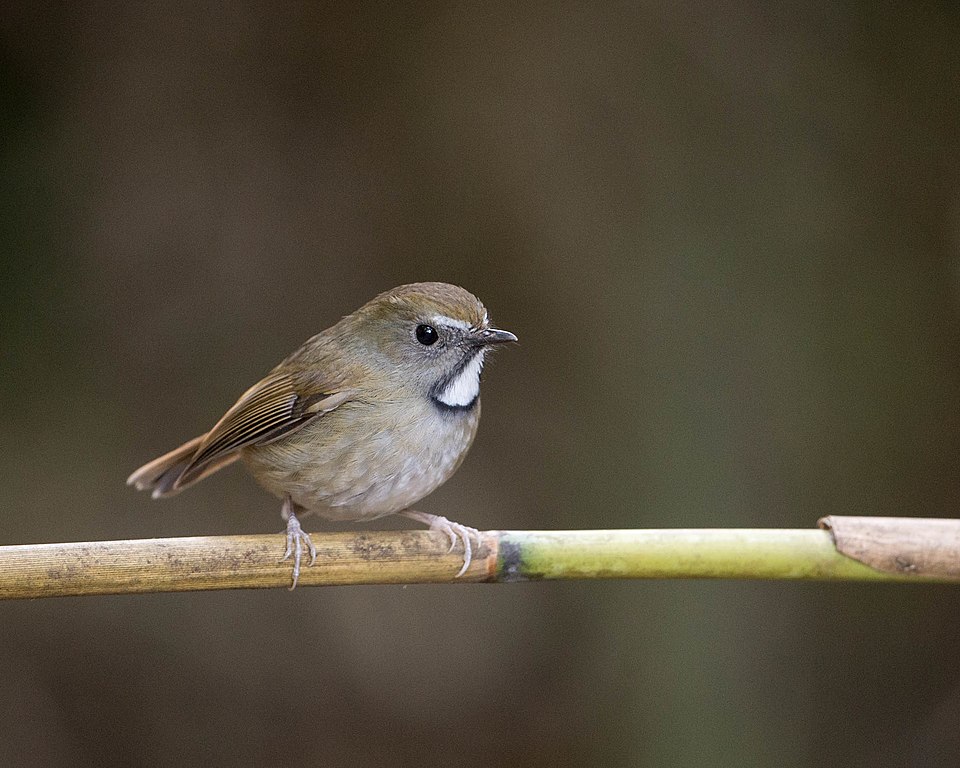
The Karoo Chat, or Emarginata trilucida, is a small bird, typically measuring around 14 centimeters in length. When identifying this bird, note the striking contrast of its black upperparts and white underparts, which are definitive field marks. The male and female Karoo Chat appear similar, both adorned with the same distinct plumage pattern, although females may exhibit slightly duller coloration. Juveniles display more mottled patterns, with speckled plumage that provides excellent camouflage against the arid landscape.
In flight, the Karoo Chat is easily recognized by its swift and direct flight pattern, characterized by rapid wingbeats. Its wings, when fully spread, reveal a subtle white patch on the secondary feathers. This bird's perching posture is also distinctive, often upright, with a characteristic flicking of the tail that can serve as a useful identification cue in the field.
Confusion with similar species can occur, particularly with the Tractrac Chat, which shares a similar habitat and general appearance. However, the Tractrac Chat typically has a paler, more uniform coloration than the Karoo Chat. Observing the Karoo Chat's lively behavior, such as its frequent tail-flicking and agile movements, can aid in distinguishing it from other species within the same range.
Having trouble telling birds apart? Upload a photo to our bird identification tool for an instant species match.
Emarginata trilucida Habitat and Range
Preferred Habitat
The Karoo Chat thrives in the arid and semi-arid regions of southern Africa. Its preferred habitats include open scrublands and rocky outcrops, where vegetation is sparse. These environments offer the bird ample opportunities for foraging and nesting. The Karoo region of South Africa, characterized by low rainfall and extreme temperatures, provides an ideal setting for this species. Additionally, the bird can be found in similar habitats in eastern Namibia and southern Botswana.
This species is typically found at elevations ranging from sea level to about 1,500 meters, with a preference for flat or gently undulating terrain. While the Karoo Chat is primarily associated with rural and wild landscapes, it occasionally ventures into the outskirts of urban areas, particularly where natural habitats have been preserved. The bird's presence in such regions highlights its adaptability to varying environmental conditions.
Seasonal shifts in habitat use are minimal due to the bird's sedentary nature. However, in times of severe drought or food scarcity, the Karoo Chat may relocate to areas with slightly denser vegetation or closer proximity to water sources. This subtle habitat flexibility is crucial for its survival in the unpredictable climates of its native range.
Geographic Range
The Karoo Chat's breeding range primarily encompasses the arid regions of South Africa, including the Northern Cape and Western Cape provinces. These areas provide the open landscapes and sparse vegetation that the bird favors. Beyond South Africa, the Karoo Chat also inhabits parts of eastern Namibia and southern Botswana, regions that share similar climatic and ecological characteristics with the South African Karoo.
During the non-breeding season, the range of the Karoo Chat remains largely unchanged, as the species is predominantly sedentary. However, some local movements may occur, driven by environmental factors such as food availability and weather conditions. These movements are generally confined to short distances within the bird's existing range.
Population density of the Karoo Chat tends to be higher in areas where the native vegetation has not been significantly altered by human activity. The bird’s resilience in the face of habitat fragmentation ensures its continued presence across a broad yet specific geographic range, predominantly within the confines of southern Africa. This range stability is a testament to the Karoo Chat's adaptability and its capacity to thrive in challenging environments.
Want to know which birds visit your area? Browse our backyard birds by location guides for region-specific species lists.
What Does the Emarginata trilucida Eat?
The Karoo Chat primarily feeds on insects, making it an important insectivore within its ecosystem. Its diet consists of a variety of arthropods, including beetles, ants, and grasshoppers. This bird employs a foraging technique known as 'hawking,' where it catches insects in flight, often swooping down from a perch to capture its prey.
Seasonal changes in food availability can affect the Karoo Chat's diet, prompting it to incorporate more plant material into its diet during periods of insect scarcity. Seeds and small fruits may supplement its diet during the winter months when insects are less abundant. This dietary flexibility is essential for its survival in the variable climates of its native habitat.
The Karoo Chat tends to forage alone or in pairs, rarely forming larger feeding flocks. This solitary foraging behavior reduces competition for food resources and allows the bird to exploit a wide range of prey items. The bird’s feeding schedule is largely diurnal, with peak activity occurring during the cooler hours of the morning and late afternoon. This schedule coincides with the periods of highest insect activity, maximizing the bird's foraging efficiency.
Emarginata trilucida Behavior and Social Structure
Karoo Chats are known for their solitary or paired social structure, rarely forming large flocks. This behavior allows them to maintain territories and reduce competition for resources. The bird exhibits pronounced territorial behavior, especially during the breeding season. Males often engage in displays and vocalizations to defend their territory from rivals and attract mates.
Courtship displays are a key feature of the Karoo Chat's behavior. Males perform aerial displays and sing to attract females. These displays include a series of rapid, undulating flights accompanied by song. Once paired, both sexes participate in territory defense and nesting activities.
The Karoo Chat's daily activity patterns are largely dictated by the need to conserve water and energy in its arid environment. It is most active during the cooler parts of the day, engaging in foraging and territorial activities in the early morning and late afternoon. In response to predators, the Karoo Chat employs a range of strategies, including alarm calls and evasive flight maneuvers. Its ability to detect and respond to threats quickly is vital for its survival in a habitat where avian and mammalian predators are common.
Emarginata trilucida Nesting and Reproduction
The Karoo Chat builds its nest in natural cavities, often in rock crevices or under overhanging vegetation. The choice of nesting site is crucial for protection against predators and environmental extremes. The nest itself is a cup-shaped structure constructed from twigs, grass, and other plant materials, lined with softer materials such as feathers or wool.
Clutch size typically ranges from two to four eggs, with both parents participating in incubation. The incubation period lasts approximately 14 days. During this time, the female assumes the primary role of incubating the eggs, while the male provides food and protection.
Once hatched, the chicks are altricial, requiring significant parental care. Both parents contribute to feeding and nurturing the young, who fledge approximately 14 to 16 days after hatching. The fledglings remain dependent on their parents for some time post-fledging, gradually learning to forage and survive independently. The Karoo Chat may raise two broods per year, depending on environmental conditions and food availability.
Emarginata trilucida Sounds and Vocalizations
The song of the Karoo Chat is a melodious, varied series of whistles and trills, often delivered from a prominent perch. This song serves both to attract mates and to assert territory. The rhythm is relatively fast, with clear, high-pitched notes.
In addition to its primary song, the Karoo Chat produces a range of call notes, including short, sharp 'chip' sounds used in communication between mates or as contact calls. Alarm calls are harsher and more urgent, designed to alert others to potential threats.
During the dawn chorus, the Karoo Chat's song is particularly prominent, contributing to the cacophony of bird sounds that greet the early morning in its native habitats. The song's quality can be likened to that of the related Stonechat, though the Karoo Chat's vocalizations are generally more complex and varied.
Interesting Facts About the Emarginata trilucida
- 1The Karoo Chat is named after the Karoo, a semi-desert region in South Africa where it is commonly found.
- 2Despite its small size, measuring just 14 cm, the Karoo Chat is an effective predator of insects.
- 3The Karoo Chat's song consists of a complex series of whistles and trills, making it a notable songbird.
- 4This bird displays territorial behavior, with males defending their area through song and displays.
- 5The Karoo Chat can adapt its diet to include seeds and plant material when insect prey is scarce.
- 6Unlike many birds, the Karoo Chat remains in its range year-round, showing minimal migratory behavior.
- 7The Karoo Chat often uses the same nesting sites repeatedly, demonstrating strong site fidelity.
Emarginata trilucida Conservation Status
The Karoo Chat is currently classified as a species of Least Concern by the IUCN. Its population trend is considered stable, with no significant declines detected in recent years. However, ongoing habitat degradation due to agricultural expansion and climate change poses potential threats. Conservation efforts for the Karoo Chat focus on habitat preservation and management. Protecting the integrity of its natural habitats is crucial for maintaining population stability. Conservation organizations in southern Africa are actively working to mitigate habitat loss and promote sustainable land-use practices. Historically, the Karoo Chat has demonstrated resilience in the face of environmental changes. Nevertheless, continued monitoring is essential to ensure that emerging threats do not adversely affect its populations. Public awareness campaigns and community involvement in conservation initiatives can also play a vital role in securing the future of this species.
Other Muscicapidae Species


Birds Similar to the Emarginata trilucida
These species are often confused with the Emarginata trilucida due to similar appearance or overlapping range.

