
Eurasian Marsh-Harrier
Circus aeruginosus
Order: Accipitriformes / Family: Accipitridae
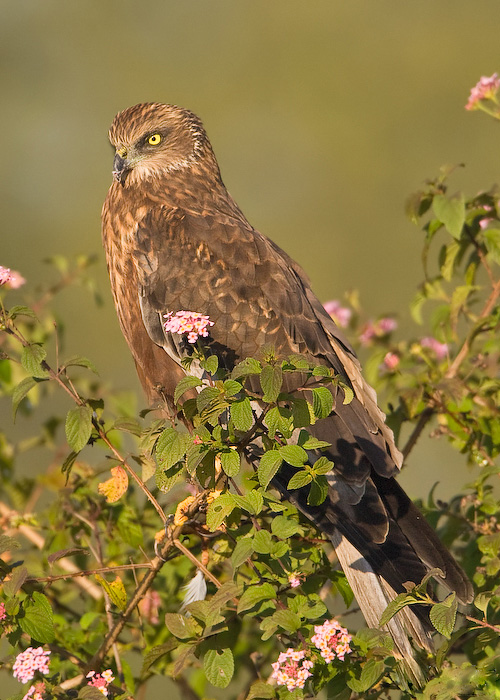
Wikimedia Commons
About the Eurasian Marsh-Harrier
The Eurasian Marsh-Harrier (Circus aeruginosus) plays a vital role in maintaining the ecological balance of wetlands across Europe, Asia, and parts of Africa. This large raptor, often seen soaring low over reed beds and marshes, is a key predator of small mammals, birds, and amphibians, helping control the populations of these species and thus promoting biodiversity. A member of the Accipitridae family, the Eurasian Marsh-Harrier shows particular adaptability to various wetland environments, from extensive reed beds along the Danube River to the marshlands of the Nile Delta. Its presence often indicates a healthy ecosystem, as it requires large areas of undisturbed habitat to thrive. During the breeding season, which occurs from April to July, the Eurasian Marsh-Harrier is highly territorial, often seen engaging in impressive aerial displays to establish dominance and attract mates. In winter, the species migrates to milder climates, with many individuals traveling to sub-Saharan Africa, Southern Asia, and the Mediterranean region. Seasonal migrations highlight its adaptability, as it exploits different habitats depending on the time of year. This adaptability also underscores the significance of conserving wetland habitats across its range, as these ecosystems support not only the Eurasian Marsh-Harrier but numerous other species that form complex ecological networks.
The Eurasian Marsh-Harrier belongs to the family Accipitridae, within the order Accipitriformes. These birds typically live average 10-12 years, with a maximum recorded of 16 years..
How to Identify a Eurasian Marsh-Harrier
The Eurasian Marsh-Harrier is a large raptor with a wingspan ranging from 115 to 140 cm. Adult males typically exhibit a striking combination of brown and gray plumage, with pale gray on their heads, wings, and tails, distinguishing them from females and juveniles. Females and juveniles are predominantly brown with creamy yellow crowns and throat patches, which can lead to confusion with other harrier species such as the Hen Harrier. In flight, the Eurasian Marsh-Harrier can be recognized by its long wings, held in a shallow V-shape, and its distinctive buoyant flight pattern as it glides low over wetlands. When perching, it often adopts a hunched posture, with its wings slightly drooped. The differences in plumage between sexes and age groups can assist birders in accurate field identification, especially during the breeding season when males are more visible due to their aerial displays.
Having trouble telling birds apart? Upload a photo to our bird identification tool for an instant species match.
Eurasian Marsh-Harrier Habitat and Range
Preferred Habitat
The Eurasian Marsh-Harrier predominantly inhabits wetland areas, including reed beds, marshes, and lakes. These habitats are crucial during the breeding season, providing both food and nesting sites. In regions like the Camargue in France and the Danube Delta in Romania, the species is a common sight. Elevation is not a limiting factor for this species, as it is primarily associated with lowland wetlands. During migration and winter, the Eurasian Marsh-Harrier may also be found in coastal areas, rice paddies, and flooded fields, demonstrating some flexibility in habitat preference. Although it occasionally ventures into more urban environments, this is less common and typically limited to areas where wetlands are interspersed with human development.
Geographic Range
The Eurasian Marsh-Harrier has a broad breeding range extending across Europe and parts of Asia, from the British Isles in the west to Mongolia in the east. Significant populations breed in countries such as Poland, Germany, and Russia. In winter, the species migrates to sub-Saharan Africa, the Indian subcontinent, and southern Europe. Migration corridors often follow major river valleys and coastlines, with birds traveling through regions like the Mediterranean Basin. Population density tends to be highest in expansive wetland areas, such as the Danube Delta, where habitat conditions are ideal for breeding and foraging.
Want to know which birds visit your area? Browse our backyard birds by location guides for region-specific species lists.
What Does the Eurasian Marsh-Harrier Eat?
The diet of the Eurasian Marsh-Harrier is diverse, primarily consisting of small mammals like voles and mice, as well as birds, reptiles, and amphibians. During the breeding season, when the availability of prey is crucial for raising young, these harriers may also feed on eggs and young birds. In winter, their diet shifts to include more carrion and aquatic prey, such as fish and frogs, reflecting changes in prey availability. The Eurasian Marsh-Harrier employs a distinctive hunting technique, flying low over its habitat with slow, deliberate wingbeats, scanning for movement below. This method is highly efficient, allowing the bird to cover large areas in search of food.
Eurasian Marsh-Harrier Behavior and Social Structure
Eurasian Marsh-Harriers exhibit complex social and territorial behaviors, particularly during the breeding season. Males perform elaborate aerial displays, involving steep dives and loops to attract females and establish territories. These displays are often accompanied by vocalizations and the presentation of prey items as courtship gifts. Territorial disputes can be aggressive, with individuals engaging in aerial combat to defend nesting sites. Outside the breeding season, these birds are more solitary but can sometimes be observed in loose flocks during migration. They are diurnal, with peak activity occurring in the early morning and late afternoon, coinciding with optimal hunting conditions. When faced with predators or human disturbances, the Eurasian Marsh-Harrier may display mobbing behavior, attempting to drive threats away from their nests.
Eurasian Marsh-Harrier Nesting and Reproduction
The breeding ecology of the Eurasian Marsh-Harrier is closely tied to wetland habitats, where they construct large nests from reeds and grasses, usually on the ground or in low vegetation. Preferred nesting sites are in dense reed beds, providing protection from predators and proximity to hunting grounds. The typical clutch size ranges from three to five eggs, with an incubation period of about 33-38 days. Both parents share incubation duties and feeding of the chicks, which fledge approximately 35-40 days after hatching. The species generally has one brood per year, although in favorable conditions, a second brood may occur. Parental care extends until the fledglings become independent, usually within two months post-fledging.
Eurasian Marsh-Harrier Sounds and Vocalizations
The vocal repertoire of the Eurasian Marsh-Harrier includes a variety of calls, with the most common being a sharp, whistling 'peew' used during breeding displays and territory defense. This call is often repeated in rapid succession, creating a series of high-pitched notes. Alarm calls are more harsh and repetitive, designed to alert other birds of potential threats. While not known for a melodious song, the Eurasian Marsh-Harrier's vocalizations play a crucial role in communication, particularly in the dense reeds where visibility is limited. They are most vocal during the early morning, coinciding with peak activity periods.
Interesting Facts About the Eurasian Marsh-Harrier
- 1The Eurasian Marsh-Harrier has been known to travel over 5000 kilometers during migration from Europe to Africa.
- 2Unlike many raptors, the male Eurasian Marsh-Harrier often assists in feeding the young by delivering prey to the nest.
- 3In some regions, the Eurasian Marsh-Harrier has been observed nesting in agricultural fields, showcasing its adaptability.
- 4The species exhibits sexual dimorphism, with males being smaller and lighter than females, which is common among raptors.
- 5The Eurasian Marsh-Harrier's ability to hunt over waterlogged areas makes it uniquely adapted to its wetland environment.
- 6Young Eurasian Marsh-Harriers can be distinguished by their distinctive creamy heads, which fade as they mature.
- 7The Eurasian Marsh-Harrier's gliding flight style is not only energy efficient but also aids in stealthy hunting.
Eurasian Marsh-Harrier Conservation Status
The Eurasian Marsh-Harrier is currently classified as Least Concern by the IUCN, with populations considered stable across most of its range. However, specific local populations face threats from habitat loss due to wetland drainage and conversion for agriculture. Pollution and pesticide use also pose significant risks, impacting prey availability and reproductive success. Conservation efforts focus on protecting and restoring wetland habitats, with initiatives in Europe and Asia aimed at preserving critical breeding and wintering sites. Historical declines in some regions have been reversed through targeted conservation actions, highlighting the importance of continued habitat protection.


