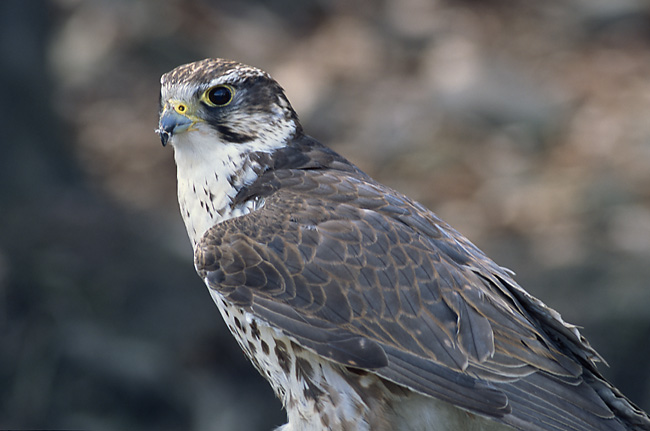
Falco parasitus
Falco parasitus
Order: Falconiformes / Family: Falconidae
About the Falco parasitus
The Falco parasitus, commonly referred to as the African Hobby, is a small falcon that thrives across various regions of sub-Saharan Africa. Its presence is not only a testament to its adaptability but also an indicator of healthy ecosystems. Often found flitting across the open skies, the African Hobby is a master of aerial agility, engaging in thrilling pursuits of its insect prey. This raptor's ecological significance extends beyond its role as a predator; it helps control the population of large insects, contributing to the balance of the food web.
The African Hobby is particularly notable in regions such as the savannas of East Africa, where it shares the skies with other raptors like the Lanner Falcon and the Amur Falcon. Its preference for open landscapes allows it to exploit a variety of habitats, from grasslands to lightly wooded areas, but it is rarely found in dense forests or arid deserts. During the breeding season, the African Hobby exhibits a remarkable territorial behavior, often seen in pairs soaring high above their nesting territories, which they defend vigorously against intruders.
In terms of seasonal behavior, the African Hobby is a partial migrant. While some populations remain resident year-round, others undertake seasonal movements in response to changes in prey availability. This adaptability ensures the species can exploit temporary abundances of food resources across different areas. In many parts of its range, the African Hobby is a familiar sight during the rainy season, when insect populations surge, providing ample feeding opportunities. Its presence, therefore, underscores not only the richness of the avifauna in its range but also the ecological dynamics of the regions it inhabits.
The Falco parasitus belongs to the family Falconidae, within the order Falconiformes. These birds typically live average 10-14 years with max recorded 18 years.
How to Identify a Falco parasitus
The African Hobby, or Falco parasitus, presents a striking silhouette with a wingspan ranging from 66 to 78 cm. Adults exhibit bold, contrasting plumage with a distinctive black crown and nape, contrasting sharply with a rich chestnut throat and breast. The upperparts are predominantly slate-gray, while the underparts are buff with rufous barring, a pattern that aids in identification from below. Juvenile African Hobbies resemble adults but have a more muted plumage and less distinct barring.
Males and females of the species are similar in appearance, though females are slightly larger, a common trait among raptors. The African Hobby is often confused with the Eurasian Hobby due to similar size and coloration; however, the African Hobby's more extensive chestnut coloring on the underparts is a key differentiator. Observers should also note the long, pointed wings and narrow tail, which give it an elegant appearance during flight.
In flight, the African Hobby exhibits rapid, powerful wingbeats interspersed with glides, a common behavior among falcons. When perched, it sits upright, often on exposed branches or utility poles, scanning for prey. Its posture, combined with its unique coloration, makes it a memorable sight for birdwatchers across its range.
Having trouble telling birds apart? Upload a photo to our bird identification tool for an instant species match.
Falco parasitus Habitat and Range
Preferred Habitat
The African Hobby occupies a variety of habitats, thriving most notably in open savannas, grasslands, and lightly wooded areas. It avoids dense forests and extreme arid regions, preferring landscapes that offer both hunting opportunities and suitable perching sites. The species is commonly found at elevations ranging from sea level to around 2000 meters, although this can vary locally.
In urban areas, the African Hobby has adapted to utilize tall buildings and transmission towers as substitute perching sites, reflecting its adaptability to human-modified environments. During the wet season, when insect prey is abundant, the African Hobby may be observed in more diverse habitats, including agricultural fields and suburban parks, where it exploits the seasonal surge in available food resources.
Geographic Range
The breeding range of the African Hobby spans much of sub-Saharan Africa, with notable populations in countries such as Kenya, Tanzania, and South Africa. It is a partial migrant, with some populations moving northward during the non-breeding season, reaching areas such as the Sahel and occasionally southern parts of Europe, although this is rare.
Migration corridors are primarily intra-African, with movements dictated by prey availability rather than strict seasonal patterns. In some regions, particularly in East and Southern Africa, the species is resident year-round, benefiting from stable food supplies. Population density hotspots include the savannas and grasslands of East Africa, where large insect populations support healthy numbers of African Hobbies.
As a migratory species, the African Hobby's presence in certain regions can vary significantly across seasons, underscoring its reliance on dynamic habitats that offer fluctuating resources throughout the year.
Want to know which birds visit your area? Browse our backyard birds by location guides for region-specific species lists.
What Does the Falco parasitus Eat?
The diet of the African Hobby consists primarily of large flying insects, such as dragonflies and beetles, which it hunts with remarkable aerial dexterity. During the rainy season, when insect populations peak, these falcons engage in spectacular aerial chases, often catching prey in mid-air with their talons.
In addition to insects, the African Hobby occasionally preys on small birds, particularly during periods when insect prey is less abundant. This opportunistic feeding strategy highlights its adaptability and resourcefulness in varying environmental conditions. Prey size typically ranges from medium to large insects, with occasional captures of small avian species.
The African Hobby often hunts during the cooler parts of the day, such as early morning and late afternoon, aligning its activity with periods of increased prey availability. This feeding schedule also reduces competition with other diurnal raptors, allowing the African Hobby to exploit its preferred niche more effectively.
Falco parasitus Behavior and Social Structure
The African Hobby exhibits a fascinating blend of social and solitary behaviors. During the breeding season, pairs establish and defend territories with vigor, often engaging in aerial displays to deter rivals. These displays include steep dives and rapid swoops, showcasing their agility and territorial commitment.
Courtship involves intricate aerial acrobatics, with the male often presenting food to the female as part of the bonding process. Outside the breeding season, African Hobbies can be seen in loose flocks, particularly when migrating or exploiting a temporary abundance of food. These flocks are usually small, numbering up to 20 individuals.
In response to predators, the African Hobby relies on its speed and agility to avoid danger, often taking refuge in dense foliage or diving steeply to evade threats. Its daily activity is primarily diurnal, with peak activity during the early morning and late afternoon, times that coincide with optimal hunting conditions and reduced competition.
Falco parasitus Nesting and Reproduction
The African Hobby typically nests in abandoned nests of other birds, such as crows or large passerines, rather than constructing its own. These nests are often located high in trees, providing a strategic vantage point for both observation and defense. Occasionally, nests are also found on cliffs or ledges, particularly in less forested regions.
Clutch size generally ranges from 2 to 4 eggs, with incubation lasting approximately 28 to 30 days. Both parents share incubation duties, although the female takes on the primary role while the male provides food. The fledging period follows after about 28 to 35 days post-hatching, during which both parents are active in feeding and protecting the young.
Typically, the African Hobby produces one brood per year, although in regions with abundant food supply, there may be instances of two broods. The parental roles are well-defined, with both contributing significantly to the care and upbringing of the chicks, enabling the young to develop the skills necessary for independent life.
Falco parasitus Sounds and Vocalizations
The African Hobby's primary call is a series of quick, high-pitched 'kee-kee-kee' notes, often delivered in rapid succession. This call is most commonly heard during the breeding season, serving as both a territorial signal and a communication tool between mates.
Alarm calls are sharper and more insistent, used to alert others of potential threats. These calls are distinct from the more melodic songs of passerines, characterized instead by their urgency and repetitive nature. The dawn chorus of the African Hobby, while less elaborate than some songbirds, is nonetheless a part of its daily vocal repertoire, especially prominent during periods of increased territorial activity.
In comparison to familiar sounds, the African Hobby's call could be likened to the rapid clinking of small bells, maintaining a rhythmic cadence that can be both commanding and reassuring in the open savanna.
Interesting Facts About the Falco parasitus
- 1The African Hobby can reach speeds of up to 160 km/h during its high-speed chases, making it one of the faster falcons.
- 2Unlike many raptors, the African Hobby often hunts in low light conditions, such as dawn and dusk, to capitalize on insect activity.
- 3The species' scientific name, Falco parasitus, reflects its behavior of using nests built by other birds instead of constructing its own.
- 4During migration, African Hobbies have been known to cover distances exceeding 1,000 kilometers, showcasing their endurance and navigational skills.
- 5The African Hobby's diet occasionally includes small bats, a testament to its versatility and hunting prowess.
- 6In urban areas, African Hobbies have adapted to hunt around streetlights, taking advantage of insects attracted to artificial light.
- 7The falcon's signature 'kee-kee-kee' call can be heard over long distances, aiding in communication across open landscapes.
Falco parasitus Conservation Status
The African Hobby is currently listed as Least Concern by the IUCN, reflecting its stable population trend across much of its range. However, localized threats such as habitat destruction and pesticide use pose potential risks to certain populations. Conservation efforts focus on habitat preservation and mitigating the impacts of agricultural expansion, which can reduce suitable hunting grounds. In areas where populations have declined, such as parts of West Africa, ongoing conservation measures aim to restore habitats and monitor population trends. Historically, the African Hobby has maintained a relatively stable presence across sub-Saharan Africa, benefiting from its adaptability and broad range. Continued efforts are needed to ensure that these favorable conditions persist, particularly in the face of increasing human encroachment and environmental change.
Other Falconidae Species


Birds Similar to the Falco parasitus
These species are often confused with the Falco parasitus due to similar appearance or overlapping range.