
Fan-tailed Widowbird
Euplectes axillaris
Order: Passeriformes / Family: Ploceidae
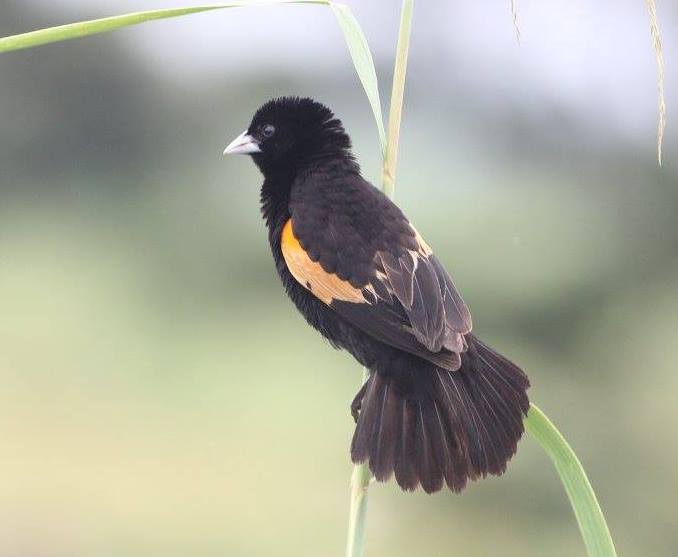
Wikimedia Commons
About the Fan-tailed Widowbird
The Fan-tailed Widowbird (Euplectes axillaris) is a strikingly unique member of the Ploceidae family, notable for its dramatic tail feathers and contrasting plumage. This species, common across sub-Saharan Africa, plays a vital role in the grassland and wetland ecosystems where it primarily resides. The Fan-tailed Widowbird, found in countries such as Kenya, Tanzania, and South Africa, is often seen in open fields, marshes, and edges of wetlands, where it contributes to the control of insect populations and the dispersal of seeds, thereby maintaining ecological balance. These birds demonstrate a fascinating seasonal behavior as they undergo a significant transformation between breeding and non-breeding seasons. During the breeding season, male widowbirds develop elongated tail feathers, sometimes measuring up to 20 centimeters, which they use in elaborate courtship displays to attract females. In contrast, outside the breeding season, these tail feathers are shed, and their plumage becomes less vibrant, allowing them to blend more easily into their environment. This seasonal dimorphism is not just for show; it significantly impacts their behavior and ecological interactions. The Fan-tailed Widowbird is an indicator species for healthy grassland and wetland environments. Their presence often hints at an ecosystem in good health. Their role in seed dispersion is crucial for the regeneration of plant life in these regions, while their predation on insects helps manage pest populations, benefiting both natural systems and agricultural lands. Understanding the behavior and ecological significance of the Fan-tailed Widowbird can provide insights into the health of African grassland ecosystems, making it a subject of interest for both ornithologists and conservationists.
The Fan-tailed Widowbird belongs to the family Ploceidae, within the order Passeriformes. These birds typically live average 5 years with some living up to 8 years.
How to Identify a Fan-tailed Widowbird
Adult male Fan-tailed Widowbirds are unmistakable during the breeding season, characterized by their glossy black plumage and the spectacularly long tail feathers that can triple their body length. These tail feathers are a key feature used during display flights to attract potential mates. In contrast, females and non-breeding males exhibit a more subdued appearance with brownish, streaked plumage, which provides effective camouflage in their grassy habitats. Juvenile widowbirds resemble females but can be identified by their slightly duller coloration and less defined streaking. The differences between males and females are particularly pronounced, with males being larger and more eye-catching during the breeding season. However, during the non-breeding season, males lose their ornate tail feathers and adopt a color scheme similar to the females. This seasonal change can sometimes cause confusion with similar species, such as the Red-collared Widowbird, which also has long tail feathers, though these are usually shorter and accompanied by a distinctive red collar. Whether in flight or perched, the Fan-tailed Widowbird's long tail feathers create a unique silhouette, with the tail often sweeping dramatically behind them in flight or draping elegantly when perched.
Having trouble telling birds apart? Upload a photo to our bird identification tool for an instant species match.
Fan-tailed Widowbird Habitat and Range
Preferred Habitat
The Fan-tailed Widowbird thrives in a variety of wetland and grassland habitats across sub-Saharan Africa. They are frequently observed in marshes, moist grasslands, and the peripheries of wetlands where tall grasses and reeds provide both cover and feeding opportunities. These birds prefer habitats at varying elevations, typically from sea level up to approximately 2,000 meters. Seasonal shifts in habitat usage are common, with some populations moving to slightly different areas during the non-breeding season, often depending on water availability and the state of vegetation. While they are primarily rural dwellers, Fan-tailed Widowbirds occasionally venture into urban parks and agricultural fields, especially where these areas border suitable natural habitats. Despite their adaptability, they are seldom found in densely forested or arid regions, underscoring their preference for grassland and wetland environments.
Geographic Range
The Fan-tailed Widowbird is widely distributed across sub-Saharan Africa. Its breeding range extends from South Africa in the south to Ethiopia in the north, covering countries such as Botswana, Zimbabwe, and Uganda. These birds are typically non-migratory, although some populations may undertake short regional movements in response to seasonal changes in habitat conditions, particularly in relation to rainfall and food availability. During the non-breeding season, some individuals might move to areas with more favorable conditions, yet such movements are generally local and do not constitute long-distance migrations. Population densities can vary significantly, with certain regions like the Okavango Delta in Botswana and the wetlands around Lake Victoria in East Africa serving as hotspots due to the abundance of suitable habitats. In areas with optimal conditions, the Fan-tailed Widowbird can be quite common, forming small flocks that can number in the dozens.
Want to know which birds visit your area? Browse our backyard birds by location guides for region-specific species lists.
What Does the Fan-tailed Widowbird Eat?
The Fan-tailed Widowbird primarily feeds on seeds and insects, making it an omnivorous species with a flexible diet that changes seasonally. During the breeding season, the abundance of insects such as grasshoppers and beetles provides a critical protein source necessary for the energy-intensive activities of courtship and rearing young. As the seasons shift and insect populations decline, seeds of grasses and sedges become a more prominent component of their diet. The widowbirds' foraging techniques are well adapted to their environment; they often feed on the ground or perch low in grasses, plucking seeds and insects with precision. They will sometimes be observed flicking their tails upwards as they forage, a behavior thought to help in flushing out insects. Prey size is generally small, focusing on easily digestible insects and seeds that do not require extensive handling. Feeding schedules can be influenced by environmental conditions, with activity peaking during cooler parts of the day such as early morning and late afternoon.
Fan-tailed Widowbird Behavior and Social Structure
Fan-tailed Widowbirds exhibit complex social and territorial behaviors, particularly during the breeding season. Males engage in elaborate courtship displays, showcasing their long tail feathers through acrobatic flight maneuvers and posturing to attract females. These displays are often accompanied by vocalizations and are crucial for establishing and maintaining territories. Males are typically polygynous, mating with multiple females within their territory, which they defend vigorously against rivals. Outside of the breeding season, Fan-tailed Widowbirds are more gregarious, forming mixed-species flocks with other seed-eating birds, which can provide safety in numbers from predators such as raptors and snakes. Daily activity patterns are dictated by the availability of food and environmental conditions, with birds often resting during the hottest parts of the day. The response to predators includes alarm calls and flocking behaviors, where the group may take flight simultaneously to confuse and evade threats.
Fan-tailed Widowbird Nesting and Reproduction
Fan-tailed Widowbirds build their nests low in dense grasses or reeds, utilizing materials such as grass blades and plant fibers to create a cup-shaped structure. The location is carefully selected to minimize predation risks, often in areas where water provides a natural barrier against ground predators. Clutch sizes typically range from two to four eggs, which are incubated primarily by the female for about 12 to 14 days. After hatching, the female continues to care for the young, with the male occasionally assisting by defending the territory and helping with feeding. The fledging period lasts approximately 15 to 18 days, during which the chicks grow rapidly and develop the skills needed for independent survival. The number of broods per year can vary depending on environmental conditions but is generally limited to one or two.
Fan-tailed Widowbird Sounds and Vocalizations
The primary song of the Fan-tailed Widowbird is a series of melodious whistles and clicks, characterized by a rhythmic pattern and a moderate pitch. These vocalizations are most commonly heard during the breeding season as males advertise their presence and attract mates. Call notes are shorter and less musical, often used for communication between individuals within a flock. Alarm calls are sharp and abrupt, designed to alert others to the presence of predators. During the dawn chorus, the Fan-tailed Widowbird's song stands out due to its clarity and repetition, contributing to the early morning symphony typical of grassland and wetland areas.
Interesting Facts About the Fan-tailed Widowbird
- 1The Fan-tailed Widowbird can grow tail feathers up to 20 centimeters long, which are used in courtship displays.
- 2During non-breeding seasons, male Fan-tailed Widowbirds shed their long tail feathers and adopt a more subdued plumage.
- 3These birds are found in flocks that can include dozens of individuals during the non-breeding season.
- 4Fan-tailed Widowbirds are primarily found in sub-Saharan Africa, making them an integral part of African grassland ecosystems.
- 5Their diet consists of a mix of seeds and insects, which helps control pest populations and disperse plant seeds.
- 6Females are responsible for building nests and incubating eggs, with males often defending the territory.
- 7The species' presence in a region can be an indicator of healthy grassland and wetland ecosystems.
Fan-tailed Widowbird Conservation Status
The Fan-tailed Widowbird is currently classified as Least Concern by the IUCN, with stable population trends across most of its range. However, habitat loss due to agricultural expansion, wetland drainage, and urbanization poses ongoing threats to its natural habitats. Conservation efforts focus on habitat protection and sustainable land management practices that consider the ecological needs of grassland and wetland species. Historically, the population has remained resilient, yet continued monitoring and conservation actions are essential to ensure its long-term survival in the face of increasing human pressures.
Other Ploceidae Species



Birds Similar to the Fan-tailed Widowbird
These species are often confused with the Fan-tailed Widowbird due to similar appearance or overlapping range.

