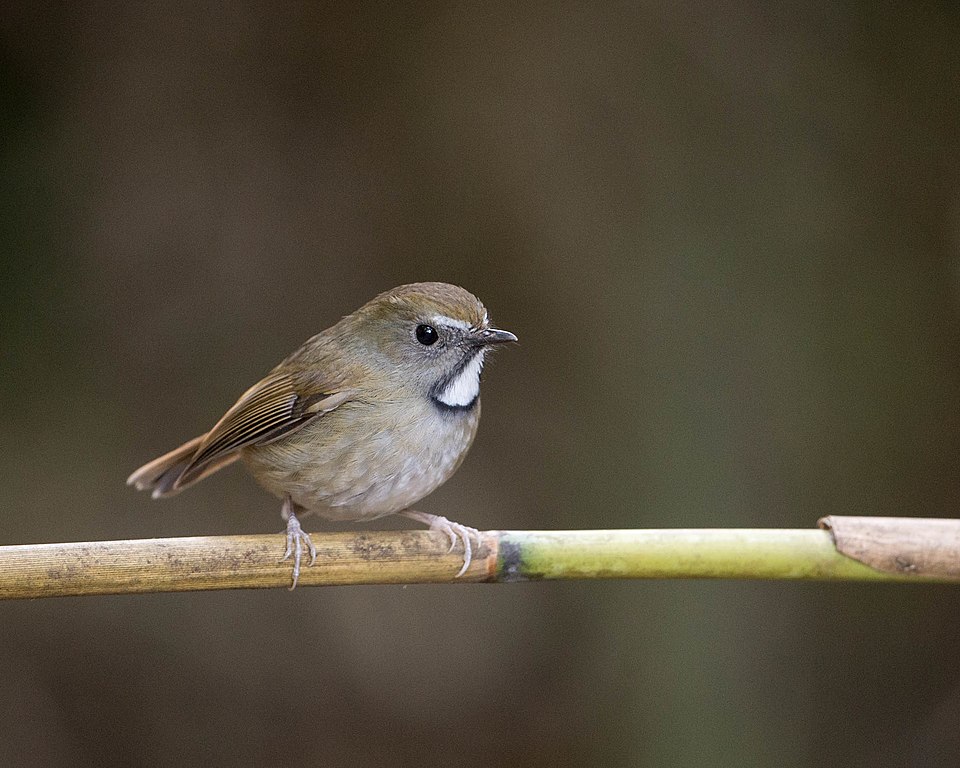
Firethroat
Luscinia pectardens
Order: Passeriformes / Family: Muscicapidae

Wikimedia Commons
About the Firethroat
The Firethroat, Luscinia pectardens, is a captivating songbird that enchants birdwatchers with its vibrant plumage and melodious songs. This species belongs to the family Muscicapidae and is found primarily in the dense forests of central China. The Firethroat is particularly significant to the ecosystems it inhabits, as it plays a crucial role in seed dispersal and insect control. During the breeding season, which spans from May to July, the Firethroat can often be seen flitting through the undergrowth, foraging for insects and small invertebrates. This bird prefers regions with abundant underbrush, where it can find ample food and suitable nesting sites. Outside the breeding season, the Firethroat migrates to warmer areas in southeastern Asia, showcasing its adaptability to different environments. The Firethroat's ecological role extends beyond its home range, as it influences the populations of various insect species it preys upon. In the dense forests of Sichuan, Yunnan, and parts of Myanmar, the presence of the Firethroat is a reliable indicator of a healthy ecosystem. Its diet consists mainly of small insects, spiders, and occasionally fruits and seeds, aiding in the natural regulation of these populations. The Firethroat's vibrant colors and unique vocalizations make it a favorite subject of study for ornithologists and bird enthusiasts alike. Understanding the behavior and habitat preferences of Luscinia pectardens is essential for conservation efforts, as its population is currently facing pressures from habitat loss and climate change. By protecting the forest habitats crucial to the Firethroat's survival, we can ensure that this magnificent bird continues to thrive and contribute to the ecological balance of its natural habitats.
The Firethroat belongs to the family Muscicapidae, within the order Passeriformes. These birds typically live average 4-6 years with a maximum recorded of 8 years..
How to Identify a Firethroat
The Firethroat is easily recognized by its striking appearance, particularly the fiery-red patch on the throat of the male. The adult male Firethroat features a bold black face-mask that starkly contrasts with its bright red throat and upper chest, while the rest of its plumage is generally a mix of olive and gray tones. The females and juveniles, however, are more subdued in color, lacking the vibrant red throat of the males, which helps them blend into their forest surroundings. They display a more uniform olive-brown color with slight mottling, making them less conspicuous. When observing the Firethroat in the field, one should note its small size and energetic movements, often seen hopping along the forest floor or low branches. Its flight is typically short and low, characterized by rapid wing beats. Differentiating the Firethroat from similar species, such as the Siberian Rubythroat, requires keen observation of its throat patch and facial markings. The Firethroat's distinctive posture during perching involves an upright stance, often with its tail slightly cocked, a behavior that can aid in its identification.
Having trouble telling birds apart? Upload a photo to our bird identification tool for an instant species match.
Firethroat Habitat and Range
Preferred Habitat
The Firethroat inhabits temperate and subtropical forests, often favoring montane regions with dense undergrowth. It thrives in areas with a complex vertical structure, allowing it to forage both on the ground and among low shrubs. During the breeding season, the Firethroat can be found in mixed forests in central China, particularly in provinces like Sichuan and Yunnan, at elevations ranging from 1,800 to 3,500 meters. These mountainous regions offer the dense vegetation and cooler temperatures ideal for nesting and foraging. In the winter months, the Firethroat migrates to lower elevations and more tropical environments in southeastern Asia, including parts of northern Thailand and Myanmar. This seasonal movement highlights its adaptability and reliance on forested habitats year-round. Unlike some songbirds, the Firethroat rarely ventures into urban or highly populated areas, preferring the seclusion and resources offered by its natural forest habitats.
Geographic Range
The Firethroat's primary breeding range is concentrated in the mountainous forests of central China, with populations predominantly located in the provinces of Sichuan and Yunnan. During the breeding season, these birds occupy the cool, dense forests at higher elevations where they can find abundant resources and suitable nesting sites. As the seasons change, the Firethroat undertakes a migration to the warmer, more tropical regions of southeastern Asia, including northern Thailand and Myanmar, where it spends the winter months. This migration follows well-defined corridors that take advantage of forested areas and natural landscapes that offer protection and food along the way. Population density hotspots are generally located in the core breeding areas of central China, where suitable habitats are extensive. However, outside these regions, the Firethroat becomes increasingly rare, with scattered records in neighboring countries during migration. Its presence is often used as an indicator of healthy forest ecosystems, making conservation of its habitat critical for its continued survival.
Want to know which birds visit your area? Browse our backyard birds by location guides for region-specific species lists.
What Does the Firethroat Eat?
The Firethroat maintains a diverse diet that shifts with the seasons, consisting primarily of small insects and other invertebrates. During the breeding season, it actively forages for caterpillars, beetles, and spiders, which provide the necessary protein for raising young. This diet plays a significant role in controlling insect populations within its habitat. In addition to insects, the Firethroat also consumes fruits and seeds, particularly during times when insect prey becomes less abundant. Its foraging technique involves gleaning from foliage and occasionally using short flights to catch flying insects in mid-air. The Firethroat tends to feed throughout the day, with peak activity occurring in the early morning and late afternoon when insect activity is highest. It primarily targets prey that ranges from small to medium in size, ensuring efficient energy intake. This varied diet not only supports the Firethroat's nutritional needs but also contributes to the ecological balance within its forest habitat.
Firethroat Behavior and Social Structure
The Firethroat is a primarily solitary bird, often seen alone or in pairs during the breeding season. It exhibits territorial behavior, with males vigorously defending their nesting areas from potential intruders. Courtship displays involve the male showcasing its vibrant red throat patch while singing complex songs to attract a mate. These displays are crucial for pair formation and successful breeding. Outside the breeding season, the Firethroat becomes less territorial and may join mixed-species flocks, particularly during migration. This behavior provides added protection against predators and increases foraging efficiency. The Firethroat's response to predators involves emitting alarm calls and seeking cover within dense vegetation. Its daily activity patterns include periods of active foraging interspersed with rest and preening. The Firethroat's adaptability to different social structures and its ability to modify behavior according to season and environment highlight its resilience within its natural habitat.
Firethroat Nesting and Reproduction
The Firethroat constructs its nest in well-concealed locations, typically within dense underbrush or low shrubbery, providing protection from predators. The nest is a cup-shaped structure made from twigs, leaves, and moss, lined with finer materials such as feathers and grasses. This choice of materials ensures both stability and comfort for the incubating female and the developing chicks. A typical clutch consists of 3 to 5 eggs, with an incubation period of approximately 12 to 14 days. During this time, the female assumes the primary role of incubating the eggs, while the male remains nearby, providing food and protection. Once the eggs hatch, both parents participate in feeding the chicks, which fledge after about 10 to 14 days. The Firethroat typically raises one brood per year, although in favorable conditions, a second brood is possible. This nesting strategy ensures the successful rearing of offspring in its specific forest environment.
Firethroat Sounds and Vocalizations
The song of the Firethroat is a rich, melodious sequence of whistles and trills that resonate through its forest habitat. These vocalizations are characterized by a rapid rhythm and a clear, bell-like quality that can carry over long distances. The primary song serves both to attract mates and to assert territory boundaries. In addition to its song, the Firethroat emits a variety of call notes, including a sharp 'chit' used in alarm situations and softer contact calls for communication between mates. During the early morning hours, the Firethroat participates in the dawn chorus, its songs mingling with those of other forest residents. The distinctiveness of its vocalizations makes it easier for birdwatchers to identify even when the bird itself remains hidden in the foliage.
Interesting Facts About the Firethroat
- 1The Firethroat's vibrant red throat is a rare trait shared with only a few other songbird species, making it a standout in its habitat.
- 2Firethroats are known to travel over 1,000 kilometers during their migration from China to Southeast Asia.
- 3Despite their vivid plumage, Firethroats can be surprisingly elusive, often concealed within dense foliage when not singing.
- 4The Firethroat's song has been described as one of the most beautiful among Asian songbirds, characterized by complex melodies.
- 5Firethroats have adapted to altitudes as high as 3,500 meters, showcasing their resilience to different climatic conditions.
- 6The species was first described in 1905, highlighting its relatively recent discovery in the ornithological world.
- 7Firethroats play an essential role in their ecosystem by controlling insect populations and spreading plant seeds.
Firethroat Conservation Status
The Firethroat currently holds a status of Vulnerable on the IUCN Red List, primarily due to habitat loss and fragmentation caused by logging and agricultural expansion. While its population is currently stable, ongoing threats necessitate continued conservation efforts. Protecting the montane forests of central China, which are crucial to the Firethroat's survival, is a primary focus of conservation initiatives. These efforts include establishing protected areas and promoting sustainable land-use practices that preserve critical habitats. Historically, the Firethroat has faced population declines due to deforestation, but recent increases in awareness and conservation actions offer hope for its future. Continued monitoring and research are essential to ensure the long-term survival of this striking songbird.