
Flame-throated Bulbul
Pycnonotus gularis
Order: Passeriformes / Family: Pycnonotidae
Wikimedia Commons
About the Flame-throated Bulbul
The Flame-throated Bulbul (Pycnonotus gularis) is a captivating avian species endemic to the Western Ghats of India, a biodiversity hotspot known for its rich birdlife. This medium-sized songbird belongs to the family Pycnonotidae, characterized by its vibrant orange-red throat, which stands out against its otherwise olive-green plumage. The bulbul's striking appearance and melodious song have made it a favorite among birdwatchers and ornithologists alike. The Flame-throated Bulbul plays a significant ecological role by aiding in seed dispersal and pollination, as it feeds on various fruits and nectar. This mutualistic relationship with the flora of the Western Ghats underscores its importance in maintaining the ecological balance of the region. Additionally, the bulbul is an indicator species for the health of its habitat, thriving in well-preserved forest ecosystems but showing vulnerability to habitat degradation.The Flame-throated Bulbul is primarily found in moist deciduous and evergreen forests, where it forms small flocks during the non-breeding season. These forests provide a rich array of food resources and nesting sites, crucial for the bulbul's survival. During the breeding season, which typically spans from February to May, the bulbul becomes more territorial and is often observed in pairs. Its melodious song, a series of rich, fluty notes, becomes more pronounced as it establishes its breeding territory. The bulbul's preference for dense forest canopies makes it an elusive bird to spot, often requiring keen observation skills and patience from birdwatchers. The species is adapted to thrive in the humid, tropical climate of the Western Ghats, although it also demonstrates some resilience to seasonal variations in food availability. In addition to its ecological significance, the Flame-throated Bulbul holds cultural importance in the regions it inhabits. Its vibrant plumage and melodious song make it a symbol of natural beauty and biodiversity, often featured in local folklore and birdwatching literature. Conservationists emphasize the need to protect the bulbul's habitat from deforestation and land conversion, ensuring that this iconic species continues to thrive in its natural environment. By preserving the forests of the Western Ghats, not only is the future of the Flame-throated Bulbul secured, but the entire ecosystem benefits, supporting countless other species.
The Flame-throated Bulbul belongs to the family Pycnonotidae, within the order Passeriformes. These birds typically live typically 5-8 years, with a maximum recorded age of 10 years.
How to Identify a Flame-throated Bulbul
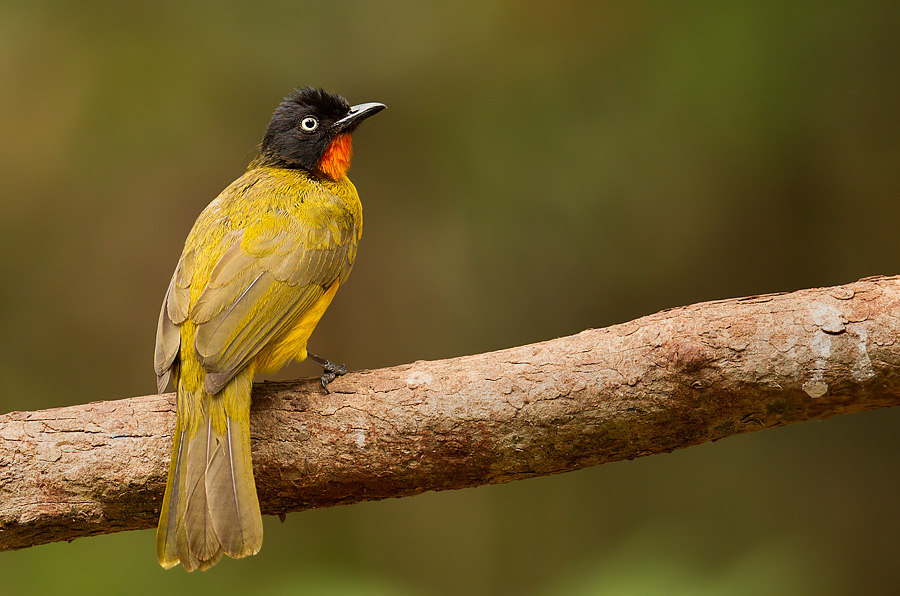
The Flame-throated Bulbul is immediately recognizable by its vivid orange-red throat, which contrasts sharply with its olive-green upperparts and yellow underparts. The head is a darker olive, almost appearing grayish, with a distinctive white eye-ring that accentuates its expressive eyes. Males and females are similar in appearance, though males may exhibit slightly brighter throat coloration. Juveniles resemble adults but with a duller overall plumage and less intense throat coloration, making them more challenging to identify. In flight, the Flame-throated Bulbul displays a relatively short, rounded tail and a quick, direct flight pattern. When perched, the bulbul exhibits a confident posture, often sitting upright on branches in the forest canopy. It can be confused with other bulbul species such as the Yellow-throated Bulbul (Pycnonotus xantholaemus), but the Flame-throated's unique throat color and overall coloration provide clear distinguishing features.
Having trouble telling birds apart? Upload a photo to our bird identification tool for an instant species match.
Flame-throated Bulbul Habitat and Range
Preferred Habitat
The Flame-throated Bulbul primarily inhabits the dense, moist deciduous and evergreen forests of the Western Ghats. These forests, rich in biodiversity, provide the bulbul with abundant food sources and nesting opportunities. The species prefers elevations ranging from 600 to 1,200 meters, where the climate is humid and the canopy is dense. During the dry season, the bulbul may venture into slightly more open areas, such as forest edges and clearings, in search of food. However, it remains largely within forested areas, demonstrating a strong preference for undisturbed habitats. Unlike some bird species, the Flame-throated Bulbul is seldom found in urban environments, indicating its reliance on natural forest ecosystems.
Geographic Range
The Flame-throated Bulbul is endemic to the Western Ghats in India, specifically found in the states of Karnataka, Kerala, Goa, and Maharashtra. This bird's range is relatively narrow, confined to this mountainous region, where it occupies suitable forest habitats. The Western Ghats serve as both the breeding and non-breeding range for the species, with no significant migratory movements reported. Within its range, the bulbul is more commonly encountered in protected areas and well-preserved forest reserves, where populations are typically denser. The species does not engage in long-distance migration but may exhibit some altitudinal movement in response to seasonal changes in food availability.
Want to know which birds visit your area? Browse our backyard birds by location guides for region-specific species lists.
What Does the Flame-throated Bulbul Eat?
The Flame-throated Bulbul is predominantly frugivorous, feeding on a wide variety of fruits and berries found in its forest habitat. Its diet includes figs, berries, and the fruits of various native trees and shrubs. During the breeding season, the bulbul may incorporate more protein-rich foods, such as insects and small invertebrates, into its diet to support the nutritional needs of its young. The bulbul employs a foraging strategy that involves actively searching the forest canopy and mid-story for ripe fruits, often plucking them while hovering briefly in front of the foliage. Feeding primarily occurs during the early morning and late afternoon, with periods of rest and preening in between.
Flame-throated Bulbul Behavior and Social Structure
The Flame-throated Bulbul is a social bird, often found in small flocks outside the breeding season. These flocks, typically comprising six to ten individuals, move through the forest in search of food, calling to each other with soft contact calls. During the breeding season, the bulbul becomes more territorial, with pairs establishing and defending nesting territories through vocal displays and occasional aerial chases. Courtship involves elaborate singing by the male, often accompanied by displays of the vibrant throat patch. The bulbul exhibits a crepuscular activity pattern, being most active during the cooler parts of the day. In the presence of predators, such as birds of prey, the Flame-throated Bulbul employs an alarm call to alert other flock members, often retreating to dense vegetation for cover.
Flame-throated Bulbul Nesting and Reproduction
Flame-throated Bulbuls construct cup-shaped nests using a variety of plant materials, including twigs, grasses, and leaves. These nests are strategically placed in the forks of small branches, typically several meters above the ground, where they are well-concealed by foliage. The breeding season spans from February to May, during which the female lays two to three eggs per clutch. Both parents share the responsibilities of incubation, which lasts approximately 12 to 14 days, and feeding the chicks once hatched. The young fledge about 14 to 16 days post-hatching, with parental care continuing for a short period thereafter. The bulbul generally raises one or occasionally two broods per year, depending on environmental conditions and food availability.
Flame-throated Bulbul Sounds and Vocalizations
The Flame-throated Bulbul's song is a melodious series of fluty, whistling notes that rise and fall in pitch. This musical repertoire is often described as a series of clear, tuneful phrases, delivered with a rich, full tone. The bird's calls, in contrast, are shorter and more abrupt, used for communication between flock members. Alarm calls are harsher and more insistent, designed to alert others to potential danger. During the dawn chorus, the Flame-throated Bulbul's song can be heard echoing through the forest, marking the beginning of the day's activities.
Interesting Facts About the Flame-throated Bulbul
- 1The Flame-throated Bulbul is one of the few bird species endemic to the Western Ghats, highlighting its restricted range.
- 2This bulbul is sometimes called the Rubigula, reflecting its bright, ruby-colored throat.
- 3It plays a crucial role in seed dispersal, contributing to the regeneration of forest ecosystems.
- 4The Flame-throated Bulbul's song is so melodious that it is often compared to a flute.
- 5Despite its vivid coloration, the bulbul's preference for dense foliage makes it surprisingly elusive.
- 6Unlike many bulbuls, the Flame-throated Bulbul does not migrate, residing year-round in its mountainous habitat.
- 7The bird's affinity for forest canopies means it is rarely seen at eye level, posing a challenge for birdwatchers.
Flame-throated Bulbul Conservation Status
The Flame-throated Bulbul is currently listed as Least Concern by the IUCN, although its population is under pressure from habitat loss due to deforestation and land conversion. Conservation efforts focus on preserving the Western Ghats' forest habitats through protected areas and sustainable land management practices. While the population trend is relatively stable, ongoing monitoring is essential to ensure that habitat degradation does not lead to future declines. In recent decades, the establishment of wildlife reserves and national parks has contributed significantly to the bulbul's conservation, providing safe havens for this and many other forest-dependent species.
Other Pycnonotidae Species


Birds Similar to the Flame-throated Bulbul
These species are often confused with the Flame-throated Bulbul due to similar appearance or overlapping range.

