
Flammulated Flycatcher
Deltarhynchus flammulatus
Order: Passeriformes / Family: Tyrannidae
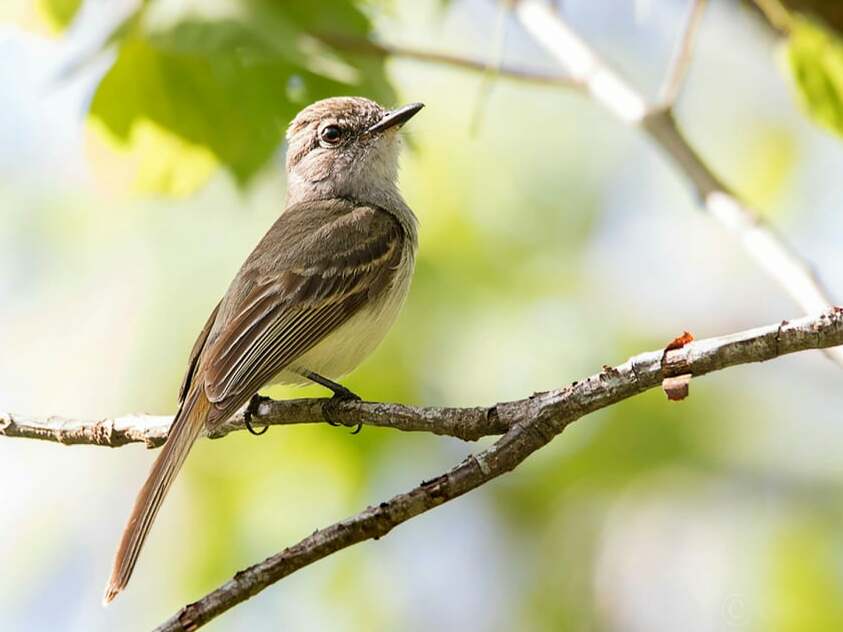
Wikimedia Commons
About the Flammulated Flycatcher
The Flammulated Flycatcher, known scientifically as Deltarhynchus flammulatus, is a small passerine bird endemic to the Pacific slope of western Mexico. It belongs to the family Tyrannidae, which encompasses a vast range of flycatcher species across the Americas. This species is particularly intriguing due to its limited geographical distribution and habitat specificity. Typically found in the subtropical and tropical dry forests, the Flammulated Flycatcher thrives in regions characterized by semi-arid conditions and sparse tree cover, such as those found in the Mexican states of Jalisco, Colima, and Michoacán. The flycatcher's preference for these habitats emphasizes its role in the ecological dynamics of the dry forest biome, where it aids in insect population control through its insectivorous diet.
The significance of the Flammulated Flycatcher extends beyond its ecological niche. As an indicator species, the health of its populations can reflect broader environmental changes, making it a focal point for conservationists who monitor habitat alterations due to deforestation and climate change. The bird's understated beauty lies in its flammulated or flame-like markings, which are subtle yet striking against the backdrop of its generally grayish-brown plumage.
Seasonal behaviors of the Flammulated Flycatcher include periods of increased vocal activity during the breeding season, which typically occurs in the early months of the year when the dry forest environment experiences a brief wet season. This timing is crucial for breeding success, as it coincides with the peak availability of insects, providing ample food resources for raising their young. The Flammulated Flycatcher's role in the ecosystem as both a predator of insects and a prey item for larger birds and mammals underlines its importance in maintaining the balance of its native dry forest habitats.
The Flammulated Flycatcher belongs to the family Tyrannidae, within the order Passeriformes. These birds typically live average 5 years, with a maximum recorded of 8 years..
How to Identify a Flammulated Flycatcher
The Flammulated Flycatcher is a small, inconspicuous bird measuring about 16 cm in length. Its plumage is predominantly grayish-brown, making it well-camouflaged in its dry forest habitat. The subtle flammulated markings, from which it derives its name, appear as faint, flame-like streaks on its throat and breast. These markings are more pronounced in males than in females, though both sexes exhibit similar coloration. Juvenile birds resemble adults but generally have a duller plumage with less distinct flammulated patterns.
In the field, the Flammulated Flycatcher might be confused with other small flycatchers, especially those sharing its range, such as the Dusky-capped Flycatcher. However, its smaller size and softer, more subdued coloration can help distinguish it. Additionally, its flight pattern is somewhat fluttery and erratic, typical of many flycatcher species, which is a useful identification cue for birders.
When perched, the Flammulated Flycatcher often adopts an upright posture, sitting quietly on branches while scanning for prey. This behavior, combined with its distinctive soft calls, aids in identification. Despite its subtle appearance, the bird's characteristic flammulated patterning provides a key field mark for those with a keen eye.
Having trouble telling birds apart? Upload a photo to our bird identification tool for an instant species match.
Flammulated Flycatcher Habitat and Range
Preferred Habitat
The Flammulated Flycatcher inhabits subtropical and tropical dry forests, particularly those with a semi-arid climate. These forests are typically found at elevations ranging from sea level to about 1,500 meters. In Mexico, these habitats are prevalent along the Pacific slope, particularly in states like Jalisco, Colima, and Michoacán.
Within these dry forests, the Flammulated Flycatcher favors areas with open understories and sparse canopy cover. It often perches on low branches and twigs, strategically positioning itself for optimal insect hunting. The bird shows little inclination for urban environments, preferring the relative seclusion and consistency of its native dry forest habitat.
Although the Flammulated Flycatcher remains primarily within dry forests year-round, slight seasonal habitat shifts occur. During the breeding season, individuals might venture into slightly more humid areas within their range to exploit increased insect availability. This flexibility highlights the bird's adaptability within its specific ecosystem.
Geographic Range
The Flammulated Flycatcher has a restricted range limited to the Pacific slope of western Mexico. It is primarily found in the states of Jalisco, Colima, Michoacán, and occasionally extends into Nayarit and Guerrero. Its presence is largely confined to areas characterized by dry forest habitats, making it a species of interest for regional conservation efforts.
Breeding and foraging occur within this limited range, and there is no significant evidence of long-distance migration. Instead, the species exhibits some local movements, potentially in response to seasonal changes in food availability. Its population density is highest in areas where dry forests remain intact and undisturbed by human activity.
The Flammulated Flycatcher's range does not extend into more northerly or southerly regions, which underscores the importance of preserving its specific habitat. Conservation efforts focus on protecting these areas from deforestation and habitat degradation, which threaten the bird's survival.
Want to know which birds visit your area? Browse our backyard birds by location guides for region-specific species lists.
What Does the Flammulated Flycatcher Eat?
The Flammulated Flycatcher's diet primarily consists of insects, which it captures using a strategy known as 'hawking'. This involves the bird sitting on a perch, scanning for flying insects, and then darting out to snatch its prey mid-air. The bird shows a preference for small to medium-sized insects, such as flies, beetles, and moths.
During the breeding season, the availability of insects peaks, allowing the Flammulated Flycatcher to thrive and provide ample nourishment for its young. Outside of this period, the bird may diversify its diet slightly, incorporating small fruits and seeds, though insects remain the primary food source.
Foraging typically occurs during daylight hours, with peak activity in the early morning and late afternoon when insect activity is highest. This schedule enables the flycatcher to efficiently exploit food resources while avoiding the midday heat typical of its dry forest habitat.
Flammulated Flycatcher Behavior and Social Structure
The Flammulated Flycatcher exhibits a solitary or sometimes paired social structure, especially during the breeding season when pairs form to rear young. Territorial behavior is evident during this period, with males often defending their chosen nesting area from intruders through vocal displays and occasional physical confrontations.
Courtship involves both visual and auditory displays, with the male showcasing its subtle plumage and performing a series of calls to attract a mate. Once paired, the birds work collaboratively to construct a nest and rear their offspring.
Outside of the breeding season, the Flammulated Flycatcher remains mostly solitary. It does not typically form large flocks, maintaining a discreet presence in its habitat. However, it remains vigilant to predators, responding to threats with quick, evasive flight. Its daily activity pattern revolves around foraging, interspersed with periods of rest during the heat of the day.
Flammulated Flycatcher Nesting and Reproduction
Nesting for the Flammulated Flycatcher involves constructing a cup-shaped nest, often situated in the fork of a tree or among dense foliage to provide concealment. The nest is crafted from a variety of materials, including twigs, grasses, and occasionally spider silk, which adds structural integrity.
The typical clutch size ranges from two to three eggs, with both parents participating in incubation, which lasts about two weeks. After hatching, the young remain in the nest for approximately 14 to 16 days, during which time they receive food from both parents, primarily consisting of insects.
The Flammulated Flycatcher usually produces one brood per year, although in particularly favorable conditions, a second brood might occur. The shared parental responsibilities underscore the cooperative nature of this species during the nesting period.
Flammulated Flycatcher Sounds and Vocalizations
The Flammulated Flycatcher's primary song is a series of soft, melodic whistles, often delivered from a concealed perch. These whistles serve as both a territorial marker and a mating call. The calls have a gentle quality, lacking the harshness found in many other flycatchers.
In addition to its primary song, the bird produces a variety of call notes, including short, sharp chirps used to communicate with its mate or signal alarm. During the dawn chorus, the Flammulated Flycatcher's song is more prominent, contributing to the symphony of sounds in its dry forest habitat.
Compared to other flycatchers, its vocalizations are quieter and less varied, which aligns with its generally unobtrusive nature.
Interesting Facts About the Flammulated Flycatcher
- 1The Flammulated Flycatcher is one of the few bird species confined entirely to Mexico's Pacific slope, making it a true Mexican endemic.
- 2Despite its subtle plumage, the Flammulated Flycatcher's flame-like throat markings give it a unique identity among flycatchers.
- 3The name 'flammulated' comes from the Latin 'flammula', meaning 'small flame', aptly describing the bird's subtle markings.
- 4This species was first described scientifically in the mid-19th century, and it remains an essential subject of study for understanding dry forest ecosystems.
- 5The Flammulated Flycatcher has a relatively stable population compared to other Mexican endemics, thanks in part to ongoing conservation efforts in its habitat.
Flammulated Flycatcher Conservation Status
The Flammulated Flycatcher is currently listed as Near Threatened on the IUCN Red List. Its population trend appears to be decreasing, largely due to habitat loss from deforestation and land conversion for agriculture. These activities reduce the availability of suitable nesting and foraging sites. Conservation efforts focus on preserving remaining dry forest habitats, with some success in establishing protected areas within its range. Continued research and monitoring are crucial to understanding population dynamics and implementing effective conservation strategies. Historically, the species likely had a more extensive range that has since been fragmented by human activities. Protecting the existing population of the Flammulated Flycatcher involves addressing both immediate threats and fostering habitat restoration initiatives.
Other Tyrannidae Species


Birds Similar to the Flammulated Flycatcher
These species are often confused with the Flammulated Flycatcher due to similar appearance or overlapping range.
