
Forbes's Rail
Rallina forbesi
Order: Gruiformes / Family: Rallidae
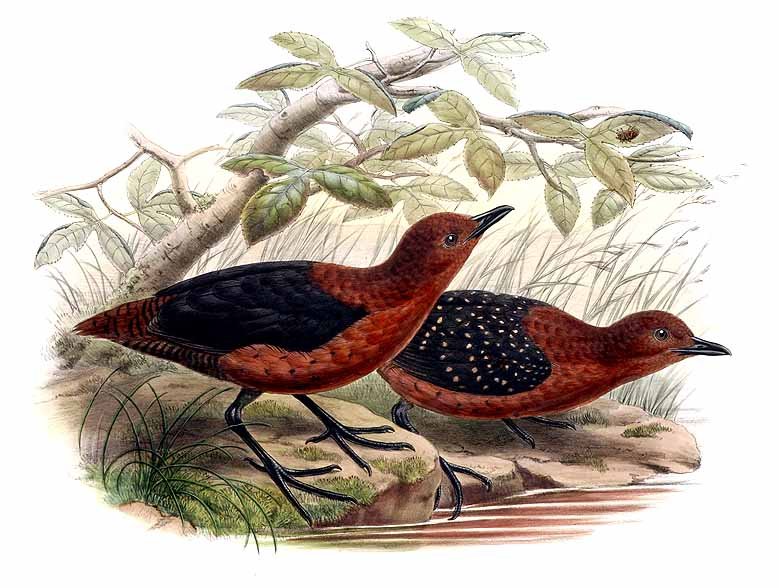
Wikimedia Commons
About the Forbes's Rail
Forbes's Rail, or Rallina forbesi, represents a fascinating member of the Rallidae family, known for its elusive nature and striking appearance. This rail is primarily found in the dense wetlands and marshy environments of the Solomon Islands, specifically within the archipelago's more isolated islands such as Guadalcanal and Malaita. The ecological role of Forbes's Rail is significant as it participates in controlling insect populations and maintaining the delicate balance of its wetland ecosystem.
The bird sports a rich rufous coloration that blends seamlessly with the reddish-brown tones of its habitat. Forbes's Rail thrives in thick, reedy swamps that provide ample cover from predators and human disturbances. Its presence often goes unnoticed due to its skulking behavior and preference for the dense undergrowth of freshwater swamps and dense mangroves.
Seasonal behaviors of Forbes's Rail include slight local movements influenced by rainfall patterns and water levels in its habitat. During the rainy season, the abundance of food such as insects and small aquatic creatures increases, prompting more active foraging. During drier periods, the rail may retreat deeper into the undergrowth where moisture is retained.
Forbes's Rail plays an essential role in its habitat, preying on various invertebrates and helping to aerate the soil. Its secretive nature can make it challenging to study, yet it remains an important subject for ornithologists seeking to understand the biodiversity and ecological dynamics of the Solomon Islands' wetlands.
The Forbes's Rail belongs to the family Rallidae, within the order Gruiformes. These birds typically live estimated 5-7 years, though specific data is limited..
How to Identify a Forbes's Rail
Forbes's Rail is a medium-sized bird with a distinctive rufous plumage that helps it blend into its swampy surroundings. Adults typically exhibit a deep reddish-brown coloration across their body, with subtle differences in shading between the head and wings. The underparts are often a paler shade of rufous, aiding in camouflage among the reeds.
Juveniles exhibit a slightly duller plumage compared to adults, lacking the full richness of color until they reach maturity. Males and females appear similar, making sexual dimorphism minimal in this species, though close observation might reveal marginal differences in size or plumage intensity.
Compared to similar species, Forbes's Rail might be confused with other rails or crakes within its range, such as the Buff-banded Rail. However, its consistent rufous coloring and secretive behavior are key identifiers. In flight, Forbes's Rail shows a direct and low flight path with short wings and a rapid wingbeat, often disappearing quickly into vegetation. When perching, it maintains a low, crouched posture, often remaining motionless to avoid detection.
Having trouble telling birds apart? Upload a photo to our bird identification tool for an instant species match.
Forbes's Rail Habitat and Range
Preferred Habitat
Forbes's Rail inhabits the dense wetlands and marshy environments of the Solomon Islands. It prefers freshwater swamps and mangroves, thriving in areas with thick vegetation that offer concealment and abundant food sources. This species is typically found at lower elevations, though it may venture into higher areas during certain seasons.
Unlike some other rail species, Forbes's Rail shows little inclination towards urbanized areas, preferring the seclusion of rural wetlands. Seasonal habitat shifts are minor, primarily dictated by changes in water levels and food availability. During drier seasons, the rail may remain closer to permanent water sources, while during wetter periods, it can exploit a broader range of swampy areas.
Geographic Range
The range of Forbes's Rail is limited to the Solomon Islands, with known populations on islands such as Guadalcanal and Malaita. This bird does not engage in long-distance migration, instead exhibiting local movements in response to environmental changes within its habitat.
Breeding and non-breeding ranges overlap significantly due to the rail's sedentary nature. Population density hotspots occur in areas with extensive wetland coverage, where the birds can find both food and protection. Despite its limited range, Forbes's Rail maintains a presence across several islands, benefiting from the diverse ecological zones within the Solomon Islands.
Want to know which birds visit your area? Browse our backyard birds by location guides for region-specific species lists.
What Does the Forbes's Rail Eat?
The diet of Forbes's Rail consists primarily of invertebrates, which it forages from the wetland understory. Common food items include insects, worms, and small crustaceans. During the wet season, the abundance of prey increases, allowing the rail to feed more freely. In drier months, the bird may turn to more terrestrial invertebrates and seeds.
Foraging techniques involve probing the mud with its bill and lifting debris with its feet to uncover hidden prey. Forbes's Rail typically feeds during dawn and dusk, taking advantage of lower light levels to avoid predators. The size of the prey ranges from small insects to larger invertebrates, with the bird demonstrating a flexible feeding strategy that adapts to seasonal changes.
Forbes's Rail Behavior and Social Structure
Forbes's Rail exhibits a solitary or small-group social structure, rarely forming large flocks. Territorial behavior is pronounced, with individuals or pairs defending their chosen patch of wetland rigorously. Courtship displays involve subtle calls and movements, as the rail remains mostly hidden within dense cover.
When threatened by predators, Forbes's Rail employs a strategy of remaining motionless or quickly retreating into thick vegetation. During daily activity, the bird is more active at the edges of dawn and dusk, taking advantage of low light conditions to forage while minimizing exposure.
Flocking patterns are generally limited to family units, with larger gatherings being uncommon. In response to predators or disturbances, the rail relies on its excellent camouflage and stealthy behavior to evade detection rather than aggressive defense.
Forbes's Rail Nesting and Reproduction
Forbes's Rail constructs nests in well-concealed locations within dense wetland vegetation. The nest consists of a shallow cup built from reeds and grasses, strategically placed to avoid flooding and predation.
Clutch sizes typically range from 3 to 5 eggs, with both parents sharing incubation duties. The incubation period lasts approximately 18 to 21 days, after which the chicks hatch and are cared for by both parents. Fledging occurs after about 3 to 4 weeks, with young birds remaining close to their parents for some time thereafter.
The species usually raises one brood per year, though favorable conditions might allow for a second. Parental roles are shared, with both males and females participating in feeding and protecting the young.
Forbes's Rail Sounds and Vocalizations
The primary song of Forbes's Rail is a series of short, quiet whistles that blend seamlessly into the ambient sounds of the wetlands. These calls serve both territorial and mating purposes, becoming more frequent during the breeding season.
Call notes are soft and often difficult to detect from a distance, adding to the bird's elusive reputation. Alarm calls consist of sharper, more urgent whistles that alert nearby birds to potential threats. During the dawn chorus, Forbes's Rail remains relatively subdued, contributing to the soundscape with its gentle whistles rather than dominant calls.
Interesting Facts About the Forbes's Rail
- 1Forbes's Rail was first described scientifically in the late 19th century, highlighting its unique habitat and behavior.
- 2Due to its elusive nature, Forbes's Rail is rarely seen, making it a prized sighting for dedicated birdwatchers.
- 3The species' rufous plumage provides exceptional camouflage, aiding its survival in dense wetland environments.
- 4Forbes's Rail plays a crucial role in controlling insect populations, contributing to the ecological balance of its habitat.
- 5The bird's secretive habits and limited range make it a focus for conservation efforts in the Solomon Islands.
- 6Forbes's Rail's calls are subdued and easily overlooked, reflecting its preference for remaining hidden.
- 7The rail's reliance on wetland habitats makes it vulnerable to changes in water levels and human encroachment.
Forbes's Rail Conservation Status
Forbes's Rail is currently classified as Near Threatened according to the IUCN Red List. Population trends suggest a declining trend, primarily due to habitat loss from wetland drainage and conversion for agriculture. Conservation efforts focus on preserving the remaining wetland habitats within the Solomon Islands, with initiatives aimed at maintaining the ecological integrity of these areas. Historical population changes include a reduction in range and numbers, correlating with increased human activity and land use changes.
Other Rallidae Species


Birds Similar to the Forbes's Rail
These species are often confused with the Forbes's Rail due to similar appearance or overlapping range.

