
Gambaga Flycatcher
Muscicapa gambagae
Order: Passeriformes / Family: Muscicapidae

Wikimedia Commons
About the Gambaga Flycatcher
The Gambaga Flycatcher, Muscicapa gambagae, is a small passerine bird that plays a crucial role in the ecosystems of sub-Saharan Africa. This flycatcher is most commonly found in open woodlands and savannas, where it skillfully captures insects in mid-air, contributing to pest control and maintaining ecological balance. The bird's presence is significant in countries such as Ghana, Nigeria, and Cameroon, where it thrives in both natural and modified landscapes. Its adaptability to various habitats, including wooded grasslands and forest edges, makes it a resilient species in the face of habitat changes.
The ecological role of the Gambaga Flycatcher extends beyond pest control. As an insectivore, it is an integral part of the food chain, serving as prey for larger avian predators. Its seasonal movements, though not as pronounced as those of long-distance migrants, involve some local dispersal in response to food availability. During the breeding season, typically from September to December in West Africa, the Gambaga Flycatcher becomes more territorial, ensuring a safe environment for raising its young.
The Gambaga Flycatcher's significance also lies in its contribution to biodiversity. By occupying various niches within its habitat, it supports a variety of other species, including plants that benefit from the insect population control it provides. In regions where agricultural practices dominate, its insectivorous nature proves beneficial for controlling pest populations, indirectly supporting human agricultural efforts. Observations have recorded its presence in countries like Ivory Coast, Burkina Faso, and Benin, making it a widespread species across the West African region.
The Gambaga Flycatcher belongs to the family Muscicapidae, within the order Passeriformes. These birds typically live average 4-6 years with a max recorded of 8 years..
How to Identify a Gambaga Flycatcher
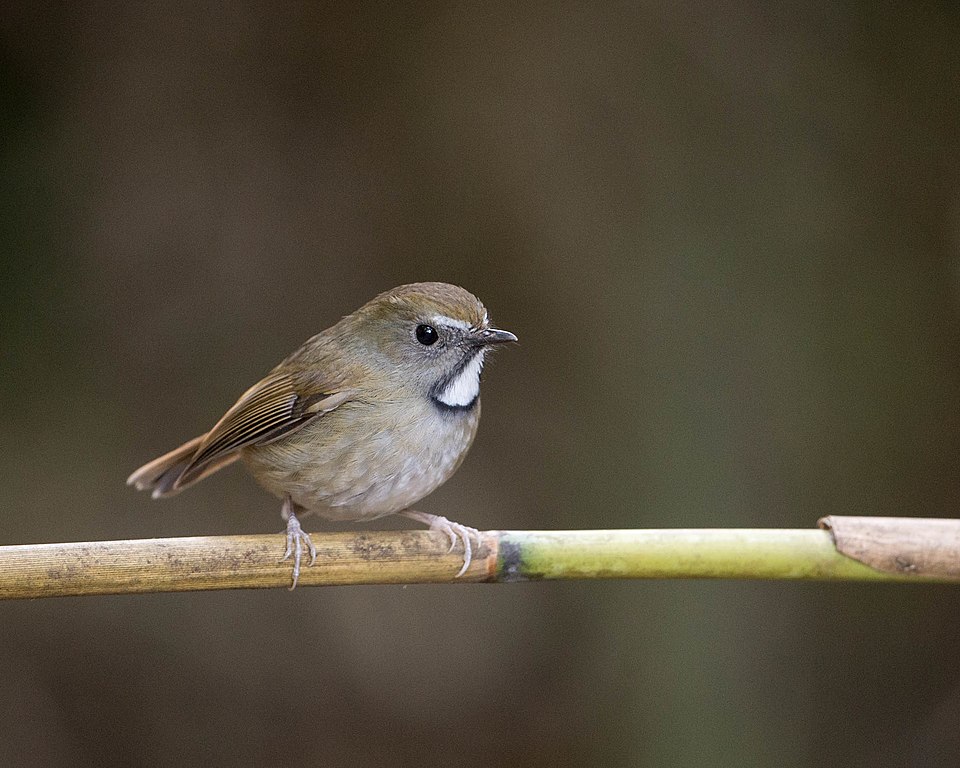
Adult Gambaga Flycatchers exhibit a subtle plumage palette that aids in their identification. They have a predominantly gray-brown upper body, which may appear slightly rufous in certain light conditions. Their underparts are paler, often displaying a whitish-gray hue with a slight buff wash on the flanks. Juveniles resemble adults but typically have more pronounced streaking on their breasts, which fades as they mature.
Unlike many bird species, there is little sexual dimorphism in the Gambaga Flycatcher. Males and females are similar in appearance, making it challenging to distinguish between the sexes in the field. The bird's slim build and relatively long tail are distinctive features, along with its sharp, pointed beak, which is perfectly adapted for snatching insects out of the air.
In flight, the Gambaga Flycatcher's silhouette is characterized by rapid wingbeats and agile maneuvers, reflecting its proficiency in aerial hunting. When perched, it often sits upright, scanning its surroundings for prey. This posture, coupled with its small size, helps differentiate it from similar species such as the Spotted Flycatcher, which tends to have more pronounced streaks and a different range.
Having trouble telling birds apart? Upload a photo to our bird identification tool for an instant species match.
Gambaga Flycatcher Habitat and Range
Preferred Habitat
The Gambaga Flycatcher predominantly inhabits open woodlands and savannas across sub-Saharan Africa. It is most frequently observed in areas where trees and open spaces combine, such as wooded grasslands and forest edges. These habitats provide ample opportunities for the flycatcher to hunt insects efficiently. The bird is adaptable and can also be found in modified landscapes, including agricultural areas and gardens, as long as there is sufficient tree cover.
Typically, the Gambaga Flycatcher is found at elevations ranging from sea level to about 1500 meters. It shows a preference for lower elevations, where insect prey is abundant. Seasonal habitat shifts are minimal, as the bird tends to be a year-round resident in its range, although some local movements may occur in response to changes in food availability.
While the Gambaga Flycatcher can be seen in both rural and semi-urban settings, it avoids densely populated urban areas. Its reliance on trees for perching and hunting makes it less common in heavily urbanized environments.
Geographic Range
The Gambaga Flycatcher has a wide distribution across West and Central Africa, including countries such as Ghana, Nigeria, Cameroon, Ivory Coast, Burkina Faso, and Benin. It is a resident bird, meaning it does not undertake long-distance migrations, though it may exhibit some local movements in response to food availability or environmental changes.
The bird's breeding range is primarily concentrated in the savannas and woodlands of these regions, where it finds suitable nesting sites and abundant insect prey. During the non-breeding season, the Gambaga Flycatcher remains within its range, though it might explore different areas to locate food resources.
Population density hotspots for the Gambaga Flycatcher are often found in protected reserves and national parks, where natural habitats remain intact. Examples include Ghana's Mole National Park and Nigeria's Gashaka-Gumti National Park, both of which provide ideal conditions for the species to thrive.
Want to know which birds visit your area? Browse our backyard birds by location guides for region-specific species lists.
What Does the Gambaga Flycatcher Eat?
The Gambaga Flycatcher primarily feeds on insects, which it catches in mid-air using its agile flight skills. Its diet consists mainly of small flying insects such as flies, beetles, and moths. During the breeding season, when energy demands are high, the flycatcher may also consume larger insects and other arthropods to provide additional nourishment.
Seasonal changes in diet are influenced by the availability of prey. Insects that are abundant during the rainy season become a staple for the flycatcher, while in the dry season, it may need to hunt over larger areas to find sufficient food. The bird employs a sit-and-wait strategy, perching quietly until it spots potential prey, then launching into the air to capture it.
The flycatcher's foraging technique is both efficient and energy-conserving. By using elevated perches like tree branches or utility wires, it can survey a wide area and minimize unnecessary energy expenditure. The Gambaga Flycatcher is most active during the early morning and late afternoon when insect activity peaks, aligning its feeding schedule with optimal prey availability.
Gambaga Flycatcher Behavior and Social Structure
The Gambaga Flycatcher exhibits a solitary or loosely territorial social structure, particularly during the breeding season when males establish territories to attract mates and defend against rivals. Territorial displays often involve vocalizations and aerial chases. Outside the breeding season, the bird may be more tolerant of conspecifics and occasionally joins mixed-species flocks to forage more efficiently.
Courtship displays in the Gambaga Flycatcher are subtle, involving vocalizations and brief aerial displays. Once paired, the male and female work together to select a suitable nesting site and raise their young. The bird's response to predators includes alarm calls and evasive maneuvers, often retreating to dense foliage for cover.
Daily activity patterns show peaks of activity in the early morning and late afternoon, coinciding with the highest availability of insect prey. During the heat of midday, the flycatcher may rest in shaded areas to conserve energy. While generally inconspicuous, the bird's presence becomes more noticeable during the breeding season due to increased singing and territorial behavior.
Gambaga Flycatcher Nesting and Reproduction
Gambaga Flycatchers typically build their nests in trees, often selecting a fork or a horizontal branch as a suitable site. The nests are cup-shaped and constructed using fine grasses, leaves, and spider webs, which provide structural integrity and camouflage. This strategic placement helps protect the eggs and chicks from predators and harsh environmental conditions.
A typical clutch consists of two to three eggs, which the female incubates for about 14 days. Both parents participate in feeding the chicks once they hatch, ensuring a steady supply of insects to support their rapid growth. The fledging period lasts approximately 14 to 18 days, after which the young birds leave the nest to become independent.
The Gambaga Flycatcher usually raises one brood per year, although in optimal conditions with abundant resources, a second brood may be attempted. Both the male and female share the responsibility of defending the nesting territory and caring for the young, illustrating a cooperative breeding strategy.
Gambaga Flycatcher Sounds and Vocalizations
The primary song of the Gambaga Flycatcher is a series of short, melodious notes delivered in quick succession. The rhythm is variable, with some phrases rising and falling in pitch, creating a lively and distinctive tune that stands out in its woodland habitat. During dawn choruses, the flycatcher's song is more prominent, marking its territory and attracting mates.
In addition to its song, the Gambaga Flycatcher produces sharp call notes that serve as contact calls between mates or to alert others to potential threats. Alarm calls are harsher and more urgent, designed to warn of approaching predators. These vocalizations play a crucial role in the bird's communication and social interactions, maintaining cohesion with conspecifics and enhancing survival in a complex environment.
Interesting Facts About the Gambaga Flycatcher
- 1The Gambaga Flycatcher is named after the Gambaga escarpment region in northern Ghana, where the species was first documented.
- 2Despite its small size, the Gambaga Flycatcher can cover large areas while foraging, sometimes traveling several kilometers in search of food.
- 3This species is adept at capturing prey in flight, exhibiting impressive aerial acrobatics to snatch insects mid-air.
- 4The Gambaga Flycatcher can be identified by its distinctive, melodious song, which is often heard at dawn and dusk.
- 5Both male and female Gambaga Flycatchers share the responsibility of incubating eggs and feeding their young, showcasing a strong parental partnership.
- 6The bird's subtle plumage provides effective camouflage against the bark and leaves of its woodland habitat, aiding in predator avoidance.
- 7Gambaga Flycatchers often build their nests using spider webs, which help to bind the materials together and provide flexibility.
Gambaga Flycatcher Conservation Status
The Gambaga Flycatcher is currently classified as Least Concern by the IUCN, reflecting its stable population trend and broad distribution across suitable habitats. However, localized threats such as deforestation and habitat fragmentation could pose risks to certain populations in the future. Conservation efforts in regions like Ghana and Nigeria focus on habitat preservation and sustainable land use practices to mitigate these potential threats. Historically, the Gambaga Flycatcher has maintained a stable presence across its range, adapting well to various habitat conditions. Continued monitoring is essential to ensure that its populations remain healthy and that any emerging threats are promptly addressed.
Other Muscicapidae Species


Birds Similar to the Gambaga Flycatcher
These species are often confused with the Gambaga Flycatcher due to similar appearance or overlapping range.

