
Golden-faced Tyrannulet
Zimmerius chrysops
Order: Passeriformes / Family: Tyrannidae
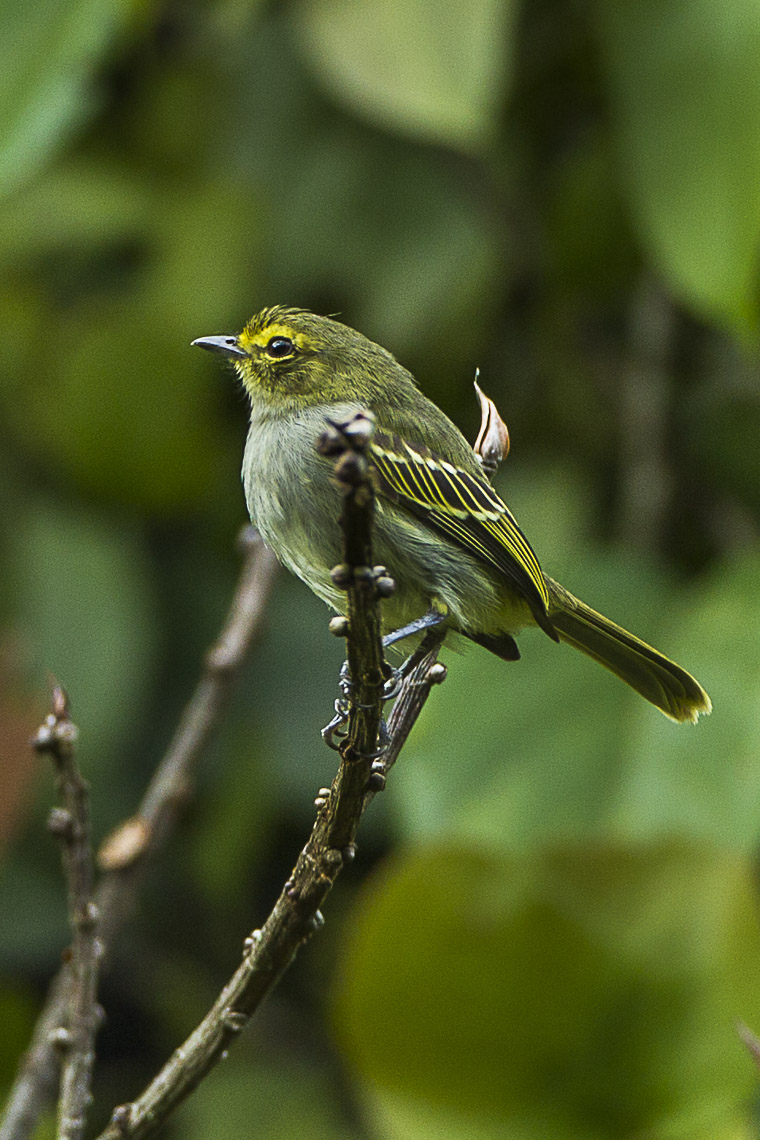
Wikimedia Commons
About the Golden-faced Tyrannulet
The Golden-faced Tyrannulet (Zimmerius chrysops) inhabits the cloud forests of the Andes, a region known for its rich biodiversity. Found primarily in Colombia, Ecuador, and northern Peru, this small passerine bird plays a vital role in the delicate ecology of these montane forests. As a member of the Tyrannidae family, it is part of a diverse group of birds known for their insectivorous diets and significant contributions to pest control. The Golden-faced Tyrannulet thrives at altitudes ranging from 1,000 to 3,200 meters, typically favoring elevations where the forests remain lush and wet year-round. Its presence in these montane ecosystems helps maintain insect populations in balance, which is crucial for the health of the forest. During the breeding season, which coincides with the rainy months, the Golden-faced Tyrannulet is actively involved in courtship and nesting activities. The increased insect abundance during this time provides ample food for raising young. Seasonal movements are generally altitudinal rather than latitudinal, with some populations descending to lower elevations during adverse weather conditions. This bird's adaptability to various microhabitats within the forest makes it a resilient species, capable of thriving even as certain areas face environmental pressures. The Golden-faced Tyrannulet also serves as an indicator species for the health of montane forest ecosystems. Its presence or absence can reveal much about the environmental conditions and biodiversity in a given area. Consequently, ornithologists and conservationists pay close attention to its population trends as they work to preserve these unique habitats. The golden face of Zimmerius chrysops, distinctive among the foliage, is not merely a visual delight but also a reminder of the interconnectedness of life in these highland forests.
The Golden-faced Tyrannulet belongs to the family Tyrannidae, within the order Passeriformes. These birds typically live average 5-8 years with a maximum recorded of 10 years..
How to Identify a Golden-faced Tyrannulet
The Golden-faced Tyrannulet is a small, subtly striking bird well-known among birders for its vivid yellow facial markings. Adult plumage primarily consists of olive-green upperparts that help it blend seamlessly into its forest environment. The undersides are paler, with a hint of grayish-white on the belly. The most distinguishing feature is its bright yellow face and throat, which contrast sharply with its blackish crown and lores. Unlike some other species, there is little sexual dimorphism, with males and females exhibiting similar plumage. Juveniles resemble adults but may have slightly duller coloration and lack the fully developed yellow face. In flight, the Golden-faced Tyrannulet presents a compact silhouette, characterized by rapid, fluttering wingbeats. Its perching posture is typically upright, often seen on the outer branches of trees where it forages for insects. Confusion with other species, such as the Spectacled Tyrannulet, can occur; however, the latter lacks the vivid yellow face. Field marks like the combination of its yellow face, olive-green body, and habitat preferences help in accurate identification.
Having trouble telling birds apart? Upload a photo to our bird identification tool for an instant species match.
Golden-faced Tyrannulet Habitat and Range
Preferred Habitat
The Golden-faced Tyrannulet predominantly inhabits montane cloud forests, favoring areas with dense, humid vegetation. These forests, found at elevations between 1,000 and 3,200 meters, provide the ideal environment for its lifestyle. It prefers regions with abundant epiphytes and mosses, which support a rich insect population. While primarily a forest bird, it can occasionally be found at the forest edges or in secondary growth, especially in areas where primary forests have been disturbed. Seasonal shifts in habitat use are minimal, though slight altitudinal movements may occur in response to weather changes. Unlike some passerines, the Golden-faced Tyrannulet is less commonly found in urban settings, as it relies heavily on the specific structural complexity and insect abundance of forested areas.
Geographic Range
The Golden-faced Tyrannulet is native to the Andean regions of South America, with its range spanning across Colombia, Ecuador, and northern Peru. This bird does not undertake long-distance migrations but may exhibit some altitudinal migration within its range, moving to lower elevations during the colder months or periods of heavy rainfall. Its distribution is heavily tied to the presence of montane cloud forests, making it a specialist species in terms of habitat. Within its range, the Golden-faced Tyrannulet is relatively common, particularly in areas where pristine forest remains. Areas like the eastern slopes of the Andes in Ecuador are known hotspots for this species, where it thrives in the rich, diverse ecosystems supported by these elevations.
Want to know which birds visit your area? Browse our backyard birds by location guides for region-specific species lists.
What Does the Golden-faced Tyrannulet Eat?
The diet of the Golden-faced Tyrannulet is primarily insectivorous, focusing on small arthropods that it gleans from foliage. Its foraging technique involves active searching through the leaves and branches, often hanging upside down to access insects hidden under leaves. During the breeding season, its diet expands to include a higher proportion of protein-rich insects to support the energy demands of raising young. Throughout the year, it may also consume small fruits and berries, though these are secondary to its insect diet. The feeding schedule of the Golden-faced Tyrannulet is diurnal, with peak activity occurring during the cooler morning and late afternoon hours when insects are most active.
Golden-faced Tyrannulet Behavior and Social Structure
Golden-faced Tyrannulets exhibit a solitary or paired lifestyle, particularly during the breeding season when pairs become highly territorial. Courtship involves vocal displays and subtle plumage posturing. Though generally not flocking birds, they may occasionally join mixed-species foraging flocks, which provide safety in numbers and increase foraging efficiency. Their response to predators includes a mix of vocal alarm calls and evasive flight maneuvers. Daily activities follow a consistent pattern, with peak foraging during the cooler hours and rest during the midday heat. The Golden-faced Tyrannulet is often seen actively flitting among branches, demonstrating agility in its quest for food.
Golden-faced Tyrannulet Nesting and Reproduction
The Golden-faced Tyrannulet constructs its nest using fine plant materials, preferring to place it in the outer branches of a tree, often concealed by leaves. The nest is a small, cup-shaped structure, meticulously crafted to protect the eggs from predators and harsh weather. A typical clutch consists of two to three eggs, with an incubation period of about 14-16 days. Both parents partake in incubation and feeding of the chicks, showcasing a shared responsibility in raising the young. Fledging occurs approximately 15-17 days after hatching, with fledglings remaining under parental supervision for a short period post-fledging. Generally, this species raises one brood per year.
Golden-faced Tyrannulet Sounds and Vocalizations
The Golden-faced Tyrannulet's vocalizations include a primary song, characterized by a rapid series of high-pitched, melodious notes. This song serves both to establish territory and attract a mate during the breeding season. Its call notes are short and sharp, often described as 'chip' sounds, used for communication between mates and as alarm calls. During the dawn chorus, its song is a prominent element of the soundscape, blending with the calls of other forest inhabitants. When comparing its song to familiar sounds, listeners often describe it as similar to the tinkling of small bells.
Interesting Facts About the Golden-faced Tyrannulet
- 1The Golden-faced Tyrannulet was first described scientifically in the late 19th century, reflecting its relatively recent discovery.
- 2Despite its small size, the Golden-faced Tyrannulet can be heard over considerable distances due to its loud and clear song.
- 3Zimmerius chrysops primarily relies on its sight to detect prey, often catching insects in mid-air with remarkable precision.
- 4This species' striking yellow face is a key identification feature, helping it stand out among other tyrannulets in its range.
- 5Golden-faced Tyrannulets often join mixed-species flocks, which can include up to 30 different bird species at a time.
- 6The cloud forests where this tyrannulet resides are among the most biodiverse ecosystems, supporting thousands of plant and animal species.
- 7Their nests are often built at dizzying heights, sometimes 10 meters above the ground, offering protection from ground-dwelling predators.
Golden-faced Tyrannulet Conservation Status
Currently, the Golden-faced Tyrannulet holds a status of Least Concern on the IUCN Red List, with a population trend considered stable. Primary threats include habitat loss due to deforestation and agricultural expansion. Conservation efforts focus on preserving montane cloud forests through protected areas and sustainable land-use practices. Historically, its population has shown resilience, but ongoing habitat destruction remains a concern. Continued monitoring and habitat protection are vital to ensure the species' long-term survival.


