
Gray Longbill
Macrosphenus concolor
Order: Passeriformes / Family: Macrosphenidae

Wikimedia Commons
About the Gray Longbill
The Gray Longbill, known scientifically as Macrosphenus concolor, is a small, intriguing bird that belongs to the family Macrosphenidae. This bird can be primarily found in the dense, humid forests of West and Central Africa, including countries like Ghana, Nigeria, and Cameroon. Its preferred habitat is within the lower strata of the forest, where it actively participates in the ecosystem by controlling insect populations. The Gray Longbill is a relatively inconspicuous bird due to its modest coloration, which serves as excellent camouflage against predators in the densely vegetated environments it inhabits. Ecologically, the Gray Longbill plays a vital role as both a predator of insects and a prey species for larger birds of prey. During the breeding season, which typically occurs in the wet season when food is abundant, the Gray Longbill becomes more vocal, asserting its territory and attracting mates. Its song, though not particularly loud, is a series of melodious whistles that carry through the forest canopy. This species contributes significantly to the biodiversity of its habitat, often acting as a key indicator of forest health. In regions where the Gray Longbill thrives, forest ecosystems tend to exhibit greater stability and diversity. Moreover, the bird's presence is a testament to relatively undisturbed forest conditions, as it requires vast, continuous tracts of forest for its survival. Consequently, conservation efforts aimed at protecting the Gray Longbill also benefit a wide range of other species that share its habitat.
The Gray Longbill belongs to the family Macrosphenidae, within the order Passeriformes. These birds typically live typically up to 4 years in the wild..
How to Identify a Gray Longbill
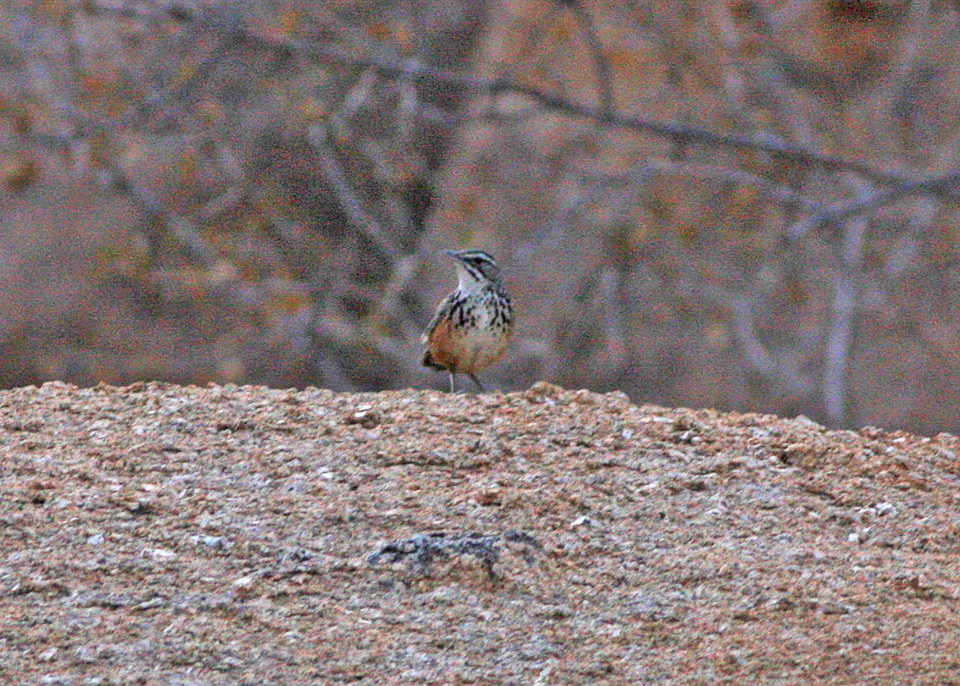
The Gray Longbill is a small songbird with an average length of 14 to 16 centimeters. Its most striking feature is its long, slightly curved bill, which is adapted for probing into crevices to extract insects. The plumage is predominantly gray, with subtle variations in shade along the back and underparts, providing effective camouflage in its forested environment. Juvenile Gray Longbills resemble adults but may display slightly duller plumage with more pronounced brownish tones. There is minimal sexual dimorphism in this species, making it difficult to distinguish males from females based on appearance alone. In flight, the Gray Longbill exhibits a compact silhouette, with rounded wings and a slightly elongated tail that aids in maneuverability through dense foliage. When perched, it often adopts a horizontal posture, with its tail slightly cocked. This bird can be confused with similar species such as the Tit Hylia and other longbills, but its distinctively longer bill and uniform gray coloration help differentiate it.
Having trouble telling birds apart? Upload a photo to our bird identification tool for an instant species match.
Gray Longbill Habitat and Range
Preferred Habitat
The Gray Longbill inhabits lowland tropical forests, with a preference for primary and secondary growth forests. These environments offer the dense foliage and abundant insect life the bird requires. Found at elevations up to 1500 meters, the Gray Longbill shows a preference for humid, evergreen forests. During the wet season, when insect populations peak, the Gray Longbill becomes more active and visible. While primarily a forest-dweller, it can occasionally be found in forest edges and clearings, though it tends to avoid urban areas. Seasonal habitat shifts are minimal, as the Gray Longbill remains within forested regions year-round, capitalizing on the consistent food supply.
Geographic Range
The Gray Longbill's range spans the tropical regions of West and Central Africa. It is commonly found in countries such as Sierra Leone, Liberia, Ivory Coast, Ghana, Nigeria, Cameroon, Gabon, and the Democratic Republic of the Congo. This species does not undertake long migrations, instead maintaining a relatively stable presence within its range throughout the year. In regions with dense forest cover, such as the Congo Basin, population densities can be higher due to the availability of suitable habitat. However, in fragmented forests at the edge of its range, populations tend to be more sparse.
Want to know which birds visit your area? Browse our backyard birds by location guides for region-specific species lists.
What Does the Gray Longbill Eat?
The Gray Longbill primarily feeds on insects, which it gleans from the bark and leaves of trees. Its long bill is particularly effective for reaching into crevices to extract grubs and other small invertebrates. During the wet season, when insect abundance is at its peak, the bird's diet becomes more diverse, including spiders and small caterpillars. The Gray Longbill is an active forager, often seen hopping along branches and probing into moss and lichen. Its foraging is mostly solitary, though pairs may occasionally be seen feeding together. The bird's diet changes little with the seasons, thanks to the relatively stable insect populations in tropical forests.
Gray Longbill Behavior and Social Structure
The Gray Longbill is a solitary and territorial bird, with each individual or pair maintaining a defined territory within the forest. During the breeding season, males become more vocal and aggressive in defending their territory from rivals. Courtship involves the male singing and performing display flights to attract a mate. The Gray Longbill is generally non-migratory, maintaining its territory year-round. Though primarily solitary, outside of the breeding season, it may join mixed-species foraging flocks, which provides some protection against predators. When threatened, the Gray Longbill tends to freeze or fly to dense cover, relying on its cryptic coloration for protection. Daily activity peaks during the early morning and late afternoon, with the bird spending the hottest part of the day resting in shaded areas.
Gray Longbill Nesting and Reproduction
The Gray Longbill constructs cup-shaped nests using moss, leaves, and fine plant fibers. These nests are typically located in the fork of a tree, well concealed by foliage. Clutch size ranges from two to three eggs, which are incubated primarily by the female for about 14 days. After hatching, both parents participate in feeding the chicks, which fledge approximately two weeks after hatching. The Gray Longbill usually raises one brood per year, though in areas with a longer wet season, two broods may be possible. Parental care extends for several weeks post-fledging, ensuring the young are adept at foraging before independence.
Gray Longbill Sounds and Vocalizations
The Gray Longbill's song consists of a series of melodious whistles that vary in pitch and rhythm, often delivered from a concealed perch within the canopy. These songs serve both to establish territory and to attract mates. The call notes are short and sharp, used primarily for communication between pairs. Alarm calls are harsher and more abrupt, alerting other birds to the presence of predators. During the dawn chorus, the Gray Longbill's song is a persistent presence, blending seamlessly with the calls of other forest species.
Interesting Facts About the Gray Longbill
- 1The Gray Longbill can be found at elevations up to 1500 meters in tropical forests.
- 2This bird's elongated bill is highly specialized for extracting insects from tree bark.
- 3Despite its modest size, the Gray Longbill plays a crucial role in controlling insect populations in its habitat.
- 4The Gray Longbill is a non-migratory species, remaining within its tropical range throughout the year.
- 5During courtship, males perform display flights accompanied by song to attract females.
- 6The species thrives in both primary and secondary forests, showcasing its adaptability.
- 7Gray Longbills join mixed-species foraging flocks, benefiting from shared vigilance against predators.
Gray Longbill Conservation Status
The Gray Longbill is currently classified as Least Concern by the IUCN due to its wide range and stable population. However, habitat destruction through logging and agriculture poses a significant threat to its forest habitat. Conservation efforts focus on preserving large tracts of intact forest and promoting sustainable land-use practices. Although historically populations have fluctuated with forest cover, the Gray Longbill has shown resilience by adapting to secondary growth forests.
Other Macrosphenidae Species


Birds Similar to the Gray Longbill
These species are often confused with the Gray Longbill due to similar appearance or overlapping range.