
Gray Thrasher
Toxostoma cinereum
Order: Passeriformes / Family: Mimidae
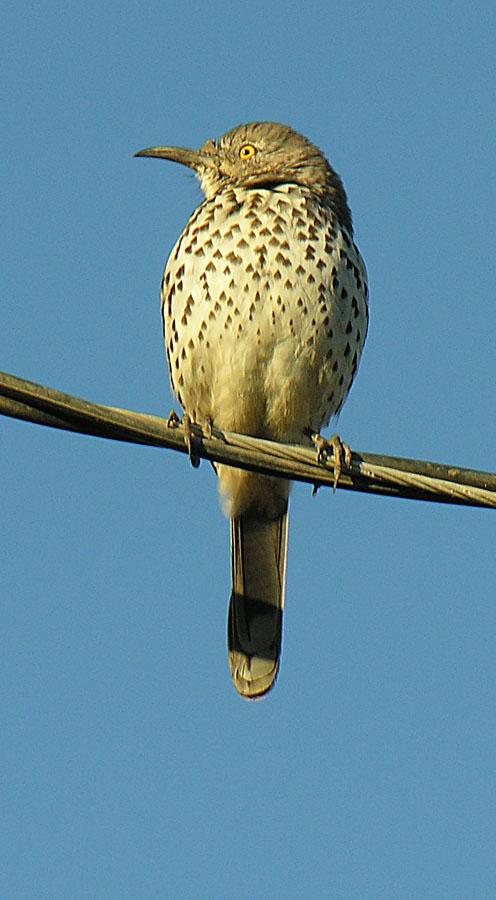
Wikimedia Commons
About the Gray Thrasher
The Gray Thrasher, scientifically known as Toxostoma cinereum, is a captivating species within the family Mimidae. This bird, native to the arid regions of western Mexico, has adapted remarkably well to desert life. It thrives in the scrubby, thorn-laden landscapes of the Baja California Peninsula, where its presence serves as a testament to the resilience of avian life in such harsh environments. The Gray Thrasher is not just an inhabitant of these arid zones; it plays a crucial ecological role by helping to control insect populations and dispersing seeds, which aids in the propagation of desert flora. Its robust bill is well-suited for probing the dry ground in search of insects and other invertebrates. This bird is not migratory, remaining within its range throughout the year, although it may shift slightly in elevation or local habitat conditions in response to food availability and climatic changes. Despite its unassuming appearance, the Gray Thrasher is known for its rich and varied song, which it delivers from exposed perches such as cacti or low shrubs. Its melodious calls contribute to the acoustic tapestry of the desert, adding a musical element to the otherwise silent landscape. During the breeding season, which aligns with the onset of the rainy season, the Gray Thrasher becomes particularly vocal, its song serving not only to attract mates but also to establish and defend territory. In ecological terms, the presence of the Gray Thrasher is vital for maintaining the balance of its habitat. By preying on insects, it helps to regulate their populations and, by spreading seeds, it supports plant diversity, which in turn sustains other wildlife. Observing this bird offers insights into the complex interplay between avian species and their environments, underscoring the interconnectedness of desert ecosystems.
The Gray Thrasher belongs to the family Mimidae, within the order Passeriformes. These birds typically live average 5-7 years in the wild..
How to Identify a Gray Thrasher
The Gray Thrasher is a medium-sized songbird, measuring approximately 23 centimeters in length. Its plumage is predominantly gray, providing it with excellent camouflage against the rocky and scrubby desert backdrop. This bird's underparts are a lighter gray, and it possesses a slightly curved bill, a distinguishing feature among thrashers. The eyes are a striking yellow, standing out against its gray head. Juvenile Gray Thrashers exhibit somewhat duller plumage compared to adults, lacking the full intensity of the yellow eye coloration. In terms of sexual dimorphism, the male and female Gray Thrashers are visually similar, making it challenging to differentiate them in the field. One must rely on behavior, particularly during the breeding season when males are more vocal and conspicuous. The Gray Thrasher may be confused with the California Thrasher, but the latter is larger and has a longer, more pronounced curve to its bill. Additionally, the California Thrasher occupies a different geographic range. In flight, the Gray Thrasher displays a relatively slender silhouette with rounded wings and a long tail, which it often flicks when perched. Its movements are deliberate and purposeful, whether foraging on the ground or navigating through the thorny underbrush.
Having trouble telling birds apart? Upload a photo to our bird identification tool for an instant species match.
Gray Thrasher Habitat and Range
Preferred Habitat
The Gray Thrasher primarily inhabits the dry scrublands and deserts of the Baja California Peninsula and adjacent regions. It prefers areas with a mix of sparse vegetation, such as thorny shrubs, cacti, and low-growing plants that provide both food and cover. The bird can be found at varying elevations, from sea level up to 1,500 meters, depending on local habitat conditions and food availability. Unlike many other species, the Gray Thrasher does not typically venture into urban areas, preferring the serenity and isolation of its natural desert environment. Seasonal habitat shifts are minimal, as the species is non-migratory, but it may move to slightly higher elevations during the hottest months to escape extreme temperatures. The Gray Thrasher's presence in these arid landscapes highlights its adaptability and specialization in surviving and thriving in challenging conditions.
Geographic Range
The range of the Gray Thrasher is largely confined to western Mexico, with a particular focus on the Baja California Peninsula. Its breeding range extends from the tip of the peninsula northward, encompassing areas such as the Sierra de la Laguna and the central desert regions. The Gray Thrasher is a resident bird, not engaging in long-distance migrations, which is characteristic of thrashers adapted to stable desert environments. However, it may undergo local movements in response to seasonal variations in food resources. While the species is not considered widespread, it is relatively common within its specific geographic range. Population density hotspots include protected areas and reserves where desert ecosystems remain intact, providing optimal habitat conditions. Its limited range makes the Gray Thrasher a species of interest for conservationists, emphasizing the importance of habitat protection in these regions.
Want to know which birds visit your area? Browse our backyard birds by location guides for region-specific species lists.
What Does the Gray Thrasher Eat?
The diet of the Gray Thrasher consists primarily of insects and other invertebrates, which it forages for with its long, slightly curved bill. This bird often employs a technique known as 'leaf-litter flipping,' where it uses its bill to turn over debris in search of hidden prey. During the breeding season, insects such as beetles, ants, and caterpillars form a significant portion of its diet, providing the necessary protein for raising young. In addition to insects, the Gray Thrasher consumes fruits and seeds, particularly in the dryer months when invertebrate prey is less abundant. Cactus fruits and berries from native shrubs supplement its diet, offering hydration and nutrients. The Gray Thrasher typically forages alone or in pairs, showing a preference for the cooler hours of the morning and late afternoon when insect activity is at its peak. This opportunistic feeding strategy allows it to thrive in the fluctuating conditions of its desert habitat.
Gray Thrasher Behavior and Social Structure
The Gray Thrasher exhibits a range of behaviors that reflect its adaptation to the desert environment. It is primarily a solitary bird, although it forms pairs during the breeding season. This species is territorial, with males defending their home ranges through song and displays, deterring other thrashers from encroaching. Courtship involves elaborate song displays, where the male perches prominently and delivers a series of melodious notes to attract a mate. Once paired, both male and female participate in nest building and rearing the young. This thrasher is generally non-aggressive towards other species, although it will assertively protect its nest from potential predators, including snakes and larger birds. Its daily activity patterns align with the desert climate, being most active during the cooler parts of the day. During the heat of midday, the Gray Thrasher often seeks shade, reducing its activity to conserve energy and avoid dehydration. Its response to predators is typically alert and cautious, relying on its cryptic plumage and knowledge of its environment to avoid detection.
Gray Thrasher Nesting and Reproduction
The Gray Thrasher constructs its nest in dense shrubs or low trees, often utilizing thorny vegetation to deter predators. The nest is a cup-shaped structure made of twigs, grasses, and other plant materials, lined with softer substances for insulation and comfort. Typically, the female lays a clutch of 2-4 eggs, which she incubates for approximately 13-15 days. Both parents participate in feeding the hatchlings, which fledge about 11-14 days after hatching. The fledglings remain dependent on their parents for food and protection for several weeks post-fledging. The Gray Thrasher usually raises one brood per year, although favorable conditions may sometimes lead to a second. Parental roles are shared, with both sexes engaging in incubation and feeding, showcasing a cooperative breeding strategy that enhances the survival prospects of their young.
Gray Thrasher Sounds and Vocalizations
The Gray Thrasher is renowned for its rich and melodious song, comprising a series of varied phrases and notes delivered with clarity and volume. Its song consists of repeated phrases interspersed with mimicry of other bird species, a trait common among members of the Mimidae family. The primary song serves both territorial and courtship functions, with males singing more frequently during the breeding season. Call notes include harsh, scolding sounds used as alarm calls when potential threats are detected. During the dawn chorus, the Gray Thrasher's song is particularly prominent, contributing to the vibrant acoustic environment of its desert habitat. Its vocalizations are an integral part of the bird's behavior, reflecting its adaptability and the importance of sound in communication and survival.
Interesting Facts About the Gray Thrasher
- 1The Gray Thrasher can mimic the calls of other bird species, showcasing its vocal versatility.
- 2This bird's nesting strategy includes using thorny shrubs to protect its young from predators.
- 3The Gray Thrasher's song can be heard from over 200 meters away, a testament to its acoustic power.
- 4Unlike many birds, the Gray Thrasher remains in its desert habitat year-round, showcasing its adaptability.
- 5The species plays a vital ecological role by controlling insect populations and dispersing seeds.
Gray Thrasher Conservation Status
The Gray Thrasher is currently classified as Least Concern by the IUCN due to its stable population trend and relatively widespread presence within its limited range. However, habitat degradation, particularly from agricultural expansion and urban development, poses a threat to its natural environment. Conservation efforts focus on preserving desert habitats and promoting sustainable land use practices. Historical population levels have remained fairly constant, but continued monitoring is essential to ensure the species does not face increased risks in the future. Protecting key habitats, especially in biodiversity-rich areas, is crucial for the long-term conservation of the Gray Thrasher and other desert-adapted species.
Other Mimidae Species


Birds Similar to the Gray Thrasher
These species are often confused with the Gray Thrasher due to similar appearance or overlapping range.
