
Gray Whistler
Pachycephala simplex
Order: Passeriformes / Family: Pachycephalidae
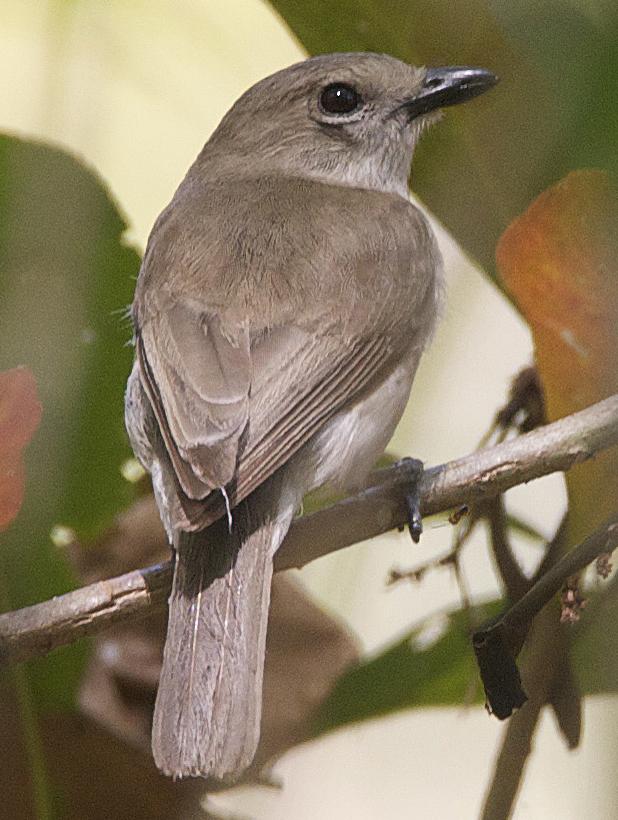
Wikimedia Commons
About the Gray Whistler
The Gray Whistler, known scientifically as Pachycephala simplex, is a captivating songbird found predominantly in the Australasian region. This species plays a significant role in the ecosystems it inhabits, acting as both a predator to various insects and a seed disperser. Its presence in the forests of New Guinea and Northern Australia adds to the rich tapestry of avian life found in these biodiverse areas. The bird's subtle plumage belies its vibrant life, characterized by a repertoire of songs that contribute to the soundscape of its habitat. This species thrives in moist, dense forests, often frequenting the understory and mid-canopy layers where it forages for food. The Gray Whistler's ecological role extends to its interactions with other species, as it partakes in mixed-species foraging flocks, enhancing its ability to locate food while also benefiting from the vigilance of other birds. Seasonally, the Gray Whistler demonstrates adaptability, adjusting its foraging patterns and sometimes its habitat preferences in response to climatic changes. During breeding seasons, its vocalizations become more pronounced, serving both to attract mates and to defend territories. Its presence in these regions highlights the importance of preserving forested habitats not only for the Gray Whistler but for the multitude of species that share its home.
The Gray Whistler belongs to the family Pachycephalidae, within the order Passeriformes. These birds typically live typically 5-7 years in the wild, with some individuals reaching up to 9 years..
How to Identify a Gray Whistler
The Gray Whistler is a medium-sized passerine with a predominantly gray plumage, which provides excellent camouflage among the forest trees. Adult birds exhibit a uniform gray coloration with a slight olive tinge on the wings and tail, an adaptation that blends seamlessly with their leafy surroundings. Juveniles differ slightly, showcasing a more muted gray with subtle streaks that fade as they mature. Notably, there is little sexual dimorphism in this species, meaning males and females appear similar in plumage. A key distinguishing feature is the bird's eye, encircled by a faint, lighter gray ring that accentuates its alertness. In flight, the Gray Whistler shows a compact silhouette with rapid wingbeats, typical of birds that maneuver through dense foliage. When perched, it often adopts an upright posture, scanning its surroundings for food. While it may be confused with other Pachycephala species, the Gray Whistler's lack of vibrant yellow or rufous hues helps differentiate it from its more colorful relatives.
Having trouble telling birds apart? Upload a photo to our bird identification tool for an instant species match.
Gray Whistler Habitat and Range
Preferred Habitat
The Gray Whistler thrives in the humid, tropical forests of New Guinea and the northern regions of Australia. These areas provide the dense foliage and abundant insect life that the species depends on. Typically found at elevations ranging from sea level to 1,500 meters, the Gray Whistler favors the understory and mid-canopy levels, where it can effectively forage. During the wet season, it may venture into more open forested areas or secondary growth as insect activity increases. The Gray Whistler shows some degree of adaptability in habitat selection, occasionally appearing in mangroves and coastal woodlands. Unlike some species, it rarely ventures into urban environments, preferring the secluded depths of the forest where human disturbance is minimal.
Geographic Range
The Gray Whistler's range is centered in the Australasian region, encompassing the vast rainforests of New Guinea and stretching into the northern parts of the Australian continent, particularly in Queensland and the Northern Territory. While this bird is not migratory, its range is fairly stable, with some local movements possibly triggered by seasonal changes in food availability. Within its range, population densities can vary, with denser populations often observed in areas with rich insect life and minimal habitat disturbance. New Guinea, in particular, serves as a hotspot for the Gray Whistler, providing an ideal environment where it can maintain thriving populations.
Want to know which birds visit your area? Browse our backyard birds by location guides for region-specific species lists.
What Does the Gray Whistler Eat?
The Gray Whistler primarily feeds on insects, making it an integral part of controlling insect populations within its habitat. Its diet includes a wide array of arthropods such as beetles, caterpillars, and spiders. During the wet season, when insects abound, the Gray Whistler's diet is almost exclusively insectivorous. In drier periods or when insect availability drops, it may supplement its diet with berries and small fruits, acting as a seed disperser in its ecosystem. The bird employs a foraging technique that involves gleaning insects from leaves and branches, as well as occasional aerial sallies to catch flying insects. Its feeding schedule is primarily diurnal, with peak activity occurring in the early morning and late afternoon.
Gray Whistler Behavior and Social Structure
The Gray Whistler exhibits a solitary or loosely territorial behavior, especially pronounced during the breeding season when males sing to declare territory and attract mates. Its song, a melodious sequence of whistles, is a staple of the forest soundscape. Outside of breeding periods, the Gray Whistler may join mixed-species flocks, benefiting from increased foraging efficiency and protection against predators. Its response to threats is typically evasive; upon detecting a predator, it will retreat deeper into the canopy or issue alarm calls to alert other birds. Daily activity patterns include periods of intense foraging interspersed with rest and preening, essential for maintaining its plumage.
Gray Whistler Nesting and Reproduction
Gray Whistler nests are typically cup-shaped structures made from grass, bark strips, and leaves, often lined with softer materials for insulation. These nests are strategically placed in the fork of a tree branch, usually between 2 to 5 meters above the ground, offering some protection from ground predators. The typical clutch size ranges from 2 to 3 eggs, with an incubation period of approximately 14 days. Both parents share the duties of incubating the eggs and feeding the chicks once they hatch. Fledging occurs around 12 to 14 days after hatching, with parental care continuing for a short period thereafter. The Gray Whistler generally raises one to two broods per year, depending on environmental conditions.
Gray Whistler Sounds and Vocalizations
The primary song of the Gray Whistler consists of clear, sweet whistles that rise and fall in pitch, a characteristic trait that makes it easily recognizable. These songs are often delivered from a concealed perch within the forest canopy. Call notes include a series of short, sharp whistles used in communication between mates or to signal alarm. During the dawn chorus, the Gray Whistler's voice blends with other forest species, contributing to a rich tapestry of sound. Its alarm calls, a series of urgent, high-pitched notes, alert nearby birds to the presence of predators.
Interesting Facts About the Gray Whistler
- 1The Gray Whistler can be found at elevations up to 1,500 meters in some parts of its range, showcasing its adaptability.
- 2Despite its drab coloration, the Gray Whistler is known for its clear, melodious song, often heard before the bird is seen.
- 3The species belongs to the Pachycephalidae family, which includes a variety of whistlers known for their powerful vocalizations.
- 4Gray Whistlers participate in mixed-species foraging flocks, which help reduce predation risk and improve foraging success.
- 5The Gray Whistler's diet shifts seasonally, with a higher reliance on fruits during periods of low insect abundance.
- 6Nesting sites are carefully selected in tree forks, providing a strategic advantage against ground-based predators.
- 7The species displays little sexual dimorphism, with males and females appearing nearly identical in the field.
Gray Whistler Conservation Status
The Gray Whistler currently holds a conservation status of 'Least Concern' according to the IUCN. Its population trend appears stable, though habitat destruction poses a potential threat in some areas, particularly deforestation for agriculture and logging. Conservation efforts must focus on preserving large tracts of forest to ensure the continued survival of this and other forest-dependent species. Historically, the Gray Whistler's population has remained relatively stable, benefiting from the extensive forest coverage in parts of its range.


