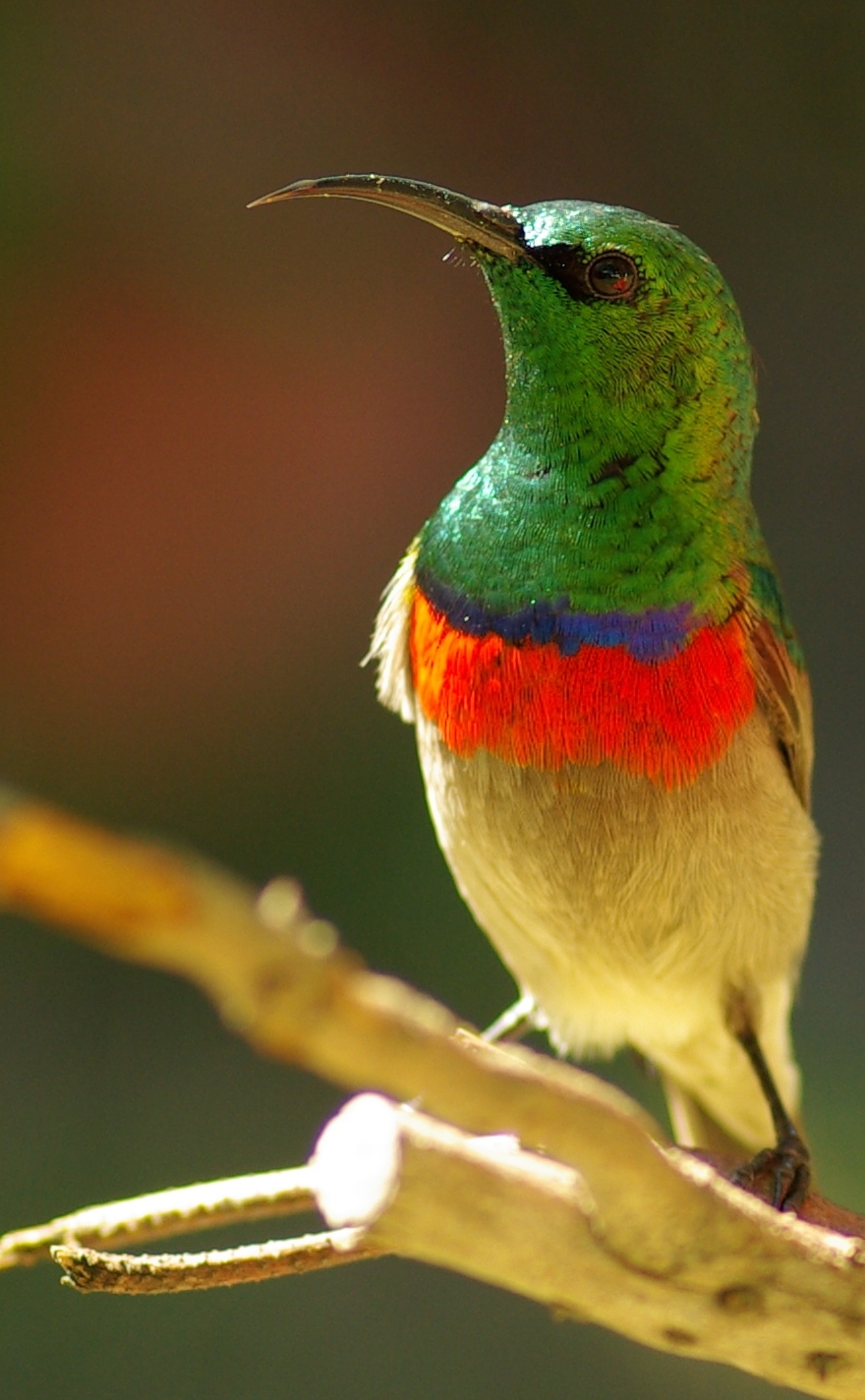
Greater Double-collared Sunbird
Cinnyris afer
Order: Passeriformes / Family: Nectariniidae

Wikimedia Commons
About the Greater Double-collared Sunbird
The Greater Double-collared Sunbird, Cinnyris afer, is a captivating passerine bird that belongs to the Nectariniidae family. This species is renowned for its vibrant plumage and plays a significant role in the ecosystems of sub-Saharan Africa, particularly in the regions of South Africa, Lesotho, and Swaziland. These sunbirds inhabit forests, scrub, and gardens, where they contribute to the pollination of various plant species through their feeding activities. The Greater Double-collared Sunbird is a small bird, measuring about 12-15 cm in length, with a wingspan that ranges from 15-20 cm.
The bird is particularly abundant in the fynbos biome of South Africa, where it thrives in the rich floral diversity. Its role as a pollinator is vital, especially during the flowering season from late winter to early summer, when the bird actively seeks out nectar from a plethora of flowering plants. The bird's preference for habitats with abundant floral resources makes it an important species for maintaining the ecological balance in these regions.
During the breeding season, which generally occurs from August to February, the Greater Double-collared Sunbird becomes more territorial. Males, with their vivid plumage, are often seen engaging in elaborate courtship displays to attract females. Outside the breeding season, these birds may form small flocks, though they are generally more solitary or found in pairs. Their role extends beyond pollination, as they also help control insect populations, feeding on small arthropods that they glean from foliage.
The sunbird's adaptability to various habitats, including urban gardens, has allowed it to maintain stable populations, although habitat destruction and climate change pose ongoing threats. Conservation efforts in the region focus on preserving native flora and promoting biodiversity, which in turn supports the health and sustainability of sunbird populations.
The Greater Double-collared Sunbird belongs to the family Nectariniidae, within the order Passeriformes. These birds typically live average 5-7 years, with a maximum recorded of 10 years..
How to Identify a Greater Double-collared Sunbird
The Greater Double-collared Sunbird is a small, colorful bird that can be readily identified by a few key features. Adult males exhibit a metallic green head, throat, and upperparts, with a striking red breast band that contrasts sharply with their otherwise glossy plumage. Below the red band, a narrow iridescent blue band is visible, which is an important field mark when distinguishing this sunbird from similar species. The belly is mostly white or light gray.
Females and juveniles, in contrast, have a more subdued appearance, with olive-brown upperparts and pale underparts. The lack of bright red and iridescent blue makes females and young birds less conspicuous in their natural habitats. However, females can be differentiated from juveniles by their slightly more pronounced olive tones and a faint eye stripe.
Similar species include the Southern Double-collared Sunbird, which shares some overlapping territories. However, the Greater Double-collared Sunbird is generally larger and possesses the distinctive double-collared pattern of red and blue, which is less pronounced in the Southern variant. The Greater Double-collared Sunbird also exhibits a more upright perching posture, often cocking its tail while foraging or perched, which can aid in identification.
Having trouble telling birds apart? Upload a photo to our bird identification tool for an instant species match.
Greater Double-collared Sunbird Habitat and Range
Preferred Habitat
The Greater Double-collared Sunbird thrives in diverse habitats, primarily favoring forest edges, fynbos, and gardens. It is commonly found in montane regions, especially in the fynbos biome of South Africa, known for its rich plant diversity. These sunbirds prefer elevations from sea level to about 2,500 meters, where flowering plants are abundant. During the blooming season, they frequent areas with high concentrations of nectar-producing flora, such as proteas and ericas.
In urban areas, the Greater Double-collared Sunbird adapts well to gardens and parks where exotic and native flowering plants are cultivated. While the bird is primarily associated with rural and semi-natural environments, its presence in urban settings demonstrates its adaptability and resilience. Seasonal habitat shifts are minor, given the bird's relatively stable range, though it may move locally to exploit food resources.
Geographic Range
The Greater Double-collared Sunbird is predominantly found in southern Africa. Its range covers South Africa, extending into Lesotho and Swaziland. The bird is a non-migratory resident, primarily staying within its established territories throughout the year. In South Africa, it is most abundant in the Western and Eastern Cape provinces, regions known for their fynbos vegetation.
Although the sunbird does not undertake significant migratory journeys, it may exhibit local movements in response to the availability of flowering plants. Areas like the Cape Peninsula and the Drakensberg Mountains serve as population density hotspots, where the bird thrives amidst dense floral growth. The bird's stable presence across these regions reflects its adaptability to various ecological zones within its range.
Want to know which birds visit your area? Browse our backyard birds by location guides for region-specific species lists.
What Does the Greater Double-collared Sunbird Eat?
The Greater Double-collared Sunbird primarily feeds on nectar, making it an essential pollinator for a wide array of flowering plants. Its long, curved bill and brush-tipped tongue are perfectly adapted for accessing deep tubular flowers. The sunbird's diet shifts seasonally, depending on the availability of nectar sources. During the peak flowering seasons of late winter and early spring, it consumes nectar from proteas, ericas, and other native plants.
In addition to nectar, the bird supplements its diet with small insects and spiders, providing essential protein, especially during the breeding season when energy demands are high. The sunbird employs a gleaning technique, capturing prey from foliage or mid-air. This diverse diet allows the Greater Double-collared Sunbird to fulfill its nutritional requirements and maintain its role in both pollination and insect population control.
Want to attract Greater Double-collared Sunbirds to your yard? See our recommended feeders and seed types for the best results.
Greater Double-collared Sunbird Behavior and Social Structure
The Greater Double-collared Sunbird exhibits a range of fascinating behaviors, particularly during the breeding season. These birds are generally solitary or found in pairs, but they may form loose associations in areas with abundant food resources. Males are territorial, defending their patches of flowering plants with vigor. They perform elaborate displays, involving song and flight, to ward off rivals and attract females.
Courtship displays include a mix of vocalizations and aerial maneuvers, where the male swings back and forth while singing. The song is a series of high-pitched, melodious notes that can be heard echoing through their habitats. During the day, the sunbird remains active, engaging in regular foraging trips interspersed with periods of rest. It responds to predators with alarm calls and evasive flight, seeking cover in dense foliage when necessary. The species' social structure and territoriality are crucial for understanding its interactions with other fauna and its ecological niche.
Greater Double-collared Sunbird Nesting and Reproduction
The nesting habits of the Greater Double-collared Sunbird are intriguing and reflect its adaptability. These birds construct oval-shaped nests using a variety of materials, including grass, leaves, and spider silk, which they bind together to form a sturdy structure. The nests are often suspended from branches, usually at a height of 1-3 meters above ground, providing protection from ground-based predators.
A typical clutch consists of two to three eggs, which the female incubates for about 13-15 days. During this period, the male assists by defending the territory and occasionally feeding the female. After hatching, the chicks remain in the nest for approximately 14-21 days before fledging. Parental care continues post-fledging, with both parents contributing to feeding and protecting the young birds. The species typically raises two broods per year, depending on the availability of resources and environmental conditions.
Greater Double-collared Sunbird Sounds and Vocalizations
The vocalizations of the Greater Double-collared Sunbird are a key aspect of its behavior and identification. The primary song consists of a series of high-pitched, melodious notes delivered in a rapid sequence. This song serves both territorial and courtship purposes, resonating through their habitats during the breeding season. In addition to their song, these sunbirds emit a variety of call notes, including sharp 'chip' sounds used for communication between mates or to signal alarm.
Alarm calls are more abrupt and louder, designed to alert other sunbirds of potential threats. During the dawn chorus, males perch conspicuously while singing to establish their territory and attract females. This vocal repertoire not only aids in communication but also reinforces the sunbird's presence within its environment.
Interesting Facts About the Greater Double-collared Sunbird
- 1The Greater Double-collared Sunbird can hover like a hummingbird, allowing it to feed from flowers without perching.
- 2Males display a courtship dance involving rapid wing-beats and vocalizations to impress potential mates.
- 3These sunbirds often use spider silk to bind their nests, providing strength and flexibility to the structure.
- 4Their long, curved bills enable them to feed on nectar from flowers that other birds cannot access.
- 5The fynbos biome, a key habitat for these sunbirds, contains over 8,500 plant species, many of which rely on sunbirds for pollination.
- 6Greater Double-collared Sunbirds can consume up to 90% of their body weight in nectar each day during peak feeding periods.
- 7They contribute to controlling insect populations by consuming various small arthropods in addition to their nectar diet.
Greater Double-collared Sunbird Conservation Status
The Greater Double-collared Sunbird is currently classified as a species of Least Concern by the IUCN. Its population is considered stable, with no immediate threats causing significant declines. However, habitat loss due to urban expansion and agriculture poses potential risks to its preferred environments. Climate change also threatens the floral diversity upon which this sunbird relies for nectar. Conservation efforts focus on preserving natural habitats and promoting biodiversity in areas where the bird resides. Initiatives include the protection of fynbos regions and the encouragement of native plant cultivation in urban gardens. While the bird's adaptability has helped maintain its numbers, continued conservation measures are essential to ensure the long-term survival of the Greater Double-collared Sunbird.
Attracting Greater Double-collared Sunbirds to Your Feeder
The Greater Double-collared Sunbird is a regular visitor to backyard bird feeders across its range. At the Eye On The Fly feeding station, we observe Greater Double-collared Sunbirds regularly and capture footage with our feeder cameras.
Other Nectariniidae Species


Birds Similar to the Greater Double-collared Sunbird
These species are often confused with the Greater Double-collared Sunbird due to similar appearance or overlapping range.