
Greater Spotted Eagle
Aquila clanga
Order: Accipitriformes / Family: Accipitridae
Wikimedia Commons
About the Greater Spotted Eagle
The Greater Spotted Eagle, scientifically known as Aquila clanga, is a large bird of prey belonging to the family Accipitridae. This eagle is primarily found across the Palearctic region, spanning from Eastern Europe to East Asia. It plays a significant ecological role as a top predator, helping to control populations of small mammals and other prey species. The Greater Spotted Eagle favors habitats such as river valleys, wetlands, and floodplain forests, where it can find an abundance of food sources. During the breeding season, which occurs from April to July, these eagles are highly territorial, often defending their chosen nesting sites vigorously against intruders. Migration is another crucial aspect of the Greater Spotted Eagle's life. In the winter months, many individuals migrate south to regions like the Indian subcontinent, the Middle East, and Southeast Asia, where milder climates and plentiful food resources provide the necessary conditions for survival. Beyond its ecological significance, the Greater Spotted Eagle is of considerable interest to conservationists due to its status as a vulnerable species. Habitat loss through deforestation and wetland drainage poses significant threats to its population. Conservation efforts, including habitat protection and public awareness campaigns, are essential to ensure the survival of this magnificent raptor. In some regions, such as Belarus and Ukraine, the Greater Spotted Eagle is a symbol of wilderness and natural heritage, highlighting its cultural as well as ecological importance. Understanding the life cycle and habits of the Greater Spotted Eagle is crucial for developing effective conservation strategies, particularly in areas where human activities encroach upon its natural habitats.
The Greater Spotted Eagle belongs to the family Accipitridae, within the order Accipitriformes. These birds typically live average 15 years, with a maximum recorded of 27 years..
How to Identify a Greater Spotted Eagle
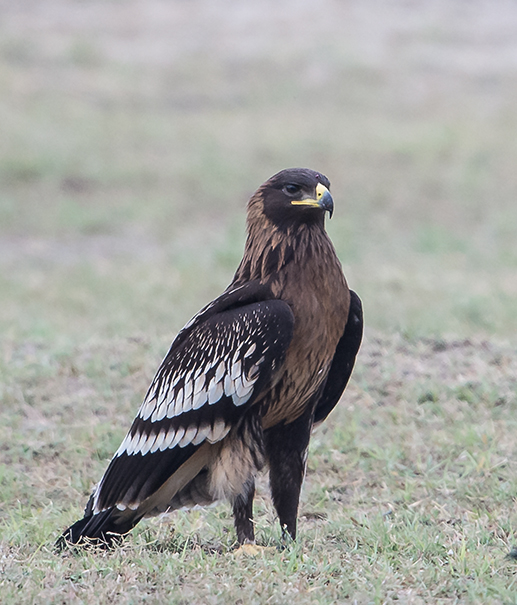
Identifying the Greater Spotted Eagle involves recognizing several key field marks. Adults exhibit dark brown plumage with notable white spots on the upperwing coverts, which give the species its common name. In contrast, juveniles are generally lighter with buff-tipped feathers, which can cause confusion with other eagle species. Male and female Greater Spotted Eagles are similar in appearance, although females are generally larger. When observing the eagle in flight, note its broad, rounded wings and relatively short tail, which contribute to its distinctive silhouette. Unlike some other eagles, the Greater Spotted Eagle holds its wings flat when soaring, and during active flight, its wingbeats are shallow and deliberate. When perched, these eagles maintain an upright posture and showcase their strikingly powerful talons and hooked beak, adaptations for seizing and consuming prey. Similar species, such as the Lesser Spotted Eagle, can be distinguished by the Greater Spotted Eagle’s larger size and the more pronounced wing spots.
Having trouble telling birds apart? Upload a photo to our bird identification tool for an instant species match.
Greater Spotted Eagle Habitat and Range
Preferred Habitat
The Greater Spotted Eagle prefers habitats with abundant water resources and ample vegetation. Prime habitats include river valleys, marshes, floodplain forests, and bogs. These areas offer the dense cover and rich prey base necessary for the eagle's survival. The species is typically found from sea level up to elevations of about 1,500 meters. During the breeding season, they tend to favor secluded, undisturbed areas, while wintering birds may frequent more open landscapes, such as agricultural fields and savannas. While they are generally associated with rural environments, Greater Spotted Eagles can occasionally be observed near urban areas, especially during migration when they might use city parks and reservoirs as temporary stopovers.
Geographic Range
The Greater Spotted Eagle's breeding range extends from Eastern Europe through Russia and into Central Asia. Key countries include Belarus, Ukraine, and Siberia. In the winter, they migrate to warmer regions, with significant populations found in India, Pakistan, and Southeast Asia, including parts of Thailand and Malaysia. The species utilizes well-established migration corridors, often following major river systems. Population densities are higher in regions like the Biebrza Marshes in Poland and the Danube Delta, where suitable habitats are abundant. During migration, they can be seen in a variety of countries, including Turkey and Iran, as they move between breeding and wintering grounds.
Want to know which birds visit your area? Browse our backyard birds by location guides for region-specific species lists.
What Does the Greater Spotted Eagle Eat?
The diet of the Greater Spotted Eagle primarily consists of small to medium-sized mammals, such as voles and hares, as well as birds, reptiles, and amphibians. They are opportunistic feeders and may also consume carrion when available. Seasonal changes affect their diet composition, with a higher reliance on birds during the winter months when mammalian prey becomes scarce. Greater Spotted Eagles employ a variety of hunting techniques, including soaring high to locate prey visually and ambushing from a perch. They typically hunt during the day, with peak activity occurring in the early morning and late afternoon. Their powerful talons and beak are well-adapted for capturing and dismembering prey.
Greater Spotted Eagle Behavior and Social Structure
The Greater Spotted Eagle is generally solitary or found in pairs, especially during the breeding season, when they exhibit strong territorial behavior. Courtship displays involve aerial acrobatics, with pairs performing synchronized flights and calling to one another. Outside of the breeding season, these eagles may occasionally form loose associations, particularly when migrating or roosting in shared habitats. Flocking behavior is rare, and they tend to avoid close contact with other raptors. In the presence of predators or threats, Greater Spotted Eagles exhibit aggressive behaviors, such as swooping and vocalizing loudly to deter intruders. Their daily activity pattern is diurnal, with most hunting and foraging occurring during daylight hours. Resting and preening activities are common during midday.
Greater Spotted Eagle Nesting and Reproduction
Greater Spotted Eagles construct large nests using sticks and twigs, often lined with softer materials like grass and leaves. These nests are typically located in tall trees within secluded areas, providing both elevation and cover from predators. Clutch size ranges from one to three eggs, with two being the most common. The incubation period lasts approximately 42 days, during which the female primarily incubates while the male provides food. Once hatched, the fledglings remain in the nest for about 60 to 70 days before fledging. Both parents participate in feeding and protecting the young, ensuring their survival through this vulnerable stage. The species generally produces one brood per year, although environmental conditions can influence reproductive success.
Greater Spotted Eagle Sounds and Vocalizations
The primary vocalizations of the Greater Spotted Eagle include a series of high-pitched whistles and a distinct 'klee-klee-klee' call, often heard during territorial displays. These calls are clear and can carry over long distances, especially in open habitats. Alarm calls, characterized by rapid, sharper notes, are employed when potential threats are detected near the nest or when encountering predators. Unlike some songbirds, the Greater Spotted Eagle does not participate in dawn choruses. Instead, vocal activity is more pronounced during early morning and late afternoon when they are most active.
Interesting Facts About the Greater Spotted Eagle
- 1Greater Spotted Eagles can travel over 5,000 kilometers during their migratory journey from breeding to wintering grounds.
- 2The species is known for its distinct 'klee-klee-klee' call, which serves as both a territorial and contact call.
- 3Greater Spotted Eagles often reuse their nests for several years, adding new materials each season to maintain the structure.
- 4Juveniles exhibit a mottled appearance with buff-tipped feathers, which helps them blend into their environment.
- 5The Greater Spotted Eagle's wingspan ranges from 160 to 180 cm, making it a formidable presence in the skies.
Greater Spotted Eagle Conservation Status
The Greater Spotted Eagle is currently listed as Vulnerable on the IUCN Red List, with declining population trends observed across its range. Habitat destruction, particularly the loss of wetlands and forested areas, poses the greatest threat to its survival. Other significant threats include illegal shooting, poisoning, and the disturbance of nesting sites. Conservation efforts focus on habitat preservation, legal protection, and the establishment of protected areas. Education and awareness campaigns aim to reduce human-wildlife conflict. Historical data indicates a significant population decline over the past century, highlighting the need for continued conservation action.


