
Green Malkoha
Ceuthmochares australis
Order: Cuculiformes / Family: Cuculidae
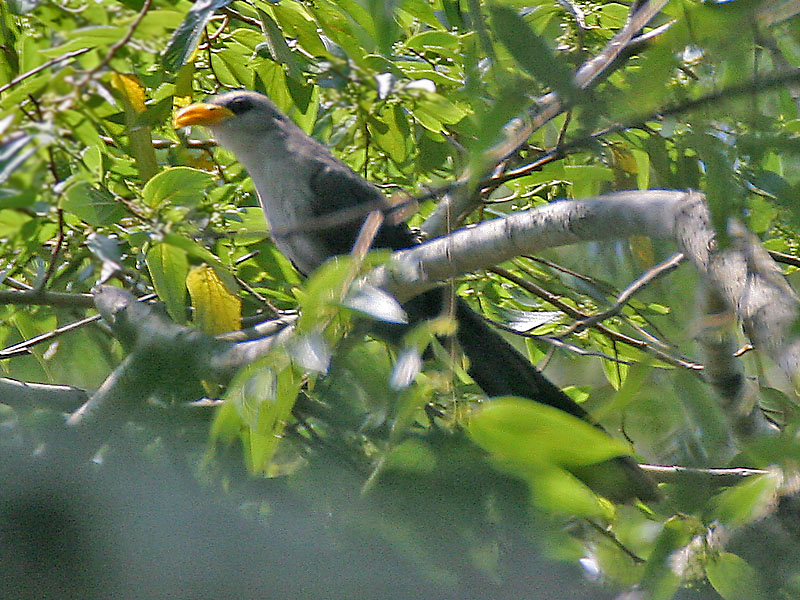
Wikimedia Commons
About the Green Malkoha
The Green Malkoha, scientifically known as Ceuthmochares australis, is a captivating bird found primarily within the verdant forests of sub-Saharan Africa. This species, belonging to the Cuculidae family, is distinguished by its vibrant green plumage, which provides excellent camouflage among the dense foliage it inhabits. The Green Malkoha plays a significant ecological role as both a predator and prey, contributing to the complex food web of its forest environment. Its presence indicates healthy forest ecosystems, as it relies on abundant insect populations and diverse plant life. This bird is seen frequently in the lowland tropical rainforests of countries like Nigeria, Cameroon, and Gabon, where it thrives in the humid, dense canopy.
The Green Malkoha's ecological role extends beyond mere presence, as it helps control insect populations, including caterpillars and small arthropods, which are its primary food sources. These birds have a unique foraging strategy, using their elongated bills to probe into crevices and under leaves, capturing prey that other birds might overlook. This behavior not only helps maintain a balanced ecosystem but also illustrates the species' adaptability and specialization.
During the breeding season, which typically coincides with the rainy season, the Green Malkoha becomes more vocal and active. Its calls echo through the forest, establishing territories and attracting mates. This seasonal behavior underscores the bird's reliance on its environment's cyclical nature. The rainy season brings a flush of new foliage and insects, providing ample resources for raising young. As a species that thrives in specific habitat conditions, the Green Malkoha serves as a barometer for the health of the tropical forests it inhabits.
The Green Malkoha belongs to the family Cuculidae, within the order Cuculiformes. These birds typically live average 6-8 years, with a maximum recorded of 12 years..
How to Identify a Green Malkoha
The Green Malkoha is easily recognized by its striking emerald green plumage, which covers most of its body, providing excellent camouflage within its forest habitat. The bird has a long tail and a slightly curved bill that is well-suited for its foraging habits. Adult Green Malkohas have a distinctive blue-grey eye ring and a subtle brownish tinge on their wings, which can appear more pronounced in different lighting.
Juvenile Green Malkohas differ slightly from adults, with a duller green hue and less defined eye rings. Both sexes are similar in appearance, making it challenging to distinguish between males and females in the field. However, the females may appear slightly smaller and less vibrant during certain times of the year.
In flight, the Green Malkoha exhibits a unique silhouette with its elongated tail and rounded wings. This shape helps it navigate the dense forest canopy with agility. When perched, the bird often adopts an upright posture, which helps it maintain a vigilant lookout for predators and prey. The Green Malkoha can sometimes be mistaken for similar species like the Yellowbill, which also shares its habitat, but the latter lacks the distinct green coloration that sets the Green Malkoha apart.
Having trouble telling birds apart? Upload a photo to our bird identification tool for an instant species match.
Green Malkoha Habitat and Range
Preferred Habitat
The Green Malkoha thrives in tropical lowland rainforests, where dense foliage offers both shelter and abundant food sources. It primarily inhabits evergreen forests, particularly those with a rich understory and a closed canopy. These habitats provide the necessary cover and resources for the bird's foraging activities. In regions like the Congo Basin, the Green Malkoha is a common resident of such environments.
Typically found at elevations ranging from sea level to about 1,500 meters, this bird shows a preference for undisturbed forest areas. However, it can also adapt to secondary growth and forest edges, where it continues to find sufficient food. There is little evidence to suggest significant seasonal habitat shifts, as the Green Malkoha tends to remain in areas that consistently offer its ecological needs.
While not a common visitor to urban areas, the Green Malkoha occasionally appears in large, forested city parks or reserves, where suitable habitat is available. Its presence in these areas underscores the bird's adaptability, although it remains primarily a forest-dwelling species.
Geographic Range
The Green Malkoha is native to the tropical regions of sub-Saharan Africa, with its range extending from West Africa to parts of Central and East Africa. Its breeding grounds are primarily located in countries like Nigeria, Cameroon, and the Democratic Republic of the Congo, where dense rainforests provide ideal conditions.
Throughout the year, the Green Malkoha is largely sedentary, with minimal long-distance migration patterns observed. Instead, it exhibits some local movements, likely in response to resource availability and environmental changes. These movements are typically within the same general geographic area, ensuring the bird remains within its preferred habitat.
In terms of population density, the Green Malkoha can be found in significant numbers within the Congo Basin, one of its primary hotspots. Smaller populations exist in the forests of West Africa, though these are more fragmented due to habitat loss. Despite these pressures, the Green Malkoha continues to maintain stable populations in regions where forest conservation efforts are effective.
Want to know which birds visit your area? Browse our backyard birds by location guides for region-specific species lists.
What Does the Green Malkoha Eat?
The diet of the Green Malkoha consists predominantly of insects, with a particular fondness for caterpillars and various arthropods. This insectivorous diet plays a critical role in regulating pest populations within its forest habitat. The Green Malkoha's feeding schedule aligns with the diurnal activity of its prey, making early morning and late afternoon peak foraging times.
In addition to caterpillars, the Green Malkoha consumes beetles, grasshoppers, and occasionally small reptiles when available. This diet may shift slightly with the seasons, as the availability of different prey types fluctuates. During the rainy season, when insect populations surge, the Green Malkoha exhibits increased foraging activity, capitalizing on the abundance of food.
The bird employs a methodical foraging technique, using its slightly curved bill to probe into crevices, under leaves, and within bark, securing hidden prey. Its keen eyesight allows it to detect even the smallest movements, making it an efficient predator. The Green Malkoha's ability to exploit various niches within its habitat exemplifies its adaptability and ecological importance.
Green Malkoha Behavior and Social Structure
The Green Malkoha exhibits a solitary or paired social structure, with individuals often seen alone or in pairs rather than in flocks. This behavior is typical of many forest cuckoos, allowing them to exploit food resources efficiently without competition from conspecifics. However, during the breeding season, pairs become more conspicuous as they establish territories and engage in courtship displays.
Territorial behavior is marked by vocalizations and sometimes aggressive displays to deter intruders. The Green Malkoha's calls are a critical component of these territorial interactions, serving as both a warning to rivals and an invitation to potential mates. Courtship displays include mutual preening and food sharing, behaviors that strengthen pair bonds.
While generally shy and elusive, the Green Malkoha may exhibit boldness when threatened by predators. It employs a combination of rapid flight and stealthy movements to evade detection. Daily activity patterns include bursts of foraging interspersed with periods of rest, typically in the safety of dense foliage. The bird's daily rhythm is closely tied to the availability of sunlight, with activity peaking during the cooler parts of the day.
Green Malkoha Nesting and Reproduction
Green Malkohas prefer to nest in the dense undergrowth of forested areas, where they construct cup-shaped nests made of twigs and leaves. These nests are typically situated in shrubs or small trees, providing cover and protection from potential predators. The choice of nesting site is crucial, as it needs to offer both concealment and accessibility.
The typical clutch size ranges from two to three eggs, which both parents incubate cooperatively. The incubation period lasts approximately 14 to 16 days, during which the parents alternate duties, ensuring the eggs remain at a consistent temperature. Once hatched, the chicks remain in the nest for about 18 to 21 days, during which time they are fed a diet rich in insects provided by both parents.
Parental roles are shared, with both adults participating in feeding and protecting the young. This cooperative breeding strategy ensures a higher success rate for fledging. The Green Malkoha typically raises one brood per year, although this can vary depending on environmental conditions and food availability.
Green Malkoha Sounds and Vocalizations
The Green Malkoha's primary song is a series of soft, repetitive cooing notes that resonate through the forest canopy. This rhythmical pattern serves to communicate with mates and establish territory boundaries. The pitch is relatively low and melodious, blending harmoniously with the sounds of the forest.
Call notes are generally short and sharp, often used as contact calls between mates or to signal alarm in response to threats. Alarm calls are more abrupt and higher-pitched, effectively alerting nearby birds to potential dangers. During the dawn chorus, the Green Malkoha joins in with other forest species, adding its distinct voice to the morning soundscape.
The vocalizations of the Green Malkoha can be compared to the cooing of doves, though with a unique timbre that sets it apart. These sounds play a crucial role in the bird's social interactions and territorial behaviors.
Interesting Facts About the Green Malkoha
- 1The Green Malkoha's striking green plumage acts as camouflage, making it nearly invisible among the forest canopy.
- 2Unlike many cuckoos, the Green Malkoha builds its own nest rather than relying on brood parasitism.
- 3Green Malkohas have a unique foraging technique, using their curved bills to extract insects from crevices.
- 4The species is predominantly sedentary, showing little evidence of long-distance migration.
- 5Their vocalizations are often mistaken for the cooing of doves due to their smooth, rhythmic nature.
- 6Both male and female Green Malkohas participate equally in feeding and incubating their young.
- 7The Green Malkoha is an indicator species, reflecting the overall health of the tropical forest ecosystems it inhabits.
Green Malkoha Conservation Status
The Green Malkoha is currently listed as a species of least concern by the IUCN, with populations considered stable across much of its range. However, habitat loss due to deforestation and agricultural expansion poses a potential threat to certain populations. Efforts to conserve large tracts of rainforest are vital for the continued survival of this species. Historically, the Green Malkoha's population has shown resilience, adapting to changing environmental conditions as long as sufficient habitat remains. Conservation initiatives in regions like the Congo Basin focus on sustainable land use and forest protection, which benefit the Green Malkoha and countless other species sharing its habitat. Primary threats include habitat fragmentation and degradation, which can isolate populations and reduce genetic diversity. By supporting conservation efforts and protecting critical habitats, we can ensure the Green Malkoha continues to thrive in its natural environment.
Other Cuculidae Species


Birds Similar to the Green Malkoha
These species are often confused with the Green Malkoha due to similar appearance or overlapping range.

