
Grey Tit-Flycatcher
Myioparus plumbeus
Order: Passeriformes / Family: Muscicapidae

Wikimedia Commons
About the Grey Tit-Flycatcher
The Grey Tit-Flycatcher, Myioparus plumbeus, is a small passerine bird that showcases the intricate beauty of African avifauna. Predominantly found in sub-Saharan Africa, this species thrives across various landscapes, from dense woodlands and forest margins to savannas and urban gardens. The Grey Tit-Flycatcher is remarkable for its adaptability and resilience, often spotted flitting through the trees in search of insects. With a plumage that blends soft greys and whites, this bird is not only a master of camouflage but also an essential player in its ecosystem, controlling insect populations. During the breeding season, which varies by region but generally peaks in the warmer months, these birds exhibit increased vocal activity. The Grey Tit-Flycatcher contributes significantly to the ecological balance by acting as both predator and prey within its environment. Its ability to thrive in both rural and urban settings highlights the importance of preserving diverse habitats to maintain ecological connectivity and support avian biodiversity. Observations have shown that Grey Tit-Flycatchers are particularly active during dawn and dusk, when they engage in their most vigorous feeding activities. As a species, they serve as an indicator of environmental health, signaling changes in insect populations and habitat quality. The Grey Tit-Flycatcher's role in seed dispersal, though secondary, supports plant regeneration, particularly in savanna ecosystems where it often resides. By maintaining such ecological relationships, the Grey Tit-Flycatcher helps sustain the intricate web of life within its range.
The Grey Tit-Flycatcher belongs to the family Muscicapidae, within the order Passeriformes. These birds typically live average 5 years, with a maximum recorded of 8 years..
How to Identify a Grey Tit-Flycatcher
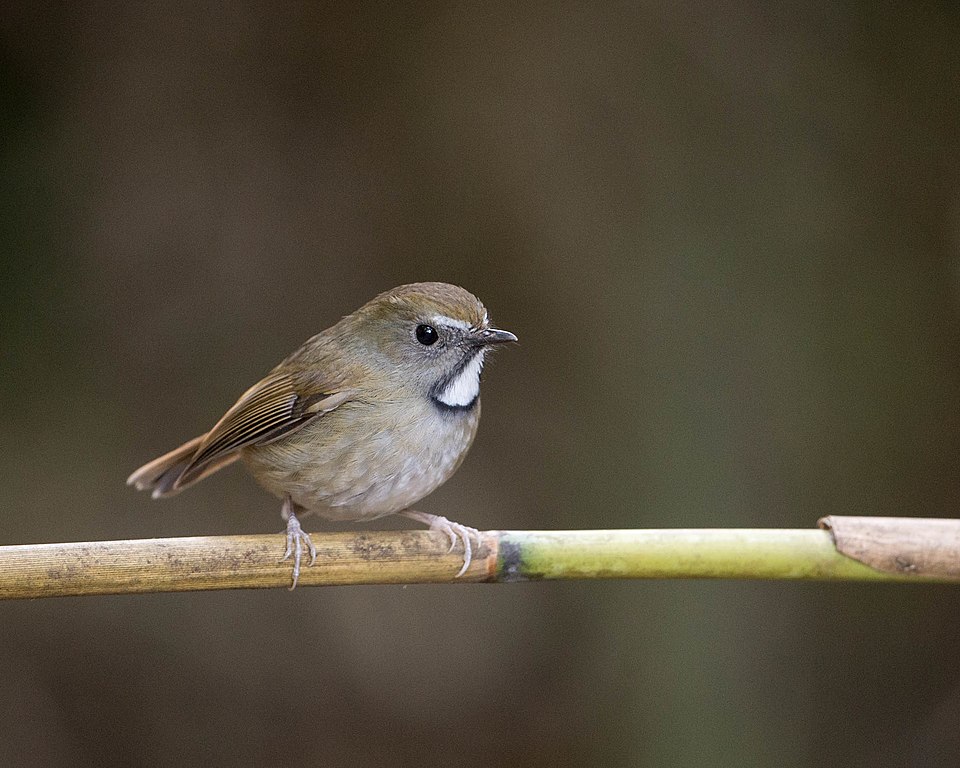
The Grey Tit-Flycatcher is a small bird, measuring approximately 12-14 cm in length. Its plumage is primarily a soft grey, with a subtle white belly and undertail coverts. The head is darker, featuring a distinct blackish mask through the eyes, which can be a key identifying feature. The wings have a slightly darker hue, providing a gentle contrast to the rest of the body. Juveniles resemble adults but are generally duller, lacking the darker cap seen in mature individuals. Males and females are similar in appearance, making sex differentiation challenging in the field. However, the male may exhibit marginally brighter plumage during the breeding season. The flight of the Grey Tit-Flycatcher is agile and somewhat erratic, a trait common to flycatchers, as it maneuvers deftly through foliage. When perched, this bird often adopts an upright stance, flicking its wings and tail nervously as it scans for prey. Distinguishing the Grey Tit-Flycatcher from similar species, such as the Ashy Flycatcher, involves careful observation of its darker head and wing patterns. Its subtle yet distinctive silhouette in flight can aid in identification, especially when observed against the backdrop of the forest canopy.
Having trouble telling birds apart? Upload a photo to our bird identification tool for an instant species match.
Grey Tit-Flycatcher Habitat and Range
Preferred Habitat
The Grey Tit-Flycatcher inhabits a range of habitats, predominantly favoring woodland and forested areas. It is frequently found in miombo woodlands, acacia-dominated regions, and forest edges. This species can also adapt to secondary growth forests and well-vegetated gardens in urban regions. Typically found at elevations ranging from sea level to about 1800 meters, the Grey Tit-Flycatcher adjusts to various environmental conditions. Seasonal changes in habitat preference are minimal, although during the breeding season, proximity to water sources such as rivers and streams is often advantageous. Despite its preference for rural and natural settings, this bird has successfully occupied urban green spaces, reflecting its versatile nature.
Geographic Range
The Grey Tit-Flycatcher's range spans much of sub-Saharan Africa. It is widely distributed across countries such as Angola, Kenya, Tanzania, Zambia, and the Democratic Republic of the Congo. While it is a resident species in much of its range, local movements may occur in response to food availability and climatic conditions. Population density is notably higher in regions with dense woodlands and abundant insect life. Though not migratory in the traditional sense, some populations exhibit altitudinal movements, descending to lower elevations during the colder months. This enhances their access to insect prey and suitable habitats. In southern Africa, sightings are most frequent in Zimbabwe and northern South Africa, where dense bushveld provides an ideal environment.
Want to know which birds visit your area? Browse our backyard birds by location guides for region-specific species lists.
What Does the Grey Tit-Flycatcher Eat?
The diet of the Grey Tit-Flycatcher primarily consists of insects. It feeds on a variety of invertebrates, including beetles, caterpillars, and flies. This bird employs a sallying technique, where it darts from a perch to capture prey in mid-air before returning to the same or a nearby vantage point. During the rainy season, when insect abundance increases, the Grey Tit-Flycatcher might also consume small spiders and other arthropods. While primarily insectivorous, it occasionally supplements its diet with berries and seeds, especially when insects are scarce. Feeding typically occurs during the early morning and late afternoon, coinciding with peak insect activity. This behavior ensures maximum foraging success while minimizing energy expenditure.
Grey Tit-Flycatcher Behavior and Social Structure
The Grey Tit-Flycatcher is a solitary or loosely social bird, often seen alone or in pairs. Territorial during the breeding season, it engages in vocal displays to assert dominance and deter intruders. Courtship involves a combination of vocalizations and physical displays, with males performing aerial acrobatics and wing displays to attract females. Outside of the breeding season, the Grey Tit-Flycatcher may join mixed-species foraging flocks, enhancing its feeding opportunities. Its response to predators involves a series of alarm calls, often prompting other birds to join in mobbing behavior. The Grey Tit-Flycatcher's daily routine includes periods of intense foraging activity interspersed with rest and preening, ensuring that its plumage remains in optimal condition for both insulation and flight.
Grey Tit-Flycatcher Nesting and Reproduction
The nesting habits of the Grey Tit-Flycatcher are indicative of its adaptability. It constructs cup-shaped nests using grasses, twigs, and spider webs, often placing them in the forks of tree branches or within dense foliage for concealment. The breeding season varies, generally aligning with periods of increased insect availability. Clutch size typically ranges from two to four eggs, which are incubated by the female for approximately 12-14 days. During this period, the male may assist by feeding the female. Once hatched, the chicks are altricial, requiring constant care and feeding from both parents. Fledging occurs around 15-18 days post-hatching, with fledglings remaining dependent on parental support for several weeks thereafter. In regions with favorable conditions, two broods may be raised per year.
Grey Tit-Flycatcher Sounds and Vocalizations
The Grey Tit-Flycatcher's song is a melodious sequence of whistled notes, often delivered from a concealed perch within the canopy. The rhythm is steady and deliberate, with a pitch that rises and falls gently, creating a soothing auditory presence in its habitat. Call notes are sharp and quick, serving as contact calls between mates or as alerts to potential danger. Alarm calls are more intense, with rapid sequences that signal the presence of predators. During the dawn chorus, the Grey Tit-Flycatcher contributes with its characteristic song, adding to the symphony of the forest. Its vocalizations, while not as diverse as some songbirds, play a crucial role in communication and territory establishment.
Interesting Facts About the Grey Tit-Flycatcher
- 1The Grey Tit-Flycatcher can catch insects in mid-flight, showcasing remarkable agility and precision.
- 2This species is often found in mixed-species flocks, benefiting from cooperative foraging strategies.
- 3Despite its small size, the Grey Tit-Flycatcher plays a crucial role in controlling insect populations.
- 4The Grey Tit-Flycatcher's plumage provides excellent camouflage, allowing it to blend seamlessly into its habitat.
- 5During the breeding season, males perform aerial displays to attract mates, showcasing their agility and strength.
- 6The species' adaptability to urban environments highlights its resilience and ecological versatility.
- 7Its melodious song contributes to the dawn chorus, enhancing the acoustic landscape of African woodlands.
Grey Tit-Flycatcher Conservation Status
The Grey Tit-Flycatcher is currently classified as Least Concern by the IUCN, with a stable population trend. While not facing immediate threats, habitat destruction and fragmentation pose potential risks. Conservation efforts focus on preserving woodland habitats and promoting sustainable land-use practices. Historical data suggests that the population has remained relatively stable over the past few decades, although continued monitoring is essential. Collaboration with local communities to maintain and restore natural habitats can help safeguard the future of this adaptable species.
Other Muscicapidae Species


Birds Similar to the Grey Tit-Flycatcher
These species are often confused with the Grey Tit-Flycatcher due to similar appearance or overlapping range.
