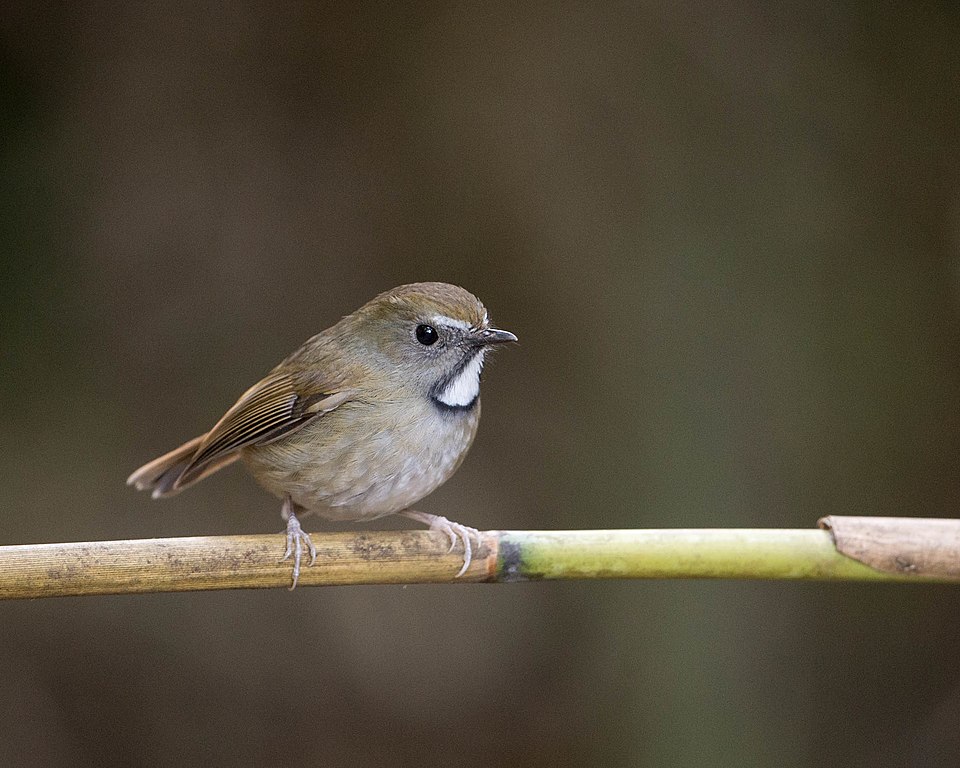
Hainan Blue Flycatcher
Cyornis hainanus
Order: Passeriformes / Family: Muscicapidae

Wikimedia Commons
About the Hainan Blue Flycatcher
The Hainan Blue Flycatcher (Cyornis hainanus) is a small, vibrant songbird native to Southeast Asia, particularly thriving in the subtropical and tropical moist lowland forests of regions such as Hainan, Vietnam, and parts of southern China. This bird is a member of the Muscicapidae family, known for its agile flying ability and melodious song. The Hainan Blue Flycatcher plays a crucial ecological role as an insectivore, helping control insect populations in its native habitats. Its presence is an indicator of healthy forest ecosystems, as it prefers undisturbed, dense forests with a rich understory. The flycatcher is not only significant for its ecological contributions but also for its aesthetic appeal, which draws birdwatchers from around the world to its habitats. Its seasonal behaviors include breeding in the lush months of spring and summer, when food is abundant, and retreating to slightly denser cover during colder months. This species exemplifies the delicate balance required for avian survival in rapidly changing environments, where habitat destruction poses a significant threat. As forests are cleared for agriculture and urban development, the Hainan Blue Flycatcher faces increasing pressure, potentially leading to a decline in population numbers. Conservation efforts are vital to ensure this vibrant bird continues to flourish in its natural habitat, maintaining its role in the ecosystem and its place in the hearts of bird enthusiasts.
The Hainan Blue Flycatcher belongs to the family Muscicapidae, within the order Passeriformes. These birds typically live average 5-7 years, with a max recorded of 9 years.
How to Identify a Hainan Blue Flycatcher
The Hainan Blue Flycatcher is easily distinguished by its striking blue plumage, which is most vivid in males. Adult males present a deep azure blue on their upperparts, with a lighter blue throat and breast that contrasts with their white belly. Females, on the other hand, exhibit a more subdued color palette, with olive-brown upperparts and a faint blue wash on the wings and tail. Juveniles resemble females but are generally duller and possess more mottled underparts. The Hainan Blue Flycatcher can sometimes be confused with the Hill Blue Flycatcher (Cyornis banyumas), but it is slightly smaller and has a more defined blue coloration. When observing in flight, the Hainan Blue Flycatcher displays a compact silhouette with rapid wing beats and a slightly undulating flight pattern. Perched, it maintains an upright posture, often flicking its wings and tail nervously. These field marks are crucial for birders aiming to distinguish this species from similar flycatchers in overlapping habitats.
Having trouble telling birds apart? Upload a photo to our bird identification tool for an instant species match.
Hainan Blue Flycatcher Habitat and Range
Preferred Habitat
The Hainan Blue Flycatcher predominantly inhabits subtropical and tropical moist lowland forests, favoring dense, undisturbed areas with a rich understory. It thrives at elevations ranging from sea level up to about 1,000 meters, primarily in regions such as Hainan Island, parts of Vietnam, and southern China. During the breeding season, these birds prefer forested areas with ample canopy cover and minimal human disturbance. In non-breeding seasons, the flycatcher may venture into secondary forests and scrubby areas, though it remains less common in urban centers. The species requires a habitat that provides plentiful insect prey and opportunities for nesting, emphasizing the importance of conservation in maintaining large tracts of continuous forest.
Geographic Range
The Hainan Blue Flycatcher boasts a range concentrated in Southeast Asia, with its breeding range primarily encompassing Hainan Island, southern China, and northern Vietnam. During the non-breeding season, these birds may disperse more widely across Southeast Asia, occasionally reaching parts of Laos and Thailand. Migration patterns are not well-defined, as the species is largely resident within its range, though some local movements occur in response to seasonal changes in food availability. Population density is typically higher in the core breeding areas, particularly in the well-preserved forests of Hainan. Conservation of these areas is critical, as habitat fragmentation could further restrict the flycatcher's range.
Want to know which birds visit your area? Browse our backyard birds by location guides for region-specific species lists.
What Does the Hainan Blue Flycatcher Eat?
The Hainan Blue Flycatcher primarily feeds on insects, playing a pivotal role in controlling insect populations within its habitat. During the breeding season, its diet consists largely of beetles, ants, and caterpillars, which are abundant in the lush forest environment. As an agile forager, the flycatcher typically captures prey through aerial sallies, launching from a perch to snatch insects mid-flight. It also gleans insects from leaves and branches, showcasing its adaptability in foraging techniques. In the non-breeding season, the bird may expand its diet slightly to include small fruits and berries, although insects remain its primary food source. The flycatcher forages at various times throughout the day, with heightened activity during the cooler morning and late afternoon hours.
Hainan Blue Flycatcher Behavior and Social Structure
The Hainan Blue Flycatcher exhibits solitary to loosely social behavior, particularly during the non-breeding season when it may form small, mixed-species flocks. It is territorial during the breeding season, with males establishing and defending small territories through song and displays. Courtship involves males singing to attract females and performing aerial displays to demonstrate fitness. The flycatcher is generally diurnal, with peak activity occurring in the early morning and late afternoon. It exhibits a characteristic flicking of the wings and tail when agitated or excited. In response to predators, the flycatcher employs rapid, erratic flight to evade capture, often retreating into dense foliage for cover. Its daily routine involves alternating periods of foraging and resting, with an emphasis on maintaining energy efficiency.
Hainan Blue Flycatcher Nesting and Reproduction
The Hainan Blue Flycatcher constructs cup-shaped nests using a combination of moss, fine twigs, and grasses, often lined with softer materials such as feathers or plant down. These nests are typically positioned in the fork of a tree branch or nestled within a dense shrub, providing concealment from predators. The female lays a clutch of 2 to 4 eggs, which she incubates for approximately 12 to 14 days. During incubation, the male may assist by providing food to the female. Once hatched, chicks are altricial and remain in the nest for about 12 to 16 days before fledging. Both parents share responsibilities in feeding and caring for the young, ensuring a high survival rate. The species typically produces one to two broods per year, depending on environmental conditions and food availability.
Hainan Blue Flycatcher Sounds and Vocalizations
The primary song of the Hainan Blue Flycatcher is a melodious series of clear, whistled notes, often described as 'tiu-tee-tee' or 'chee-chee-choo.' These songs are delivered from a prominent perch during the breeding season, serving both to attract mates and to assert territorial boundaries. In addition to its song, the flycatcher produces a variety of call notes, including a sharp 'chip' used as an alarm call when predators are nearby. During the dawn chorus, the Hainan Blue Flycatcher contributes its voice to the symphony of forest sounds, its song standing out with its pure, flute-like quality.
Interesting Facts About the Hainan Blue Flycatcher
- 1The Hainan Blue Flycatcher was once considered a subspecies of the Hill Blue Flycatcher but is now recognized as its own species.
- 2Males and females exhibit distinct plumage differences, making them one of the more sexually dimorphic flycatchers.
- 3The species name 'hainanus' refers to Hainan Island, where the bird is commonly found and possibly first described.
- 4During courtship, males perform elaborate aerial displays to woo potential mates, showcasing their agility and strength.
- 5Despite being a forest bird, the Hainan Blue Flycatcher can occasionally be spotted in well-vegetated gardens and parks.
- 6Its song is not only a mating call but also serves as a territorial declaration, warding off rival males.
- 7The Hainan Blue Flycatcher's preference for dense forests makes it an excellent bioindicator for forest health.
Hainan Blue Flycatcher Conservation Status
The Hainan Blue Flycatcher is currently classified as Least Concern by the IUCN, though it faces threats from habitat destruction and fragmentation. Deforestation for agriculture and urban expansion poses significant risks to its populations, particularly in areas where forest cover is diminishing. Conservation efforts focus on preserving existing habitats, establishing protected areas, and promoting sustainable land-use practices. Historically, the species has maintained a stable population, but ongoing environmental pressures necessitate continued monitoring and conservation actions to ensure its long-term survival.